
Greetings! It is the traditional beginning of a New Year among the Tamulte Mayas of Tabasco State, Mexico, plus the Creek, Seminole and Chickasaw Peoples of the Southeastern United States.
by Richard L. Thornton, Architect and City Planner
Not the Green Corn Festival!
Although the tribes in Oklahoma, all references and most academicians equate the Summer Solstice New Year Celebration to the Green Corn Festival, they are totally wrong. I was surprised to learn this in 2015, when studying some of the other manuscripts by Georgia Colonial Secretary Thomas Christie that were in the same wooden chest as the original transcript of High King Chikili’s speech to the leaders of Savannah on June 6, 1735 (The Kaushete Creek Migration Legend).
In the spring of 1734, Christie traveled among the tribal members of the Creek Confederacy to learn more about their cultural traditions. The earliest celebrations of the ripening of the corn ears occurred in late May on the coast of Georgia and in late July or early August in the Georgia Mountains and Tennessee. Each tribal division practiced somewhat different celebrations.
There was no mention of “Creek Squares.” Public plazas were described as being oval, round or elongated rectangles, like the plaza at Ocmulgee National Historical Park. He did say that temporary arbors were erected on the edges of these plazas.
Etymology
Tamaulte (or Tamaute) – Mexican Spanish version of the tribal name, Tamaulite, which is an Itza Maya proper noun, meaning “Trade – Nation – People.”
Tamaulipas (State) means “Trade – Nation – Place of” in Itza Maya.
Tamate or Tamale – Tribal branch of the Creek Confederacy in Georgia, which was originally a distinct, sovereign province.
Tamahi – Word for merchant in Totonac, Itza Maya and Georgia Creek.
Tamahite – Word for Merchant People in Itza Maya and Georgia Creek. Until the early 1700s, they were a distinct tribe in southwestern Virginia, NE Tennessee and NW North Carolina. They returned to their homeland in SW Georgia then migrated southward into Florida and joined the Seminole Alliance.
Altamaha (River) in Southeast Georgia – From Alt Tama Haw . . . Tabasco Itza Maya proper noun meaning “Place of – Trade – River.
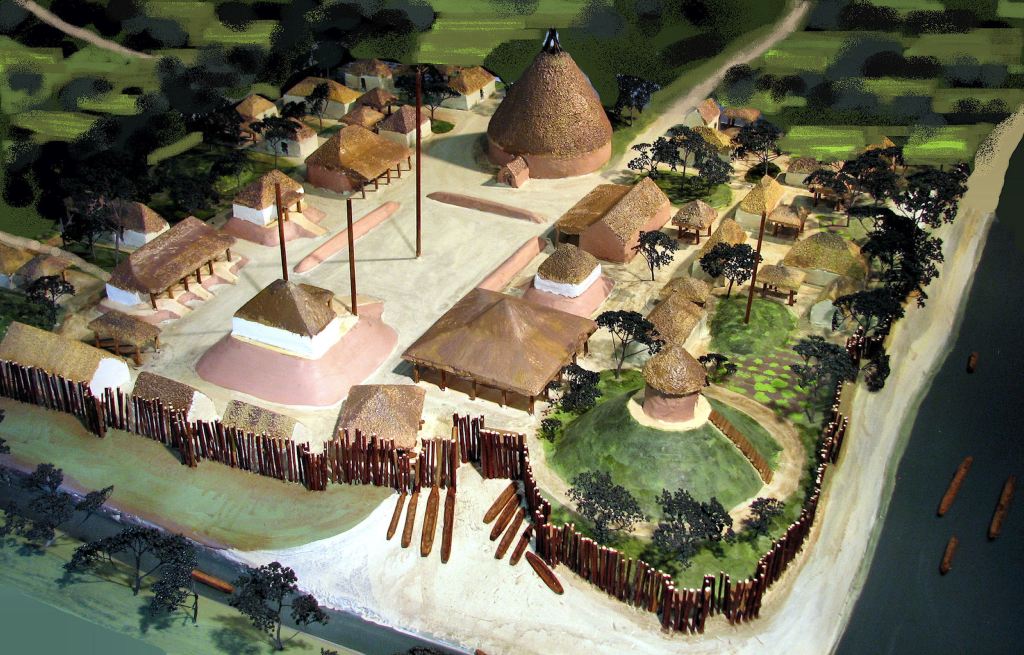
Tama – on the Lower Ocmulgee River, from sketch by William Bartram in 1776.
Memories from an earlier Summer Solstice
Our lives are like tapestries. Threads weave in and out of the frame, but often we do not know their full meaning for many years. Such is my situation with the Tamaulte. I traveled through several Tamaulte towns, while on the Barrett Fellowship in Mexico, but did not know their significance and thus, did not even mention them in my daily journal.
I first learned about the Tamaulte Maya’s unique traditions on June 20, 1992. Vivi and her young daughter, Aimee, had flown from France on June 14th (Bastille Day) to spend six weeks on my farm in the Shenandoah Valley. On Saturday morning the 20th, I had returned from the vet’s office to get rabies shots for the dogs to find my two mademoiselles quite excited. A very nice older gentleman had come to the kitchen door, wanting to buy goat cheese. Vivi didn’t know where the key to the cheese creamery was, so she invited him in for a traditional French breakfast . . . hoping that I would return in time. She said that he had the same name as the sausage in the refrigerator and sang some cowboy songs. Aimee called him Oncle Jimmie.

I suggested that we drive into Washington, DC to attend services at Foundry United Methodist Church, where several French Protestant families attended. Vivi said that it was too early to expose 7 year old Aimee to strange crowds. Instead, could we have a picnic or special meal to celebrate the Summer Solstice. It was her Mexican grandmother’s favorite day. She called it Día de Año Nuevo (New Year’s Day). Her grandmother would invite her favorite grand-daughter over to feast on traditional Native American foods of Tabasco.
I told Vivi that was a great idea. My mother’s family always had a family reunion about this time of the year, where we ate traditional foods to honor an ancient festival among the Creek Indians.
In fact, it was her Tamulte Maya grandmother, who gave Vivi her nickname. I was the only other person allowed to use it. Vivi said that her grandmother and I were the only persons in her life, who had loved her for who she was . . . not as a commodity like a sports car.
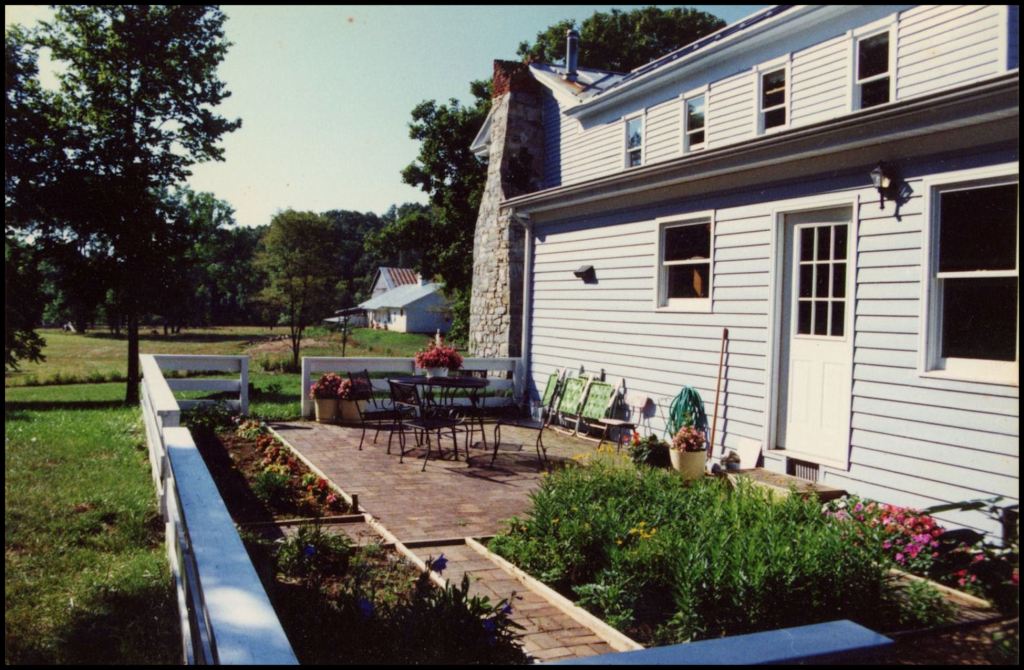
We compromised on the picnic idea by dining outside in the Kitchen Herb Garden.
Vivi said that she would need some special foods and spices to cook a traditional Tamulte New Years Day meal. (This was 30 years ago!) I told her that the only supermarket in the Valley that sold Mexican foods was a Walmart in Winchester that catered to the many Mexicans, who worked as apple pickers and poultry plant employees.
Vivi was elated to find several bags of corn meal and corn grits in our pantry. Back then, such food products were unavailable in Virginia, north of the “Grits Line” which defined the boundary between Germanic and Scots-Irish settlers. We had to drive southward to Staunton, VA to buy such products. Vivi’s grandmother had to make her hominy and grits from scratch. Vivi used the corn meal to cook tamales, corn fritters and hush puppies. She used the grits to cook a dish, similar to Creek sofke.
As soon as we entered the Walmart, Vivi made a bee line for the display featuring fresh corn from southern Georgia. The Shenandoah Valley’s sweet corn wouldn’t ripen until late July. I was shocked. “Vivi! Mexicans and French people don’t eat corn on the cob. In fact, the French college girls in Oaxaca laughed and told me that only pigs eat corn in France.”
In her sexy French accent, Vivi responded, “I lov-v-ve American corn. Aimee does too. My grandmother always served it in the summer. Maybe in an earlier life, I was a pig, Richard?” She added another sexy giggle.
The traditional Tamaulte New Year’s Day feast included many foods that would have been served at our family reunions . . . albeit a little mas picante! In fact, most of their dishes could have been found at our family reunions, except tamales. However, tamales were a favorite of the Creeks in the old days. The Tamaulte cuisine even included a dish very similar to Brunswick stew, which reigned supreme in our family reunions.

The Tamaultes of Tabasco and Georgia
The bizarre memory of a beloved French soulmate, cooking traditional Creek foods to celebrate a New Years holiday by an obscure Maya tribe, stayed in the back of my head for 14 years. Then on the internet I stumbled upon a Spanish language academic paper, written by sociology professors at the Universidad Nacional Autónoma de México (UNAM). It was on the Tamulté de las Sabanas. That had to be the same tribe that Vivi’s grandmother came from.
The article said that they were the only tribe in Mexico, who started their New Year on the Summer Solstice and ate corn on the cob, grits, corn bread, fried corn bread (hush puppies) and battered, deep-fried poultry/fish. Their favorite dance was the Stomp Dance. Several tribes in central and southern Mexico do the Stomp Dance. It originated in Peru.
Basically, the Tamaulte are Creek Indians in Mexico. They can even carry on conversations with the Miccosukee, who speak the Itsate Creek language, which predominated in Georgia (not Muskogee).
The Tamulte were descended from Itza Mayas in the Coastal Plain of Tabasco, who had become skilled mariners and traders. They established a nation in Tamaulipas (Mexican state next to Texas). Around 1200 AD, Chichimec barbarians invaded their lands. Some sailed back home to Tabasco. Some sailed northward to unknown destinations in North America.
However, we know exactly where they ended up!

Post Script

The identity of the mysterious, but friendly, early morning visitor to my Shenandoah Valley farmhouse became readily apparent in September 1992. I received an order for 200 pounds of mixed styles of goat cheese from the secretary of singer and sausage magnate, Jimmy Dean. She said that “Oncle Jimmie” thoroughly enjoyed his breakfast, cooked by my charming French wife and served by her precocious little daughter. He was in the Shenandoah Valley to film a TV ad for his famous sausage.
The note added that Jimmy and his wife, Donna, would love for Vivi, myself and Aimee to be their guests for several days at their new house on the James River near Varina, VA. The only condition was that Vivi cook the breakfasts.* LOL Their land was on part of the land of the estate, established in 1615 by John Rolfe and Pocahontas. We never found the time to accept the invitation.
*Vivi quit the entertainment industry after meeting me in December 1990. She then enrolled in the prestigious Ecole du Cordon Bleu in Paris. She already had a degree in Early European History from the Sorbonne.
 The Americas Revealed
From your article above: “In the spring of 1734, Christie traveled among the tribal members of the Creek Confederacy to learn more about their cultural traditions. The earliest celebrations of the ripening of the corn ears occurred in late May on the coast of Georgia and in late July or early August in the Georgia Mountains ….. “Public plazas were described as being oval, round or elongated rectangles, like the plaza at Ocmulgee”
Remember the Arkaqua/trackrock branch mound complex that we discussed? and the oval feature across from my home? The pond that drained in time for Satellite images to reveal this..
34°51’3.49″N 83°53’59.97″W
That pond btw has been filled back up. Thank goodness.
Is this the remnants of what Christie might have referred? This feature sits about halfway between Buzzards roost Ridge, and Fort Mountain. Laying a compass line from Buzzards roost to Fort Mountain is along the Winter Solstice set. This Pond feature is flanked by the Karin Pyramid (base of Buzzards roost) Pine Ridge Quartz quary and Arkaqua very large mound complex. No shortage of in your face evidence to back up above article.
Cheers.
Charlie
LikeLiked by 1 person
Thomas Christie never mentioned ponds and only commented on a couple of mounds.
LikeLike
Not that that was a pond at Arkaqua. I believe somewhere in early 1990’s the land owner had it excavated and turned into a pond. Recently soil taken from the site was pushed up the hill and placed in the garden of the Anderson family new home. Hugh and I did a 45 minute survey of that soil and recovered 50 to 60 pot shards hand tools, near crystal quality glass shards and other fragments of engineered types. Your article has triggered many concepts in my head to lead me to believe the now “pond” was once a public plaza complete with evidence of temporary arbors erected on the edges of these plazas. Take a look at the GE image and see for yourself! I am still looking for the person who may know of how that spot got excavated. Bet they pulled out many artifacts which are in someone’s collection atm.
LikeLiked by 1 person
I think that you are right. There sure are a lot of artifacts there.
LikeLike