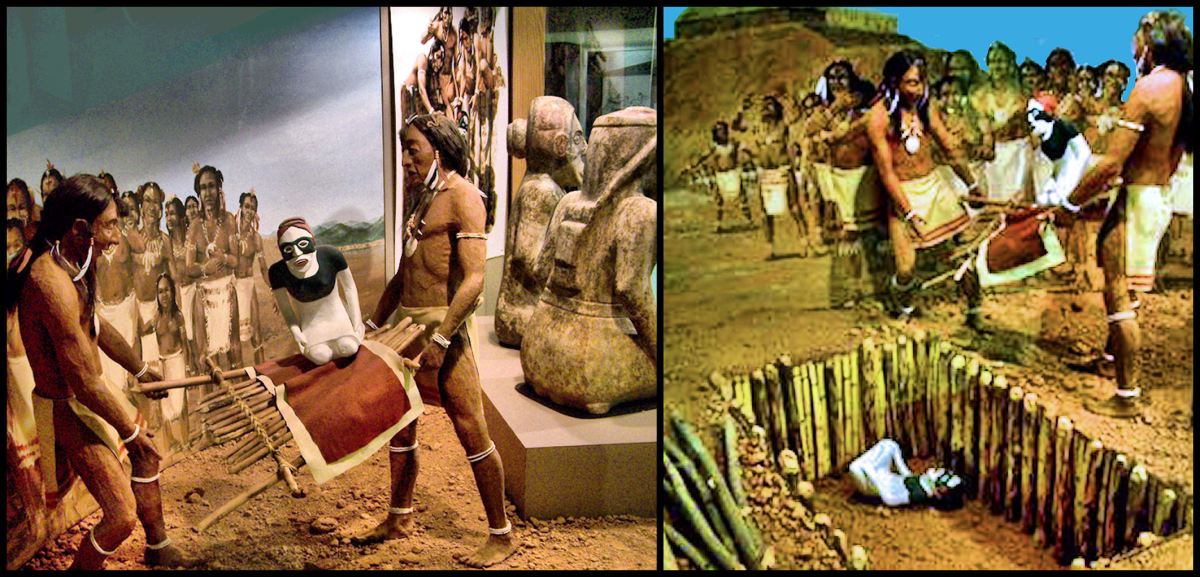
As in the case of many museums, the murals on prominent display at the Ocmulgee and Etowah Mounds museums are grossly inaccurate. The long plaza at Ocmulgee was once lined by the large, square houses of wealthy merchants, behind which were warehouses. None of the illustrations of Southeastern Indigenous towns, which accompany articles in Wikipedia and other commercial references are fully accurate. Most bear little resemblance at the macro scale to what the archaeologists actually unearthed. Instead they reflect the obsession by many Gringo archaeologists in the micro scale and total disinterest in communitywide scale.
My great fear is that in the highly politicized process that now is accompanying yet another renovation of the Etowah Mounds Museum, text message generation academicians and tribal bureaucrats, who know nothing of Georgia’s complex indigenous cultural heritage and never knew archaeologists Arthur Kelly and Lewis Larson or Architect Julian Harris, will yet again present a fictional version of the past. Their stated goal of removing from exhibits the artifacts produced by the distinct peoples on the Etowah River over the past 12,000 years is absolute, New Age Religion idiocy.
The actual artifacts are supposedly to be replaced by artistic representations. Since no one, who has periodically “modified the message” at the Etowah Mounds Museum, had read the archaeological report by Arthur Kelly and Lewis Larson, can we expect the artistic exhibits to be even farther removed from factuality? Unless they read the reports I prepared for the MCN National Council almost 20 years ago, Oklahoma Creeks know very little about their cultural traditions prior to the late 1700s. There were enormous changes in the late Colonial Era.
The architect of the Etowah Mounds Museum, Julian Harris, was my professor for 12 courses at Georgia Tech. Arthur Kelly introduced me to the world of archaeology and endorsed my proposal for the Barrett Fellowship. Lewis Larson was the professor for the only formal course in anthropology that I ever took. I own a copy of the original illustrated archaeological report for Etowah Mounds. It was handed to me in person by Dr. Arthur Kelly.
by Richard L. Thornton, Architect & City Planner
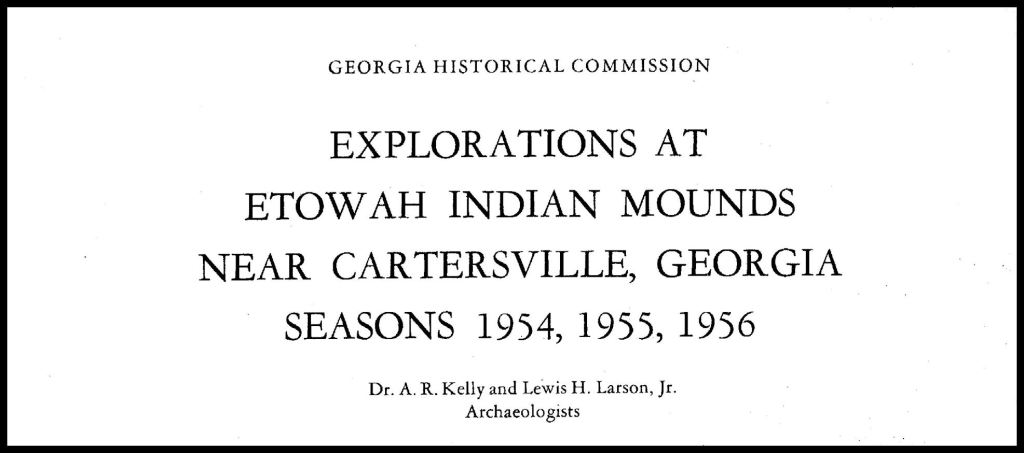
A succession of professors, artists and bureaucrats have made inappropriate changes to the Etowah Mounds Museum, because they NEVER read this report. I have found that the current generation of Georgia archaeologists don’t even know that it exists!
“Fake archaeology” images at top of article
When renovating the Etowah Mounds Museum in the mid-1990s, the State of Georgia went to enormous expense to create a diorama out of an illustration in the October 1991 issue of National Geographic Magazine article, entitled “Etowah . . . A Southeast Village in 1491.” On display at the entrance hall of the museum is a birds-eye view painting of Etowah Mounds as it supposedly looked in 1491 . . . also originally published by National Geographic in October 1991. Both National Geo paintings are pure fiction.
Would you believe that while living in North Carolina and Virginia, I was friends with the author of that article . . . George Stuart? Here is the story behind the fake archaeological art, included in an article by a very competent archaeologist, writer and photographer. George eventually became Senior Editor of National Geographic Magazine.
Our last time together
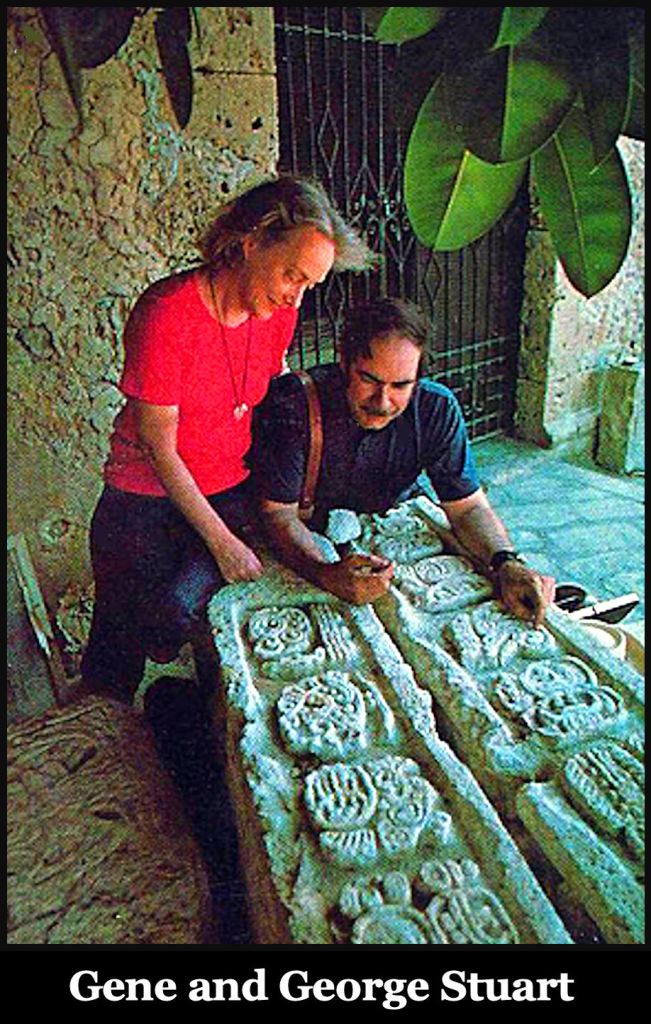
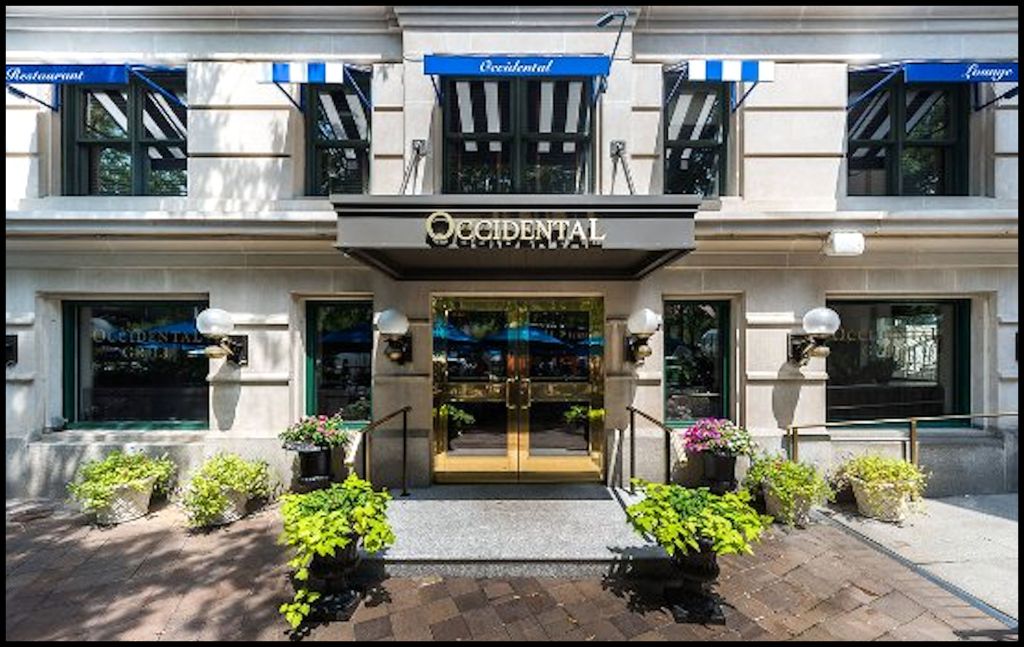
The last time that I saw George and Gene Stuart of National Geographic was in the winter of 1993. Yet again they invited my official wife and I to be their guests at the posh Occidental Restaurant in Downtown Washington. The Occidental featured our Shenandoah Chevre cheeses. Once again my official wife declined, but this time Vivi was planning to fly in from Paris to be with me overnight in Alexandria, while I met with the new US Attorney General of the Clinton Administration Janet Reno and her staff. George and Gene were delighted that she would be available and invited her instead.
The new leadership in the Justice Department wanted to hear in person the incredible story of how five car loads of Virginia State Police and the local Shenandoah County Commonwealth’s Attorney had planned to murder me on my farm the previous August 27th, but an African-American U.S. Marshall on vacation had saved my life. Vivi had purchased land for a vineyard and winery in Warren County, VA (Blue Ridge Mountains) and wanted to check on the progress of preparing the land for planting vines.
Gene adored Vivi. She repeatedly told us in 1991 and 1992 that as soon as we could officially be a couple, our names would be on every Washington socialite’s party list. I expected to be appointed to a position in the National Park Service by the Clinton Administration. Then Vivi planned to buy out my estranged wife’s interest in Shenandoah Chevre and staff it with a professional personnel from France. My only role would be training them how to make Alpine and Scandinavian style goat cheeses, for which we were becoming famous.
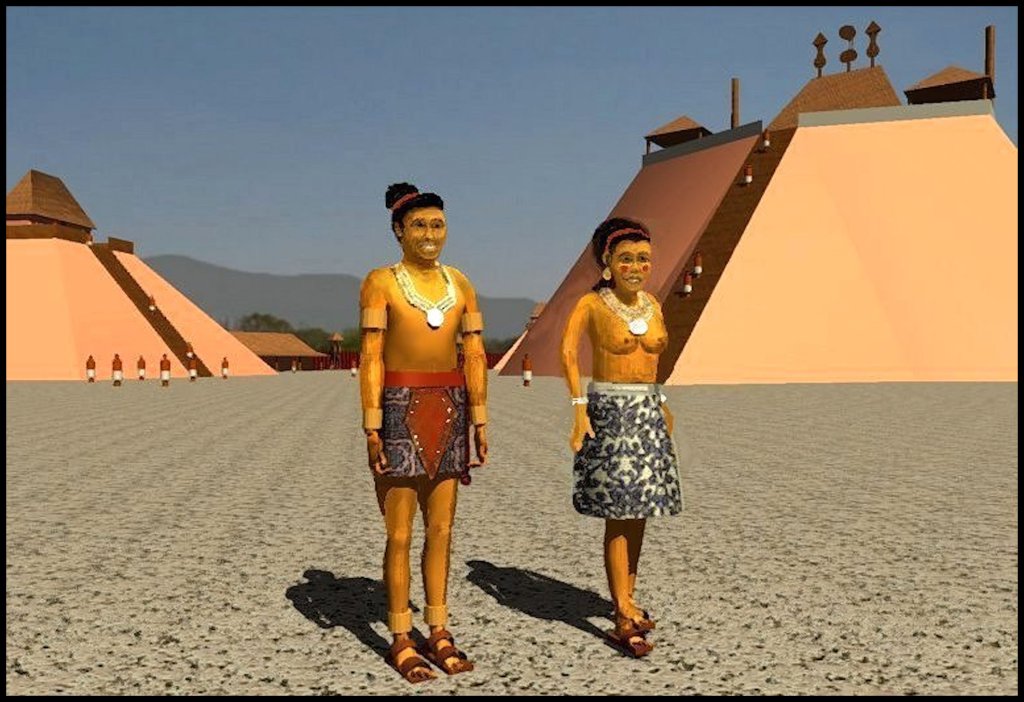
As described in the De Soto Chronicles – 1540 – This is what the residents of Etula (Etowah Mounds) actually looked like in the summer time. The artist for the diorama at the top of the article seems to have used Western Plains peoples as his role model. All Creek art portrays themselves wearing kilts or skirts, not breech-cloths.
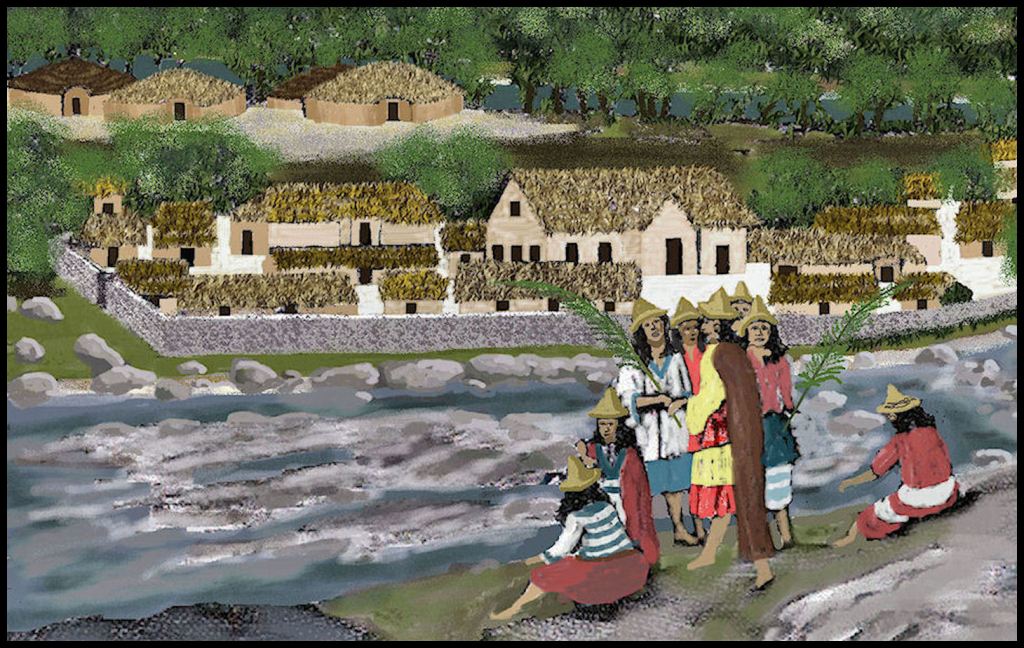
As described by Richard Brigstock in 1653 – In cooler weather or for formal occasions, the men and women wore tunics. Additional togas were worn to denote high political positions in diplomatic or legislative situations. Both Indigenous men and women in northern Florida wore grass skirts like the Polynesians.
On October 14, 1991, Gene had stopped by our cheese sampling table at Union Station for the American Institute of Wine and Food gourmet food tasting. Knowing that I was a Creek from Georgia, she asked me what I thought of George’s article on Etowah Mounds. I told her that I hadn’t seen this month’s National Geo, but would check it out.
After the magazine arrived and I had time to read the article, I immediately noticed some glaring errors in the artwork. There were at least 15 mounds at Etowah, on both sides of the river. The town was densely developed with streets. It was not a village with a scattering of houses as portrayed by the artist.
The artists had the wrong architectural forms for the mounds, but the worst thing was the featured painting about the two famous marble statues. They had NOT been carelessly dropped into a shallow grave at the top of Mound C around 1585, as stated in the article. They had been found in a temple UNDERNEATH Mound C. The artist also portrayed Mound C wrong. It was almost round, not a square.
I certainly didn’t want to embarrass a good friend, by sending a letter to the “Readers Comments” section of National Geo. However, I didn’t see George in person again, until the dinner invitation in 1993.
I had not seen Gene since the summer of 1992, when Vivi and I were hawking goat cheese at a wine festival. Gene now looked tired and frail. She didn’t tell me that she had cancer.
My good friends presented Vivi and I copies of what would prove to be their final book, The Mysterious Maya. Much of our conversation drifted far into the past. I suspect they knew that she was terminally ill, so they talked a lot about the era when they first met and fell in love.
It was the first time that we ever really talked much about archaeology, since the grand opening of the Virginia cheese creamery in 1990. During most of our contacts in the past, they wanted to talk about farming, goat cheese, dairy goats, Barbados sheep, Toulouse geese and Virginia history.
George, as a teenager had worked one summer at the Etowah Mounds dig under the supervision of Lewis Larson and Arthur Kelly. Gene had rented a house near Etowah Mounds as young school teacher at Cartersville High School. Although in Cartersville, GA at different times, for both of them, it was Etowah Mounds, which caused them to seek a career in anthropology. Actually, it was my move to a townhouse near Etowah Mounds after being shanghaied from Virginia that caused me to start shifting my professional time toward Pre-Columbian architecture.
George listened intently about my complaints. He was not offended. He explained that he only worked at Etowah one summer and was just a teenage laborer at the time. The marble statues were found much later. Everything that he wrote in the article was provided to him by anthropology professors at the University of Georgia.
George later mailed me a Xerox copy of the instructions of the University of Georgia professors to the National Geographic artist. Xerox is the word we used back then for a photocopy, because back then most copiers were made by Xerox in the United States! (editorial comment) LOL
The UGA anthropology professor, Charles Hudson, stated that the marble statues were found in a shallow log-lined grave near the surface of the ramp of Mound C. They had been carelessly dropped there, because an enemy, probably the Cherokees, was attacking the town and about to burn it.
The story was total fiction. Creeks occupied the Etowah Mounds town until the early 1700s. The town site was abandoned and covered with 100+ year old hardwood trees, when in 1818, Yale Professor Elias Cornelius surveyed the mounds. No Cherokees ever lived at Etowah Mounds. This is what the mounds looked like in 1818.
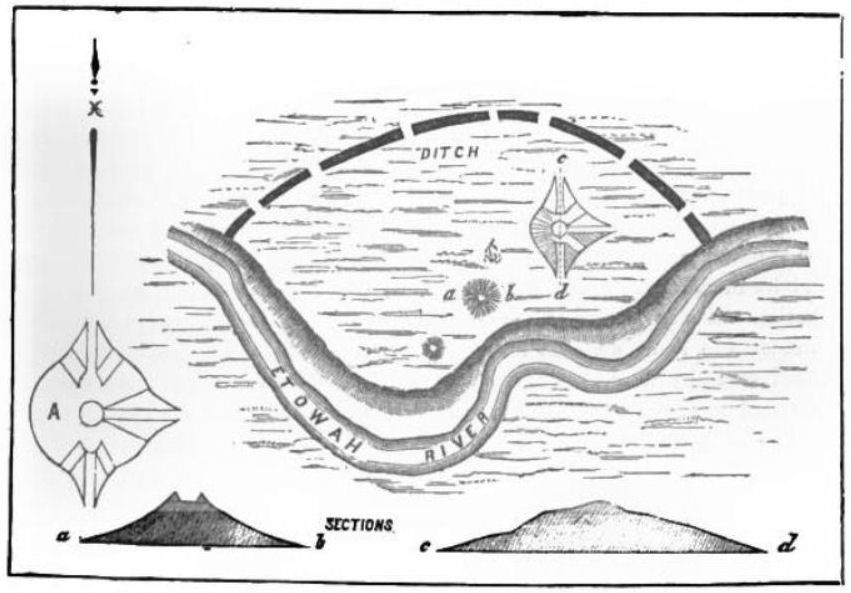
The UGA professors also deleted references to the Creek occupation of the townsite during the Colonial Period in the museum exhibits, because they wanted to line up all the false facts to support Cherokees living there. We understood why a little latter in the 1990s, when proposals appeared to build a Cherokee gambling casino next to Etowah Mounds! It is funny how money will alter the esoteric interests of sublime academicians.
However, little did any of us realize that night at the Occidental Restaurant that two months later, I would become trapped, penniless, in my parent’s house in South Metro Atlanta and that Gene would die of cancer in August of that year. I thought that Vivi had dumped me, while Vivi thought that I had been murdered and my body hidden in rural Virginia. I did not hear about Gene’s death until that autumn, when I ran into a mutual friend of ours in Winchester, VA.
Regrettably, I never saw or communicated with George or Gene again. About 20 years ago, George retired to the farmhouse in the North Carolina Mountains. I don’t know why I didn’t go by to see him before passed away.
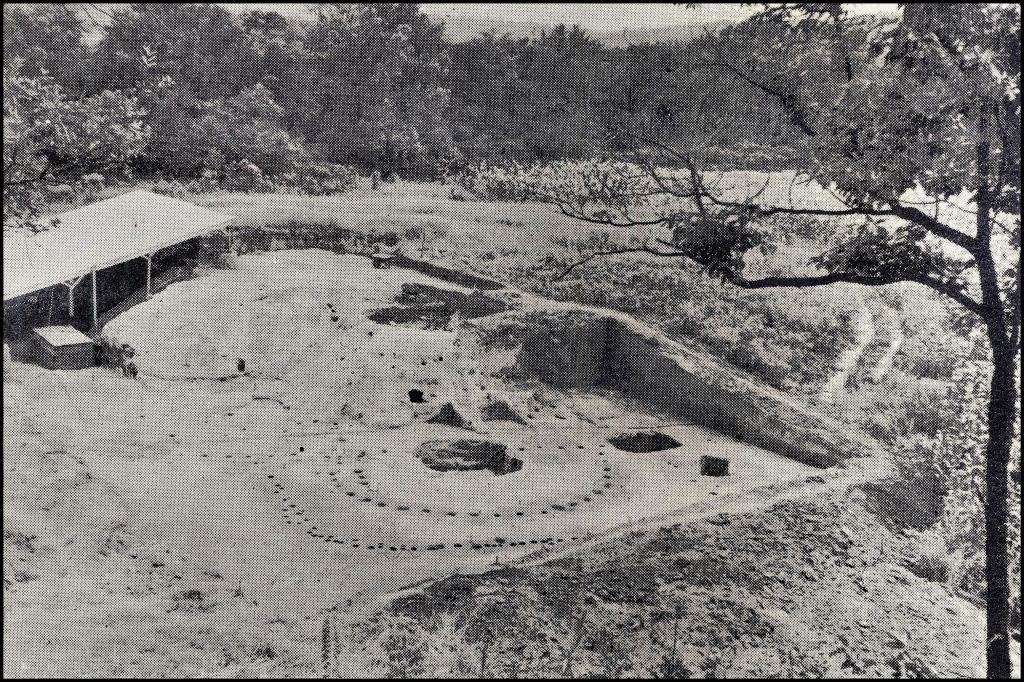
Photo taken by Dr. Arthur Kelly, shortly after Dr. Lewis Larson had discovered the two marble statues in a collapsed temple at the base of Mound C at Etowah Mounds.
It was not until 2003 that I began to use architectural software to describe Native American towns and architecture more precisely than was currently being done by archaeological firms. In the next article, there will be a slide show that will take the reader on a 20 year magic carpet ride through increasingly more powerful computers and sophisticated software, plus, of course, my own learning process.
Until then . . .
 The Americas Revealed