They came from Campeche!
by Richard L. Thornton, Architect & City Planner
Many of you have probably heard of the Mouse People, who supposedly lived around Franklin, NC when the first Cherokee explorers or traders first arrived there. They were supposedly very short with brown skin and rodent-like faces. The Itsate Creeks called them Rat People (Chessete) and said that they lived in remote mountain valleys of Northeast Georgia, also.
Most people probably think that the Mouse People were a myth, but reexamining archaeological reports and interpolating them with my knowledge of Mesoamerican architecture and the indigenous people of Campeche has convinced me that they were real. Hundreds of diminutive Indigenous American skeletons have been found in Lake Okeechobee, Florida during drought conditions.
The architectural evidence suggests that the first Mayas to reach the Nacoochee Valley were from Campeche and arrived between 550 AD and 600 AD. This is exactly when there was an enormous decline in the population of central and eastern Campeche.
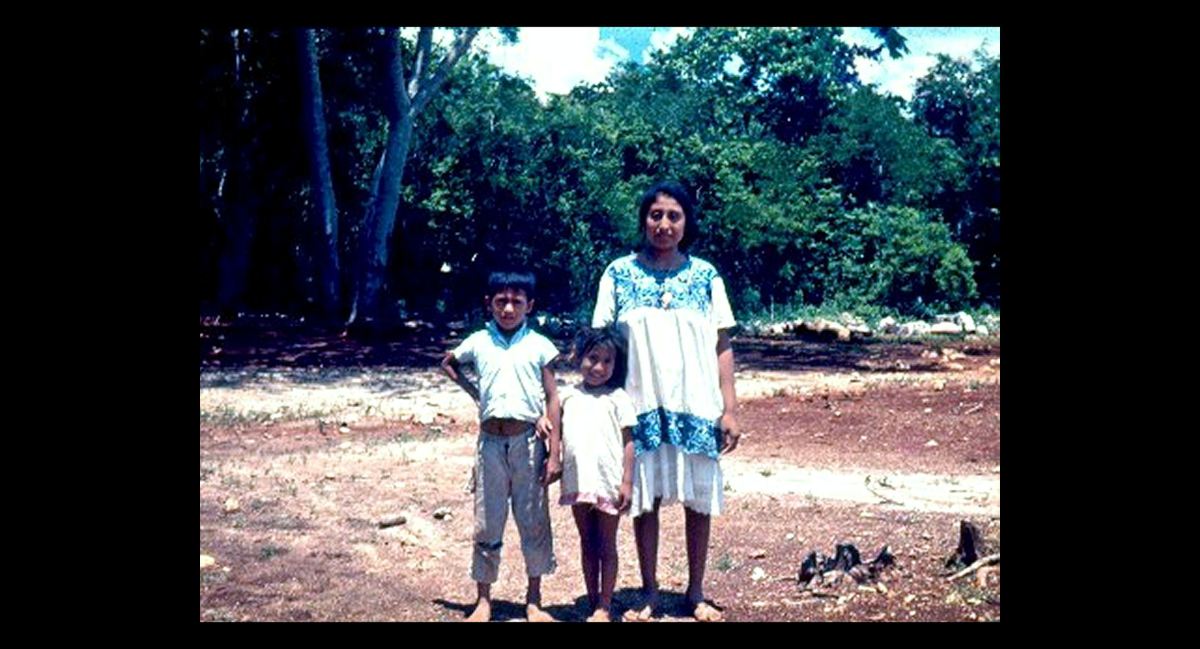
There is a Maya tribe, which lives in remote sections of the Puuc Hills of northern Campeche and southern Yucatan, who are borderline pigmies. The lady and her children above were members of that tribe. Their facial features are very different than those of the other Maya tribes in the region and they do not seem to intermarry with the other branches of the Mayas.
The lady above was the site manager for the Labna Archaeological Zone on the border between Yucatan and Campeche. She was about 4′-8″ (142 cm) tall. She was a very nice person, who spoke Spanish non-fluently as a second language.
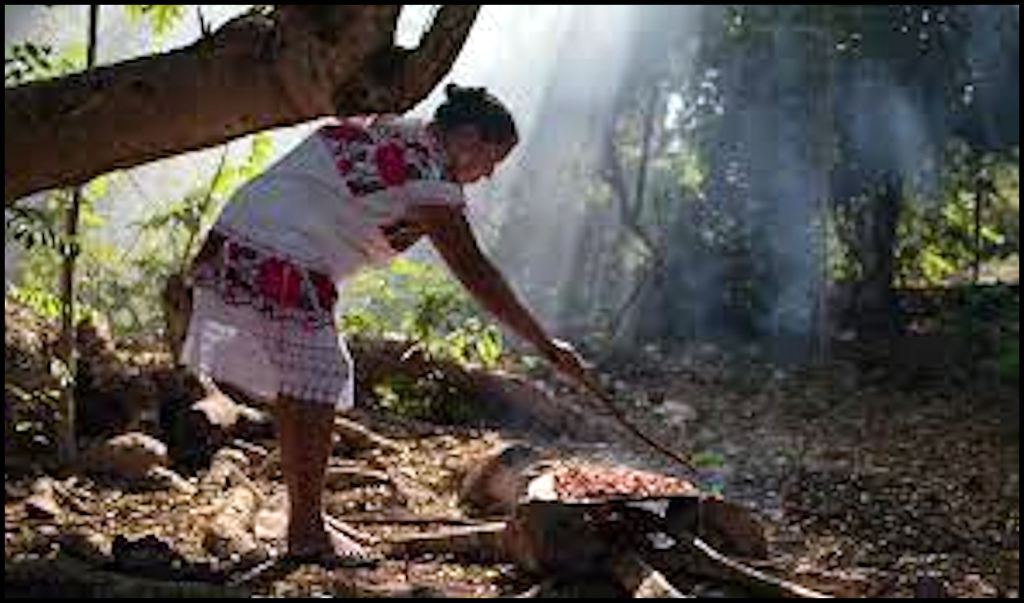
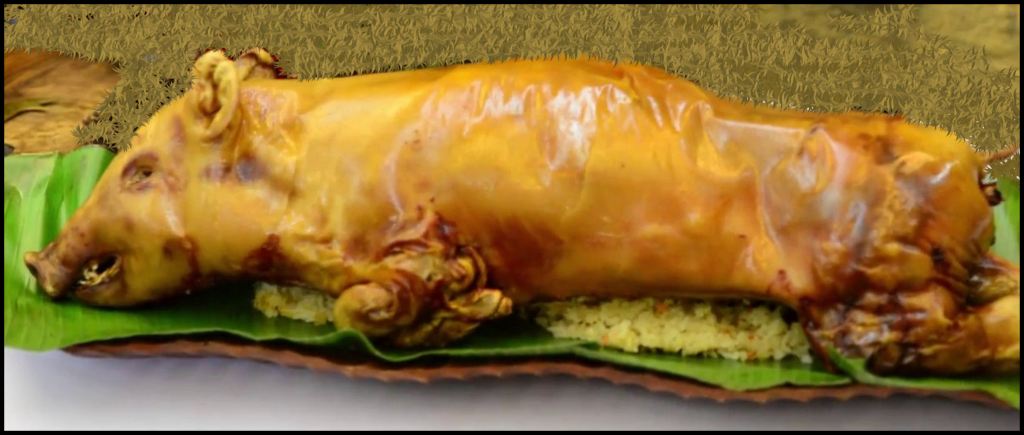
Because I wore an INAH* photo ID card, she thought that I was an important official from Mexico City. She also thought that Ana Rojas and I were on our honeymoon. She had one of her brothers slaughter one of her pigs then cooked a wedding feast for us. About two dozen relatives and neighbors came to the party.
Although we could only partially communicate with them, because of their limited command of Spanish, a good time was had by all. After everyone had left, Ana and I reimbursed her for the cost of the food and the pig, which was equal to about one week’s salary in those days from the Mexican government.
*INAH = Institutio Nacional de Antropologia E Historia.

 The Americas Revealed
Very interesting Richard, But what a horrible name to call that tribe , Rat people.
LikeLike
Also, remember that our three indigenous species of rats here in the Southeastern United States are wild animals – very different lifestyles than the European rats, who live with mankind. Where I live, we only have the Woods Rat, which is a close relative of the Scandinavian Lemming. During the warm months Woods Rats live in nests in trees. They will come into homes, but generally not until around 11 PM at night. They depart just before sunrise. Like lemmings, they will also, for reasons not fully understood, form large herds, which wander around the forests and pastures. These herds have been known to devoir huge sections of commercial broccoli farms at night. The Muskrat lives in temperate climate freshwater wetlands or along rivers. The Marsh Rice Rat lives along the sea coast – generally near tidal marshes or slow moving rivers.
LikeLiked by 2 people
Oh I see ! Thanks for explaining Richard.
LikeLiked by 1 person
Yes, you are right, but racial and ethnic prejudice is not a new invention.
LikeLiked by 1 person
So fascinating and just points once more to how many types of humans have made up humanity and at times reads like character descriptions in a Tolkien or Lewis fantasy novel. Which leaves me to think they had some greater knowledge themselves of ancient race histories that were and still are, unconventional and hidden away.
LikeLiked by 1 person