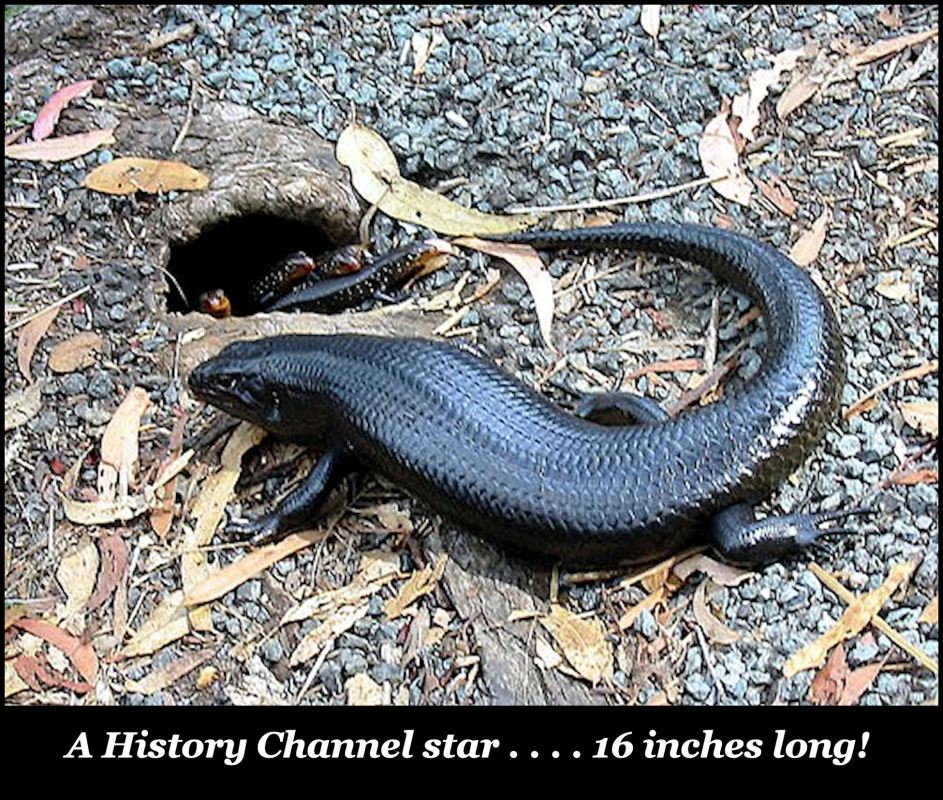
Being tropical animals from Yucatan and northern Central America, they are not supposed to be in the Georgia Mountains, but you heard them in the opening scenes of American Unearthed’s premier. Their preferred habitats are near old farmhouses and barns at the southern end of the Blue Ridge Mountains.
by Richard L. Thornton, Architect and City Planner
Viewers of the premier of America Unearthed on December 21, 2012 heard a strange sound in the opening scene, when show host, Scott Wolter, was in the Chattahoochee National Forest and then again, when he arrived at my cabin. It sounded something like a ratchet, so most folks probably assumed that it was an electronic sound effect added by the TV show’s producers. NOPE! It was from a microphone placed right here!

The film crew was from Minneapolis, so had no clue that they were recording proof of a Maya presence in northern Georgia. Actually, I didn’t either until the summer of 2013. Before then I thought I was getting brief glimpses in my cabin crawl space of very fat, black snakes.
Even after getting a view of an entire Giant Black Skink, it took me several months to figure out what I was seeing. Georgia biologists and wildlife rangers were absolutely no help. My description of a 14″-16″ (36-41 cm) long, fat, shiny black lizard only brought chuckles and a quick comment that they had to get back to work. Eventually, though, I did run into many people, living in rural areas of Dahlonega Area, who also had these Giant Black skink living in tunnels under their basement or barn.
These Giant Skinks prefer to live in the dark, 24/7. After I built the first phase of the terrace garden that you see below, they immediately dug tunnels from the cabin’s crawl space to the fill soil behind the recently constructed log retaining walls. These terraces were only about six weeks old, when filmed by the History Channel film crew, but already contained a network of Skink tunnels.

This Itza Maya terrace complex in the highlands of southern Guatemala consists mostly of small fieldstones, raked out of the top soil. Many of the Georgia terrace complexes merely contain this sort of unimpressive stone masonry. Even parts of the Track Rock Terrace Complex look like this. Dr. Román Piña Chan tore up the syllabus, prepared by Georgia Tech professors and directed me to be immersed in the culture of real Mexicans. Otherwise, I would have never seen the terrace complexes. I will be eternally grateful for his wisdom in sending me out into the boonies.
When I arrived at the dilapidated cabin near Amicalola Falls in May 2012, I immediately noticed that the forests in that part of Lumpkin County were identical to those in the Puuc Hills region of Campeche State in Mexico. It inspired me to start building a terrace garden. There was an impenetrable, dense growth of saplings and vines that surrounded all mature trees. This the first phase that you saw on the History Channel program.
As you will see in my upcoming documentary video, I am convinced that all the terrace complexes in Georgia initially looked like this. I have found many that never had stone walls. The terrace complexes in Chiapas that have stonework of the quality that we see here in Georgia, were all associated with temple compounds or the houses of district leaders.

These are the ruins of a very sophisticated stone retaining wall at an agricultural terrace and temple complex in the Rich Mountain Wilderness area of eastern Gilmer County, GA. I also found Maya skinks living here amongst the decayed ruins of an old log cabin.
Did they come as pets or tag-alongs?
The Giant Black Skinks do not live anywhere else in Mexico west or north of the foothills in eastern Tabasco. They don’t live in Cuba, Florida, Texas, Louisiana, Louisiana or Alabama. Since they are voracious eaters of insects, voles and field mice, my guess is that they came as pets. I can’t imagine a reptile that large being able to hide in a canoe or backpack. Of course, anything is possible. They seem to like living around humans in old rural buildings, but do not openly associate with humans. They are night-hunters, when the humans are asleep.
The Truth is out there somewhere.
 The Americas Revealed
My wife and I walked our trash can out and saw one of these on the drive way. We saw it first from a distance and could not figure out what it was. When we got closer I realized it was not native to GA. I couldn’t find any articles about it until this one.
LikeLike
I don’t know why the biologists and state bureaucrats refuse to acknowledge their existence in Georgia. They are well known among ole time Georgia Mountain families. The population of Maya Skinks seems to be stable, perhaps growing, since being mega-skinks they tend to dominate their competition. However, they are proof that the Mayas came to Georgia. LOL
LikeLike