
This photo was made in June 2012, two years after my original articles on the homeless veterans living in national forests. There was still virtually no private sector construction activity in northern Georgia, outside of Metro Atlanta, However, some of the veterans, who didn’t have legal problems, had found minimum wage work at fast food restaurants or had moved to areas of the country, where there were more jobs. Some marginally employed vets were living in maritime shipping containers near Blairsville and Dahlonega.
All of the veterans at this campsite still had warrants out for their arrest for being arrears in child support payments, so I didn’t photograph them. The laws passed by Congress on behalf of penniless veterans had only one impact on these men. They told me that the Veterans Healthcare Center in Blairsville, GA was now protecting their identities from local and state law enforcement agencies. They were now able to get basic healthcare without fear of being arrested, when they showed up to a doctor’s appointment.
There were several big differences between my campsites, while homeless, and those of these veterans. First of all, when facing a low income crisis in 2009, I put first priority on paying my car note and automobile insurance, knowing that without “wheels” I would be absolutely helpless. My vehicle was a Ford Explorer, which meant that if worse came to worst, the three dogs and I could sleep in the back of the Explorer.
Almost all the veterans had lost their cars and their drivers licenses due to non-payment of insurance or to a combination of defaulting on a loan, not paying auto insurance and judicial orders that seized their drivers license after being charged with contempt of court for not paying past due child support payments.
Secondly, all were totally unprepared for living in the wilderness. As you can see, their shelters were created by hanging sheets of plastic over ropes and then weighing them down with stones. Most didn’t even have camp stoves or emergency radios. Most of these guys were totally dependent on more affluent Vietnam Vets, who had Winnebago campers and more camping equipment, plus were not in trouble with the law . . . so they could go into town to get necessities.
In contrast, I had intentionally maintained a complete inventory of off-the-grid survival equipment in water proof containers – complete with tanks of propane and fishing/hunting equipment. I had solar powered lights, walkie-talkies and a hand-crank radio. It took me exactly seven minutes to load into my Explorer everything that I needed to survive for two years off-the-grid.
Thirdly, all these guys seemed have gone straight from living with their Mama to living with a girlfriend or wife . . . who cooked their meals and washed their clothes. Whereas in conventional military experiences, the Army, Navy or Air Force takes care of you, mine involved going alone in the mountains of Mexico, the jungles of Central America or the Arctic region of Scandinavia. Naval Intelligence thought I could do it, without being particularly noticed, and I did it.
I learned how to take care of myself on long hiking-camping adventures with the Boy Scouts. I was one of the youngest ever Eagle Scouts. I instantly had to learn how to cook, wash clothes and maintain myself in a “professional appearance” by moving to a job in Sweden the day after graduating from Georgia Tech. In other words, on my first night in the wilderness, I didn’t look around for a woman to cook my food or wash my clothes.

Meanwhile at the offices of the Chattahoochee National Forest
I didn’t know it at the time, but just a few weeks before this photo was made, the US Forest Service spent over $10,000 of staff time and equipment operation to cut down at least 110 mature trees and many more saplings over the access trail to the Track Rock Terrace Complex. The purpose of this eco-terrorism was to prevent 23 members of the California Sierra Club from hiking there that weekend.
The hiking trail was actually an old wagon road used by residents of Union County, GA to go on picnics or to drive their livestock to the mountainside, when pastures were dry in the valley. When maintained by the people of Union County for over a century, the archaeological zone was kept in pristine condition as a public recreation area and commons pasture. That is certainly food for thought nowadays.

Picnickers taking the road up to Track Rock Gap

Base of Track Rock Gap – church picnic

Church picnic on Track Rock Creek
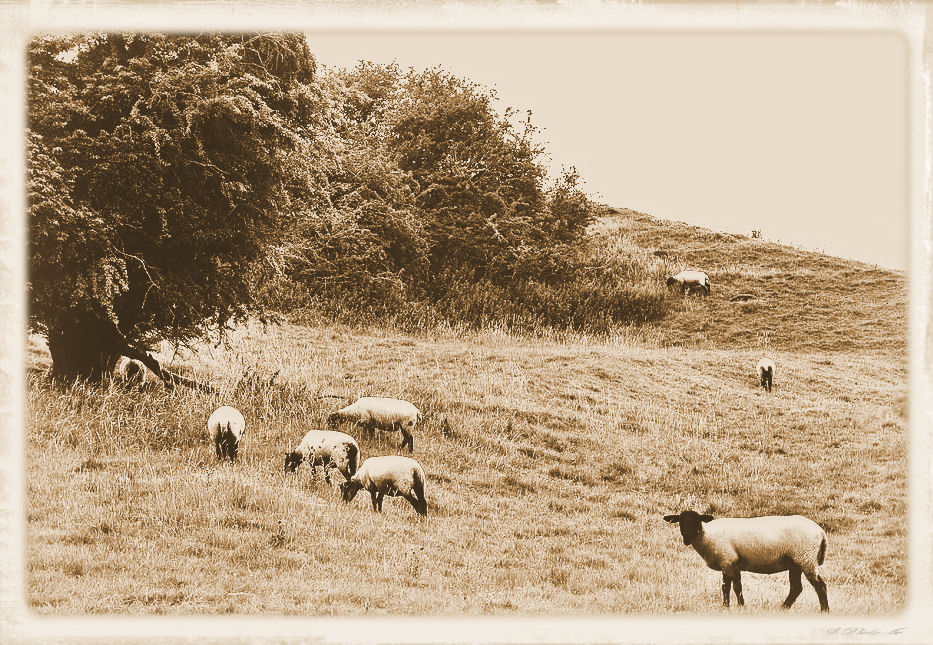
Slopes of Track Rock Archaeological Zone – 1890s
 The Americas Revealed