The Cherokee AND Muskogee-speaking Creeks were nowhere around when the Track Rock Terrace Complex was built. The Cherokee definitely did not invent Swift Creek Pottery or Indian Mounds . . . They traditionally threw the bodies of their dead into fast-moving rivers. This was a tradition started, when they lived on the banks of the St. Lawrence River. They believed that the bodies would return to their homeland on the Atlantic Coast of Canada. However, there is one amazing true fact about their past, which certainly earns them stardom.
The Cherokee are the only known Indigenous American people, who knew how to make wagon wheels and wheeled carts at the time of European Contact.
by Richard L. Thornton, Architect & City Planner
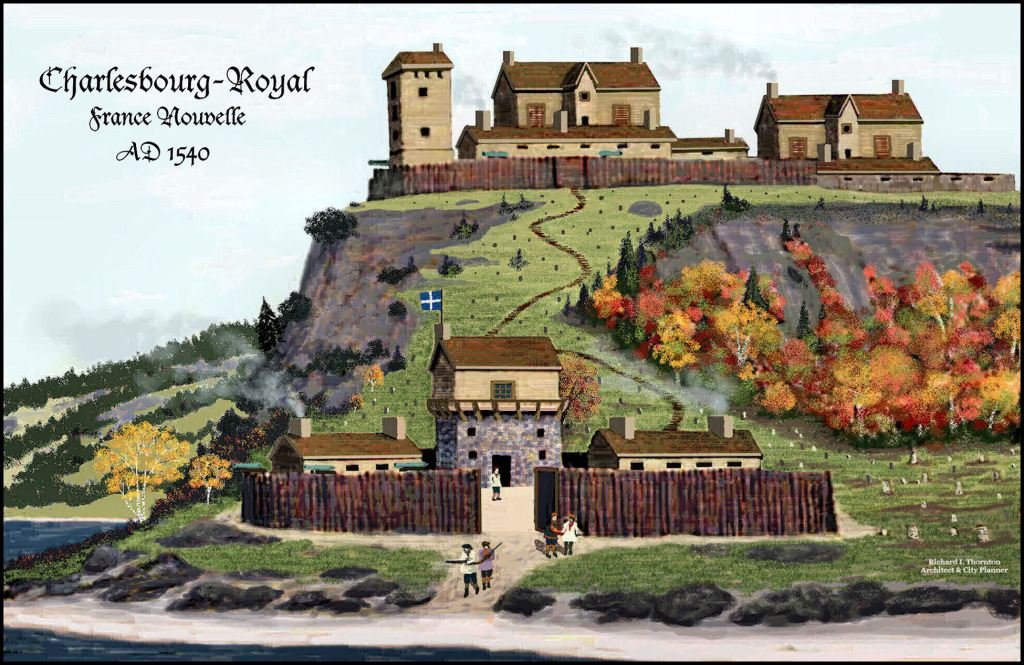
The new French version of the Canadian History textbook seeks to provide an expanded and accurate portrayal of Canada’s First Nations peoples, plus give credit to the French Protestant explorers, who founded the first European settlements in Canada. I was honored to have my rendering of Charlesbourg-Royal from my book, Earthfast, included in this textbook. The lady told me that I was the only architect, who labeled their rendering in French! Even the Quebecois architects labeled their drawings in English. LOL
The French Colonial Archives in Toronto
Canada’s depository for the French Colonial Archives is located in the Downtown Toronto Library. It contains a wealth of information that is typically ignored by “American History” textbooks, published in the United States. French Protestants, based in La Rochelle, France, began exploration and colonization attempts of North America long before the English explorers mentioned in “American History” textbooks. Some of their earliest colonies were in what is now the United States. We were never told about them when I was in high school and college.
The French Natural Scientist, Historian and Pastor, Charles de Rochefort, was funded by the Protestants in La Rochelle. He wrote a book in 1658 that included ten chapters on the inhabitants, history, architecture, religions, flora and fauna of what is now the State of Georgia. That book was ignored by Dixie academicians in the 20th century, even though the information contained has proved to be almost 100% accurate.

The same can be said for the vast treasure trove of reports and letters left by Samuel Champlain. He was also from La Rochelle and his family was known to be Protestants. However, by the time he came along, he had to be officially be considered a Roman Catholic. Protestants were banned from settling in French colonies.
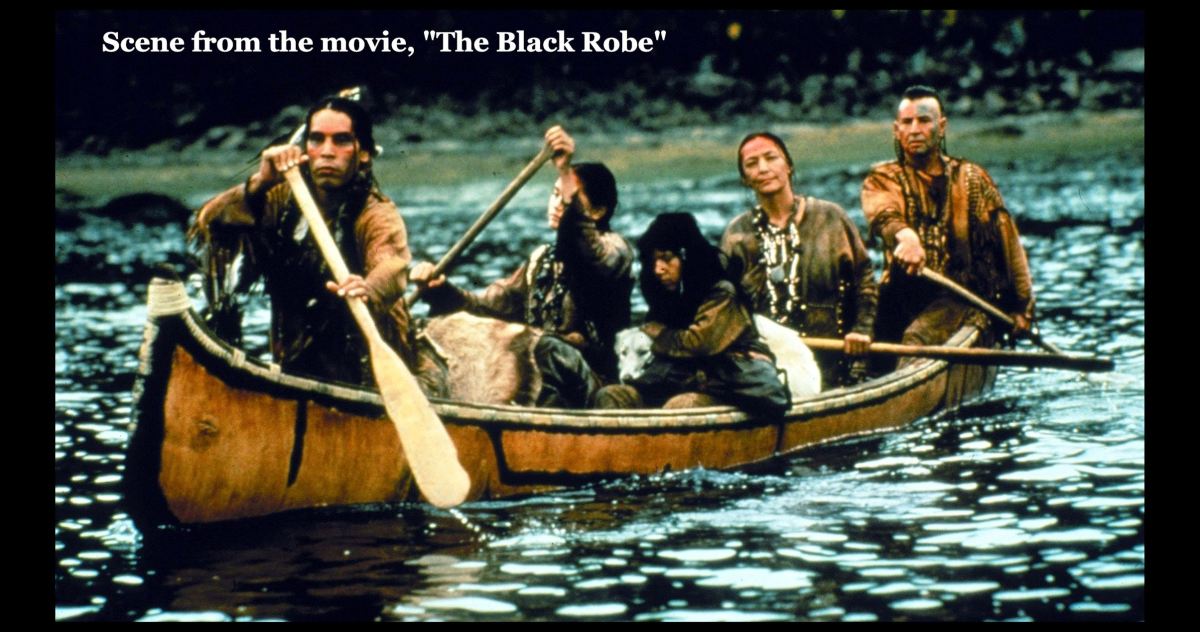
A magnificent movie, “The Black Robe,” describes the era that we are discussing. At the time, which Charlesbourg-Royal was constructed, the Cherokees were probably living nearby. However, they first appear in written history in 1615, living farther upstream on the St. Lawrence River.
Champlain journeyed by canoe all the way to Lake Huron, where he spent the winter with the Wendats (Hurons.) At the Great Falls of the St. Lawrence River, Champlain encountered a small tribe, which was a vassal of the Teononateca tribe, that was an ally of the Wendat. This tribe specialized in portaging canoes around the Great Falls. Champlain was astonished to see that they used wheeled carts to transport the large freight canoes. He did not know that any tribe in the Americas utilized wheeled vehicles.
His interpreters could not fully understand the portage Indians, so Champlain gave them the name Charioqui. It combined the word for a two wheeled cart or chariot in the French dialect spoken on the French Atlantic Coast with the Wendat suffix for “people or tribe” – “qui” or “kee” in English.
Of course, Muskogee-Creek uses that same suffix. It is actually from Irish and Scottish Gaelic. Now you figure that what out! Itsate and Apalachete Creek use the Itza Maya suffix for “people or tribe.”
When Champlain returned to Quebec in the spring of 1616, he was handed a letter from King Louis XIII ordering him to stay in Nouvelle France and tend to his duties as “acting governor.” He could not be appointed a Royal Governor because he was a commoner. Champlain then requested that the Jesuits send “black robed” missionaries to the Hurons, Tionontatecas and Charioquis in order to assimilate them to French culture and convert them to Christianity. Thus, begins the plot of the movie, “The Black Robe.”
It is interesting that Tionontateca is a pure Nahua word from Mexico. It means “God-Silent-People”. That was a major Chichimec tribe in Mexico. I have a color slide of the Temple to the Silent God that is located at the ruins of the city, Tlatilolco . . . now in central Mexico City. What were Chichimecas doing in Canada? This connection to a Chichimeca tribe explains why some Cherokee descendants are being found to carry substantial Northern Mesoamerican DNA.
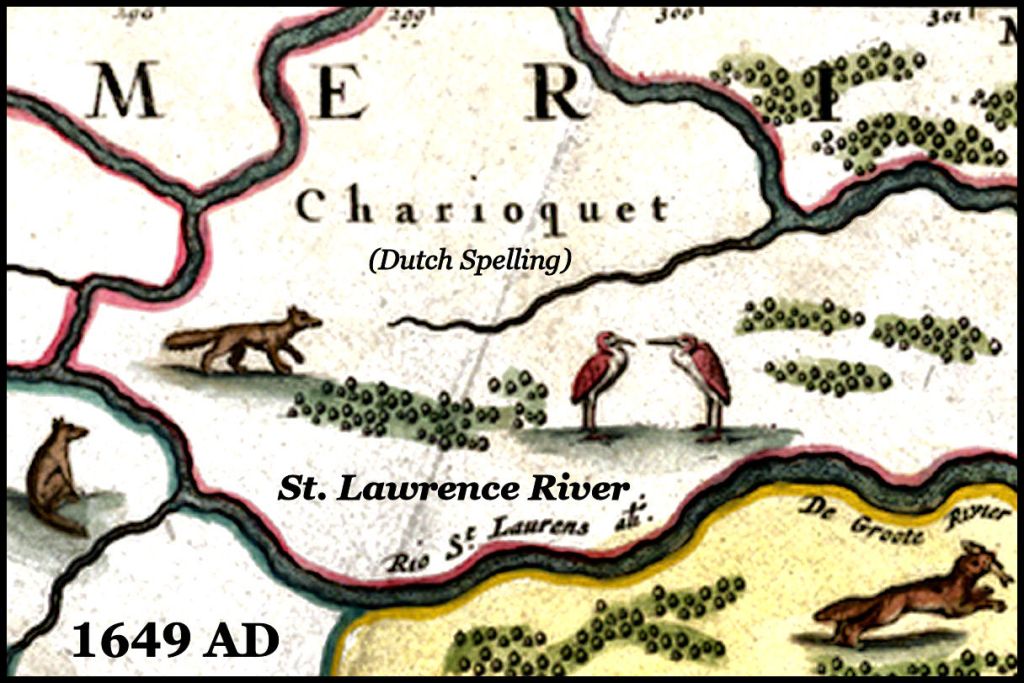
In 1649, the French Colonial Archives mentioned that the Hurons, Teonontatecas and Cherioqui’s were viciously attacked by the Iroquois. Many of their people were massacred. In 1650, the archives state that the Hurons (Wendats) had moved westward, while the Tionontatecas and Charioquis had moved south of the St. Lawrence River, but were still being attacked by the Iroquois.
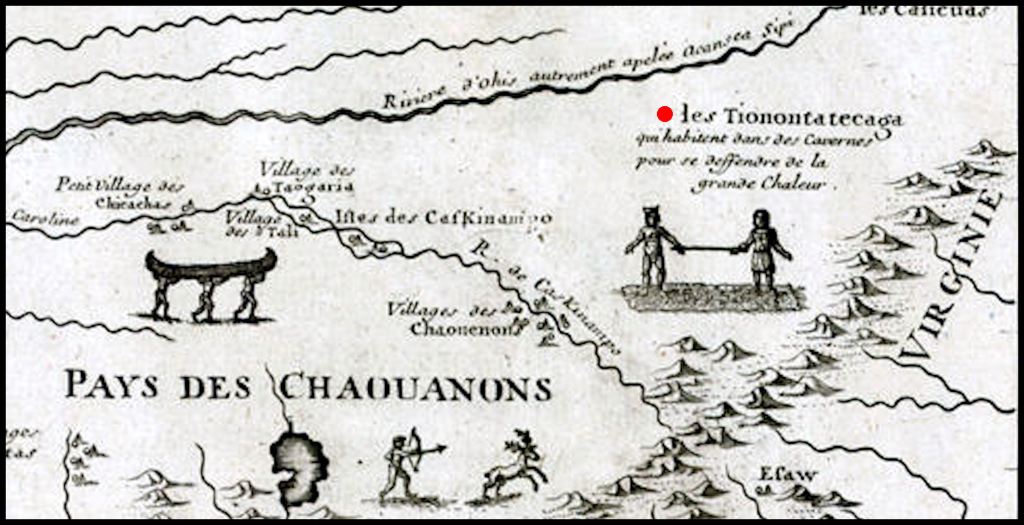
French maps from the late 17th century show the “Tionontatecaga” living in what is now southern West Virginia. It is presumed that their vassals, the Charioqui, were with them. Western North Carolina was labeled, “Shawnee Nation,” but also included several Creek, Koasati, Chickasaw and Uchee towns along the Little Tennessee and Tennessee Rivers. This map is from 1701 and was drawn by French Royal cartographer, Guillaume De L’Isle.
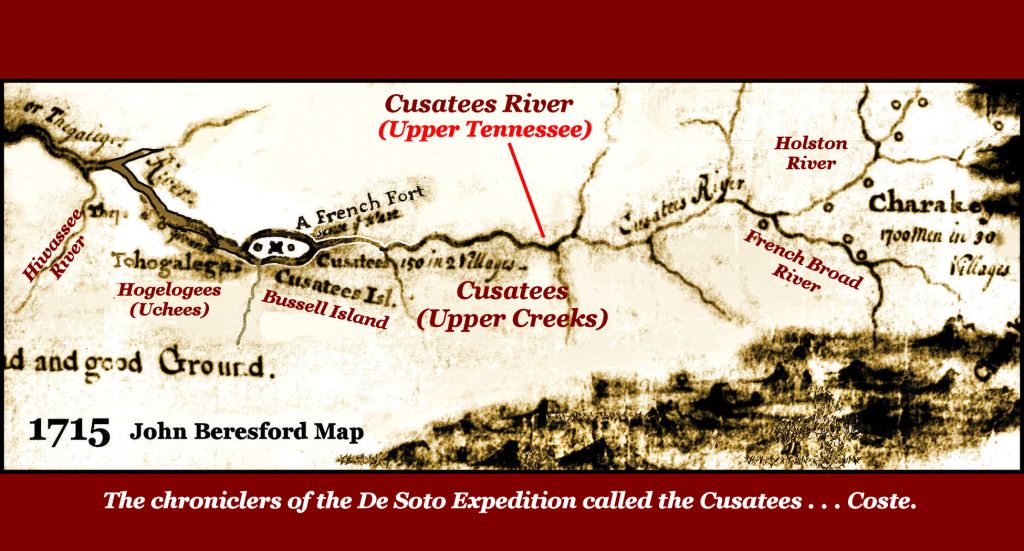
This map by John and Richard Beresford was the first English language map to mention the “Charakeys.” They were living in extreme northeastern Tennessee.
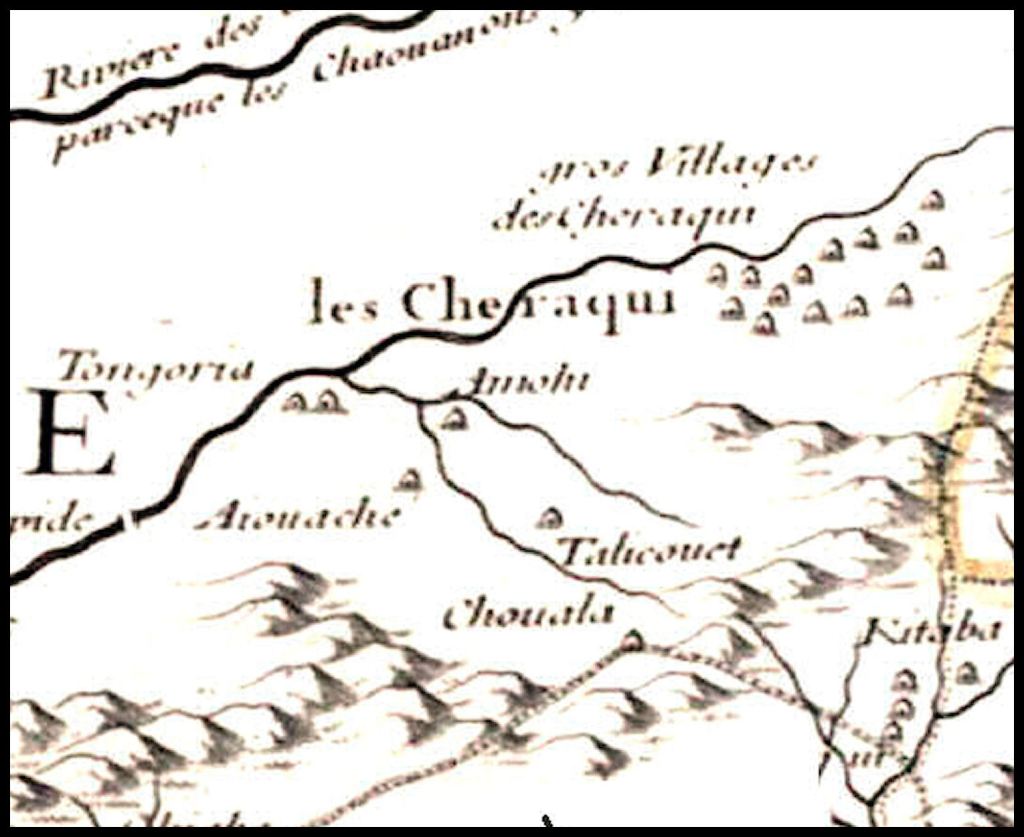
This is a detail of Guillaume De L’Isle’s 1718 map of what is now the Southeastern United States. It was the first European map to show the Cherokees living in the Southeast. They were located along the Holston and Lower French Broad Rivers in extreme northeastern Tennessee. A 1725 map shows that their settlements had extended southwestward to the Little Tennessee River.
Now you know!
Humorous Footnote
In high school I took Latin, because it supposedly would help me understand foreign languages and also took two years of French, because it was the second language of the United Nations. Then, at Georgia Tech I took French because some the best architecture magazines were in French. Then, the French magazines started English language versions and millions of Spanish-speaking immigrants came to the United States. I had to teach myself Spanish in order to speak to many of the workers at construction sites.
In the 21st century, everything has gone full circle. The most accurate Colonial Period maps were written in either Latin or French. Meanwhile, the most comprehensive and reliable firsthand accounts of Native American peoples at the time of contact, were written in French. Oh, and there are those fond memories of very special French mademoiselles, who popped into my life in between. LOL
 The Americas Revealed
Excellent! Explains a lot! Wonder if the Cherokee/ chichimeca wheel was due to the early 1400s intrusion into China ,and also about 500 AD bishop hue shen (sp?)and apparent 2000 BC( voyage of 7000li?
LikeLiked by 1 person
I meant to say Chinese intrusion into the americas1423, I believe it was ,and according to the Chinese ,in 500AD and 2000BC
Genetic studies have verified genetics from so.west China ,,Origen of admiral Zheng He s voyage in 1423 and the other apparent visits
Appreciate mr Thornton because so much of what we have taught is blatantly wrong,usually for political or religious reasons
LikeLike
Another fascinating post. Thanks Richard. I enjoyed every minute of it especially the humorous bit at the end.
LikeLiked by 1 person
The name “ Teonontateca” is definitely from Mexico. This is very interesting!
LikeLike
Here is some evidence that may possibly be from the times of your story. I have searched high and low in Mary Ann Dobson Duncan’s work for my Duncans- they are not there. I believe they are part of your story in this episode, Canadian Duncans. Since most of these people never went to Oklahoma, it is not possible for me to say for sure at this time that they were married into natives, but there are way too many names on Roberta Estes’ list who moved at the time of the Indian Removal not to smell smoke. My father’s grandfathers were named Willis Duncan 1815, Willis F Duncan 1853 (accd to My Heritage, probably incorrect), and Francis Marion Duncan. Willis 1815 married Nancy Ann Matlock in Mississippi. The census records state that they claimed Canadian ethnicity and Willis Sr was a farmer. They were from Tennessee and lived in Hickory Ridge Arkansas after the removal until around 1862, I figure they left when the confederacy was declared. Guess where they went! Watonwan- and Willis stayed there for almost 30 years, most of the family then dispersing to Nebraska, Dakota, Michigan. and Oklahoma (that one named Columbus Duncan, married a Stapp) – one daughter stayed in St James. Willis went back to and is buried in Arkansas. I believe that the Duncans may have been interested in the Peacepipe material mine at Watonwan. I certainly hope they were supportive of the Sioux but have no evidence at this time that they were not part of the troublemaker settlers- as you know many Indian half-breeds replaced Indians (just as Willis did when he moved to Hickory Ridge and my mother’s family did when they moved from Alabama). Willis Jr became a gold quartz miner and ended up moving around in that pursuit. He married Elizabeth Edwards. One of his sons, my GG, Francis Marion, married Letha Frances Manes, Polk Missouri, and they ended up moving to San Diego, I believe as part of the dust Bowl crowd, but maybe not, noting that Missouri is also rich in minerals. My grandmother Ruth Duncan Hannibal Middleton was a crazy rock hound- I could never figure out the root of her obsession with Rose Quartz until now. I believe Francis Marion and Letha (with all the family in tow, including Francis Marion’s kids from first marriage to Obedience Harrell in Tn who had died) moved to California for the Gold Rush and Indian Reservations. It is possible that they went to Napa first because my mother’s cousins also went to Napa from Ark (Ingles). It is possible that Francis Marion and Letha moved to El Cajon for farming and for Julian Gold mine. My father’s parents, Ruth and Edward Hannibal met at a dance at Lakeside. My grandmother, daughter of Francis Marion and Letha Manes, worked at a cafeteria in Santee California. Just a coincidence?? My brother has a great gift in woodworking, as did the Santee Sioux. I have searched every Cherokee Duncan family of the Five Tribes, and my Willis Duncans not among them. I believe it is because they were “Canadian” Looking at Letha Francis pic at Ancestry, you will see what I think. Considering that the Canadian Sioux and Ottawas were more variable and darker, I think the Duncans were likely from Nova Scotia and somehow came through the crowd you discuss in the article, or they went to Sarnia and entered Michigan. Over time, they moved with the crowd you discuss or Plains Indians. I look the most like them and my father looked like Little Crow when younger and is the spitting image of the Sioux Medicine Man in the you Tube video, mannerisms and all) down into the interior of what is now the US. That is how a Canadian Duncan meets a Plains Choctaw. Note, my father also bears very strong resemblance to Col James Duncan of New York, Mexican War leader. This Duncan was from Cornwall on Hudson, originally named Willisville. The Cornwall on Hudson Historian is sending me info on them. As far as I can tell, the Letha Manes family, William R (Bill) Manes and Amanda Jane Jenkins go back to the 5 tribes Cherokee Crowd with Letha’s grandfather Micaja Manes marriage to Sinthia Roberts and his father Cager Manes. I have no trail before Cager yet. Jenkins crowd goes back to Willis and Keith- I believe they were all Choctaws. I traced the Roberts all the way back to Plymouth, lots of Native names in there, but no trace of Manes all the way back. If you look on Letha Frances Manes page, you will see a pic of her and Francis Marion. While I cannot be sure that any of these people were “in a tribe”, there are about 10 names on the Roberta Estes’ lists in the Manes family of ancestors. I have a Letha Frances Manes Duncan record from the Choctaw Nation, but they say she never lived there. It is possible that neither the Duncans nor the Manes were Indians- maybe they were just Scottish- but I think they were sent her to marry Natives, and they did. My father’s father’s side came from Anthony Annable, Plymouth 1615. Six generations later my Great Grandfather Edward Hannibal (was changed when the Hannibal NY bounties were granted) built what is probably for first RV. Too bad he did not know about patents, but the news papers all raved when he and Maude Kilburn drove through town in their Model T with a cabin build on the back and their 13 kids going to San Diego. My father, who knew nothing about his grandparents possibly being at least half Native, joined the Air Force and moved to Jacksonville Air Force Base in Arkansas, where he met my mother on a blind date. She also know nothing of her family’s past- but the genes knew!! You just cannot make this stuff up! While the inputs to our country were not so nice, the output is totally amazing – because of Freedom. I have learned through all my reading that a whole lot of the Freedoms we have were not from the Pilgrims- they were socialists- our Freedoms came from the Indians who fought for it- and some of them still are. Kind Regards
LikeLiked by 1 person
I believe all the connections because outside of melanin, I have all the traits, teeth included
LikeLiked by 1 person
Howdy Just got out of the hospital again…trying to play catch up
LikeLike