
Model 723 AD
by Richard L. Thornton, Architect and City Planner
Ana and I came upon this stone basin, while exploring a jungle trail on the eastern edge of Campeche State. At the time, we had not seen an occupied house in over 20 miles or more. There WERE ancient stone ruins nearby, however.
This part of Campeche has no surface streams or lakes. I never saw a cenote (sink hole), but there may be a few. In contrast, the landscape of Yucatan State to the north is dotted with cenotes, but there is less rainfall.
The annual rainfall in eastern Campeche nowadays is 45 inches or 110 cm, which is much more than what we received in Shenandoah County, VA (23 inches ~ 58 cm). Thus, prior to the arrival of the Spanish with metal tools to dig wells, the Puuc Mayas were dependent on stored rain for all of their domestic and agricultural needs.
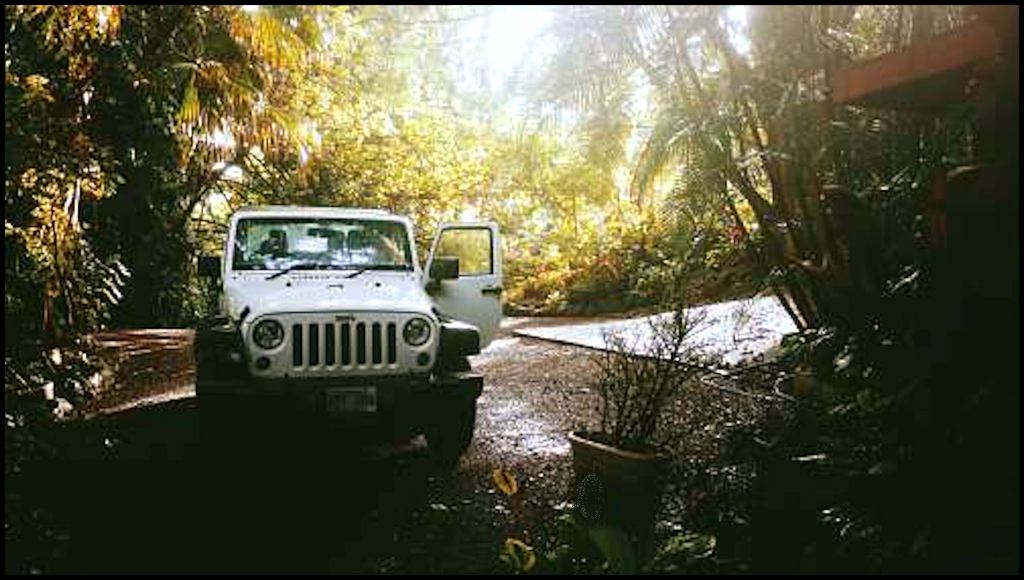
Ana’s Jeep at her parents’ hacienda, just before departure
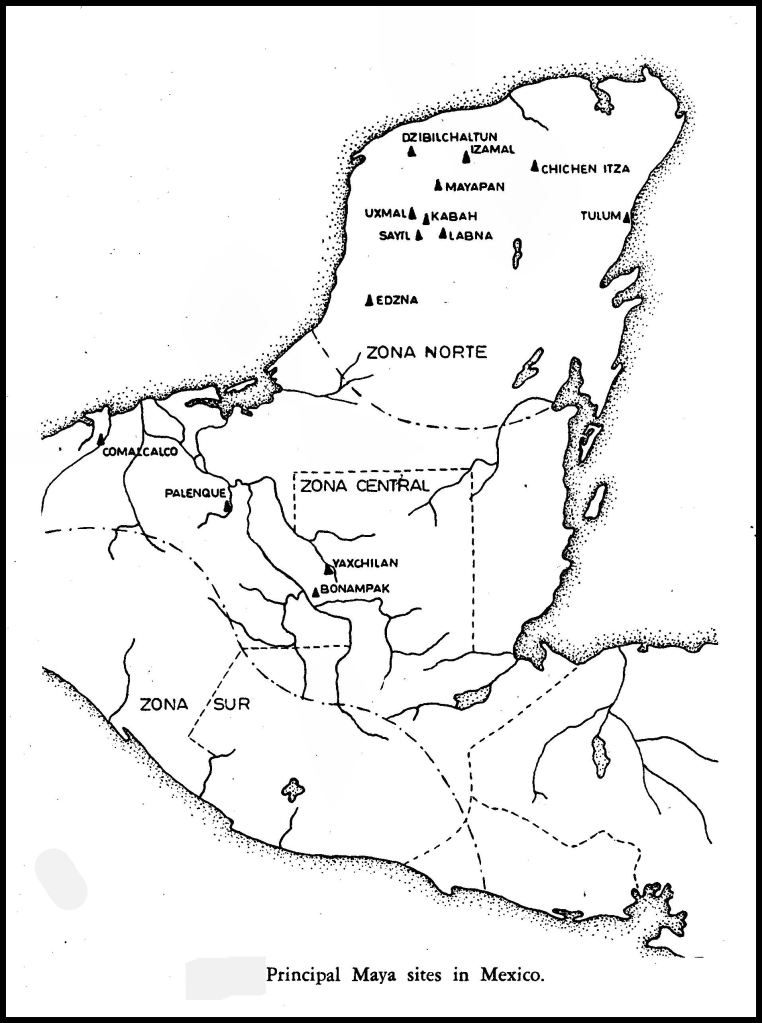
Like my situation in most rural areas of southern and western Mexico, I never really knew where I was. Below is the only map I could get, when exploring Yucatan, Quintana Roo, Tabasco and Chiapas. You can see why I had to hire a guide (with benefits)* for exploring Campeche. There was only one paved highway north-south, through the interior of the Yucatan Peninsula. Ana’s father loaned me an M-4 semi-automatic rifle for protection, but we never needed to use it.
Of course, there were no state highway maps, Google Maps, GPS devices, cell phones, pay telephone booths, gas stations, restaurants, grocery stores, power lines, telephone lines, doctors offices, hospitals, tow trucks or ambulances. I never even saw a horse or burro in eastern Campeche . . . only a few ancient Ford farm trucks in some of the largest villages. The Mayas generally walked everywhere.
We had to carry all the gasoline for the six day journey into the heart of the Yucatan Peninsula in jerry cans, mounted to the back of Ana’s new Jeep. All the food and water that we consumed, was stored in waterproof containers in the back storage compartment of the Jeep.
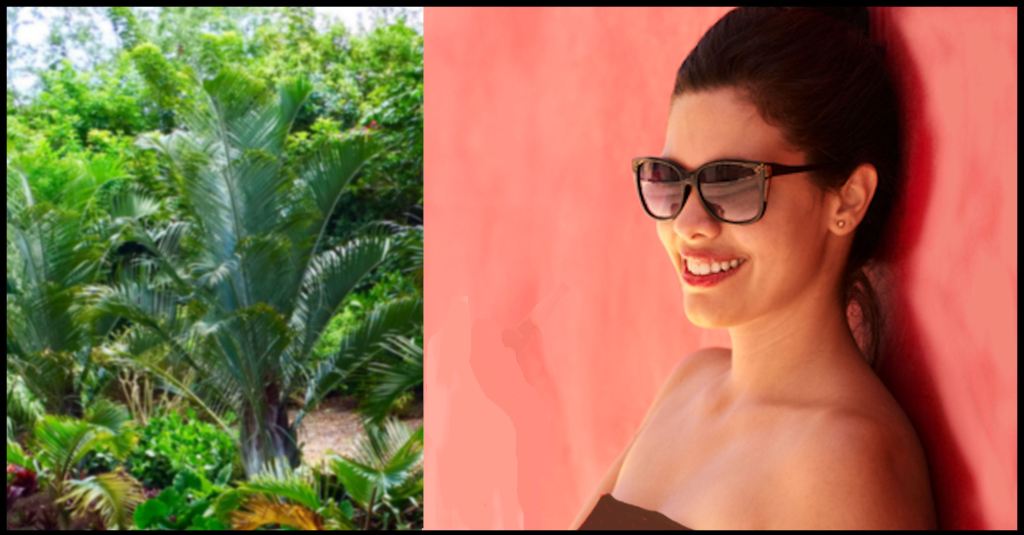
*The logistics company, owned by Ana’s father, only charged me $40 for Ana to escort me in her 21st birthday gift Jeep for a week in the Tierra Incognito of Campeche . . . all supplies included. However, after she returned home, grinning ear to ear, he handed me a wad of pesos, equivalent then to about $100, to escort Ana the next night to Campeche City’s finest restaurant and night club. Now that is Southern Hospitality!
 The Americas Revealed
Do I need to tune in tomorrow for the next part of your new serial on the Mayan washing machine story? Same Bat time, same Bat channel??
LikeLiked by 1 person
You might have to wait until Saturday. This week, I trying to think of the strangest artifacts or buildings that I photographed in Mexico. You and your husband lived in Mexico for awhile, didn’t you?
LikeLiked by 1 person