
Yaupon is a member of closely related plants of the Holly family, which grow naturally from the lower Southeastern United States to northern Argentina and Paraguay. The tea made from their roasted leaves taste similar to Asian tea, but has four times the caffeine content. This beverage is called mate’ in most of South America and is quite popular. The indigenous people of eastern Peru and the Creek Indians of Georgia call it ase’.

Source: U. S. Department of Agriculture
Large quantities of Yaupon leaves were exported by the southern British colonies to Europe until the 1770s. At that time, the British government enacted a series of punitive laws and policies in order to force both British subjects and colonists to only drink Asian tea, which was being imported by a monopoly owned by King George III and Great Britain’s wealthiest families. This was one of the causes of the American Revolution.
British nobility even went to the extreme of encouraging one of their botanists to give Yaupon Tea the unappetizing scientific name of “Ilex Vomitoria” . . . inferring that one would become nauseated and vomit, after consuming the tea from North America.
The region around the Maya city of Palenque, Chiapas is the only location, where Yaupon Holly grows naturally outside of the Southeastern United States. The plants continued to thrive after cultivated Yaupon orchards were abandoned around 800 AD, following a massive eruption of the El Chichon caldera volcano.
Evidently, Maya traders grabbed some Yaupon berries, while hauling atatpulgite, indigo, mica and gold from Georgia to Tabasco and Chiapas. It is quite likely that Yaupon was also cultivated in Tabasco, but (probably) the thicker tropical vegetation of the Tabasco Lowlands crowded out the non-Native Yaupon plants.
Archaeologists don’t seem to know this fact
Much of western and central Chiapas was depopulated after the explosion of the El Chichon Caldera in 800 AD. The volcanic cinders actually set buildings on fire in Palenque. Much of the region’s vegetation was also immolated at this time. Evidently, the Yaupon Holly roots survived the heat and were able to establish patches of Yaupon Holly plants before native vegetation took over.
Both North American and Mexican archaeologists seem to be unaware of this information, which is highly significant. Mexican archaeologists typically known virtually nothing about the advanced indigenous cultures in the Southeastern United States, while archaeologists in the United States tend to compartmentalize their post-graduate interests into rather small geographical areas.
I originally obtained this information from the US Department of Agriculture in 2005, while doing research for the Muscogee Creek Nation of the history of their Sacred Black Drink . . . Yaupon Tea. It was 10 years later that I realized that ase’, Asebo and Aseo were Peruvian words.
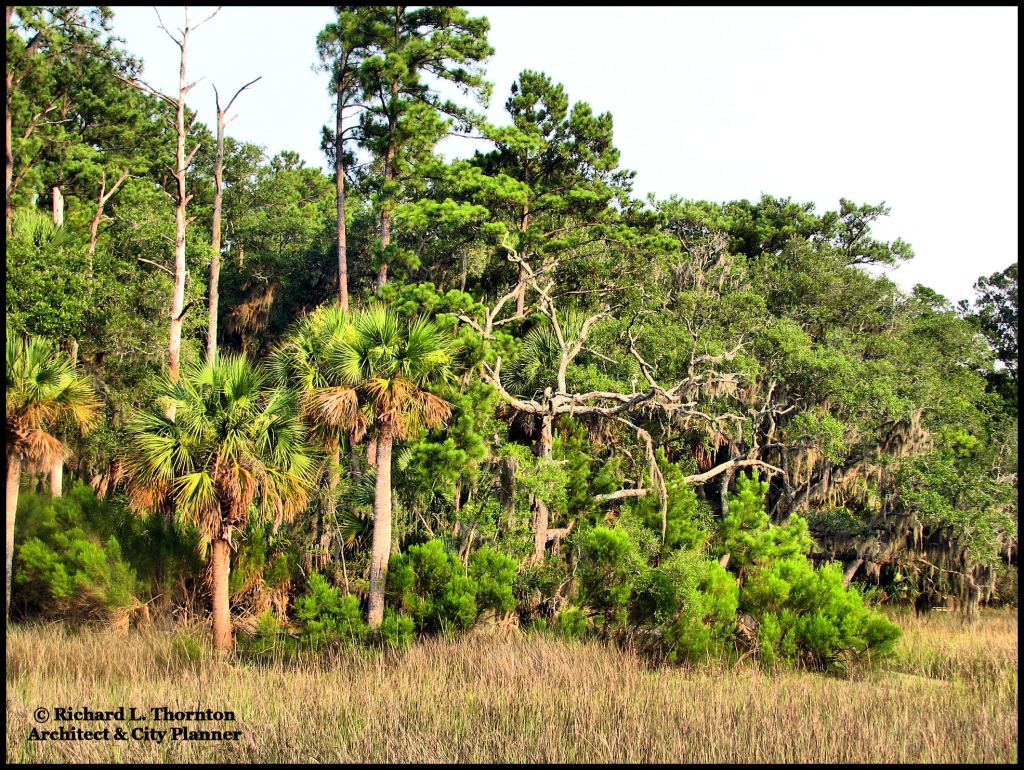
Significance of Ossabaw Island, Georgia
Sixteenth century French explorers, Captain René Goulaine de Laudonnière and Captain Dominique de Gourgues, both stated that the best leaves for making the Native’s tea were grown by the Aseo tribe on what is now called Ossabaw and St. Simons Island, GA. * The Aseo traded large quantities of these leaves to the Apalache in the mountains in return for greenstone axe heads and wedges, plus gold chains and copper hatchet heads.
De Gourgues actually attended a big party on Ossabaw Island. He described this island as one large Yaupon plantation and the young Native women visiting there, as being “beautiful and seductive.”
In those days, Ossabaw, then called Asebo, was the Las Vegas of North America. Young, single adult men and women often traveled long distances to visit, party and play there. Drinking several cups of Yaupon tea had a similar effect to cocaine.
Surprisingly modern, single Native Georgians
Unlike most indigenous tribes of North America, Creek Indian teenagers and young adults dated (with benefits) for up to ten years before marrying. According to explorer John Lawson, young Creek brides typically used birth control potion until around age 25. Lawson stated that in comparison, the women of other tribes married and started having babies, shortly after puberty and that most of their children died before adulthood.
The Creeks had learned that delaying babies until that age resulted in stronger babies and far less probability of the woman dying in childbirth. In contrast, adultery was a very serious crime, while divorces were rare, but accomplished very quickly.
Like their kin in southern Mexico, the Creek women made a very effective birth control potion from the wild yam. It was sometimes mixed with the yaupon tea. Modern birth control pills were originally made from wild yams, also.
Asebo is a Panoan word from Peru and means “Yaupon holly/tea – place of.” Aseo is a Southern Arawak word from Peru and means “Yaupon holly/tea – principal” . . . meaning principal cultivators of the tea.
Footnote
*One must go to the original French texts by De Laudonnière and De Gourgues to obtain detailed information on the consumption of Yaupon Tea in the 1500s. Unfortunately, virtually all discussions in references and academic papers on Fort Caroline nowadays are based on the book, Three Voyages (2001) by former Florida Congressman Charles E. Bennett with a forward by Florida archaeology professor, Jerald T. Milanich. Bennett barely mentioned De Gourgues in his book, because he clearly was based near Ossabaw Island and described it as being 16 French leagues (35 miles) north of Fort Caroline.
This book is, very frankly, fraudulent, and in fact, is a cover up for the fact that Fort Caroline was on the Altamaha River in Georgia, not where the National Park Service built an inaccurate 1/12th reproduction of Fort Caroline in Jacksonville, FL during 1961.
In 1950, Bennett submitted a bill to make a site near Jacksonville, Fort Caroline National Park. The National Park Service could find no evidence that the fort was there, but President Truman wanted to maintain Bennett’s support in Congress, so thought a “National Monument” might suffice. This was done even though maps up to after 1794, label the Altamaha River as formerly being the May River. Maps as late as 1721 even show the location of the ruins of Fort Caroline in Georgia . . . which were visited by William Bartram in 1776.
The book advertises itself as being an authentic English translation of the original French text. It is not. It is a highly edited modernization of the faulty English translation of De Laudonnière’s memoirs by Richard Hakluyt in 1584. It contains the same translation mistakes as Hakluyt’s book, but also redacts all paragraphs by De Laudonnière, which clearly place the fort in Georgia.
For example, near the beginning of his memoirs De Laudonnière stated that “the May River begins two days walk south of the Apalachen Mountains then flows generally southeastward to the Atlantic Ocean to pass by the north side of Fort Caroline and the northern end of Aseo (St. Simons) Island.”
 The Americas Revealed