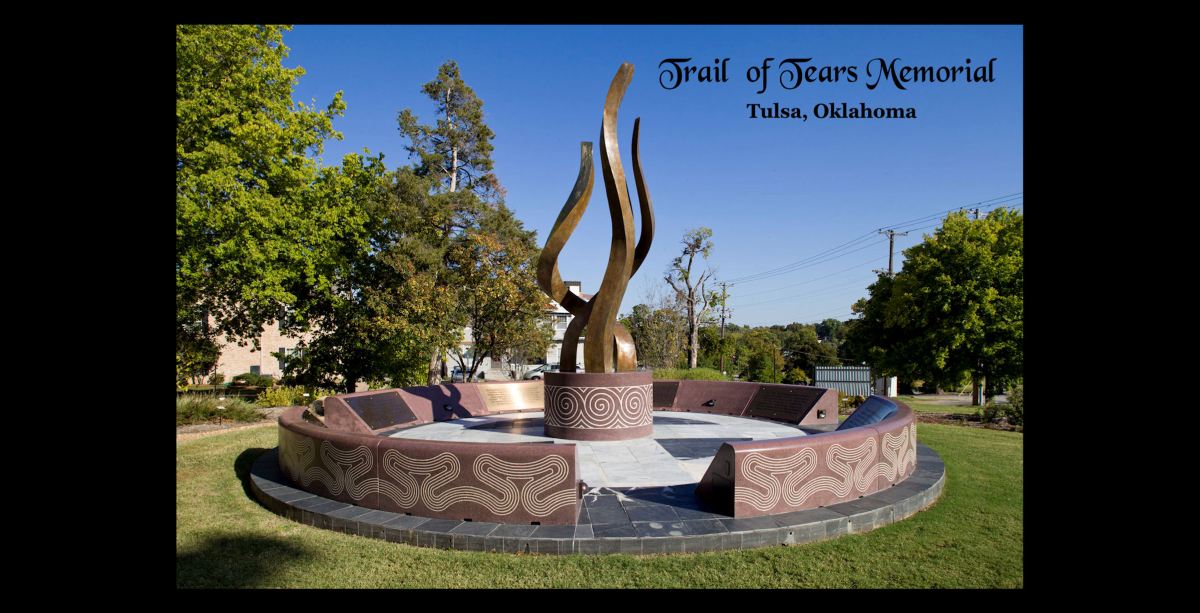
Ancient symbols . . . one that first appeared at least 5,000 years ago . . . integrate geometric forms within the structure. It is constructed of materials from Oklahoma and the Etowah River Valley of Georgia.
by Richard L. Thornton, Architect and City Planner
Take a closer look at the photograph of the monument above. Its base is a white marble cross within a circle. Remember seeing that symbol in my two previous articles? The podium for bronze flames contains connected spirals. They also appeared in the two previous articles. The outer rim contains engravings of what appears to be ocean waves. The inner face of the rim tells the tragic story of the Trail of Tears in the 1820s and 1830s with cast bronze tablets. Virtually no one, who visits this popular tourist attraction in Council Oak Park realizes the symbolism of these features.
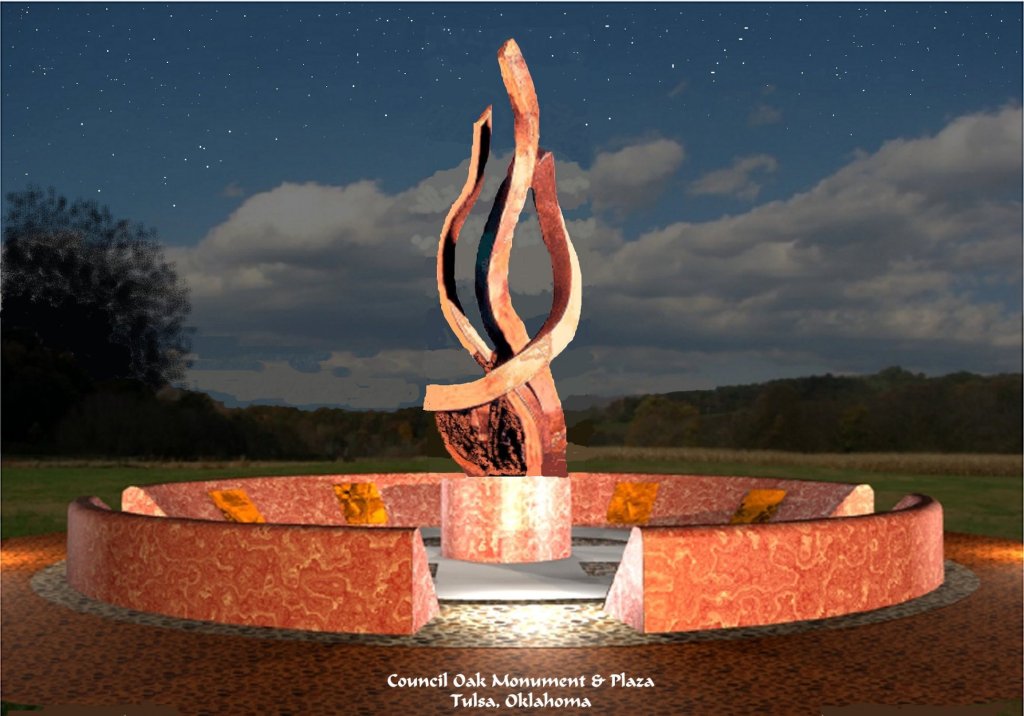
My conceptual rendering that was presented to the Centennial Commission
In 2008, Muskogee-Creek sculptor, Dan Brooks, and I were retained by the Oklahoma Centennial Commission to design a proposed monument to the Trail of Tears in Tulsa. Dan was to also to fabricate the bronze flames. I was to also prepare the construction documents and handle the bidding process. I ended up tossing out three sets of bids, due to suspicious irregularities (That is a big problem in Oklahoma!) and thus, Dan was hired by the Centennial Commission to do an extraordinary job of constructing the entire project. The fine craftsmanship on the structure is Dan’s personal work.
Although strangers living 885 miles apart, we both recognized the significance and extreme professional responsibility of a Western Creek and an Eastern Creek collaborating to design a monument to an ancient people, which was expected to last for centuries. Fortunately, we had an instant rapport on our long telephone conversations. The final product represents a complete synthesis of our talents.
We both are aware that Western Creeks and Chickasaws are generally not aware of their ancient cultural heritage in the Southeast or that the Chickasaws were founding members of the People of One Fire . . . the original Creek Confederacy. At that time the alliance stretched from the Mississippi River to the Atlantic Ocean . . . from the Ohio River to northern Florida.
On the other hand, descendants of those Chickasaws, Creeks and Alabamas, who found a way to avoid deportation to the Indian Territory, know practically nothing about what happened to their kin once they left the Southeast. Like . . . did you know that Greek Revival architecture was introduced to eastern Texas, Louisiana and Mississippi by the 2000+ members of the McIntosh Faction in western Georgia, who moved there in the mid-1820s to mid-1830s rather than live in Oklahoma?
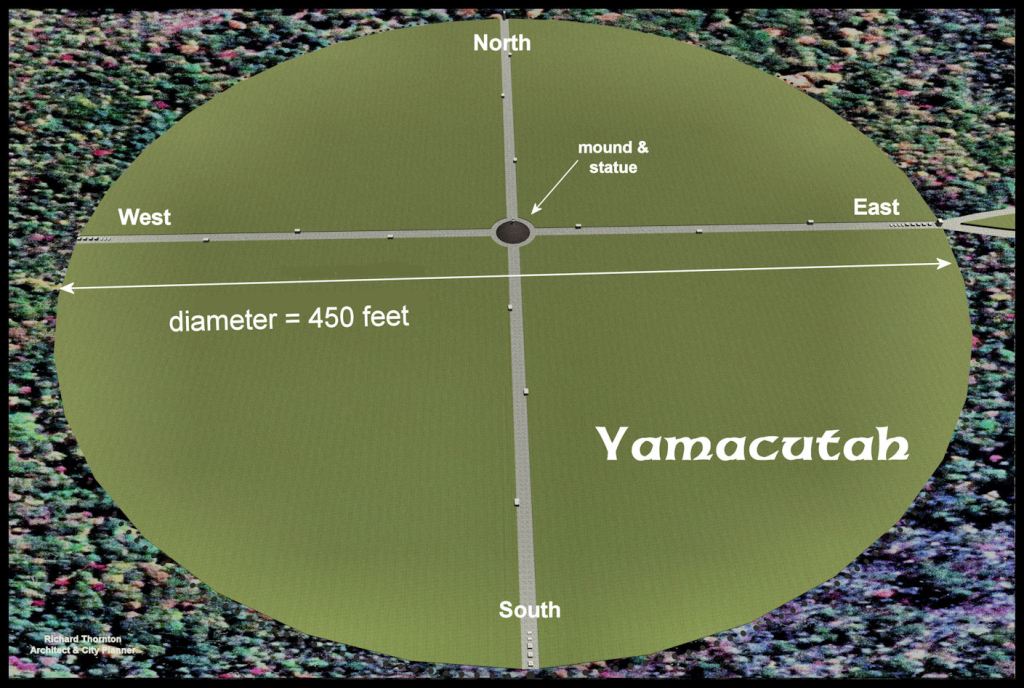
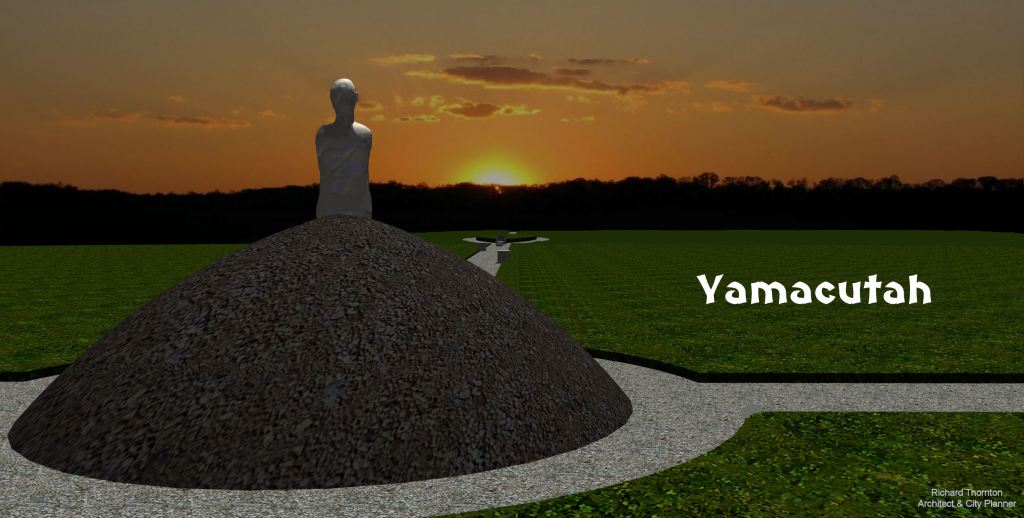
As a whole, the monument represents the Sacred Fire, which burned in every Creek and Chickasaw temple constantly. According to the Kaushete (Creek) Migration Legend, all Sacred Fires and domestic fires were descended from hot coals obtained from the Orizaba Volcano in southwestern Veracruz State, Mexico. On the Summer Solstice, the people extinguished their domestic fires and rekindled them with coals from the Sacred Fire in the temple.
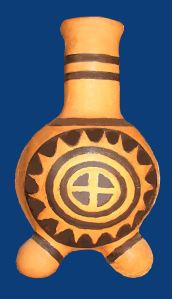
Of course, in 2008 I was quite aware that I had seen “Creek Sacred Symbols” on the sides of boulders in southern Sweden, but kept that information to myself. It would suffice that the symbol, which Creeks and Chickasaws called “The Sacred Fire” . . . a cross within a circle . . . was memorialized at the most sacred shrine of the Creek People . . . Yamacutah on a branch of the Oconee River in Northeast Metro Atlanta. The symbol was also seen on clothing and pottery produced at Etowah Mounds. It was to be created with pure white Georgia marble from the Etowah Valley.

For the base of the bronze flames, we chose the drum-like form of the altar, used by my ancestors, the Apalachete Creeks, to burn copal incense. The original podiums were fieldstone cairns, plastered with the highest quality clay, reinforced with mica.
The Sacred Fire podium is decorated with spirals, another symbol shared on both sides of the Atlantic. In Bronze Age Scandinavia, it symbolized a partial eclipse and time travel. In the Iberian Peninsula and in Georgia it was also the symbol of the invisible Sun Goddess, Amana. There is one large town site on the south side of the Chattahoochee River near me, where most of the pottery has a spiral motif.
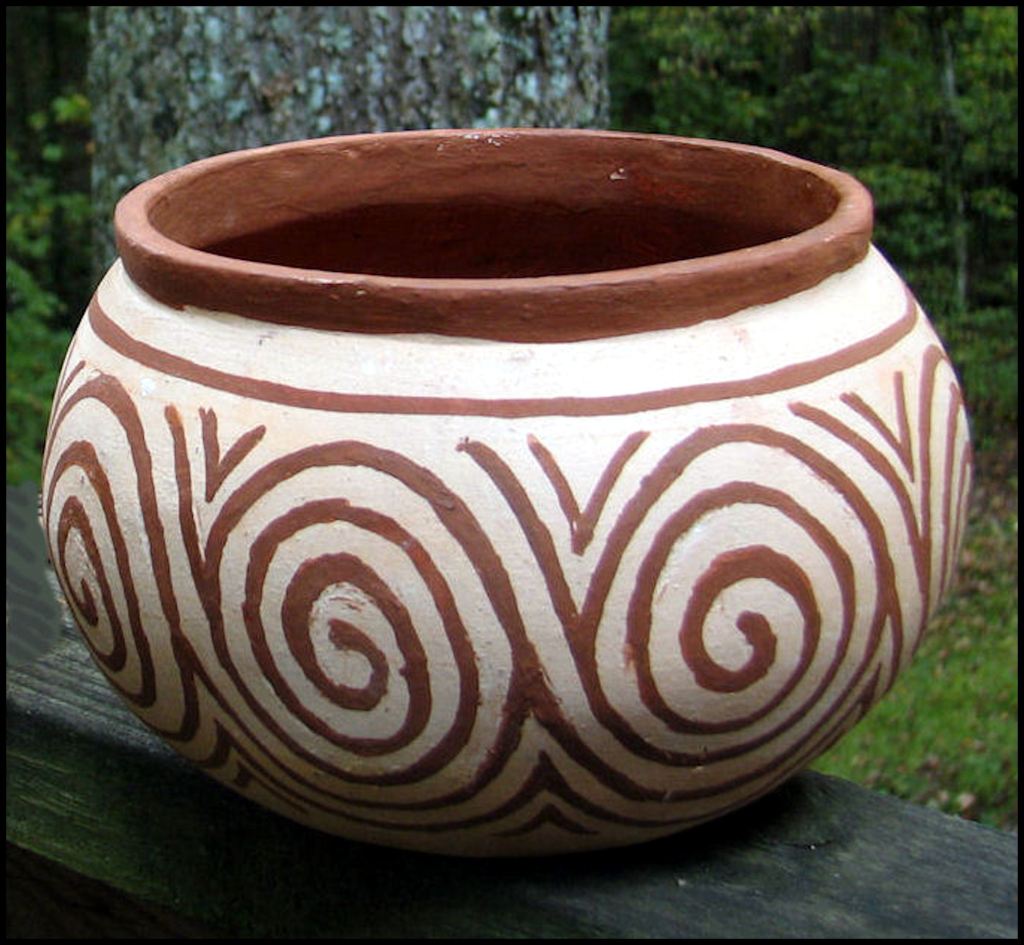
The outer rim of the monument is constructed out of precast, composite red Oklahoma granite. It is engraved with a typical motif of the Swift Creek Culture, which began around 100 AD and lasted in extreme northeast Georgia until around 1000 AD. The motifs then appeared again in the period between 1000 AD and 1700 AD . . . when they were called “Lamar Culture” complicated stamp pottery by archaeologists.

The use of wooden paddles to apply complicated motifs to unfired pottery was introduced by Panoan immigrants from Peru. Still today, the Panoan tribes of eastern Peru and the western edge of Brazil make beautiful clothing, decorated with motifs identical to those found on Swift Creek Culture, Napier Culture and Lamar Culture pottery in Georgia.
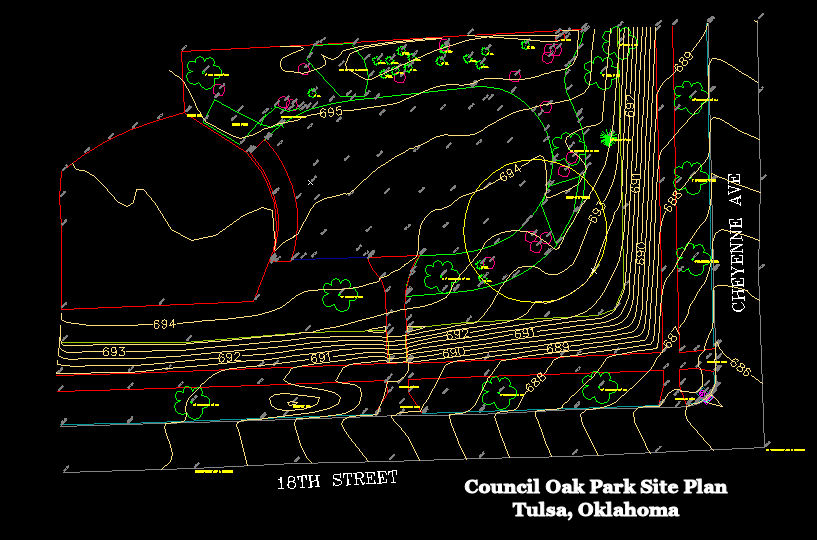
Council Oak Park is maintained jointly by the Muscogee-Creek Nation and the City of Tulsa Parks Department. It is open to the general public and a popular tourist destination. I worked closely with the Parks Department botanists to create a park plan that preserved the ancient Council Oak and that was reverent of nature . . . as we Creeks have always been.
Now you know!
 The Americas Revealed
Dirty little secret . . . the background of the initial rendering of the monument is actually a photograph made at Etowah Mounds in Cartersville, GA. Even the conceptual design rendering had symbolism in it. LOL
LikeLike
I need to take a look at Russel Cave, Alabama again. There are several ancient objects on display dating back thousands of years. Im curious if these objects may be related to some of the symbols you have been highlighting recently.
LikeLiked by 1 person
This is so interesting Richard I love the photo of the monument, also the pottery.
LikeLiked by 1 person
Thank you ma’m!
LikeLike
Hi Richard
I remember on one of my trips to Colorado I detoured to Tulsa and checked out your work. It was very impressive. I sent you a picture from there while I was eating lunch in the parking lot. I remember a small children’s playground and a grass area was across the street, so the park was also a place for the neighborhood to come and play. Thanks for all the work you do.
LikeLiked by 1 person
Yes, it is a neighborhood park. I agreed totally with the Tulsa Parks Department, when they requested that the monument not have a lot of hard paving or have a “super modern” look to it.
LikeLike