History is the accumulated wisdom of the ages. It is NOT propaganda to prove that one’s race, religion, nation, state, region or tribe are somehow superior to other peoples.
Native American history is America’s history. The cultural traditions and genes of the indigenous peoples of the Americas are found among many inhabitants of the New World . . .from Utqiagvik, Alaska to Tierra del Fuego, Chile. Fried fish/poultry, hush puppies, baked potatoes, hot chocolate and tamales were first a Native American thing.
Historic preservation is a reverence for the tapestry of life. It is being stewards for the physical legacies of where the strands of many people’s lives interwove to create history. It is NOT merely a governmental activity that only honors the monuments of the rich and famous.
The ancient history of Southeastern North America is one of many peoples from many places, mixing over thousands of years to create sophisticated, environmentally sustainable societies. More than ever, The Americas Revealed will continue to present history as the story of the mixing of those strands on the loom of life.
by Richard L. Thornton, Architect & City Planner
A Reverence for Lives in the Past
During the eight years that I attended classes at Georgia Institute of Technology and Georgia State University, neither institution offered a single course in Historic Preservation. During the five years of architecture school at Georgia Tech, we did not have a single design project, involving historic preservation. Virtually all of our commercial projects involved the demolition of an older building or buildings in order to construct a “modern” building.
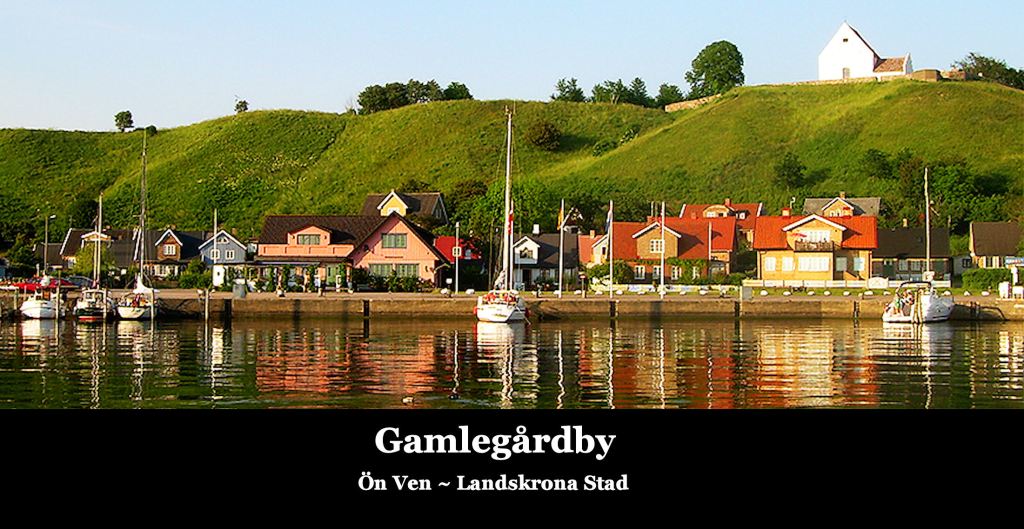
Fifteen hours after graduating from Georgia Tech, I embarked on a 24 hour-long journey to Landskrona, Sweden to work for the county’s Kommun Statsarkitektkontoret (Architecture and Planning Office). My boss, Stadsarkitekt Gunnar Lydh, quickly realized that I had no background in historic preservation, other than the fellowship in Mexico, so dispatched me to Lund University to audit classes in historic preservation, Swedish Medieval Architectural History and Swedish Bronze Age History.
You see, my assigned project was the design of a pedestrian village, inserted into the landscape of an island that was a metaphor for Sweden’s entire period of human occupation, since the Ice Age. The project’s neighbors would be Sweden’s oldest church, Bronze Age stacked stone shrines and petroglyphs, a Viking Era port, a 15th century farmstead and 19th century fishermen’s houses.
Forty-five years later, I would be living in Northeast Georgia and seeing “in the flesh” petroglyphs that Georgia’s archaeologists had determined to be indecipherable graffiti by Native American hunters. Nope! They were symbols in the Swedish-Danish Bronze Age writing system. They can be translated, but what in the heck are they doing 4,600 miles (7,403 km) from Landskrona, Sweden?

Ironically, the first building to bear my architect’s seal was the 1981 restoration of the Old Pack Memorial Library for the Asheville Art Museum. Fortunately, this handsome structure, designed by Edward Tilton in 1926, was a modern building in the form of an Italian Renaissance palazzi. At the time, I was grossly ignorant of pre-industrial building techniques . . . except in Mesoamerican cities. LOL The project turned out well.
History not in your high school textbook
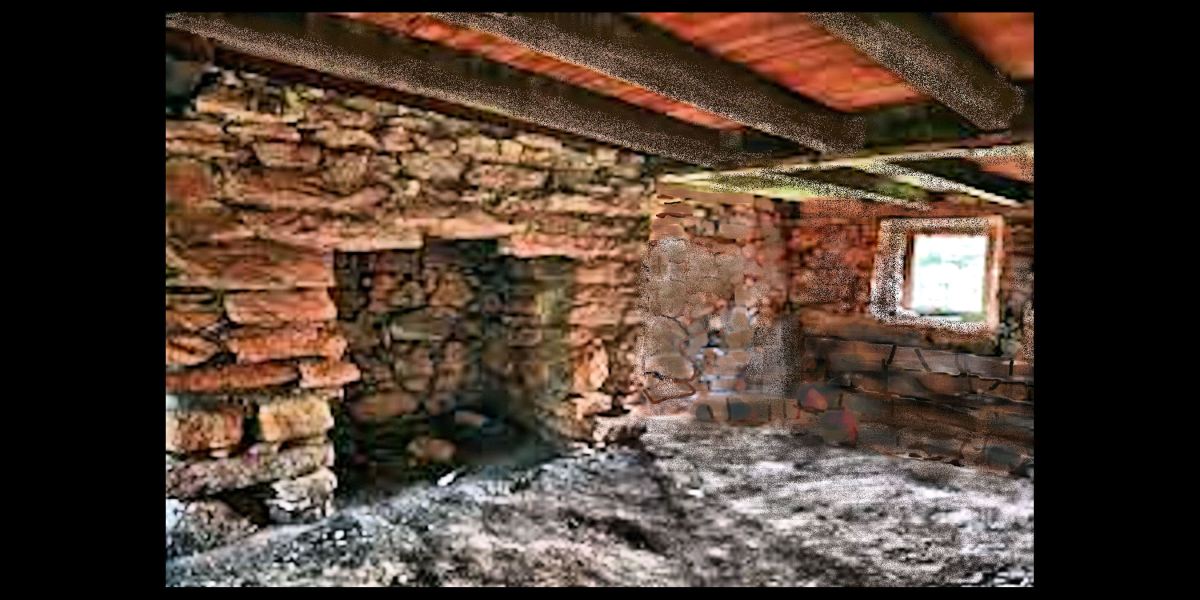
My perspective of the role of architects began changing radically on July 17, 1987. That is when I stopped to watch a herd of deer cross the Old Back Road In Shenandoah County, VA then run past an old farmhouse that seemed to be in the last phase of its decay. In a few minutes, I was standing on the same spot where Col. George Washington stood, taking a photo of an old hearth in the basement that seemed destined to collapse at any moment.
The lawyer’s title search for the old house and farm ended at 1865. We did not have a clue how old the property was until the real estate closing, when the seller’s attorney whipped out a plat, drawn by George Washington in 1754. That was the last time it had been surveyed.
I did not know that Washington had any other connection to the property, until about two years later, when I read that he had carved his initials and the date on an old oak at the entrance to the driveway, but a tourist from Washington had carved it off in the 1940s.
Each county in Virginia had a militia. The head of that militia was a Provincial Colonel. Washington was NOT the colonel of all militiamen in Virginia as history textbooks told us – just Frederick County, which then was the northern part of the Shenandoah Valley.
Washington’s poor judgment and bad timing had triggered the French and Indian War. On a reconnaissance mission, he had unfortunately chosen Mingo Indians as his guides, who were arch-enemies of the Huron Indians, who were guides and bodyguards for French reconnaissance mission headed the opposite direction. After the French-Indian party surrendered during a skirmish, the Mingos had killed several of the prisoners-of-war. One of the victims was the brother of the commander of French forces in that region.
In 1732, Tom’s Brook Plantation became the first white settlement in the Shenandoah Valley and probably the first planned estate subdivision in the future United States. In 1754, Washington purchased our future farm from the developers of TBP as an investment, but instead, later that year, built a fort out of his own finances to guard Tom’s Brook Plantation.

The French and Indian War started 20 years of massacres in western Virginia. These massacres were committed by Native Americans, allied with the French, who had never lived in the Shenandoah Valley. Both the murderers and their victims were merely proxies for a war between England and France to determine, who would obtain world domination.
The population of the Valley declined by 90% during that war. Most of the few houses that remain from that era are clustered near the site of the old fort on Toms Brook or Fort Loudon in Winchester.
The oldest house that I worked on, while living in Virginia was built in 1746. It’s owners survived the 20 year-long “Indian War” by building a log stockade around that original log house. However, the landscape of Shenandoah County, VA is dotted with state historical markers, memorializing hundreds of settlers, who were not so fortunate. Several were tied to pine trees, coated in pine rosin then burned alive. Most of the victims were scalped because the French were paying for scalps of British and German settlers . . . men, women and children . . . it didn’t matter.
George Washington resigned from his commission with the Virginia Militia in 1758 and returned to Mount Vernon. He sold the farm, where his blockhouse was located, to Colonel John Tipton in 1770. Tipton was then the Colonel of the Virginia Militia for Shenandoah County. The blockhouse was then converted into a residence for Tipton and his family.
You can read the full history of the old house below:
 The Americas Revealed
Here is another bit of surprising history. While living on the farm, I was able to get photocopies of the property tax assessments, probate tax assessments, etc. for the house and personal property. Even though the people in the Shenandoah Valley were generally Patriots, they used British money for even legal transactions up into the 1790s. That’s pounds, shillings and pence. Apparently, until then the US Dollar was not trusted.
When the “man of the house” died, the widow was charged an INHERITTANCE tax, assessed on all real estate and personal property. The probate judge even charged a tax on the family Bible. Widows were often forced to marry men, who would pay the tax. After that was done, the new husband would own the farm, not the widow. Apparently, this was a British custom, because the widow’s tax ceases to appear in county records after the early 1800s.
LikeLike