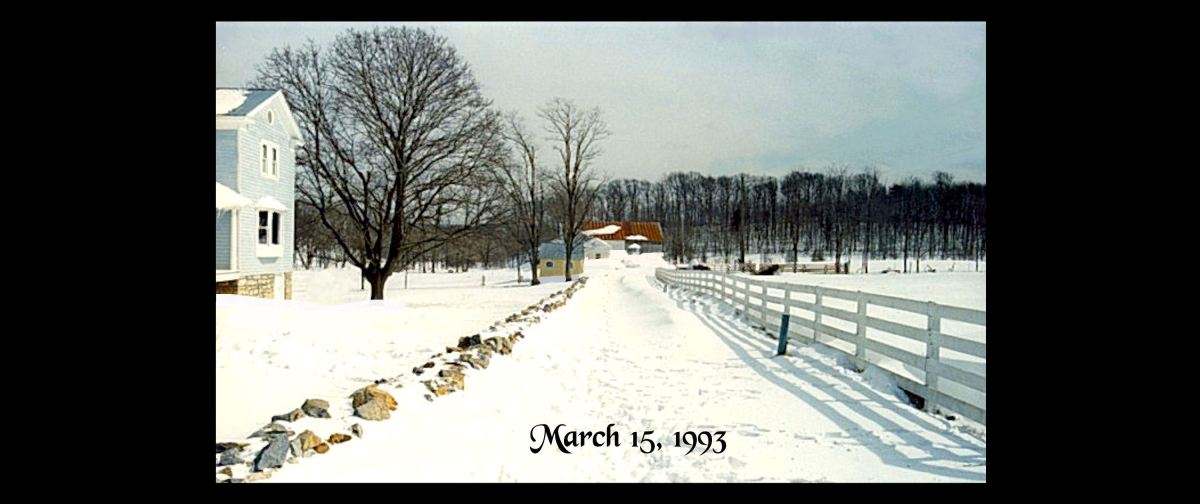
The temperatures on our farm dropped from 75° F. ( 23.9 C.) to -5° F. (-20.6 C. ) in less than 24 hours. Officially, our end of Shenandoah County, VA received 36″ (91.4 cm) of snow, but because the winds were blowing up to 60 mph (97 kmph) there was a modest coating of snow in exposed areas, such as the board fence in the foreground, However, look in the back of this view and you will see a three story barn with 12 feet ( 3.7 m) of snow banked against it. The north side windows of our house were almost completely covered by snow.
For those who lived through this visage of the Apocalypse, it was surrealistically like being in a Hollywood disaster movie, which became Real . . . similar to the feeling of living through the Covid Pandemic. We will never forget those days.
Over 300 people died. Several fishing trawlers were swamped by 100+ feet high waves in the Atlantic Ocean. The actual number of those lost at sea is still unknown. Was it not for the heroic efforts of U. S. Army helicopter pilots, U.S. Forest Rangers and thousands of National Guard members, many more victims would have perished.
Slide Show
by Richard L. Thornton, Architect & City Planner

March 12, 1993 – The lush grass of our Shenandoah Valley pastures had sprouted up along Toms Brook. We thought that winter was just about over. We were oh so wrong!
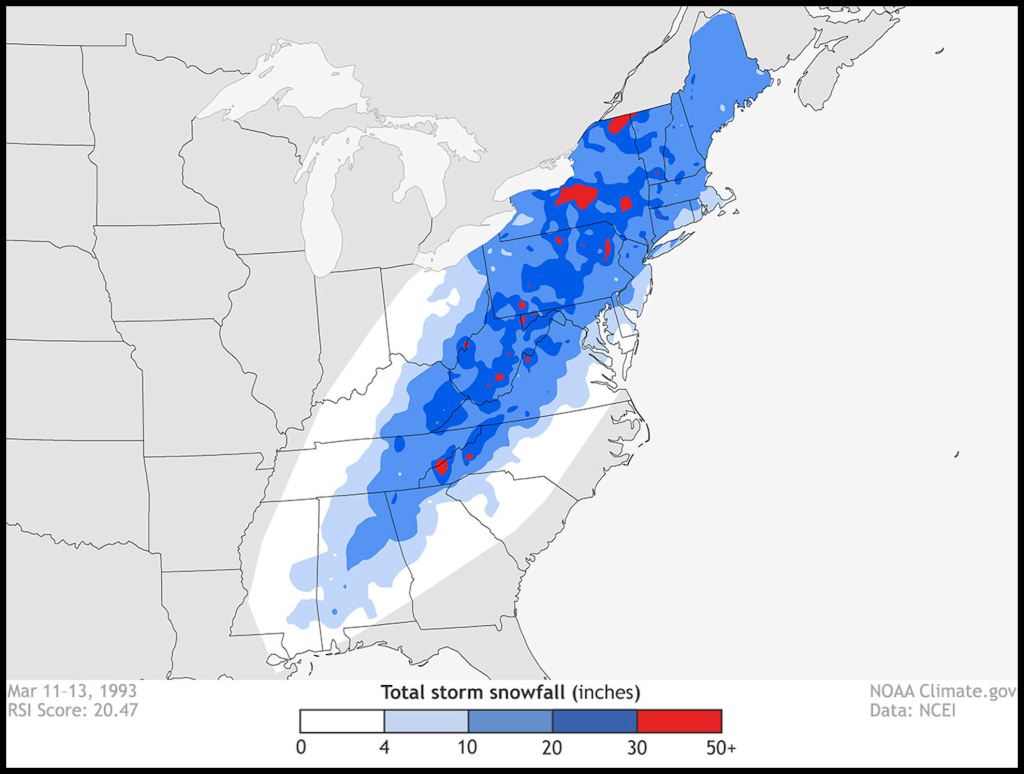
The storm began on March 8 as a little-noticed low pressure area over the Gulf of Mexico. Spring had suddenly arrived in the Southeast, so thousands of people headed to the Highlands to hike, camp and fish. The storm rapidly turned into a hurricane and then a monstrous polar vortex, which was sucking super-chilled air down to the ground from the Ionosphere. By that time, Friday March 12th, though, the nature-lovers were already in the wilderness, wearing shorts and short-sleeved shirts.
As soon as I heard the forecast for possible snow in the Shenandoah Valley on Sunday, I attached the snow plow to my tractor and drove the tractor under the equipment shed. Typically, we rarely received more than 6 inches of snow after mid-March. More commonly, we got 2-4 inches of wet snow, which quickly melted away, so I was not worried.
The alarm bells went out on Saturday, when reports were coming in of up to `16-25 inches of snow in the Georgia Mountains. The storm was moving at 60 mph, so it was going to hit the Shenandoah Valley around 4 AM at night. I still was not worried because the ground was warm . . . but in the hours leading up to bedtime, the National Weather Service kept on lowering the expected temperatures and increasing the expected snow. I did not believe them.

At sunrise, the visibility out our home’s windows was less than ten feet. Our large Colonial Era house shook, when massive explosions occurred within the blowing snow. They emitted blue light. I finally figured out that they were some type of lightning.
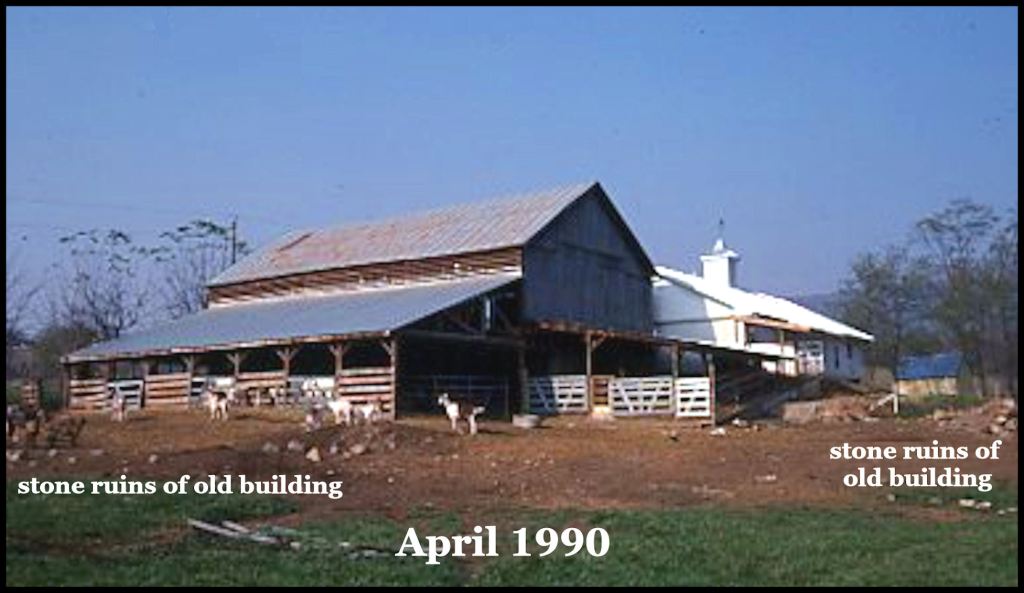
It took about 20 minutes to fight my way to the barn to feed the dairy goats and sheep. Eighteen goat kids and seven lambs had been born during the night. There were over 300 goats, kids, sheep and lambs, plus 12 Toulouse geese, packed into the lowest level of the three story barn. That was a good thing, though. Their body heat would keep the newborns warm . . . for we were headed for a week of zero F. or near zero temperatures.
The snow kept on falling and falling. By late afternoon of March 14th, this is what my Ford tractor looked like. So much for cleaning a dusting of snow off the driveway.
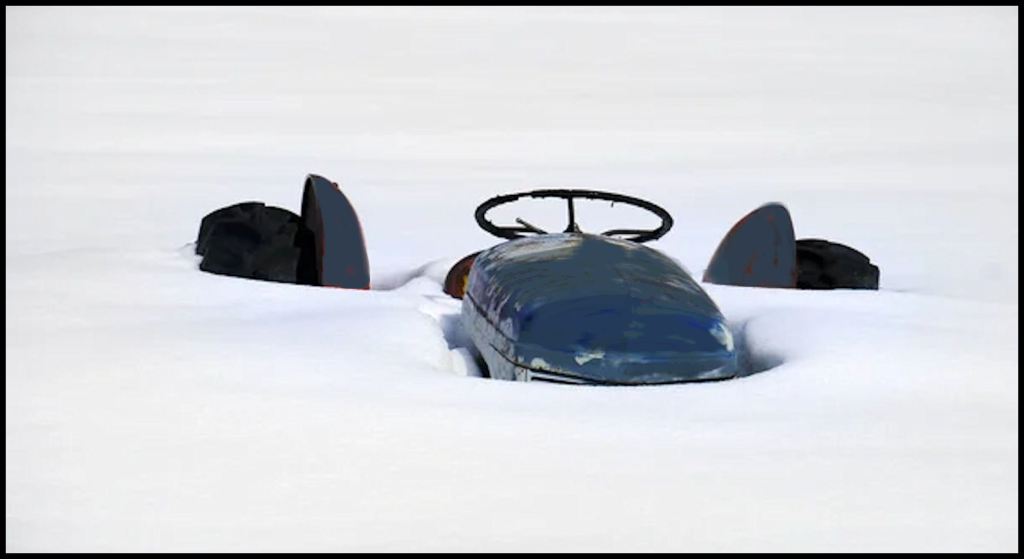
I spent all of March 15th digging a tunnel to the hay loft so I could feed the goats and sheep. At least we had plenty of hay in the barn.

We still were not terribly worried, because our farm was on the Old Back Road, a route dating back to the Colonial Period, which provided an alternate means for wagons to go north and south, when the Shenandoah River flooded the Valley Turnpike. When Interstate 81 was blocked, traffic was detoured onto the Old Back Road. The Virginia DOT first scraped snow off of I-81 then scraped the Old Back Road. Their tractor operators also were really good about opening up access to the farm driveways. Meanwhile, for day after day the snow did not melt. Because of the 0 F. weather, the snow developed a hard ice crust and the snow just stayed there.

This time the VA DOT didn’t clear our driveway entrance. Instead a 12 feet high ridge of ice blocked our driveway for two weeks. We started running out of some food items, plus dog food, but still had lots of meat in the freezer. I would have to cross-country ski a mile south to Bakers Store to get anything we needed. Bakers Store is the oldest continually operating General Store in Virginia. Mosby’s Rangers liked to stop there to snack on cheddar cheese and crackers.

Baker’s Store on the Old Back Road in Shenandoah County, VA
I raised a ruckus on the telephone with the Virginia DOT several times about them blocking my driveway. By the second week, the Old Back Road was completely clear of ice, but my driveway was blocked and there was still about two feet of snow on my driveway. As a recently appointed member of a National Park Service advisory council, I was requested to attend a big event at Arlington National Cemetery on April 3rd. Besides that, we were a federally-licensed cheese creamery and were supposed to get first priority for winter weather access.
The district manager eventually called to apologize and as a gesture of good will, offered to dispatch one of their big tractors to also clean off all 550 feet of the driveway, since the snow still covered half of my tractor’s wheels. The tractor arrived on April 1st. Hallelujah!

Okay! I have done the Alaska thing, but once is enough. There is definitely something to be said for Global Warming. It is March 14th in the Blue Ridge Mountains on Georgia. I am wearing shorts and my front garden is a wonderland of beautiful, blooming flowers.
 The Americas Revealed