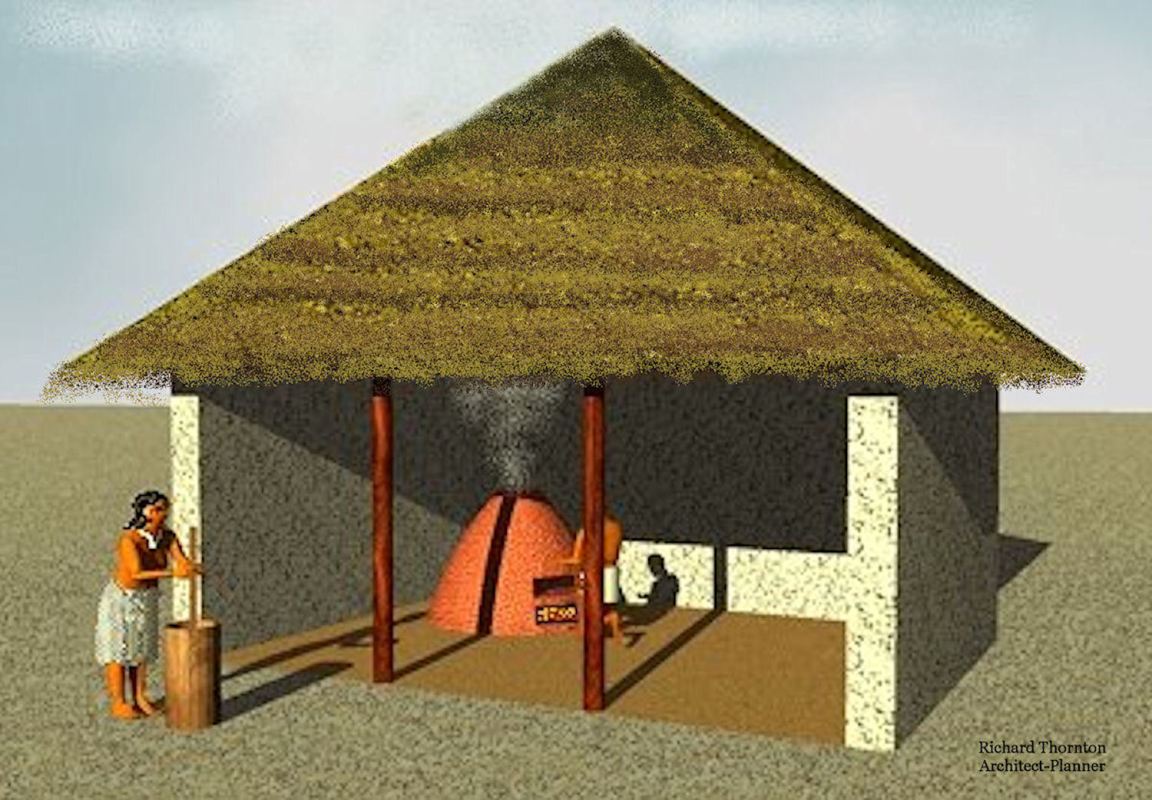
They were a common feature of all early attempts to colonize Eastern North America, except Plymouth Plantation.
Spanish and English fortifications placed them inside the palisades. The French built their communal kitchens outside the palisades to reduce the possibility of house fires being started by ashes. Plymouth did not have a communal cooking facility.
by Richard L. Thornton, Architect & City Planner
You may or may have not noticed these giant ovens, built out of clay, in some of my past articles, but you will continue to see them in the series of new virtual reality computer-generated images that I will be preparing in 2024. The thick earthen walls of the bee hive ovens enabled cooks to prepare large amounts of food or bake bread efficiently with hot coals.
You will not see this information in most history books, but the Creeks started building and using bee hive ovens during the Early Colonial Era – both for cooking and for firing pottery. Eighteenth century visitors to northern Georgia noted seeing seeing Creeks make utilitarian pottery by forming shell-tempered clay around gourds and firing the dried clay vessels in bee hive shaped kilns.
Many of the bee hive ovens in the Etowah River Valley were still in fairly good condition in the early 1830s, when winners of the Georgia Land Lottery began occupying their tracts. It is quite likely that all of these ovens and kilns were demolished long ago, however.
 The Americas Revealed