by Richard L. Thornton, Architect & City Planner
Last month, I was quite amused when I overheard a recent architecture graduate from Georgia Tech in a supermarket in Gainesville, GA. She was bragging to a friend that she was working on a house in Smyrna, GA that was built in 1919! This was nasty of me, but I had to butt in and tell her that when I was her age, I was working on a farmhouse in Sweden, which was built in 1486 AD!

Gamla Prästgården ~ Ven Island, Sweden
I have designed literally hundreds of new buildings, but what I have always enjoyed the most were my numerous romances with really old buildings. Maybe it was time that I shared with our readers, some of those extraordinary experiences that I have had in my 52 year long love affair with ancient architecture?
My first Colonial Era client
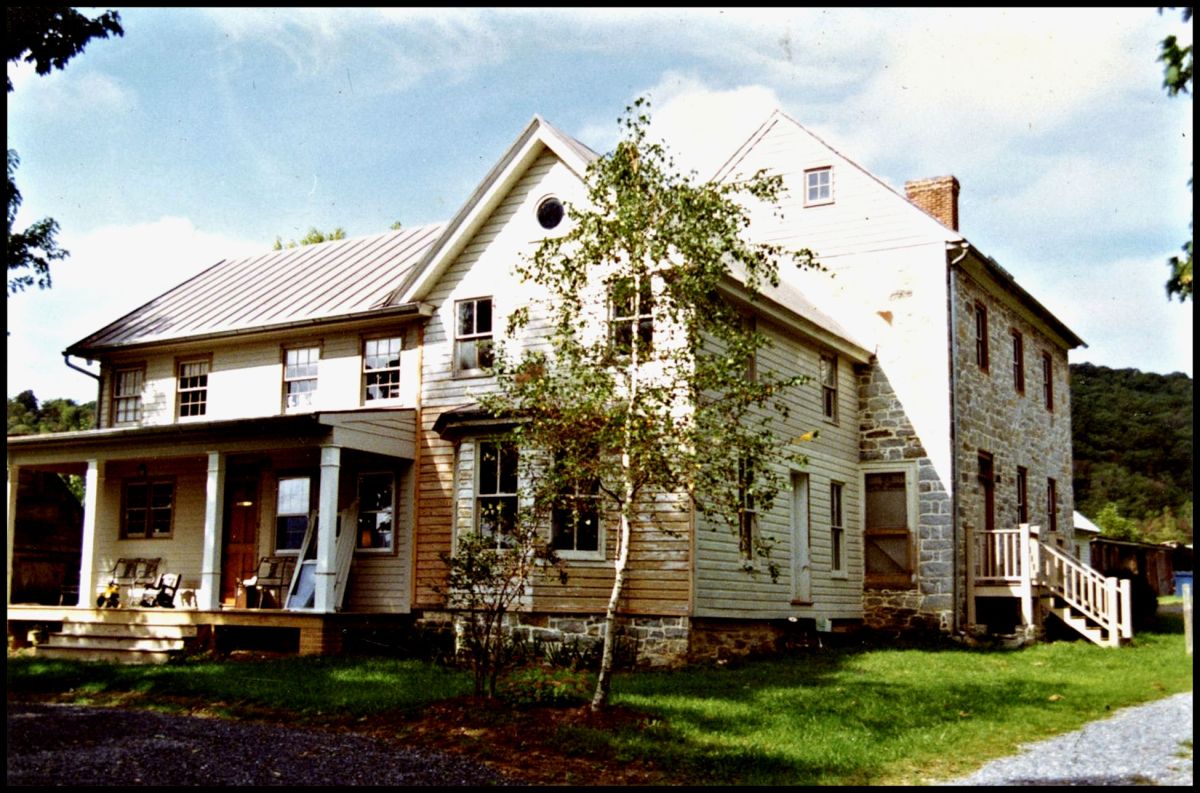
The photo at the top of the article is the Gore Farmstead in Gore, Virginia, a few miles west of Winchester, VA. Unfortunately, the Gore Family chose to build the first section in 1754, just as the French and Indian War was beginning. Even more unfortunate is that their farm lay on the main trail leading to a gap in the Allegheny Mountains, which was frequented by war parties of tribes, allied with France! The good news is that Col. George Washington quickly fortified the house with a log palisade, so it survived the Indian War Period, which lasted up until the eve of the American Revolution.
The Gore House was my first historic preservation project in Virginia, after I finished work on my own former home, farther south on Toms Brook. The original front facade of the Gore house is now a side entrance on the right side of the section with wood lap siding.

Tipton-Wisman-Thornton House (1754, 1770, 1794, 1988)
My farmhouse began as a log blockhouse, designed and constructed by Col. Washington in 1754. In 1770, the blockhouse was reconstructed into an I-shaped two story farmhouse, very similar to the Gore House. However, this house still had a spring and musket firing holes in the stone walled first floor, since the Indian Wars continued until 1774. I will be going in more detail about both the Gore House and the Tipton-Wisman-Thornton House, later on in the series.
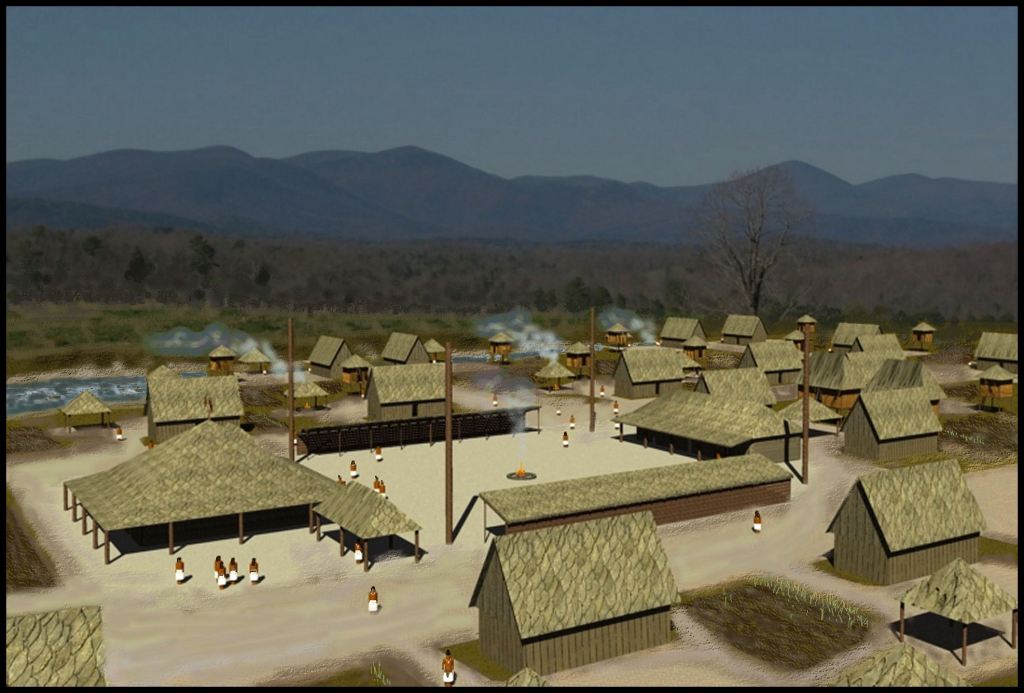
1600s and Early 1700s – Apalachicola village on the Cartacay River near present day Ellijay, GA
The surprising early date of Native American wood houses
The Muskogean Peoples of the Southeastern United States are rarely portrayed as living in wood frame or log houses. However, they began building wood frame houses several decades before the founding of Charleston in 1671. Log houses were rare among both Southeastern Native Americans and British colonists in the Carolinas and Georgia until the mid-1700s.
The oldest log house that I worked with in Virginia was constructed in 1746, by immigrants from the section of Germany, where log houses were common. There were some log houses built in the Shenandoah Valley before the Revolution, but most were constructed with stone or wood-frame walls.
The Creek, Choctaw, Chickasaw and Alabama Peoples quickly changed the appearance of their houses, once they had access to iron and steel tools. The first to change their houses were the Apalachicola of northern Georgia. They constructed wood frame, board and batten sided cottages that emulated those built by 17th century Galician and Asturian gold miners in the Georgia Gold Belt. Most likely, the Apalachicola houses did not have windows, but we don’ know that for sure. Again, these house will also be discussed in more detail, later in the series.
During the remainder of 2024, readers of the Americas Revealed will get to see photographs and accurate three dimensional architectural renderings of the buildings, towns and forts, constructed by Spanish, French and British colonists on the North American Frontier. Many were quite different than those on the Atlantic Coast, because they also had to function with little warning, as forts!
Readers are in for some real surprises . . . until then.
 The Americas Revealed
Hi Richard, I love old houses and have in fact renovated two old properties. One in England which was a thatched cottage and a lovely stone built Cretan house which is two storeys high and was once a an old library. My partner and I are quite impressed with what you have achieved throughout your life.
LikeLiked by 1 person
Yes, I am the only person in my county, who has made friends with a British archaeologist in Crete. A great achievement.
LikeLiked by 2 people