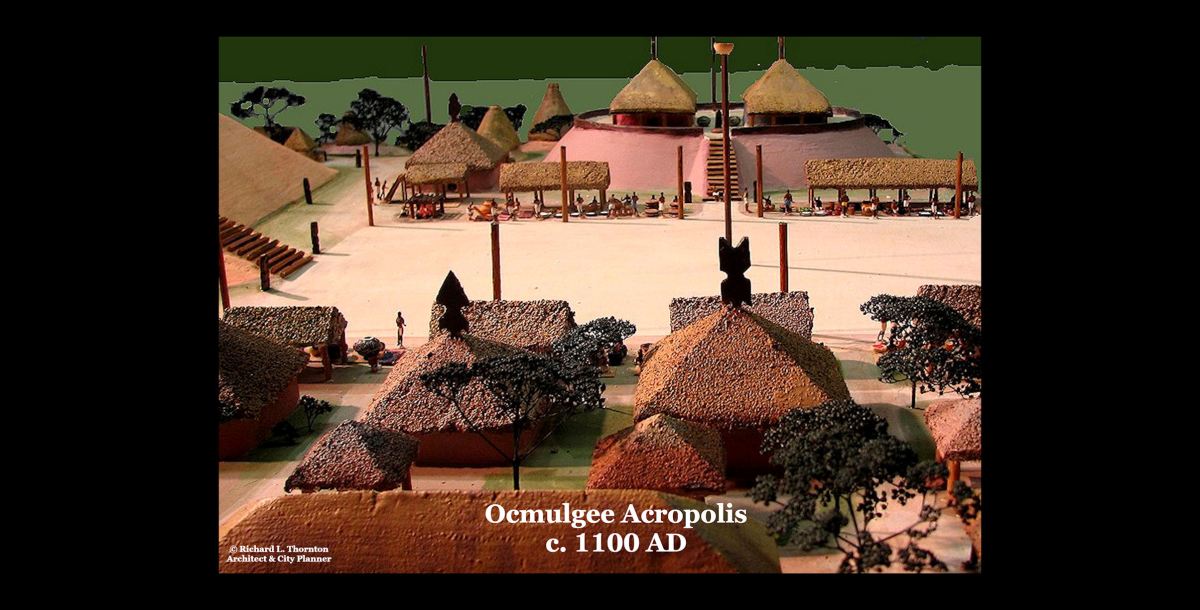
It was introduced at Ocmulgee around 1000 AD.
The Spanish adopted this system for the construction of their Colonial Era buildings in South Carolina, Georgia and Florida, but it was ignored by British colonists in North America.
Architecture of the North American Frontier Series
by Richard L. Thornton, Architect & City Planner
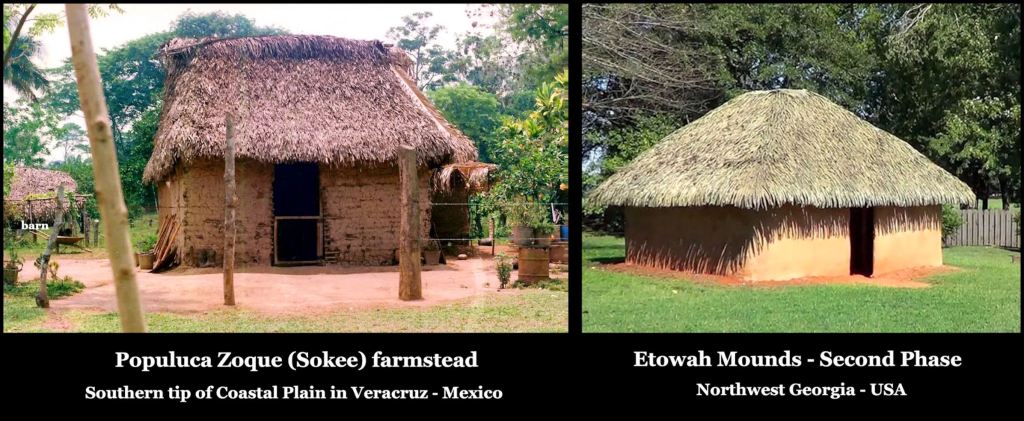
The square houses built by affluent Soque and Tamulte merchants in southern Mexico and Georgia, USA contained several rooms and were at least 35 ft. x 35 ft. (10.7m x 10.7m). However, when the prefabrication concept was adopted by regular folks, their homes were scaled down to somewhere between 15 ft. and 20 ft. square (4.6m – 6m).
An architectural innovation
In previous articles, I have shown readers photos of various styles of Maya and Totonac houses, which were adopted by the Chickasaws and some branches of the Creek Confederacy in the Southeastern United States. These relied on a framework of 4 inch to 8″ tree trunks. The houses, originally constructed in Jamestown, VA were not significantly different in concept.
Soque and Tamulte merchants, who established trading centers in the Sierra Orientale Mountains of Mexico had to adopt to chilly winters and less abundance of trees. They developed an ingenious, heavily-insulated house, which was supported by interwoven saplings and vines. Furthermore, the light-weight frame walls were assembled on the ground, set into ditches, filled with damp clay then tied together.
This type of house was well-suited to the higher elevations of the Southeast, where wintertime temperatures could drop below 0° F. The Creek Indians even applied insulation and clay stucco to the ceilings of these houses. They could be kept very comfortable in the coldest of weather with a few pieces of dead limbs, burning in the hearth.
As might be expected, Soque/Tamulte style houses are most commonly found by archaeologists in the Ocmulgee Acropolis, Upper Oconee River Valley of Northeast Georgia, the Soque River Valley of Northeast Georgia, the Etowah/Coosawatee River Valleys of Northwest Georgia and the Tennessee River Valley. Below are illustrations of their construction stages.
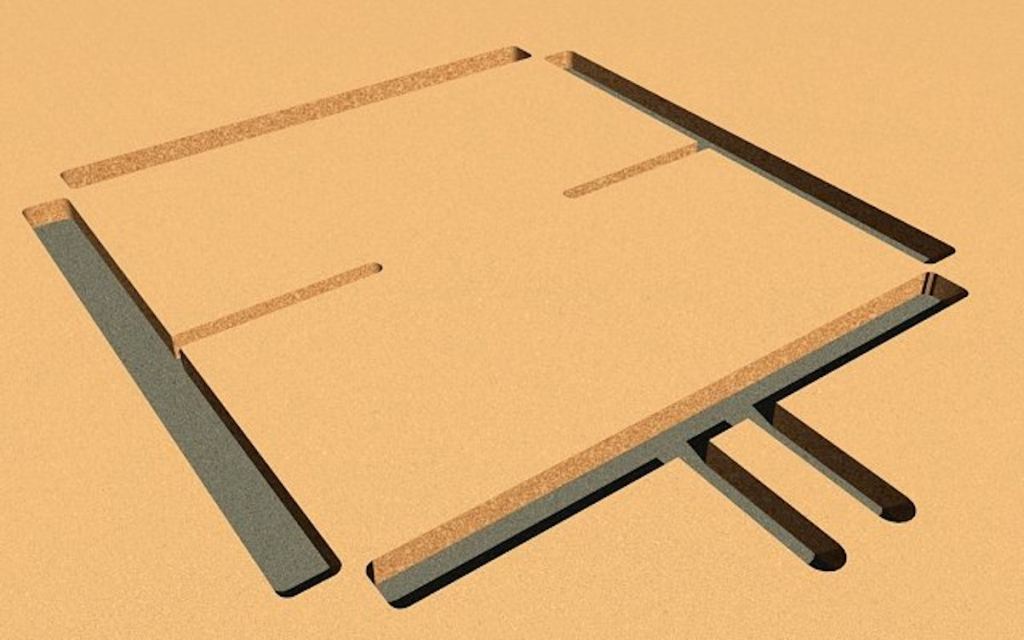
The house is staked out by a talliya (architect-surveyor) and ditches are excavated.
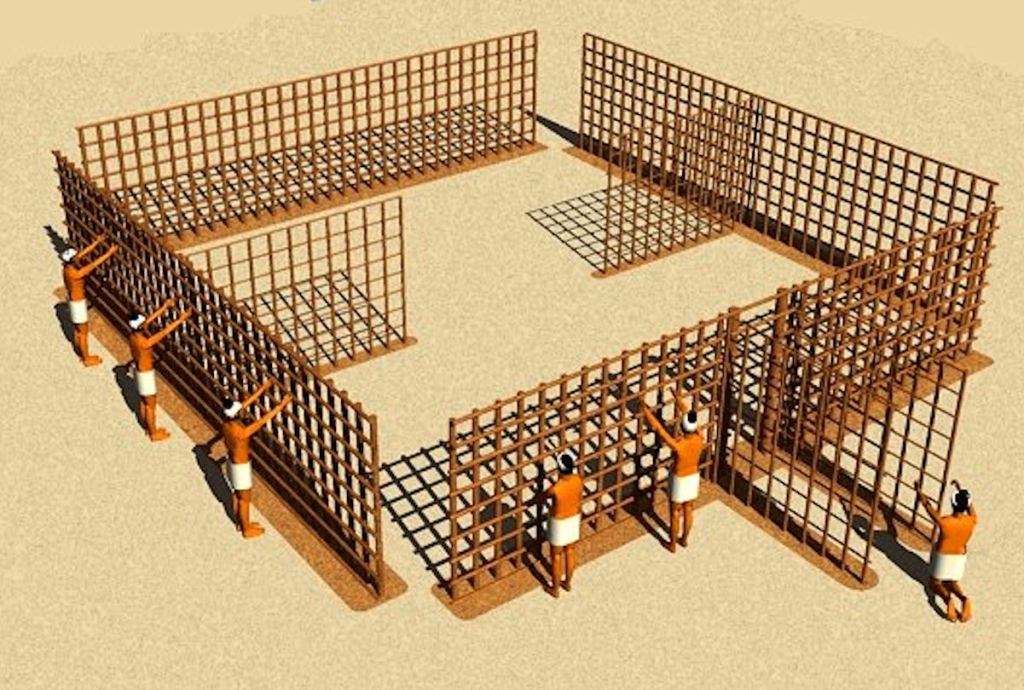
Light-weight wall matrixes of saplings and vines are woven on the ground then raised to sit in the ditches, now filled with wet clay.
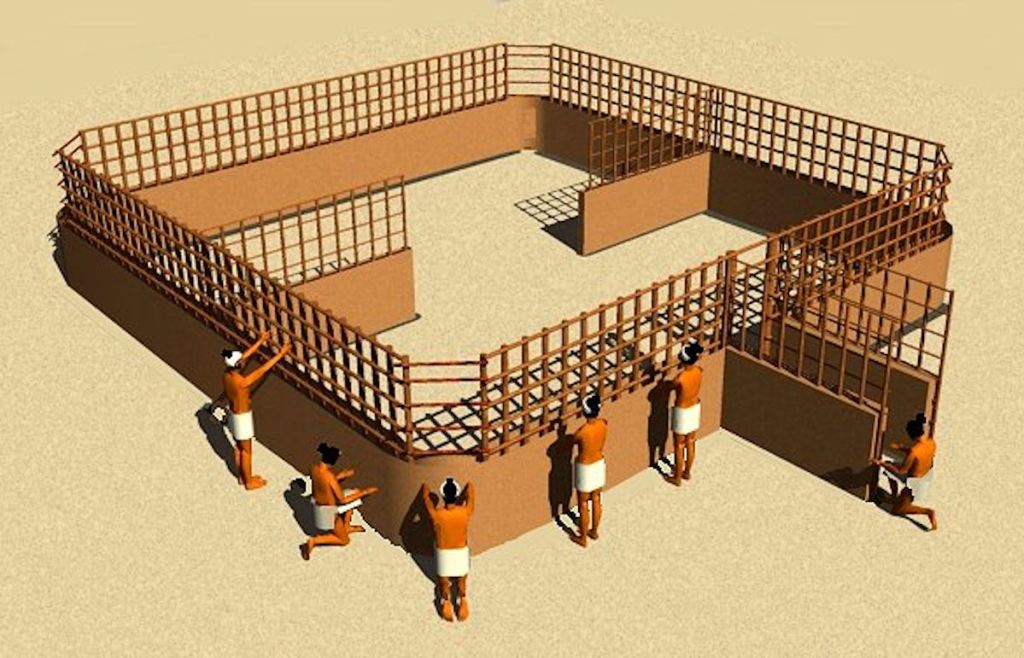
The wall sections are tied together with saplings then a base coat of sandy clay mixed with straw and crushed river cane stalks is pressed into the frame.
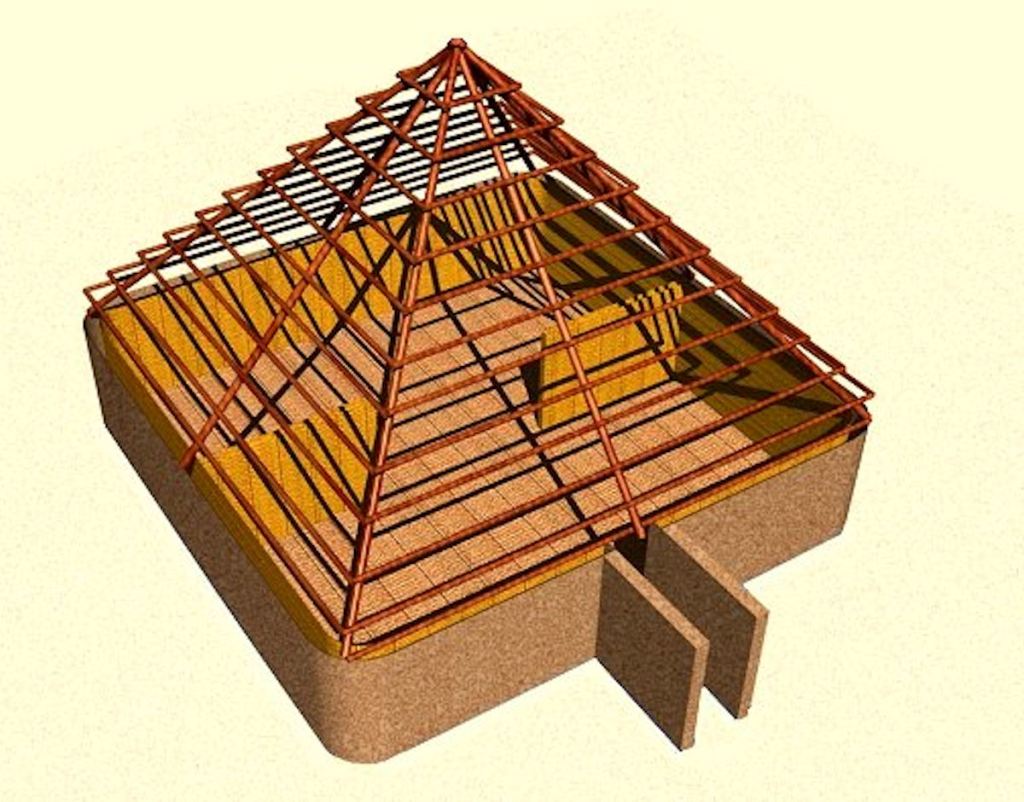
Ridge rafters are tied into the dried walls. They are composed of tree trunks around 4-5″ in diameter. Purlins, made from tree saplings are tied to the ridge rafters.

A roof composed of thatch, river canes or tree bark shingles is woven to the purlins. A finish coat composed of smooth, brightly colored clay and mica is applied to the rough clay core wall.

In some branches of the Creek Confederacy a final, dense coat of gold mica was pressed into the damp finish coat, making the buildings look like they were built out of gold. This is the source of the Seven Gold Cities of Cibola myth. Other branches mixed a stucco made of crude hydrated lime, white kaolin clay, crushed shells and white sand then applied it to the surface of the building.
 The Americas Revealed
Fascinating. I just read a book, published in 1903, “In the Camp of the Creeks” by a man named Louis Pendleton, I believe. He describes the land of Southwest Georgia, with its swamps extending to Florida and the relationship with the Seminole tribe of Indians.
LikeLiked by 2 people
Truly fascinating information Richard and love your recreations of the process thank you for sharing! I’m ready to move in but would probably add windows myself but as they stand it does rule out any “Peeping Olmecs” that might be in the village.
LikeLiked by 1 person
The only difference between the Chief’s house at Santa Catalina de Guale and the Convento, where the friars lived was the insertion of window holes. I doubt if they had glass windows . . . probably some sort of crude window shutters.
LikeLiked by 1 person