
The first official celebration of Columbus day in the United States on October 12, 1892 was accompanied by the introduction of a salute to the American flag that was later adopted by Italian Fascists then German Nazis after World War I.
The use of this “NAZI” salute in Midwestern schools, plus German-American and Italian-American communities, continued until the eve of World War II. In the meantime, Columbus Day had been enshrined as a permanent federal and state holiday.
Columbus Day was originally adopted by a U. S. President to garner political support from Italian-American voters, but there no evidence that Cristobal Colon (Columbus) was Italian. Most evidence suggests that he was from a wealthy Sephardic Jewish family that had officially converted to Roman Catholicism. The Colon Family used cryptic Ladino (Sephardic) phrases in communications between each other, but not in letters to Christian recipients.

It was the largest known “ethnic cleansing” in human history. Demographers now estimate that over 100 million indigenous Americans died from European diseases, weapons, executions and slavery in the century that followed the landing of the Cristobal Colon’s conquistadors on the shore of the island of Guanahani in the Caribbean Sea. In order to terrorize the native, the Spanish repeatedly put to death innocent men, women and children in abominable ways . . . a favorite method was burning them alive. Yet again this October 12, 2024, the United States government will be celebrating an official national holiday that honors the beginning of this holocaust.
Some Latin American countries never celebrated Columbus’s voyage, because of the horrific impact that Spanish colonization had on indigenous peoples. Most others have now changed the name of the holiday to a name in Spanish that equates to “Indigenous Americans Day” or “La Raza – Latin American People’s Day).
The states of Florida, Hawaii, Alaska, Vermont, South Dakota, New Mexico, Maine, Wisconsin, Oklahoma and parts of California including, for example, Los Angeles County, do not recognize it and have each replaced it with celebrations of Indigenous People’s Day (in Hawaii, “Discoverers’ Day” or in South Dakota, “Native American Day”).

Origin of Columbus Day
Celebration of Christopher Columbus’ voyage in the early United States is recorded from as early as 1792. In that year, the Tammany Society in New York City and the Massachusetts Historical Society in Boston celebrated the 300th anniversary of Columbus’ landing in the New World. It became an annual event in Tammany Hall.
Many Italian-Americans observe Columbus Day as a celebration of their heritage, and the first such celebration had already been held in New York City on October 12, 1866. The day was first enshrined as a legal holiday in the United States through the lobbying of Angelo Noce, a first -generation Italian, in Denver. The first statewide holiday was proclaimed by Colorado governor Jesse F. McDonald in 1905, and it was made a statutory holiday in 1907.
On March 14, 1891, 11 Italian Americans were murdered at the New Orleans, Louisiana jail, by a mob. They had been acquitted for the murder of city police chief David Hennessy. President Benjamin Harrison declared October 12, 1892 to be Columbus Day, as a one-time national celebration to placate Italian Americans and ease diplomatic tensions with Italy. The celebration included the first public introduction of the Pledge of Allegiance by Francis Bellamy, accompanied by a salute, which was later adopted by the Fascists in Italy and the Nazi’s in Germany after World War I.
In 1934, as a result of lobbying by the Knights of Columbus and New York City Italian leader Generoso Pope, Congress passed a resolution stating: “The President is requested to issue each year a proclamation designating October 12 as Columbus Day.” The resolution also requested that United States government officials display the flag of the United States on all Government buildings on Columbus Day; and invited the people of the United States to observe Columbus Day, in schools and churches, or other suitable places, “with appropriate ceremonies that express the public sentiment befitting the anniversary of the discovery of America.”
President Franklin Delano Roosevelt responded to the resolution by making such a proclamation. This proclamation did not lead to an official federal holiday, however. Nevertheless, throughout the 1940s, 1950s and 1960s elementary school teachers usually scheduled special events about Columbus or the colonization of the Americas, such as plays, on October 12 . . . if it corresponded to a class day.
In 1966, Mariano A. Lucca, from Buffalo, NY, founded the National Columbus Day Committee, which lobbied to make Columbus Day a federal holiday.[21] These efforts were successful and Columbus Day became a federal holiday in 1968. Since 1971, the holiday has been attributed to the second Monday in October, corresponding exactly to the same day as Thanksgiving in Canada.
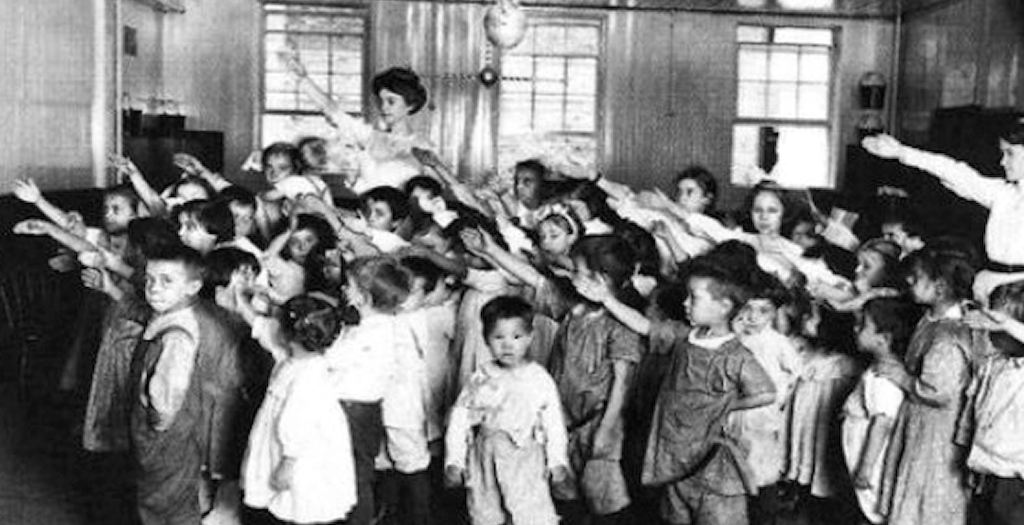
Columbus Day – 1915 – in an Italian American classroom
Was Columbus even an Italian?
In recent years, many scholars have taken a closer look at the archival materials that relate to Christopher Columbus. Tradition has long held that Columbus was born Cristoforo Colombo around 1451, in the region of Liguria, in what is now Northwest Italy. In Columbus’ time, Liguria’s capital was Genoa, a rich, influential and independent city-state (Italy as a unified nation-state did not exist until 1861). He may have been the son of Susanna Fontanarossa and Domenico Colombo, a wool merchant. Yet the fact is that all of his siblings were living in Spain at the time that he approached King Fernando of Aragon and Queen Isabela of Castille to be sponsors of voyage to find a new direct route to China.
According to later accounts, including those by his son Ferdinand, Columbus left Genoa as a teenager, serving in the Portuguese merchant marines and gaining valuable seafaring experience on explorations that took him as far afield as Ireland, Iceland, and West Africa. While in Portugal, he married a woman from a noble, but somewhat poor, family and began seeking support from the Portuguese court for his cross-Atlantic expedition. When they refused, he moved to Spain in 1485, where years of lobbying monarchs Fernando and Isabela finally paid off in 1492, when they agreed to fund his first voyage.
There are absolutely no surviving documents that back up this claim of Italian ancestry. Despite Columbus’ successes, Genoese ambassadors in Spain did not claim him as their own in their correspondence, and unlike other explorers who sailed under Spain’s flag, official government documents make no reference to Columbus as being a foreigner. Columbus’ public documents are written in Castilian. His personal journal was written in Catalan, the language spoken in NE Spain in the vicinity of Barcelona. There is no evidence that he knew Ligurian, the language spoke in Genoa.
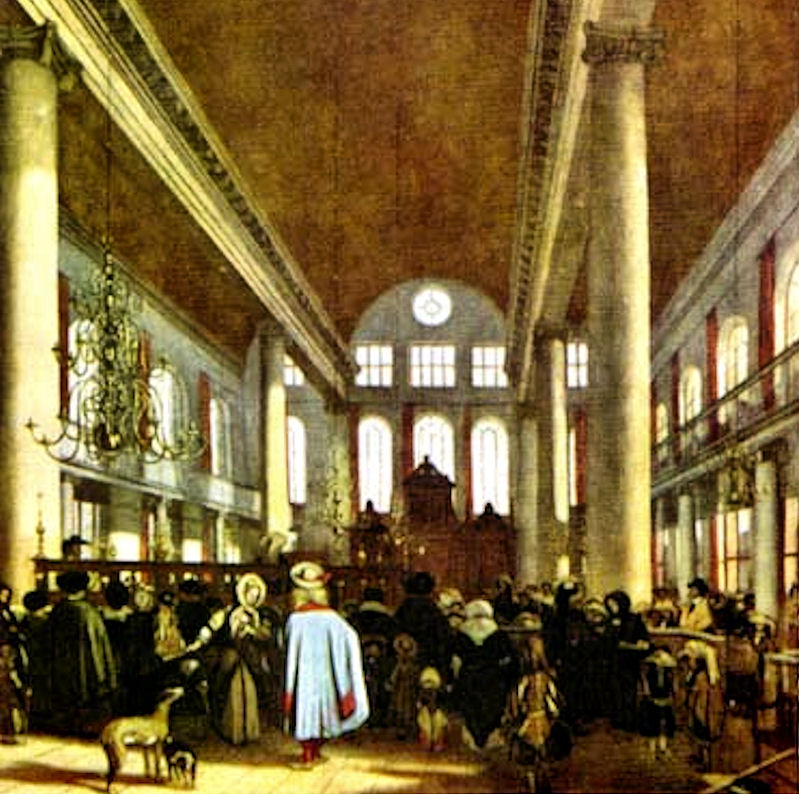
Was Columbus actually Jewish?
In recent years, scholars have proposed three theories on the actual ethnicity of Christopher Columbus, based on the name that he actually called himself, Cristobal Colon, and that his voyage seemed to have a connection with the expulsion of Jews and Muslims from Spain in 1402. They theorize that Colon knew all along that there was a continent between Iberia and China. Medieval French and Irish monastery journals called in Witmansland (White Men Land). According to these journals, Irish and Norse Christians from Ireland had established colonies along the Carolina and Georgia coasts, after being persecuted by Roman Catholic officials. Colon planned to establish colonies there for the thousands of Jews being expelled from Spain.
Columbus brought at least five Jews on his voyage, including his translator, navigator, doctor, surgeon and astronomer. On the very day that Columbus sailed for the New World, the Jews who had been expelled from Spain, sailed from the port of Palos as well. Some estimates suggest that about ¾ of the sailors on the first voyage of Columbus were former Jews, Muslims or cryptic Jews.
Linguistic traits in his writings led them to believe Columbus was raised learning Ladino, a hybrid form of Castilian Spanish, comparable to Yiddish, which was spoken by Spain’s Sephardic Jewish community. Researchers believe there is ample evidence to support their conclusions, including the existence of a Hebrew blessing, “with God’s help,” on all but one of Columbus’ letters to another son, Diego (but which do not appear on letters to anyone outside his family).
The researchers also point to Columbus’ links to the wealthy Sephardic businessmen who helped fund his expeditions, bequests he made to other Jews and even the triangular symbol that Columbus used as a family signature of sorts, which is similar to inscriptions on gravestones of Sephardim. And they believe that Columbus’ one-day delay in leaving Spain in August 1492 was to ensure he did not set sail on the Jewish holiday of Tisha B’Av, which commemorates the destruction of the Holy Temple in Jerusalem.
If Columbus was, in fact, Jewish, he would have had every reason to obscure his true origins. For decades, Ferdinand and Isabella had been pursuing the fabled “Reconquista” of Spain, which saw the forced conversion and harsh persecution of tens of thousands of Spanish Jews and Muslims. Those Sephardim who converted and remained became known as Marranos. Those who refused to convert were forced to sell their possessions and leave the country entirely — the very same year that Columbus first set sail for the New World.
Some of the Colons in the Iberian Peninsula were pirates, albeit Jewish pirates. This would be another incentive for Cristobal to claim Genoese ancestry. However, an actual connection to this branch of the Colon family tree would also explain Cristobal’s extensive efforts to conceal his true past.

The three theories are:
(1) He was a member of the Colon Family of Barcelona. They were former Jews and merchants with strong economic ties with Genoa.
(2) He was a member of a former Jewish family in Aragon. In 2009, Georgetown University linguistic professor Estelle Irizarry published her book, “Christopher Columbus: The DNA of His Writings,” based on close examination of hundreds of documents written by Columbus. According to her research, he was born in the kingdom of Aragon, in Northern Spain, and his primary language was Castilian, although he knew Ladino, the Sephardic Jewish dialect of Castilian.
(3) He was from a minor noble family in Portugal. Columbus’ strong ties to Portugal have led many to believe he was born there, not in Genoa. Some historians have argued that his marriage into a noble Portuguese family would have been unlikely had he been an unknown (and yet-unproven) foreigner. In 2012, Fernando Branco, an engineering professor at the University of Lisbon, published a book that argued that Columbus was actually Portuguese-born and his real name was Pedro Ataíde.
Ataíde, the illegitimate child of a Portuguese lord, was presumed to have died in a naval battle in 1476. But Branco and a number of Portuguese historians believe that he actually survived, and to avoid persecution for his family’s possible treasonous opposition to the Portuguese crown, changed his name to Colon.
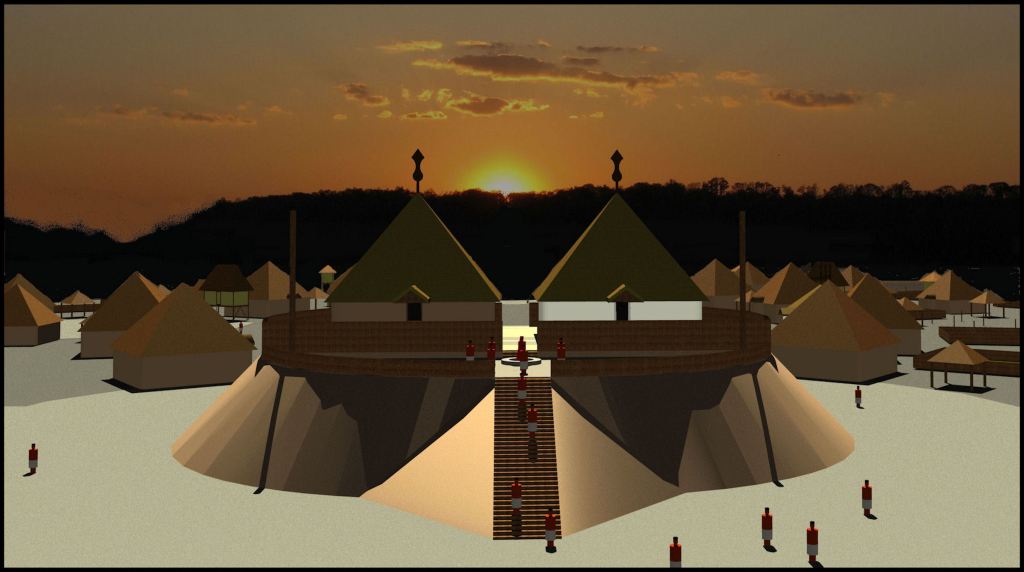
A day to honor this nation’s Native heritage
Native American history is America’s history. It is the heritage or partial heritage of both the millions of descendants the indigenous tribes of North America and 60+ million Latin Americans in United States. Whatever Cristobal Colon’s real ethnic identity, he had no directly connection to the establishment of the colonies that became the United States. When he died in 1506, he didn’t even know North America existed. It is time that we celebrate our own heritage.
 The Americas Revealed
This post inspired me to consult a historical novel, owned by my grandmother, and written by James Street, published in 1953 by Doubleday & Company in Garden City, NY. The book itself is falling apart, but it gives an interpretation of historical perspectives from the Spanish and Portuguese perspectives. This and other historical perspectives, written in various times of US life, show how our atitudes have changed over time. Your post about Columbus confirms everything I have read, but does not include the internal squabbles about the ongoing divisions within the Iberian peninsula at the time. This was within Spain and Portugal, between the Roman Catholic Andalusian Queen Isabella of Castile, and king Ferdinand of Aragon. The book has a good map of the Strait of Gibralter and how it blocked the exit to the Atlantic from the Mediterranean Sea. As you say, Christopher Columbus never knew he had found a huge double continent. Indeed, he did persuade Spain and Portugal to finance expeditions to unknown lands, because the Islamists controlled Gibralter at the bottleneck of the two continents. The best known mapmaker of the time in the novel, was a jew, hired by the Domincan Friars, masters of the Spanish Inquisition, who were vying with the Francisan friars f the US ve=or control of the seaboard Atlantic coast and the Islamists. The novel portrays Columbus as an opportunist, looking for a route east to obtain spices and other goodies from the Orient, as US history myths report.
LikeLiked by 1 person
Is Elon a modern day Columbus, setting up more colonial blight and plague but this time on Mars? https://youtu.be/5GjOuqAlFEk?si=H-1AWropR3XTsMdF&t=531
LikeLiked by 1 person
Who knows? So many strange things are happening . . . anything surrealistic seems possible now. Look at the devastation in western North Carolina.
LikeLiked by 1 person
The first Columbus Day in 1892 was celebrated on October 21, and not on October 12– if you look it up in newspapers of the period, from at least August of 1892 onwards, plans for the holiday to be celebrated in public schools were being published in local newspapers. I was researching a photo of the first Columbus Day from my home town and found out this odd fact.
LikeLike
Google lied to me! Or else the person, who wrote the online article reversed the numbers. I was vacationing in Anarctica at the time.
Great historical depth, thank you.
Another consideration is that the original Columbus Day was seen as a recognition of the contributions of Italian, Spanish and other Catholic immigrants from the Mediterranean who were made less welcome than immigrants from Protestant Europe.
LikeLike