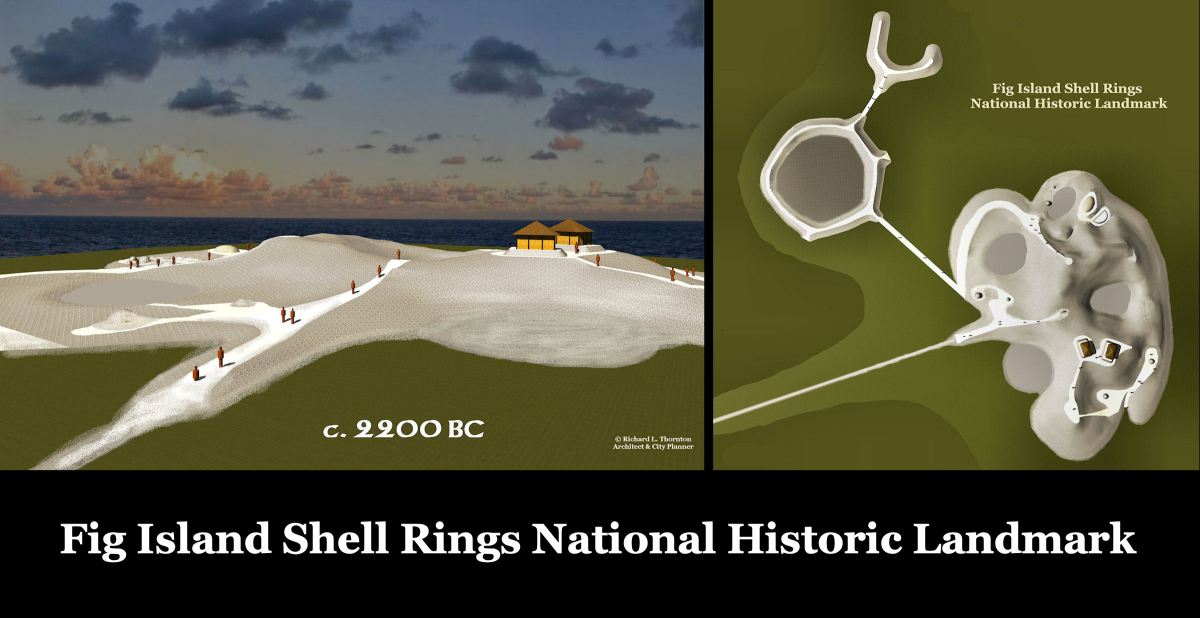
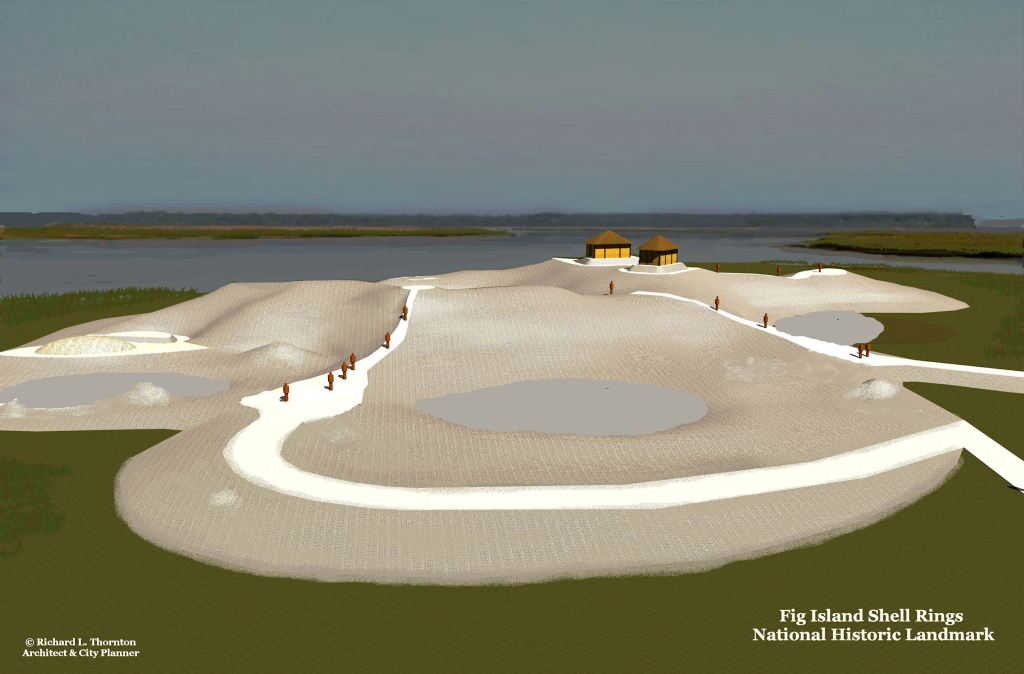
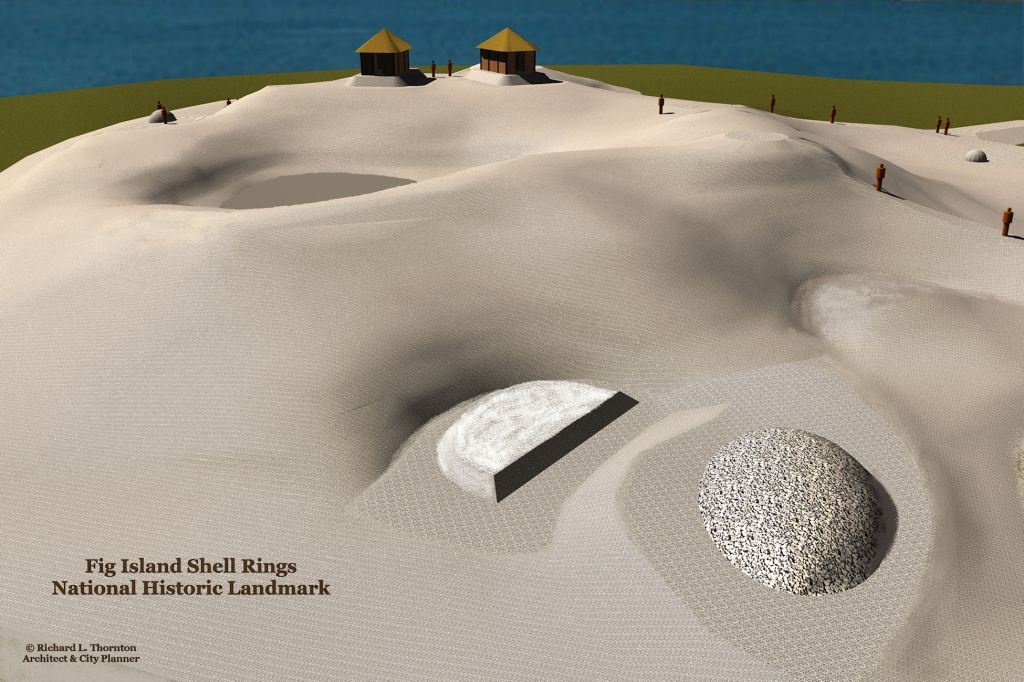
The Fig Island, SC Complex, a 4,200-year-old, mysterious landmark, is one of many sites that will be featured in my new book on the The Ancient Architecture of Savannah, Georgia and the South Atlantic Coast.
No one today is certain who built the many shell rings and shell mounds on the coast of South Carolina, Georgia and Florida. between around 2,600 BC and 1,000 BC. Many Neolithic artifacts have been unearthed, but no intact skeletons. The oldest shell structures are on Sapelo Island, Georgia. The youngest shell structures are in Florida. In 1653, the High King of Apalache* in Northeast Georgia told English explorer Richard Brigstock that they were built by ancestors of the Arawak People then they started migrated southward.
*The Creek Indians living in what is now Northern and Central Georgia, called themselves the Apalache, Apalachete or Palache until around 1748, when they adopted the coined name Maskoki (Muskogee). Apalachen (Appalachian Mountains) is the plural of Apalache. The Florida Apalachee never called themselves that name until told by the Spanish invaders that was their name.
The Peopling of Eastern North America Series
by Richard L. Thornton, Architect & City Planner

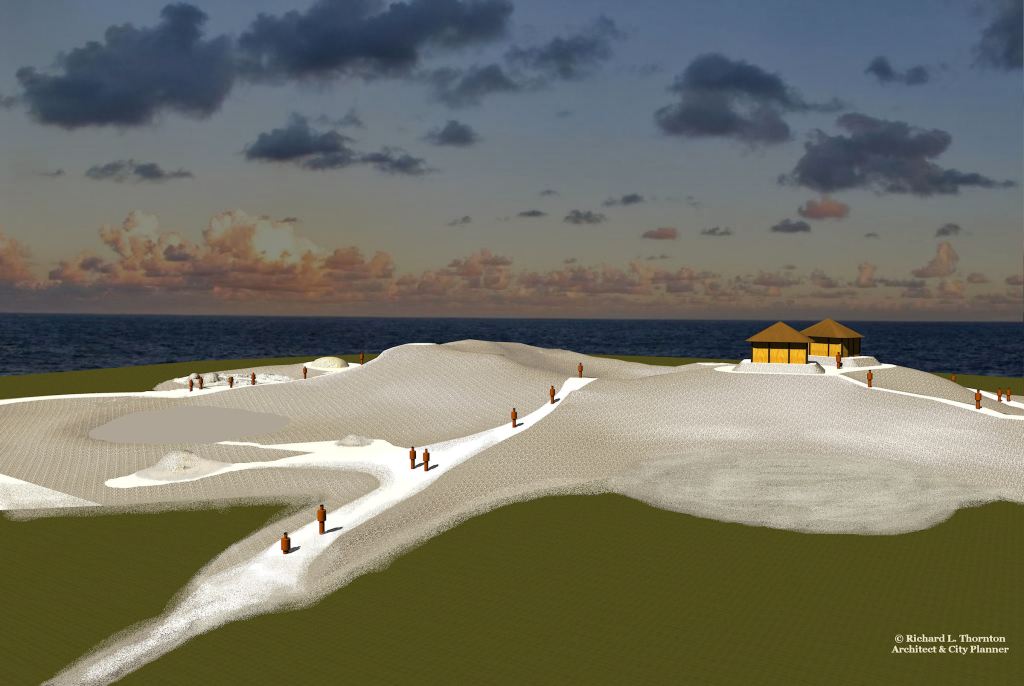
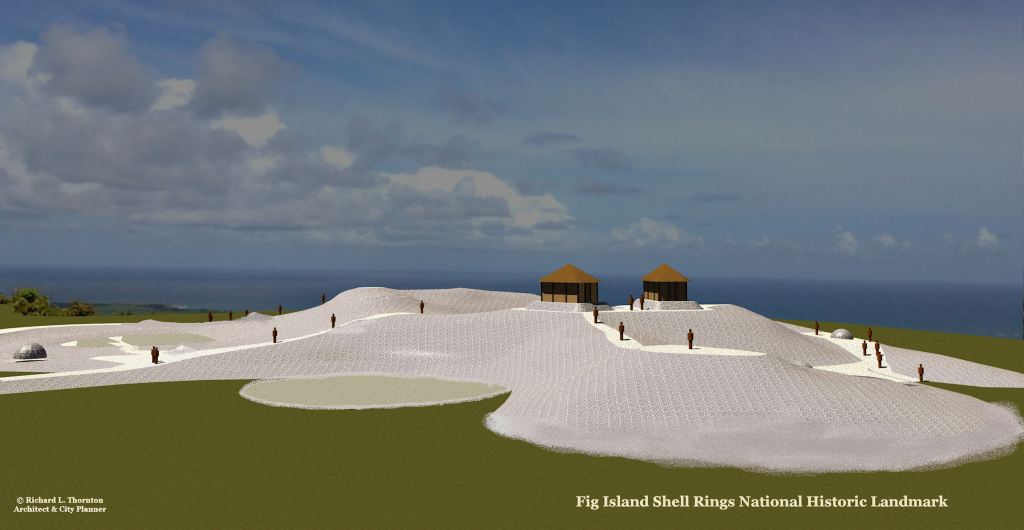
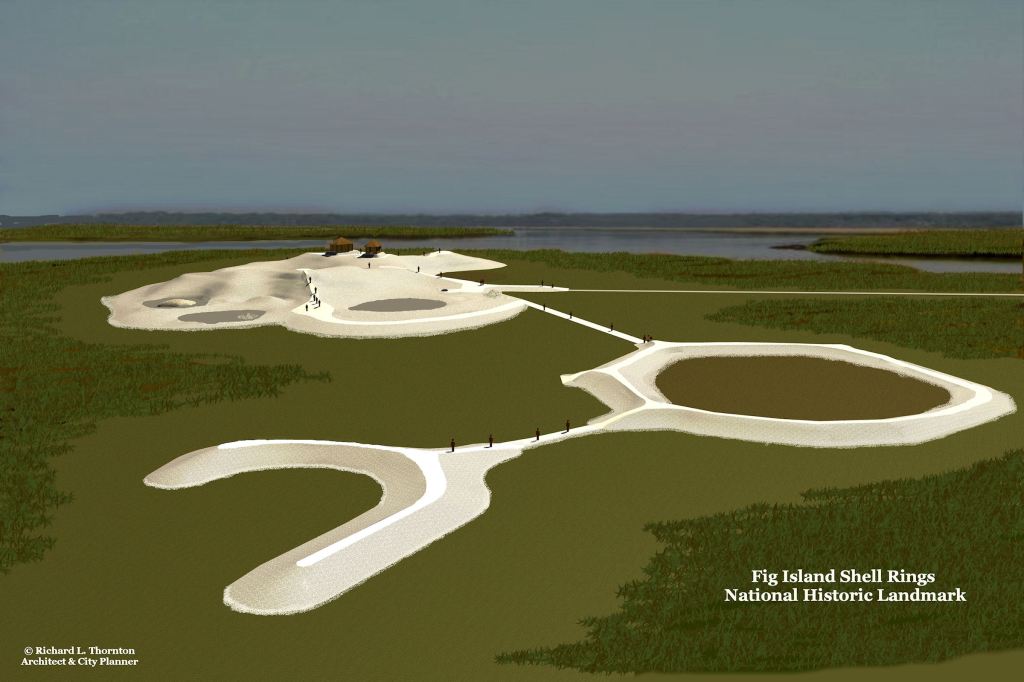
The Fig Island site is surrounded by a salt marsh on a peninsula extending from Edisto Island along the North Edisto River. The sea level on the South Carolina coast was as much as 1.2 meters lower when the Fig Island shell rings were built and occupied than it is now. The rise in sea level since then has led to the marsh expanding over what was probably dry land that connected Fig Island to Edisto Island in the past. The Fig Island rings cover an area of 300 by 275 meters.

 The Americas Revealed