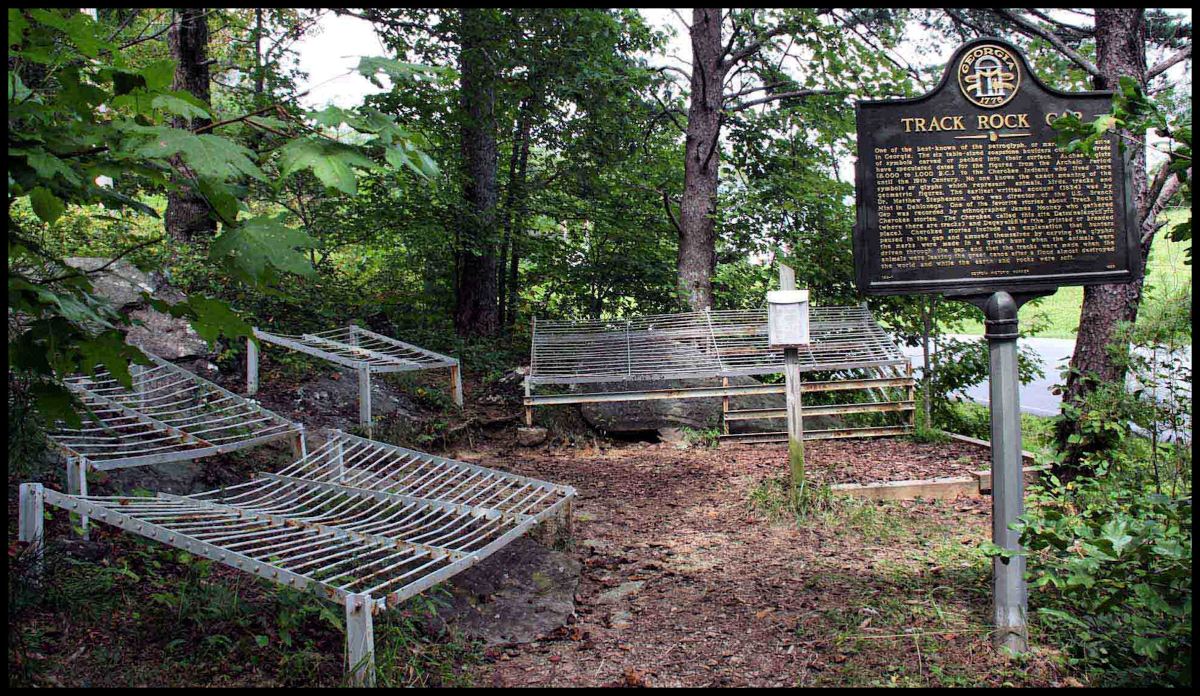
The numerous petroglyphs of the gold-bearing mountains of northern Georgia are quite different than those elsewhere in the United States, but identical to those in certain areas of northern Europe during the Bronze Age.
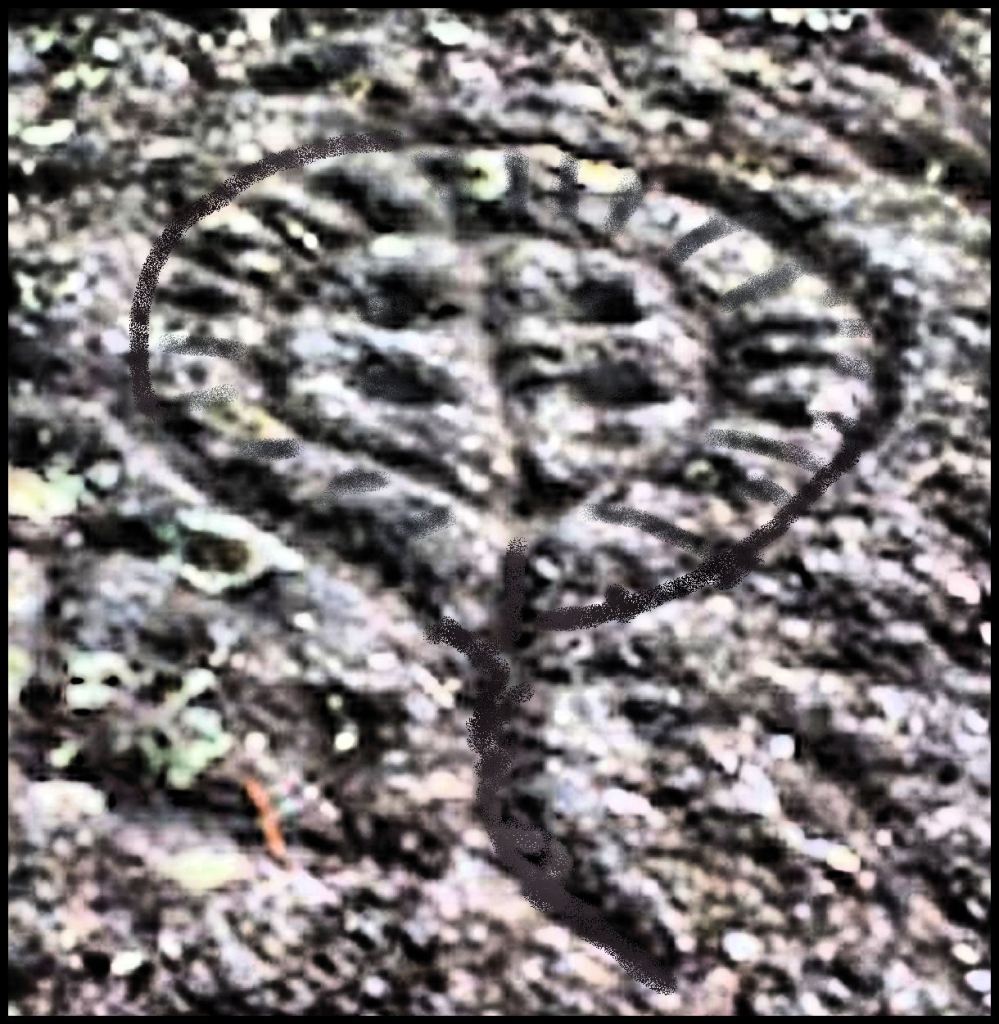
This Royal Sun symbol on Track Rock Gap Boulder Six was also carved in the Släbro Petroglyphs near Nyköping, Sweden, which have been dated to around 2000 BC. The exact same symbol is also seen at the Maya city of Palenque, Chiapas, Mexico. During the 1980s, it was the first Maya glyph translated by archaeologist David Stuart and was featured in the TV documentary, “Cracking the Maya Code.”
The Peopling of Eastern North America Series
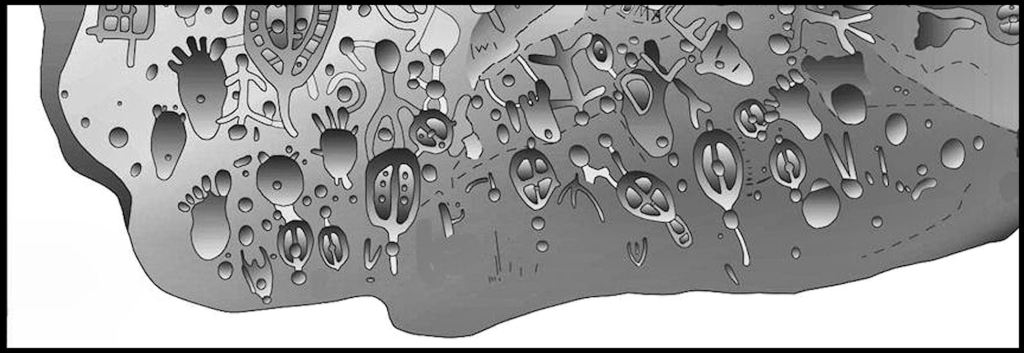
These drawings were prepared by an archaeological artist in the year 2000 AD for the U.S. Forest Service. The Americas Revealed has added some notes to these drawings. The six boulders were grouped together as an exhibit around 1970. Prior to that time, they were scattered along the side of Thunderstruck Mountain. Several more petroglyphic boulders on this mountain have never been added to the exhibit.
When first on display the engravings were much more visible. They have been seriously damaged by acid rain, caused by TVA coal-burning power plants to the west in the Tennessee River Valley, The boulders should have been protected inside a building, but “hindsight is nice.”
The Track Rock Gap petroglyphs, except for 18th and 19th century graffiti, are identical to the oldest petroglyphs in southern Sweden. In contrast, those in the Etowah River Valley of Georgia are identical to latter petroglyphs in Ireland, Scotland and the mountains north of Tepoztlan, Morelos, Mexico. Cobb and Cherokee Counties, GA contain petroglyphs identical to those in northwestern Spain.
An archaeologist, who was a supposed expert on rock art, was hired by the USFS in 2000 to analyze the petroglyphs. He grossly misinterpreted them. The were labeled “graffiti by bored Cherokee hunters.” Track Rock Gap was in the territory of the Creek Confederacy until 1785. The Cherokees were nowhere around when these boulders were carved.
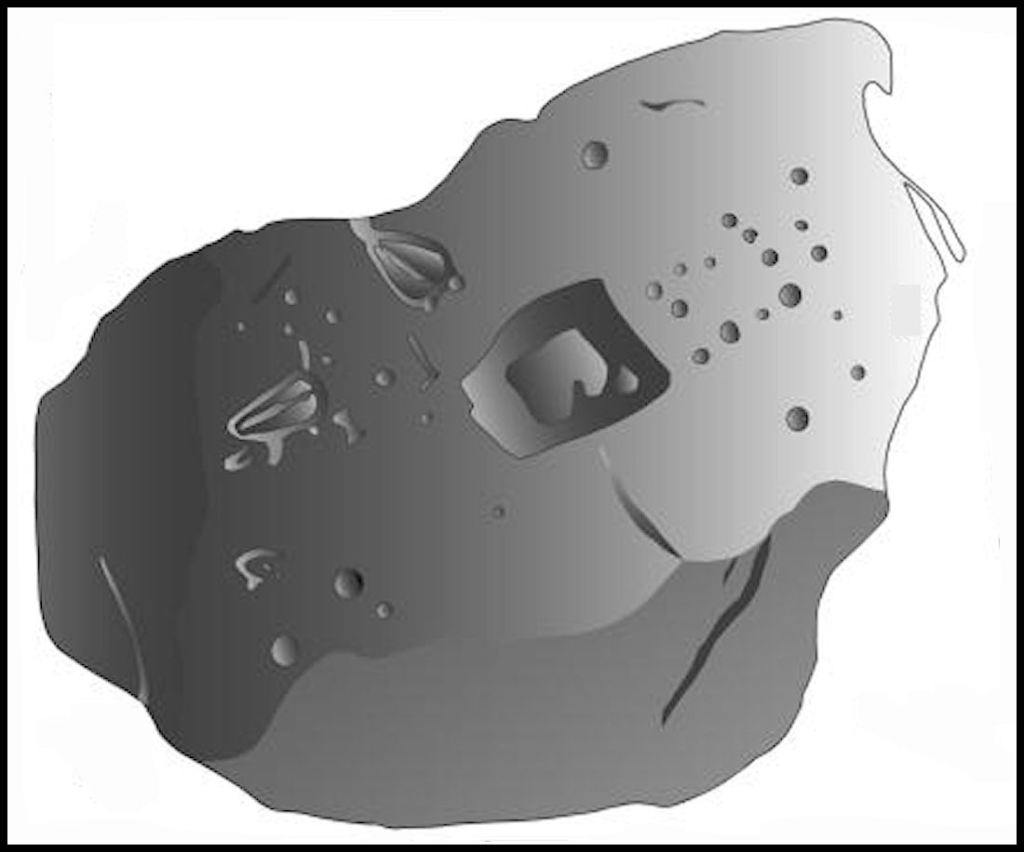
Boulder 1
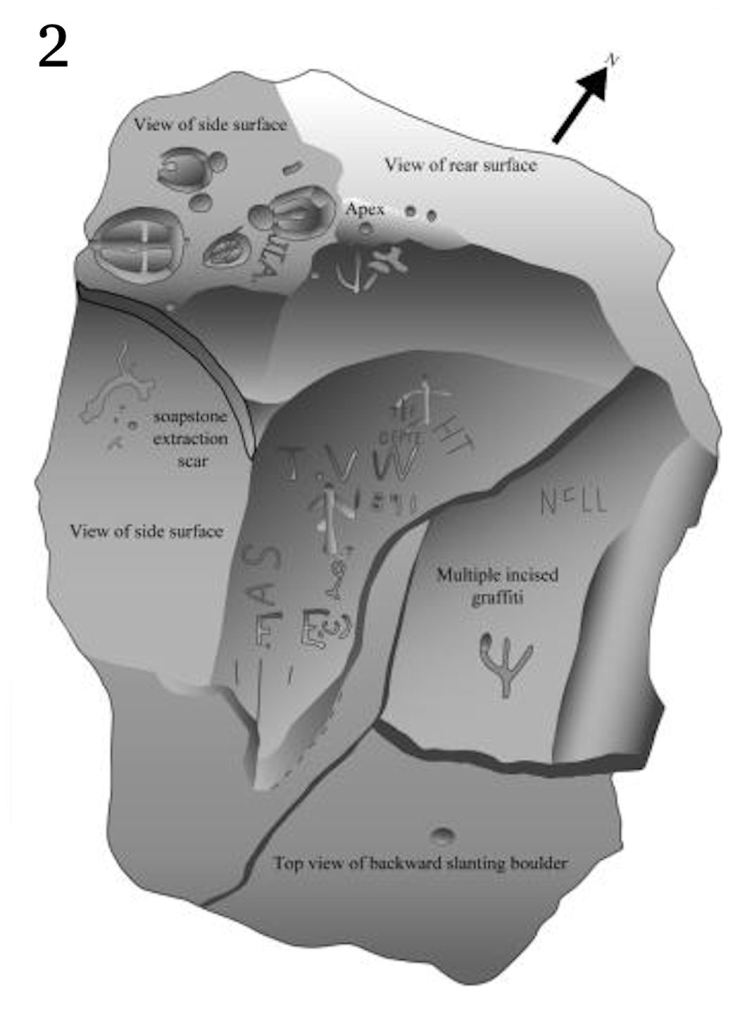
Boulder 2
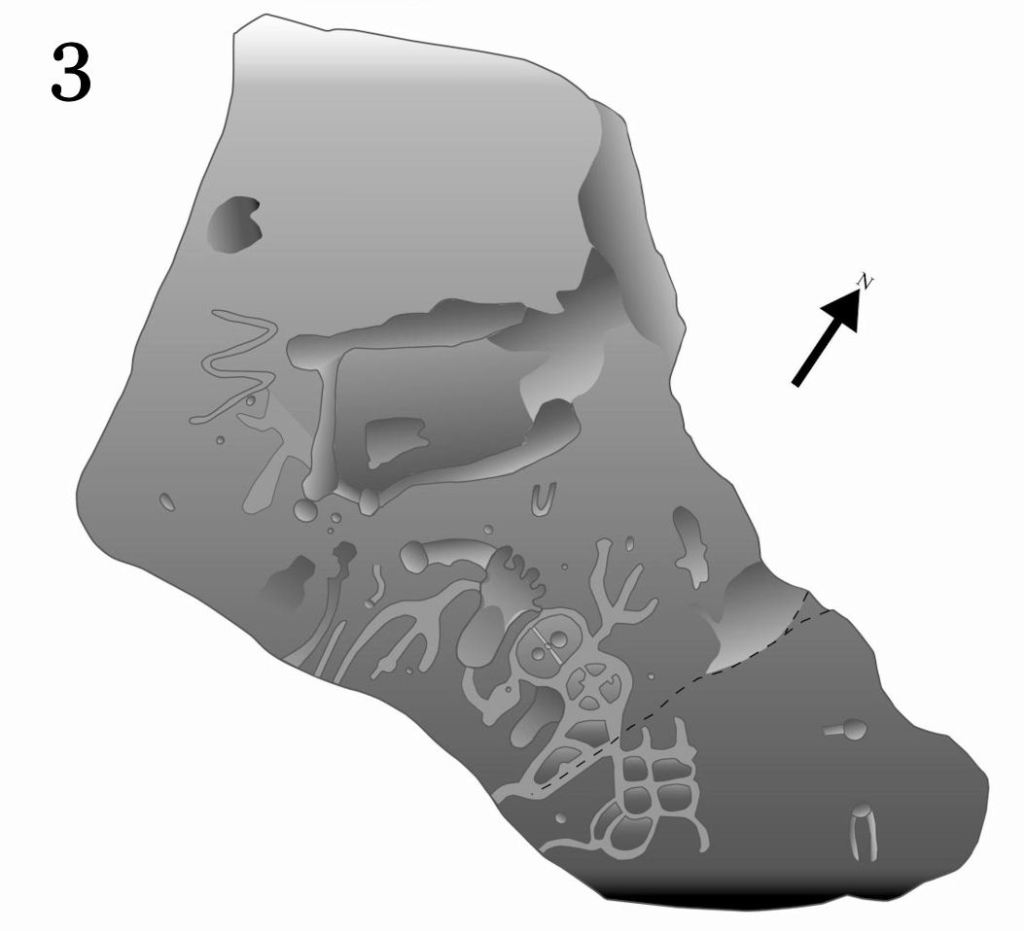
Boulder 3
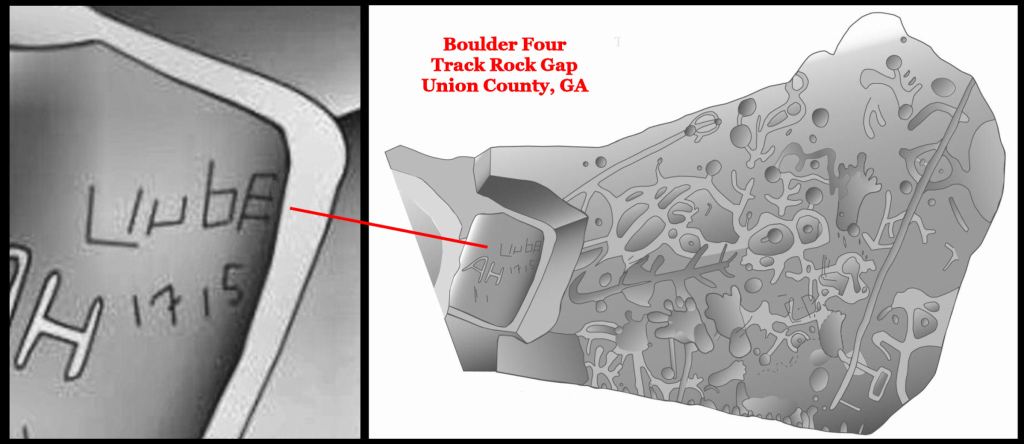
Boulder 4
The girl’s name Liube is highly significant, but was entirely overlooked by the archaeologist, who was hired by the USFS to study these boulders. Liube means “beloved” and was traditionally the name given the first born daughter of a rabbi in eastern Europe. The date “1715” corresponds to the beginning of the Yamassee War in which most Indigenous tribes in the Southeast rose up in rebellion against the British Province of Carolina. They did not attack Virginia.
This girl was either running for her life, or else was already a captive and leaving a note to potential rescuers. One could make “Liube 1715” into a dramatic adventure movie.

Boulder 5
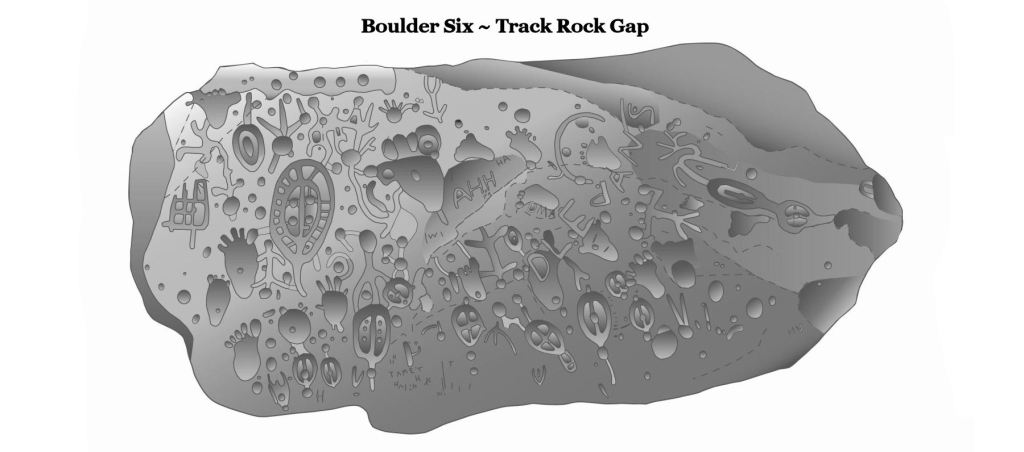
Boulder 6 Details
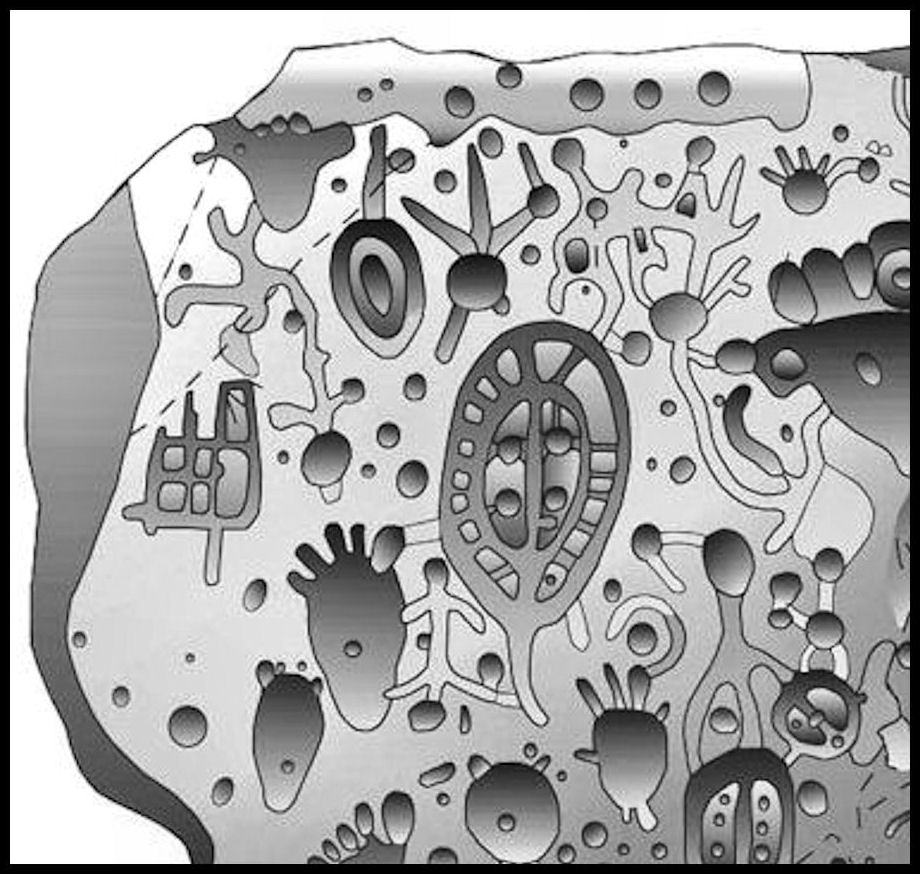
All of these symbols on Boulder Six are found near Nyköping, Sweden.
 The Americas Revealed