
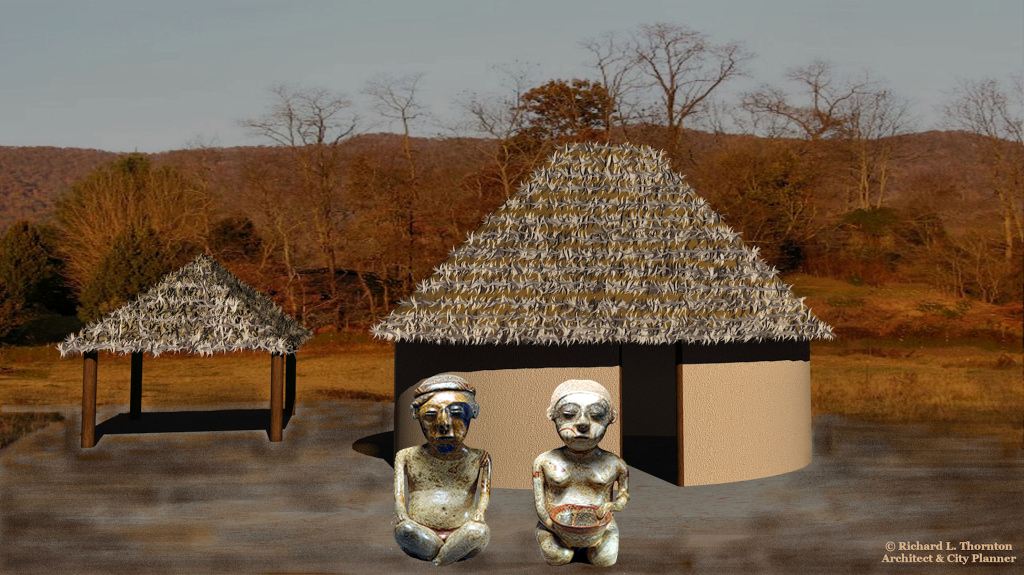
You will learn the difference between male and female figurines.
Indigenous men and women in Southern Mexico and the Lower Southeastern United States sat differently!
The Peopling of the Eastern United States Series
by Richard L. Thornton, Architect & City Planner
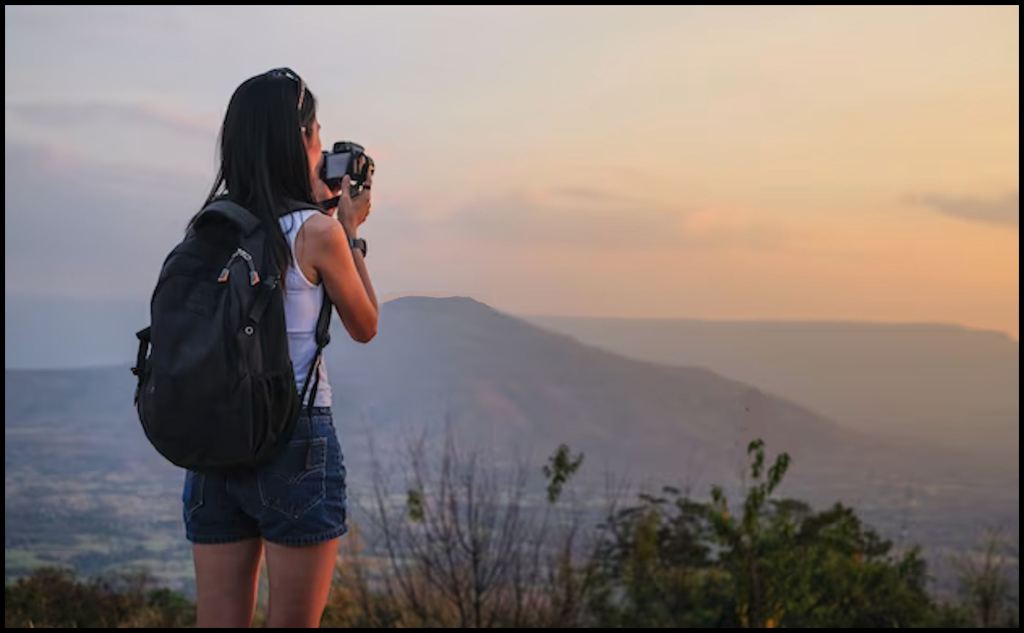
Pilar in Walmart fashions on top of Fort Mountain in Northwest Georgia
A week that changed two people
Pilar later told me that she would have probably spent the next five years in therapy, had she not first gone completely crazy by asking a stranger in a foreign country to drive her to Knoxville from Charlotte. She actually hoped that we would “click,” so that we could at least spend a week together, touring the Southeastern USA, but initially was afraid that I would turn out to be a drug addict or monster. She could always get a flight to Atlanta from of Knoxville, if she was able to escape with her life.
You see, she was raised in a nation, known for its beautiful women and the term “macho” being defined by the number of mistresses that a man had. She was brainwashed by that society to believe that people only liked women for their looks. If they also wanted to get a good education and become professionals. That was their business . . . but their main purpose in life was to always look their best. Until the quick trip into the Charlotte, NC Walmart, she only worn designer fashions and usually spent an hour getting her face and hair perfect before going out in public.
Her husband cheated discretely on her while they were engaged and after they were married. He ultimately went beyond the bounds of Colombian standards. While she was pregnant with their second child, her ex-husband abandoned her permanently for a 24-year-old, bubble-headed, TV weather girl then abandoned that woman for several other women in succession.
It was ironic that both Pilar and I had stayed faithful for 16 years in nightmarish marriages. Both of us were too idealistic and too stubborn for our own good.
Pilar had high hopes that things would be different in the Estados Unidos, but after being repeatedly shunned at the conference, she was convinced that there was something terribly wrong with her looks and personality. Then . . . I obviously adored her instantly for who she really was . . . a very intelligent woman, with a fun-loving, playful nature . . . a trait that few people outside her family knew about.
However, Pilar was to have a dramatic affect on my life, too. She had known about me for several years from her friendship with Ana Rojas, my tour guide-with-benefits in Campeche. After hearing of my extraordinary experiences in Mexico, Europe, Etowah Mounds and most recently, Ocmulgee Mounds, Pilar was convinced that some form of archaeology lay in my future and repeatedly urged me to start moving in that direction. My week with Pilar was the exact point in my life, when an intermittent interest with Indigenous American Architecture became a focused professional endeavor.
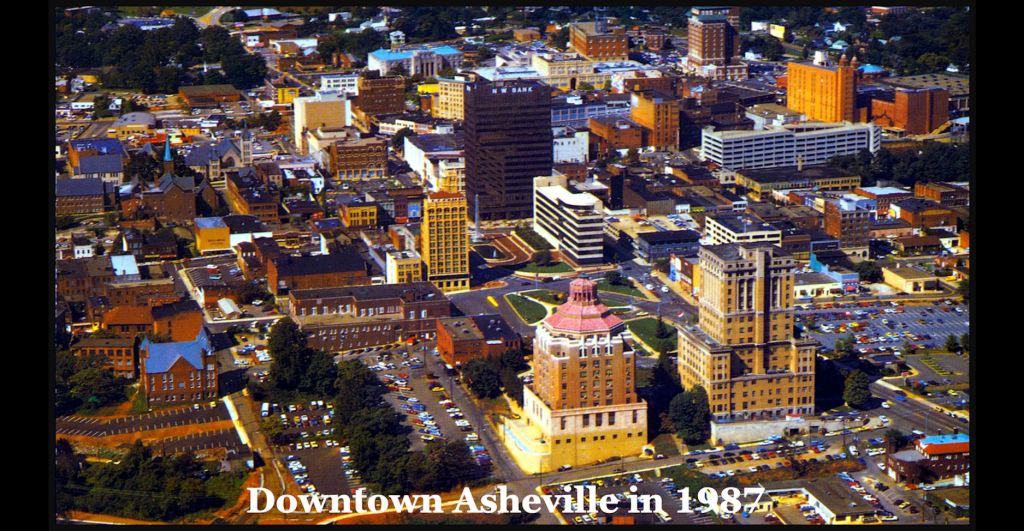
Asheville, North Carolina
I had spent ten years of my life in the Asheville Area and designed many buildings in the area, but we only had time for me to make a quick stop at Pack Square for me to show her the plazas and fountains that I designed there. Who should drive up to the plaza, but Dr. Nathan and Anne Burkhardt. They were former neighbors and my first architecture clients.
Nat and Anne greeted me warmly and asked if Pilar was my new wife. They detested my ex-wife. I told them that Pilar would make some man a wonderful partner in life, but we had not made a commitment yet. I didn’t tell them that she and I had just met that morning, but were about to travel together for a week. LOL At any rate, Pilar decided at that encounter, that I was not a monster or a drug addict.
We next drove up Merrimon Ave. for a quick lunch at the Athens Restaurant, next to the Papadopoulos Shopping Center that I had designed exactly 20 years earlier. The restaurant was gone. It had been replaced by another shopping center. The shopping center that I designed was still there. We grabbed two boxes of KFC chicken, plus chicken fingers for Rob Roy (to go) and headed toward Knoxville.
It was thrill for Pilar to eat fried chicken in an SUV, while not worrying about messing up her designer dress. Another thrill she had was hand-feeding most of her French fries to Roy Roy.
All her previous dates in Colombia, after the divorce, had involved being driven in Mercedes limousines or Porsche sports cars by bald, senile widowers to expensive, snobby restaurants in Bogota Centro. Her only fear was the man having a heart attack or stroke during the dinner . . . forcing her to pay for the extravagant meal.
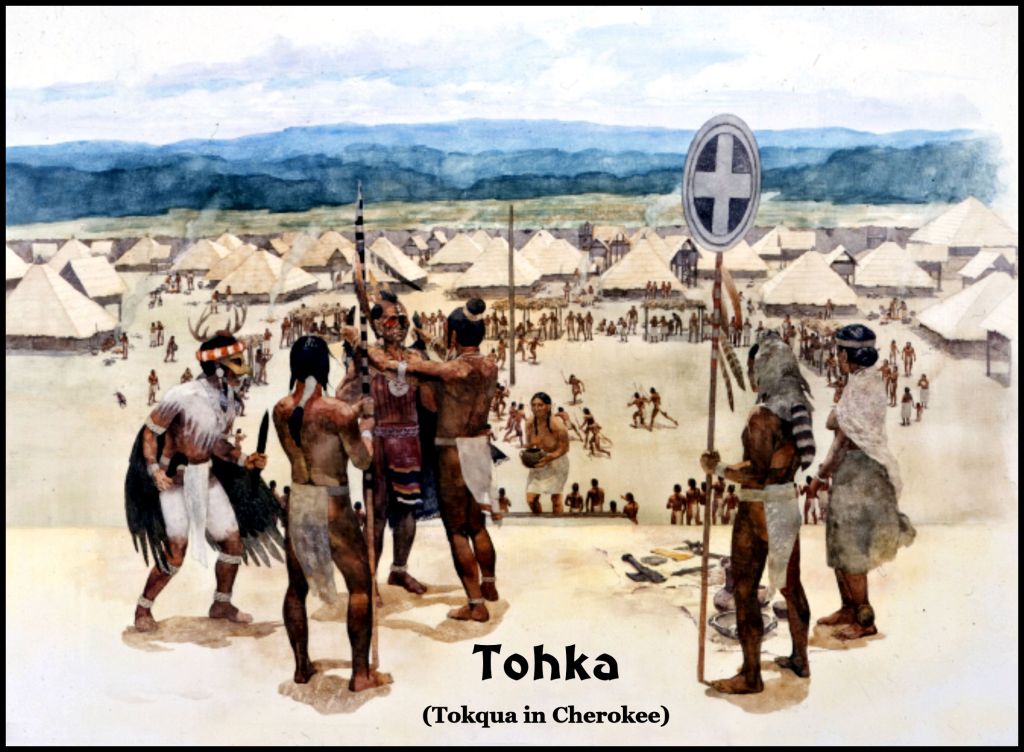
This is a famous mural in the McClung Museum – Readers of previous articles in this series may recognize Tohka as the name of one of the major Muskogee-speaking tribes in the North Carolina Mountains. This is not mentioned by the museum. In fact, the newest version of the museum’s exhibits barely mention the Chickasaw, Uchee and Creek Indians, who occupied all of Eastern Tennessee until very late 1600s and continued to live there until the 1790s. There are more surprises below.
McClung Museum – Knoxville, Tennessee
The McClung Museum is located on the University of Tennessee Campus. It was constructed in 1963 to house the best examples of Native American artifacts, unearthed by the University of Tennessee Department of Anthropology, while thoroughly studying the proposed sites of TVA dams during the 1930s through the 1970s.
During the past two years, the exhibits at the exhibits have been modified to create something akin to a miniature Fernbank Museum. Actually, the process was beginning 20 years ago, when I first saw the museum. Workers had removed Native American artifacts from one gallery and replacing them with Egyptian artifacts. More recently, the American Civil War, dinosaur skeletons, folk art ceramics and artifacts from some Middle Eastern cultures have been added.
Back two decades ago, Pilar and I were immediately impressed by the number of Native American artifacts in the original museum exhibits. However, they represented perhaps 1% or less of the total artifacts excavated at TVA sites. My understanding is many artifacts that we saw have been removed to make space for rotating exhibits from other cultures.
Next, our eyes focused in on a massive ceramic cauldron, plus some pieces of similarly large cauldrons. It must of been capable of holding 50 or 60 gallons. Neither Pilar nor I had ever seen so large an example of pottery . . . either in the Americas or in Europe. Being a professional ceramicist, I have no clue how these monsters were fired with burning wood. The accompanying sign gave very little information about an example of pottery that should have been a featured exhibit.
The mural

Note the standard being held on the right. That symbol represents the Uchee and Creek Sun Deity. Readers may recall that I recognized the same symbol, carved on boulders beneath St. Ibb’s Church on Ven Island, Sweden . . . on my third work day.
The exact same symbol universally represented the Sun Deity among Celtic, Gaelic and Nordic cultures in Bronze Age Europe! It is also the symbol for gold in the Nordic Bronze Age writing system. This is the reason that Nordic and Celtic nobility made most of their sacred objects out of gold.
After I pointed out the symbol on the standard, Pilar agreed that she had seen the same symbol in European Bronze Age art, but it was very rare in South America. I asked her how the the same symbol could have the same meaning on both sides of the Atlantic Ocean. It could only mean direct human contact. Fifteen years would pass before I realized that Tokah-ghe means “Principal People” in Gaelic.
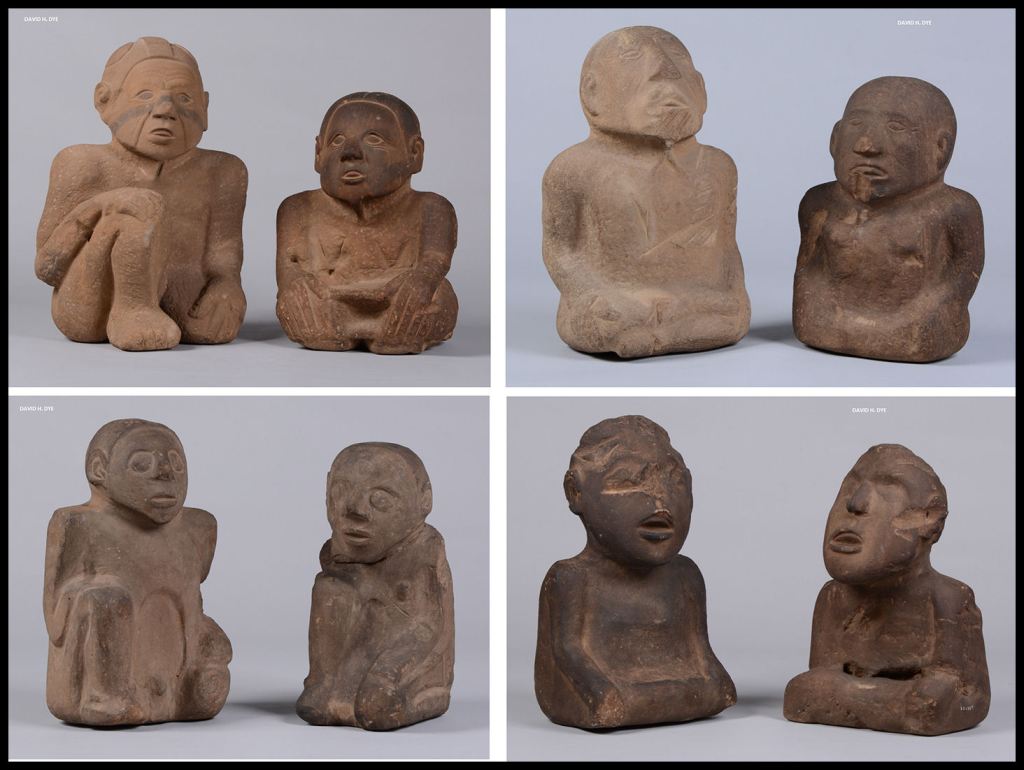
Human figurines
We came to the section of the museum, which contained hundreds of ceramic figurines, miniature jars and decorative ceremonial plates. La señorita colombiana whipped a magnifying glass and non-contact measuring device out of her purse.
She studied several of the figurines then shouted, “¡Maravillosas! . . . Richard, look how realistic these people are. I have never seen anything like this among the common people in Mexico, America Central or Colombia. Perhaps some among the Moche commoners in Peru.”
We both were amazed how detailed the little figurines were. East Tennessee was not even the most advanced region in the Southeast. What did they use to make the fingers and facial details? Most of the figurines were only 3-4 inches (7.6-10 cm) tall.
It was at that point in our “getting to know you” conversations that I realized Pilar was equally skilled in the hand-making of indigenous pottery as myself. If we had only met when we were younger. At this stage in our lives and careers, a marital relationship would almost be impossible, without one of us giving up everything.
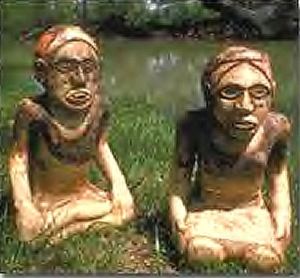
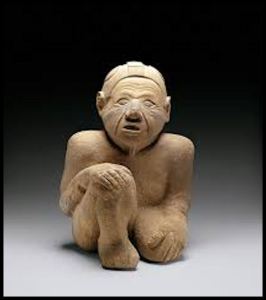
We moved on to display shelves, which were labeled “Tennessee Valley figurines of unknown gender.” I scoffed, “Pilar, that’s a no-brainer. Creek, Maya and Soque men always crossed their legs, while women kneeled.”
Pilar exclaimed, “¡Exactamente Ricardo! It is the same in southern Mexico, America Central and Colombia. We must tell the museum manager, so they can change the sign.”
It was almost 5:00 PM so we had to leave any way. Pilar talked to the college student at the entry desk. She went back into office and brought out the manager. He was very interested in what she could tell him about the figurines and pottery then wrote it down. We went out the entrance door, knowing that we had done our good deed for the day.
We had gotten within about 15 feet of the main exit doors for the Department of Anthropology Complex, when we heard a woman screaming, “Come back here you two!” The woman in her late 50s or 60s seemed deranged, so we did not dare get closer to her.
Instead, she raced toward us in a stiff-legged gate. She screamed, “How dare you two interfere with our archaeology program! You are not qualified to say one word about our exhibits here! I don’t want to ever see you again in this building. If you try to come back, I will call the campus police.”
Thinking that we had mistakenly entered East Tennessee State Mental Hospital, we said nothing, turned around, but did not start laughing until we got away from the building.
The crazed woman never asked us our names or professions. However, she was supposed to hold a PhD in Anthropology, so should have instantly noticed that we were both Mestizos. Surely, an anthropologist would at least listen politely to Native Americans. Nope! These were the people, who consistently give English names to Creek town sites, pottery and tools.
As we were driving down I-75, looking for a rural motel, where we could check in, take Rob Roy for a walk, I realized who had confronted us. During the last embers of the glory days of University of Tennessee’s archaeology program, this professor obtained national prominence. She branded herself as the nation’s leading expert on the Yuchi (always named Uchee in their homeland of Georgia) and their Mouse Creek Culture. She wrote several books and professional papers on the subject. The University of Tennessee sponsored professional conferences on the Mouse Creek Culture and their Yuchi, etc.
Both in Tennessee and Northwest Georgia, Mouse Creek Culture towns and Dallas Culture towns developed side by side or across the river from each other. An entire generation of archaeologists were taught that Mouse Creek cultural traits were Yuchi cultural traits.
However, there was a problem. Within a few years, I was able to prove with their architecture, plus the Kaushete (Upper Creek) Migration Legend AND the memoirs of Indian trader, James Adair, that the Mouse Creek towns were Chickasaw and the Dallas towns were Kaushete (Upper Creek). Oops!
As we pulled into the La Quinta Inn, for the first time I was feeling a little apprehensive. “Pilar, this is going to be interesting. We have only known each other for eight hours and are both stone sober. I have to be honest. I have never done anything like this before.”
She giggled and responded, “¡Ricardo! Any man who worries about his dog getting to pee, before he gets to pee, is a kind man. Además . . . we were so comfortable in Asheville, after knowing each other three hours that your friends thought we had been married a long time. I know we will be very kind to each other. BUT, just in case, after dinner I will start barking so you will think that I am one of your dogs and invite me to watch TV with you.”
And now you know!
 The Americas Revealed
Another exiting experience for the Wandering Soul, Ricardo. Pilar was/is a lucky lady, and you a lucky man.
LikeLiked by 1 person