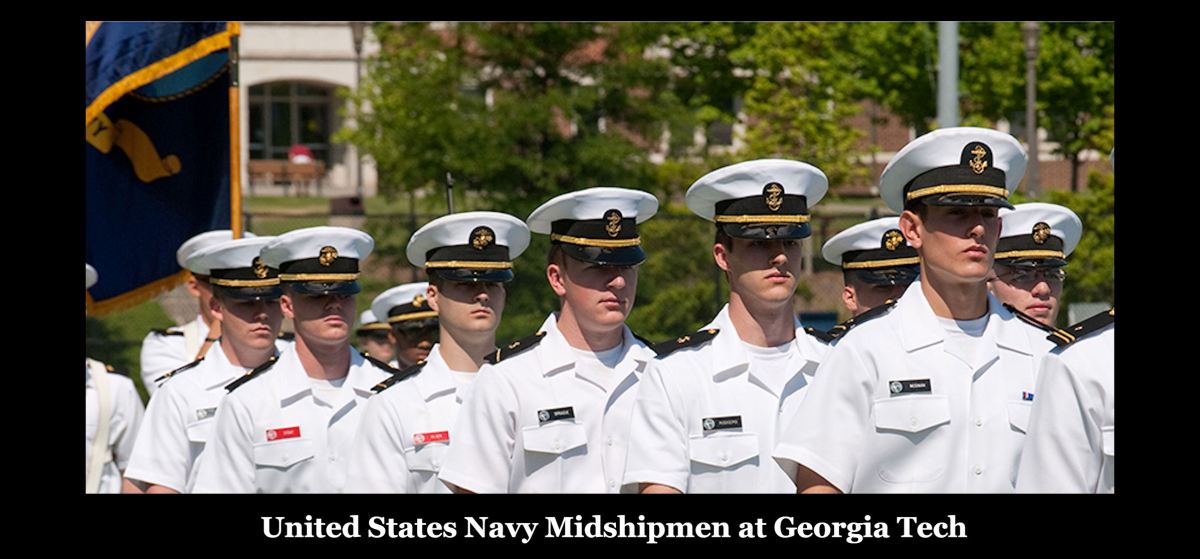
Especially, if you were under a contract to become a Science, Engineering, Submarine or Intelligence Officer, the Navy’s physical exam was more like applying to be an astronaut than the cattle herding process than enlisted personnel go through.
Long, long ago . . . during the Neolithic Period . . . a couple of weeks after turning 18 . . . I spent much of day, being analyzed like I was a newly discovered extraterrestrial cadaver. These are unsettling times, to say the least, so I thought I would throw in a couple of humorous articles, before getting back to the discovery of the South American connection. Having Native American heritage is a lot more fun than Hollywood makes it out to be.
by Richard Thornton, Architect & City Planner
Since age six I had dreamed of going to Georgia Tech and then becoming an Architect. From age 8 to 13, I spent long hours building miniature cities along a small stream in back of the house. They had dams, canals, water mills and expressways. Then I discovered girls and football.
As I approached graduation from high school, I began learning that architects don’t wake up one morning with a great idea and the next morning, its a finished building in perfect harmony with its environment. Back then, creating the construction drawings required long hours over a drafting table. I was outdoorsy. I wasn’t so sure that I wanted to spend the rest of my life, slumped over a drafting table in a Downtown Atlanta high-rise building.
Another bummer, I was offered football scholarships by several universities in Oklahoma, Texas and Virginia after the Atlanta TV stations showed a video of me (a tackle) outrunning and tackling an Allstate halfback in the big Newnan High game, when there was nothing between him and the goalpost. Georgia Tech scouts came to see me also, but said it was Tech’s policy not to give football scholarships to architecture students, since our classes last till 5-6 PM. Six PM! . . . you mean that I will be in class from 8 AM to 6 PM each day? That <expletive deleted>.
The U. S. Navy came to the rescue. After I received the acceptance letter from Georgia Tech, my counselor notified me that the US Navy wanted to talk to me. On the appointed day, two dashing young officers in their sharp winter dress uniforms showed up. I instantly noted that every girl at Lakeshore High School stopped in their tracks and gawked, even lusted after (in a Biblical way) the two officers as they came down the hall.
The two officers offered me a plum of a Science and Engineering Contract to become a SeaBee officer. However, the Navy had examined the achievement and mental skills tests that I had taken at my high school and decided that I would be ideal for a new program in which the SeaBees built schools, clinics, hospitals and recreation facilities for impoverished communities near overseas Naval bases. I would get to see the world and typically be designing buildings in tents or temporary buildings, set up near the project sites! .
After going through the NROTC program at Georgia Tech and graduating, I would become a Second Lieutenant. Annapolis graduates start out as Ensigns. As a S & E officer, I would be paid a bonus – the same as a Nuclear Engineering Officer. After I passed my Architectural Registration Exam, I would automatically jump to being a Lt. Commander. From day one, I would be earning more income than most architects in private practice.
The Navy contract application asked for race, which included “Mixed Ancestry.” Native Americans were becoming visible again – particularly the Southeastern tribes, but I knew that I was more White than American Indian. I didn’t want them to think that I was some sort of American Indian Movement Radical, so I wrote White instead of Mixed-Race.

Photograph, courtesy of Georgia Tech NROTC unit.
Mental Exams in the Morning
Exam day for future S & E officers began with the Officer Aptitude Rating (OAR) Exam. It contained lots of strange sections that measured cognitive skills, personality, social attitudes toward people of different backgrounds or ethnicity than the officer, our ability to make critical decisions, while being independent of senior officers and the brain skills to learn foreign languages quickly. Apparently, the same skills are needed for breaking or creating secret codes, if one is an intelligence officer.
They also had a questionnaire about contemporary relatives and past ancestors, who served in the military, including the Confederate Army. Thinking that they would be impressed with our family’s long history of patriotism, I put down that my gggg-grandfather was a scout for the United States in the American Revolution and Cherokee Wars. All my male ancestors served in the Confederate Army – mostly the famous Cobb’s Legion. A great-uncle commanded a troop of mounted Apache scouts in World War I. My “official” father was an infantry soldier in the South Pacific during World War II.
At that time, my Uncle Hal was Welfare Officer for all American Indian US Air Force Personnel in the Southeast and Latin America. It didn’t dawn on me that someone would take the time to figure out that my mother’s family were Creek Indians. LOL
I now know that my biological father’s family were also Creek Indians and the he played the drums in the U.S. Marine Corps Band. I played the drums in the Navy ROTC band.
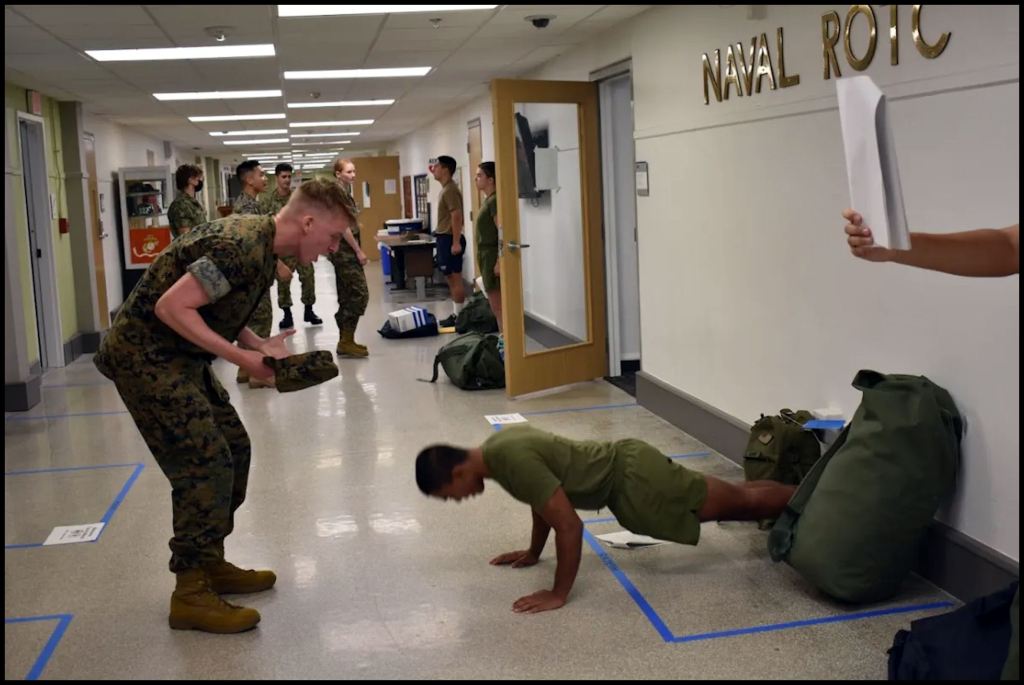
Photograph, courtesy of Georgia Tech NROTC unit.
Physical Exam in the afternoon
We went through all the experiences that all enlisted personnel go through then waited in line to have our body and brains tested by some strange machines. One of them tested our aura . . . the electro-magnetic fields created by our bodies. The dial barely moved for most future midshipmen.
My electro-test? . . . the dial went off the right end and my body electricity blew the circuitry on the machine. It was destroyed. The eyes of the Navy Corpsman, operating the machine went wide open. He looked at me like I was a monster then shouted “Hey guys, we’ve caught us an extraterrestrial trying to sneak in the Navy. Call the Shore Patrol!” (Same as the Army MP’s.) I THINK he was half-kidding, because afterward he and the other corpsmen were laughing.
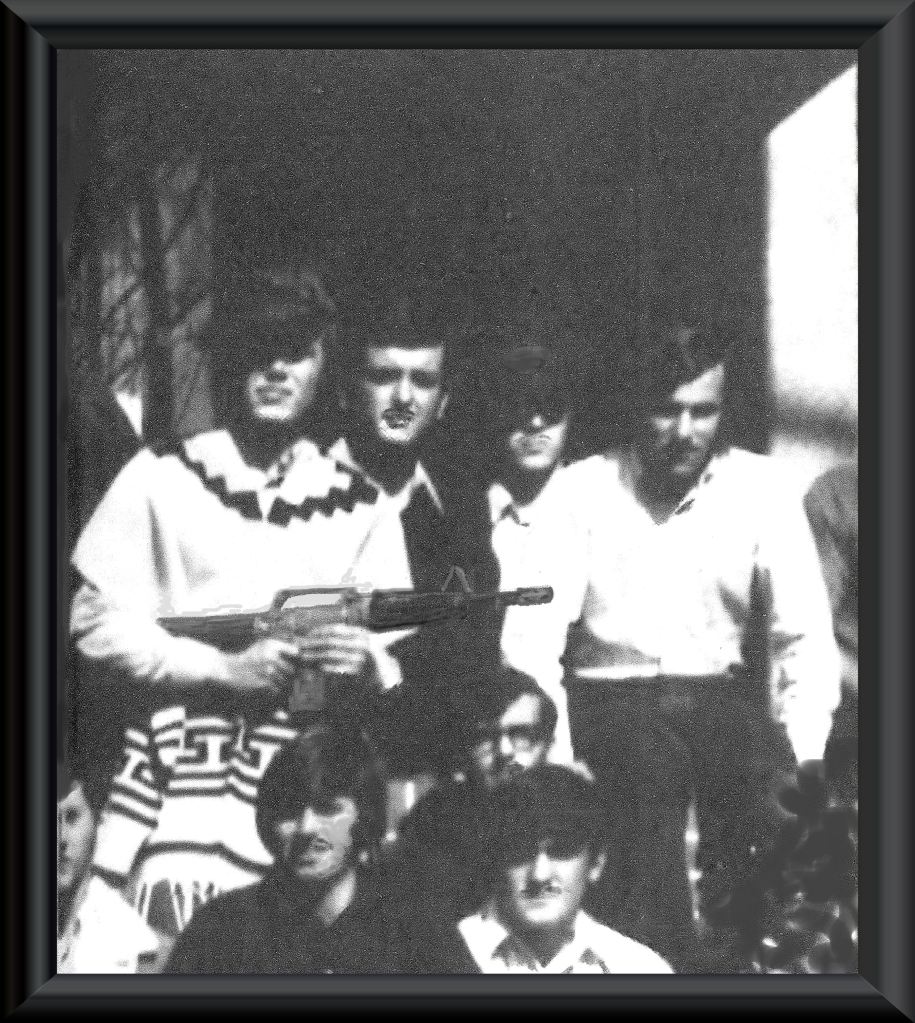
The summer of 1970
The Aftermath
A few days later I was called back to have a special meeting with the Navy Captain, who commanded our NROTC battalion. I was afraid that I had been kicked out of the Navy, because of frying the circuits on their machine. Nope! There were, however, special conditions to my contract, sent down from Washington, DC.
- I was not to be allowed in a submarine, airplane cockpit or Combat Information Center on a ship.
- My naval service would be limited to the Seabees, SEALs, Intelligence, Quartermaster Corps, and Naval Attache’ at embassies.
- I was to be reclassified as an American Indian. My blood chemistry was typical of American Indians. My Uncle Hal was listed as an American Indian by the US Air Force. My mother was listed as a federally-recognized Creek Indian, who had received financial reparations from the Bureau of Indian Affairs. At that time, there were no federally-recognized Creek tribal governments in the USA and the words “Native American” meant anyone born in the USA.
Evidently, the US Navy was trying to recruit Creek and Seminole Indians for independent command officers, because of our typical “cool under fire” disposition and ability not to screw up when not under the command of any senior officer.
I never served as an active duty officer. By my sophomore year, the Navy was forcibly retiring 30,000 SeaBees and didn’t need anymore SeaBee officers. After doing some things for Naval Intelligence in Mexico and Guatemala, I was offered a contract in which the U.S. Navy would pay for me getting a Masters in Foreign Languages and a PhD in International Affairs, before I became a career Naval Intelligence Officer.
I declined that offer, because I would be kissing off five incredibly hard years at Georgia Tech’s architecture school. Instead, we reached an agreement where I would be given “opportunities” overseas as a civilian (Inactive Reserve Officer), during which I would be doing things for Naval Intelligence. The U.S. Navy made good on that deal. I had some incredible international experiences, which are bearing fruit these days.

U.S. Navy ROTC Winter Dress Uniform – Courtesy of the U.S. Naval Academy
This Cubana couldn’t resist a Navy uniform
That was a different era, when single men and women, initially under 21 and later under 18, could not obtain birth control methods without the written permission of parents. Thus, we college-bound high school students learned how to have fun without risking unwanted parenthood. The law did not change until 1972, the year I graduated from Georgia Tech.
There were only 28 female students at Georgia Tech. I didn’t have a car and had to study most of the time. I couldn’t date gals, who liked marijuana (over half of ’em) because the Navy tested our hair and urine for pot and hallucinogenic drugs periodically. Many other women complained that I was too conservative, because I wouldn’t get soused on booze. The alcoholic beverage drinking age was then 18 in Georgia.
So, I had Junior year in high school type dates on Saturday night at the fraternity house by double-dating with an old fraternity brother, who owned a car. I had a date most Saturday nights, but no time or “wheels” to develop a “dating” relationship with the few young women, who didn’t frequently get stoned or drunk.
I had my first “adult” dating experience my sophomore year at Georgia Tech, while wearing a US Navy winter dress uniform. What they say is absolutely true.
One chilly Saturday morning in December 1968, I was collecting donations for the Toys For Tots program, run by the U. S. Marine Corps. I was in the Midtown Neighborhood, which was then the largest Hippie Colony in the United States. Since a Navy winter uniform is really black, not “Navy Blue,” most residents thought I was some sort of policeman. They didn’t answer the door and ran out the back door with their marijuana and LSD.

Teresa’s rental house on Argonne Ave. in Midtown Atlanta
I stopped at a rental house on Argonne Ave. A young, barefooted, Latin American woman came to the door in leotards and a tight dancing top. I stood there stunned and could barely get out a “Good morning!”
She was smiling and gorgeous. She asked me if I was a policeman. I said no and explained that I was a Navy ROTC architecture student at Georgia Tech collecting donations to buy toys for children in low income families.
She sighed and said, “The stupid Gringo men at Emory (University) won’t date Latin American girls, because we won’t do heavy drugs and get drunk. Would you like to come inside for an authentic Cuban breakfast? You can be my date this weekend.”
Teresa was an art student at Emory University and a semi-professional dancer. She came from a wealthy Cuban-American family that owned a Coco-Cola franchise in Florida. From the posters on the wall, it was obvious that she was an avid Anti-Vietnam War activist. That was going to be a deal-breaker, even though most of the Naval officers teaching us, were opposed to the Vietnam War also . . . even the one, who had received the Congressional Medal of Honor there!
I assumed that she meant that I would join her for a 20 minute breakfast to be chastised for wearing a military uniform and then be on my way. Nope! She asked me if I had fought in Vietnam. I told her no. After graduating in 1972, I would probably be going to Latin America, the Philippine Islands, Polynesia and Africa to build schools, hospitals and community centers for poor neighborhoods near Navy and Marine bases.
Like in a scene from the future 1982 movie about another Naval officer, “Officer and a Gentleman,” Teresa spontaneously grabbed my tie and pulled me to her then kissed me warmly. That was not expected. She then said, “I can’t resist you in that Navy uniform. It better come off so we can eat breakfast.” Gulp! I don’t even know her last name!
She went to her bedroom and brought out a loose-fitting Cuban shirt for men . . . then took off my tie, coat and white shirt. I was absolutely paralyzed. Things like this only happen in the movies, not to me. Every other Emory date I had, was not nearly as pretty as Teresa and ended the evening . . . standing five feet from me and by saying, “I am sure you will find some nice girl in the future.” (not kidding)
She slowly put the Cuban shirt on me then began cooking a traditional Cuban breakfast. I began making excuses in my head as to why I really did not need to return back to the architecture building at Tech to draw on a class project.
The unexpected “ménage à deux” ended around midnight on Sunday! In the mean time, she taught me how to excel at the major Latin American dances then excel at other things then at noon took me to Atlanta’s best Cuban restaurant . . . introducing me to the restaurant owner as her new soulmate, who does not get drunk like the immature Emory boys. Among many activities that we did that weekend was attend the Sunday night Christmas Concert at Peachtree Christian Church in Midtown, featuring the Robert Shaw Chorale. Magically, it was snowing as we exited the church.
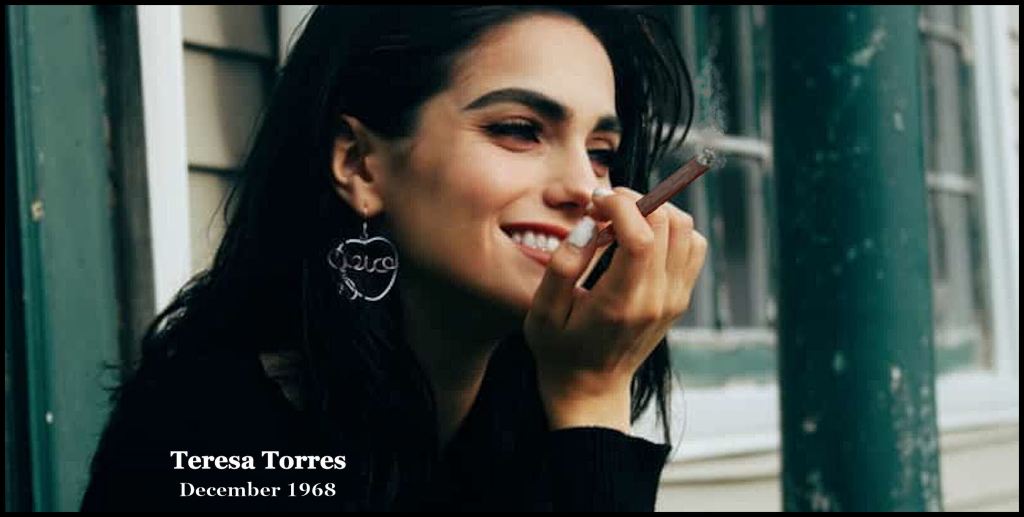
This lovely anti-Vietnam War activist couldn’t resist Navy uniforms!
The following weekend, Teresa and several of her activist friends went to a demonstration at Fort Benning, Georgia (now Fort Moore). I never got the details, but she was arrested for damaging federal property and sentenced to two years in federal prison.
Her father had been a major donor to President Richard Nixon’s campaign and so. after several months of incarceration, got her released and pardoned. There was a condition, though, she had to switch to the University of Miami and live at home. I assumed that I would never see her again, even though we exchanged Christmas cards and a few letters.
In the spring of 1970, she telephoned me with what she thought was exciting news. Her parents were going on a summer long vacation to Europe in order to celebrate their 20th anniversary, After telling her father that I was a Naval officer in training and Georgia Tech student, she persuaded him to pay me the money for being her body guard that he was going to pay a private security service. I am sure her father knew what was going on and was hoping that the summer would end in a permanent relationship, instead of her continuing to go out with wussy, leftist American eggheads or brutish Colombian narcos.
It was the equivalent of $7000 a month today. Alas, in six weeks, I was headed to Mexico on the fellowship. My life was about to take another path.
You might think that I would never see Teresa again. That is not the case. In the autumn of 2009, I was hiking along a gravel road in the Rich Mountain Wilderness Area of north-central Georgia with my three herd dogs. A chauffer-driven limousine stopped by me. The Latin American lady in back pretended that I was a stranger to whom she was asking directions.
With subtle English words that her Latin American driver wouldn’t discern, she let me know that her presence was not happenstance. She was indeed, Teresa and she knew I lived in Jasper. Her vacation home was on Aska Road near Ellijay and her husband was too busy with his girlfriends to ever go there.
Alas, it was the Great Recession and I was walking to Lake Blue Ridge to fish, because I couldn’t afford to buy meat at the supermarket. In seven weeks, I would be illegally evicted from my home on Christmas Eve. Maybe in her current position of wealth and power, Teresa knew that, too. However, it didn’t dawn on me at the time. I was too cautious that afternoon and there was no one at her vacation home on Christmas Eve. Guess we will never know, will we?

Photo and post card sent by Teresa in 1970
The next funny article will tell you about the deceitful Georgia Mountain Pentecostal preacher, who was “slain in the spirit,”
 The Americas Revealed