
Slide Show
The core area of the Adena Culture was in the Ohio River Basin and West Virginia Mountains from 500 BC to 100 AD. No one knows what these people called themselves. Their academic label comes from the name of the mansion, built by Thomas Worthington in the vicinity of Chillicothe, Ohio, which was near a large mound.
However, the cultural influence of the “Adena” People extended into the Shenandoah Valley, parts of Kentucky – outside the Ohio Basin, Tennessee, northern Alabama, Indiana, Illinois, Southern Wisconsin and parts of extreme western Pennsylvania.
by Richard L. Thornton, Architect & City Planner
Back in the Neolithic Period, when I was in college, all archaeology books stated that the Adena People built the first mounds and made the first pottery in North America. However, even by then radiocarbon dating was telling a very different story . . . but being ignored by book publishers in the Northeastern United States. There are mounds in Louisiana and Georgia, which are thousands of year older than those in Ohio. The oldest known pottery in North America is found in Georgia (c. 2500 BC).
While the carved stone and ceramic tablets of the Adena Culture strongly resemble contemporary art on Austronesian, Mesoamerican and northern South American wooden paddles, used for applying tattoos, the architecture of the Adena People seems to belong somewhere else . . . on the other side of the Atlantic Ocean.
The Potawatomi, Ottawa and Ojibwe Peoples traditionally lived in houses, identical to those of the Adena People. Also, their traditional art motifs are very similar to Adena art. This strongly suggests that they are at least partially descended from the Adena People. Although these tribes originated on the Atlantic Coast of the Maritime Provinces and Maine, they were living in the Great Lakes region, when French and English explorers arrived. That is very close to the Adena Heartland.
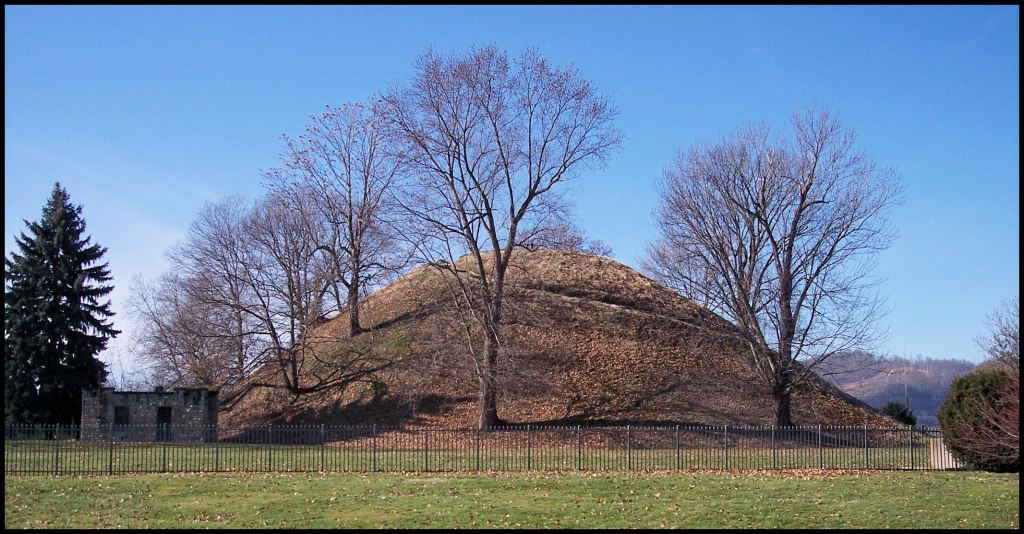
The Grave Creek Mound in Moundville, WV is the largest mound in the Adena “Heartland.”
Lessons learned under the Midnight Sun
I learned the architectural traditions of the Adena Culture the good ole fashion way . . . by working in the heartland of the Scandinavian Bronze Age Civilization . . . Skåne. This ancient province is in the southern tip of Sweden.
Obviously, few, if any, North American archaeology professors tell their students that the burial mounds of Neolithic and Early Bronze Age Sweden were identical to the burial mounds of the Adena Culture, but it is a fact. The Bronze Age ended in Southern Sweden about the time that the Adena Culture appeared in Ohio. Why they were identical is an unanswered question. Here is how I discovered that fact.
The Architectural History textbook that I taught Pre-Columbian Architecture with at Georgia Tech (immediately prior to traveling to Sweden) contained a blurred, black and white photo of the Grave Creek Mound above, plus a grainy photo of the Cincinnati Plague, seen in the previous article. There was a short paragraph, telling students that the Adena People built the first mounds in North America, plus made sophisticated stone and ceramic tablets.
The book then moved on to a somewhat larger discussion of the Hopewell Culture in the Ohio River Basin then had even larger sections on Cahokia Mounds in Illinois and Chaco Canyon in New Mexico. They completed the only chapter on the indigenous architecture of North America. There was absolutely no discussion of the thousands of Native American town and mound sites in the Southeastern United States.

This is talented artist, Herb Roe’s, conception of the “Biggs Site”(15Gp8), also known as the Portsmouth Earthworks Group D, an Adena culture archaeological site located near South Shore in Green County, Kentucky. The site was a concentric circular embankment and ditch surrounding a central conical mound.
The Biggs Mound was part of a larger complex, the Portsmouth Earthworks located across the Ohio River, now mostly obliterated by agriculture and the city of Portsmouth, Ohio. The site was surveyed and mapped by E. G. Squier in 1847 for inclusion in the seminal archaeological and anthropological work” Ancient Monuments of the Mississippi Valley”. Digital illustration in Wikipedia, All rights held by the artist, Herb Roe © 2022.
Upon arrival in Landskrona, Sweden, I quickly realized that daytime lasted as long as 18 hours and night-time was like dusk in Georgia. I wouldn’t see any stars until September. I began exploring the city and its surroundings on my bike after supper. Once I was out in the countryside, I began seeing lots of “Indian” mounds . . . Herregud! Over a hundred burial mounds ring this city of 47,000+. There were both Iron Age and Viking Age earthworks within the city’s location, but they are long gone.
The mounds on the ridges near Landskrona were smaller and shaped differently than the better known mounds of the Iron Age and Viking Age, built by Germanic peoples, who entered Scandinavia from around 500 BC . . . about the same time that the Adena Culture began in the Ohio River Basin.
Actually, prior to the bicycle tours, I didn’t have a clue that there were ANY mounds in Sweden. My new official Swedish girlfriend, Britt, suggested that we visit the city’s history museum on Saturday morning so I would know something about Sweden’s long history. The conical Neolithic and Bronze Age burial mounds were built over log-lined graves of important leaders. The Neolithic burials were accompanied by grave offerings . . . mostly stone and ceramic artifacts. The Bronze Age burials initially had only a few copper, gold and bronze items, since they were all imported. Over time, there was increasing percentage of metal offerings.
An earth berm and outer ditch encircled the mound. Archaeologists have found the decomposed wood of a log palisade atop most of the earth berms, they have studied. The mounds were typically erected in clusters as more chiefs, priests and priestesses were given elaborate burials.

This is one neighborhood of a planned pedestrian community, which intentionally was made to look like it had been there for centuries. It was surrounded by 8,000 years of Swedish history.
My project was the design of a pedestrian village, surrounded by structures and archaeological sites going back to the retreat of glaciers from southern Sweden. My boss, Stadsarkitekt Gunnar Lydh, was soon astounded to learn that in my 8,136 hours in class at Georgia Tech, I had not been offered even five minutes of instruction on historic preservation. We did have seven 3-hours-a-week classes in architectural history, which spent a one hour class on the architectural history of all of the Scandinavian, Finnish and Baltic Sea nations! LOL
Herr Lydh quickly enrolled me in a series of audited classes and workshops on the architectural history of Sweden, going back to the first hunter-gatherers. This free education included how to build Adena Mounds or gravhögar, as the Swedes call them. Lund University is unique in that it offers parallel curricula in Swedish and English.

Adena and Swedish Neolithic-.Bronze Age burial mounds were identical
Other Adena Culture Mounds
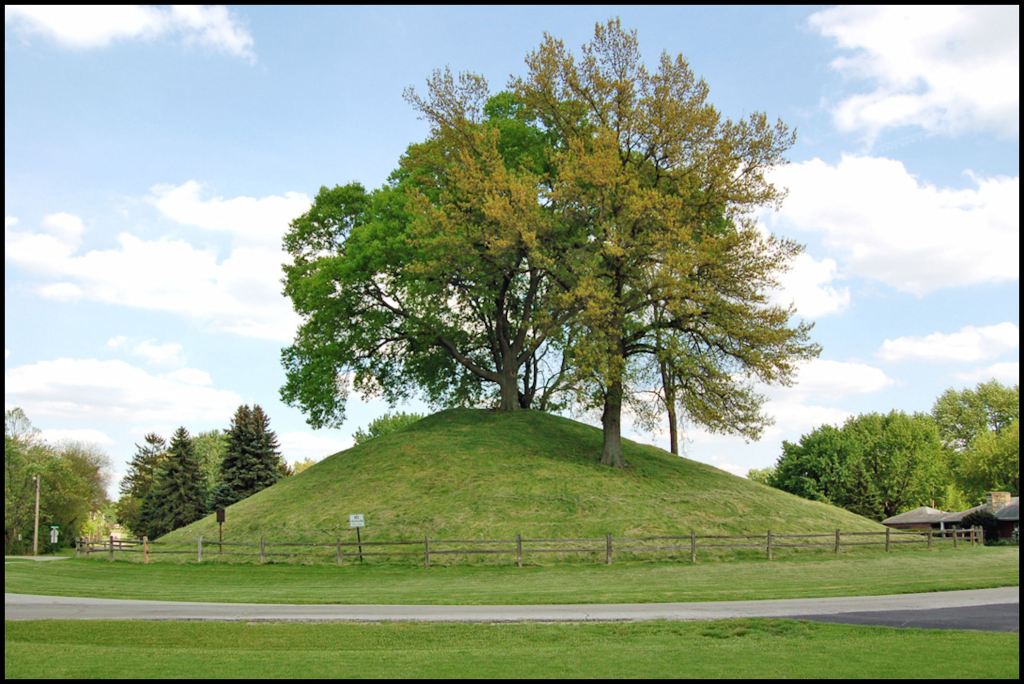
The Adena Mound – Enon, Ohio

Criel Mound – S. Charleston, WV

Jefferson County, Ohio Mounds
Examples of Adena Style houses
Thirty-six years later, in the deep recesses of my brain I only vaguely remembered seeing Southern Sami houses in a class at Lund University. They were a beehive shape. Then . . . the Citizen Potawatomi Nation contracted with me to build two large dioramas, which told the cultural and architectural history of the Potawatomi in all four seasons of the year. I knew absolutely nothing about their tribe or their two sister tribes, the Ottawa and the Ojibwe (Chippewa). I had to do a lot of research.
In the process, I discovered that during the winter, the Potawatomi, Ottawa and Ojibwe lived in houses identical to those of the Southern Sami in central Sweden AND the Adena Culture. There was another connection, though. The traditional art of these three tribes is very similar to the motifs seen in Adena Culture art.

One of the many scenes in the twin dioramas, “The Four Seasons of the Potawatomi” – Citizen Potawatomi Museum, Shawnee, OK. During the winter, the Potawatomi, Ottawa and Ojibwe lived in houses, identical to those of the Southern Sami in central Sweden and those of the Adena Culture. Their art strongly resembled Adena motifs. This similarity made me suspect that they were at least partially descended from the Adena Culture.
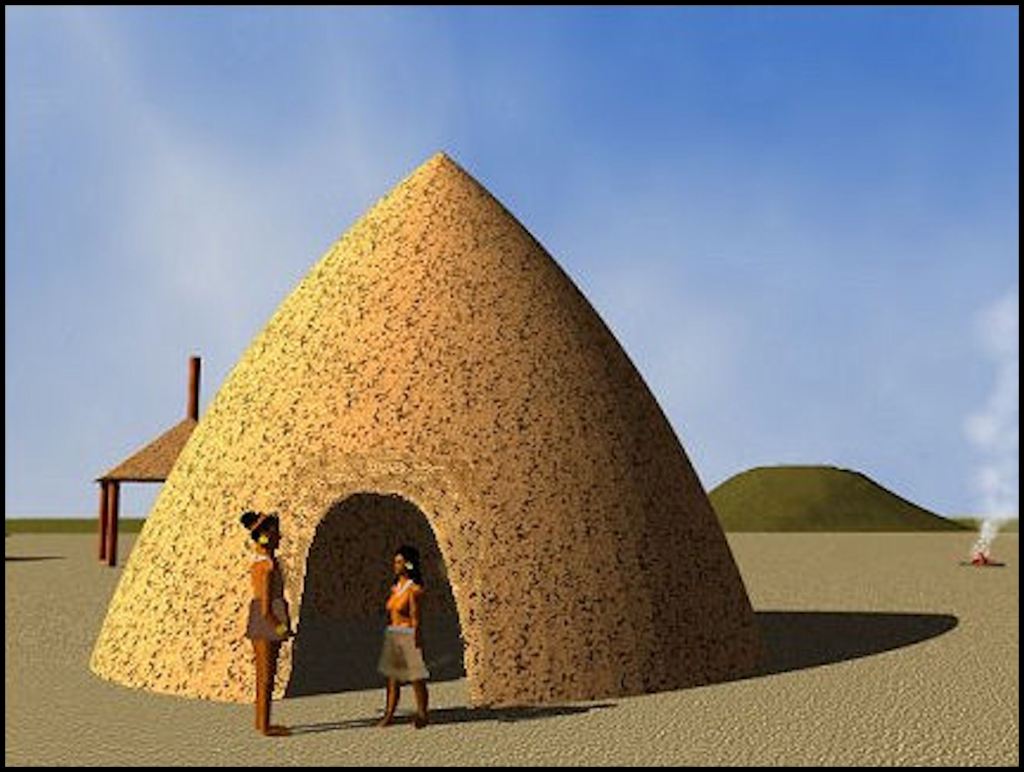
Traditional house of the Adena People, plus several Early Woodland Cultures in the Southeast
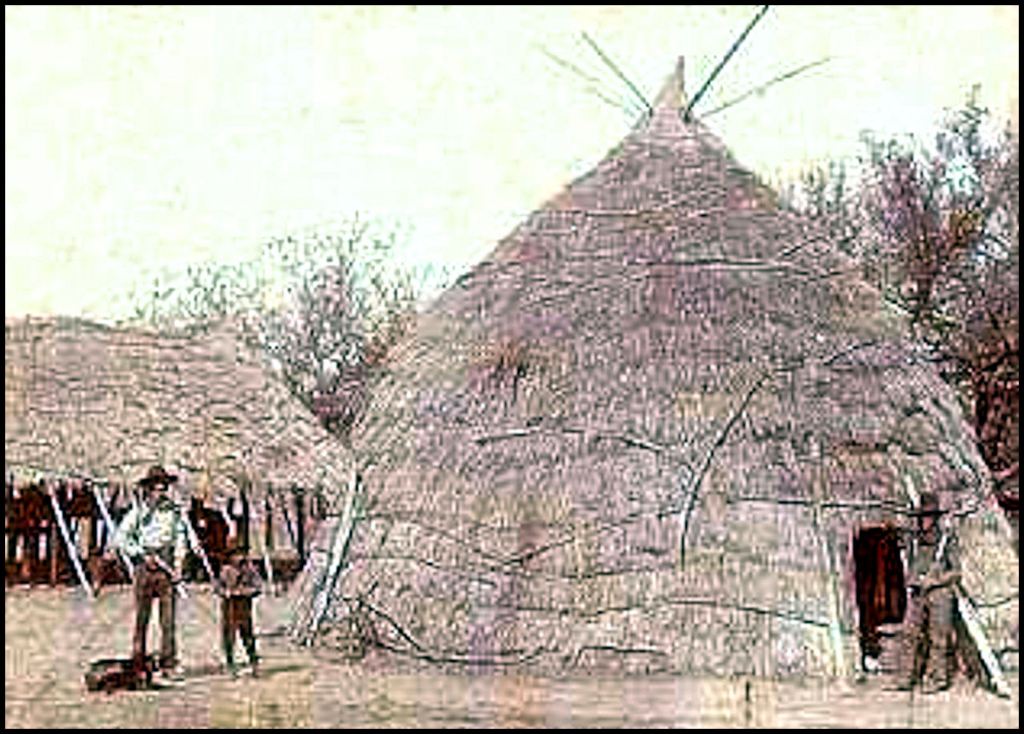
Typical Ottawa house in Ontario
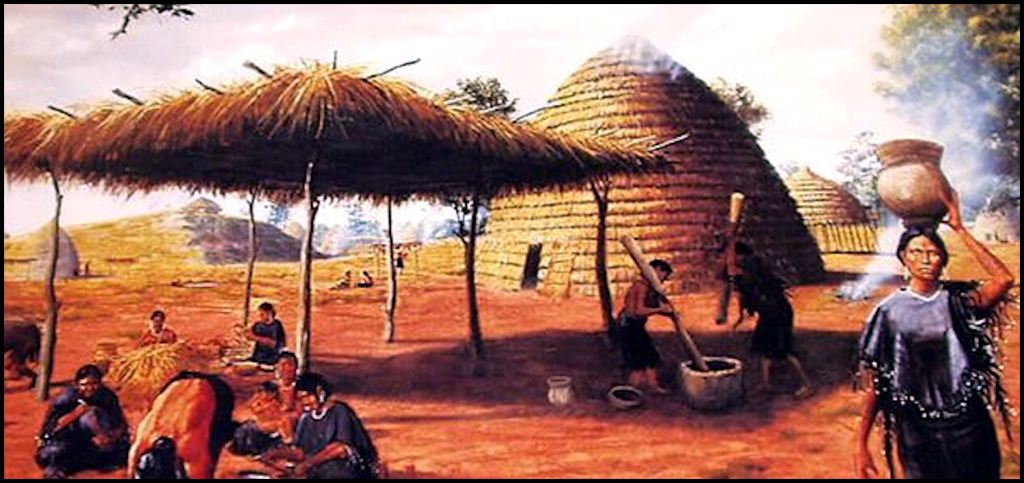
Caddo House

Jämtland, Härjedalen, Lillhärdal, Härjedalen, Southern Sami summer houses in central Sweden during the 1700s. They were identical to the Native American houses pictured above.
The Truth is out there somewhere!
 The Americas Revealed