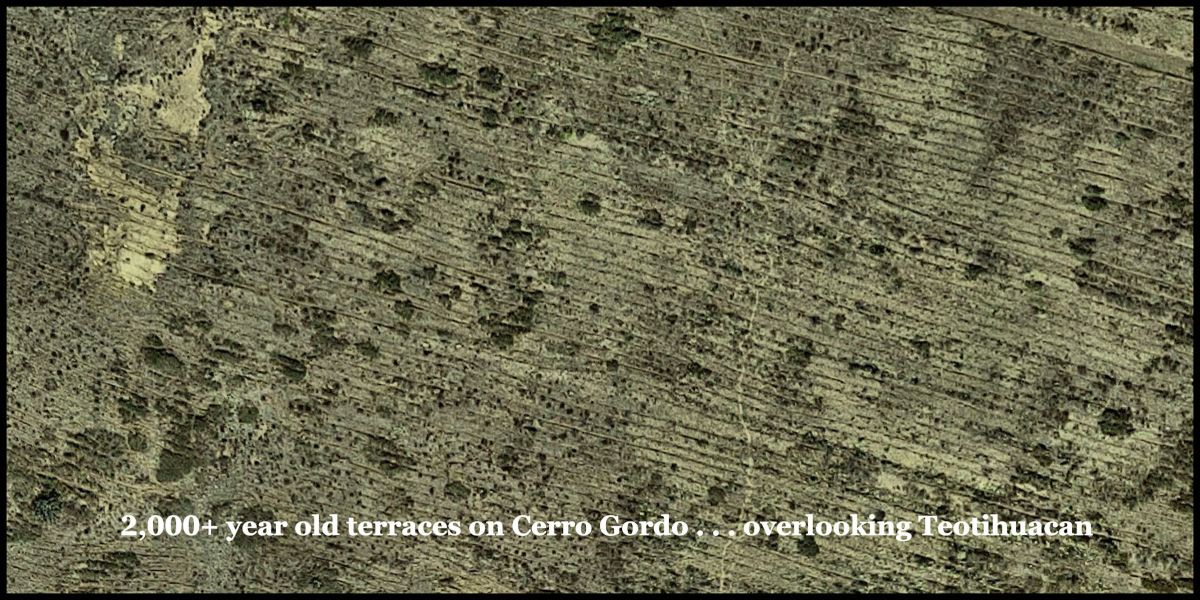
Their construction involved incalculable amounts of human labor, yet because they have been ignored by both the archaeological profession and government tourism agencies, very few people around the world are aware of their existence.
SLIDE SHOW . . . the “Mayas In Georgia” Series
by Richard L. Thornton, Architect & City Planner
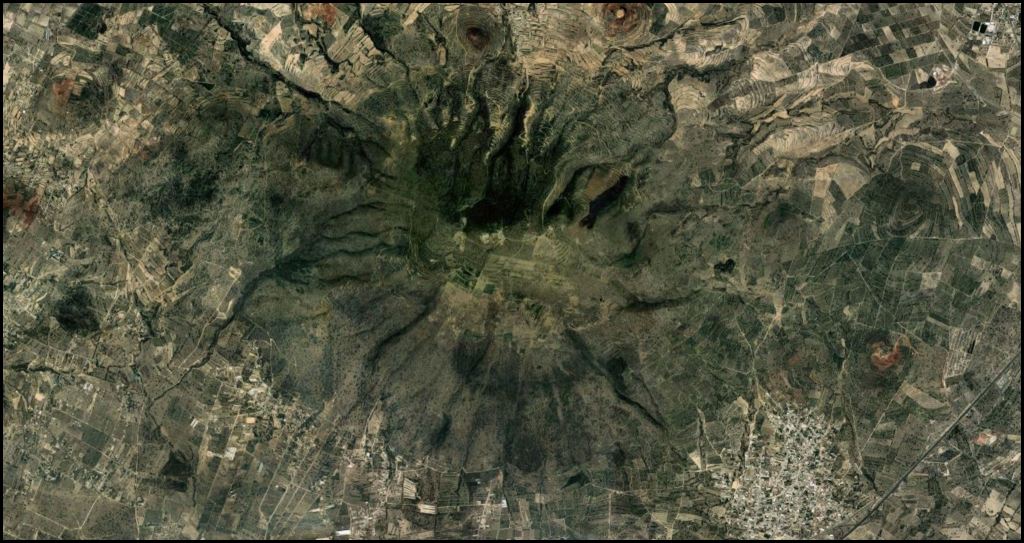
The entire eastern, southern and western flanks of 10,000 feet high Cerro Gordo are covered in stone agricultural terrace walls. On top I discovered the stone ruins of an ancient city that predated Teotihuacan. The footprints of the buildings are visible in this satellite image. Despite being one of the most respected archaeologists in the world and frequently working at nearby Teotihuacan, Dr. Román Piña Chán was not aware of either the mind-boggling scale of Cerro Gordo’s agricultural terraces or the stone ruins on top of the mountain.
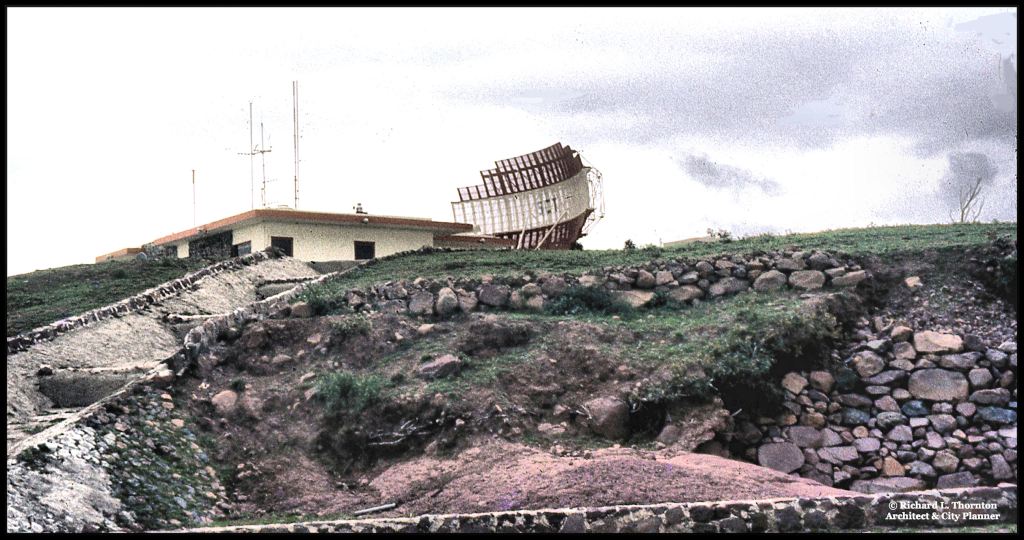
1970 – The Mexico City Regional Air Traffic Control Center was constructed atop the stone ruins of an ancient, fortified city on the crest of Cerro Gordo.
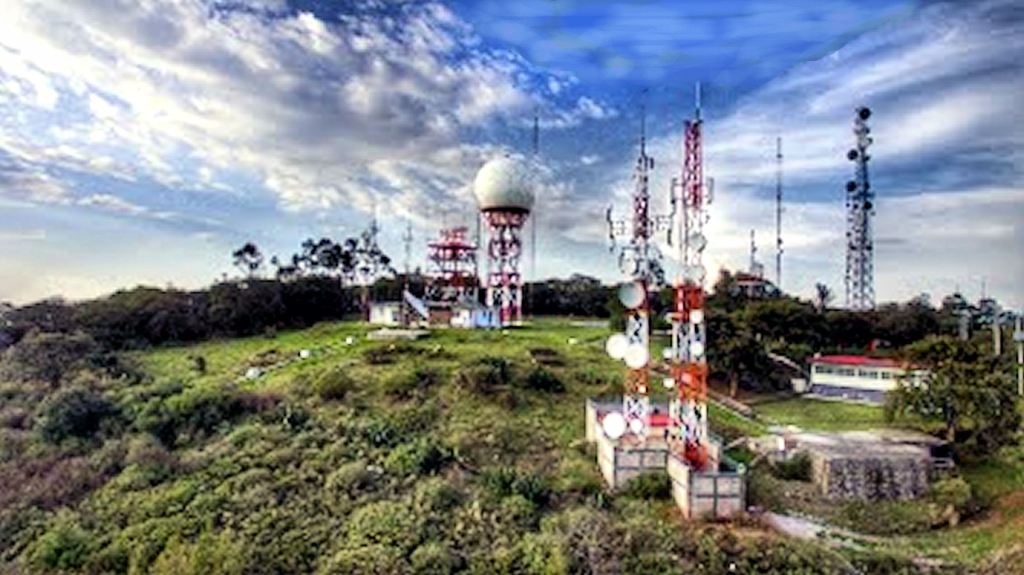
2018 – The scale of the Air Traffic Control Center had grown dramatically in the previous 48 years, but for unknown reasons, the Mexican government had covered with dirt the ancient walls next to the original building in the center that I photographed. This facility now can only be photographed with a high-powered telephoto lens. After some crazy Gringo architecture student climbed up the mountain and knocked on the door, begging for water, in 1970, the Mexican government constructed extensive security measures around the facility. LOL
The agricultural terrace complexes of Mesoamerica
Neither Dr. Arthur Kelly, my Georgia Tech professors nor Dr. Román Piña Chán ever mentioned the massive and endemic stone walled agricultural terrace complexes in Mesoamerica. They were not part of my fellowship syllabus. However, Piña Chán did throwaway my original syllabus, prepared by Georgia Tech professors, which was based on packaged tours and did force me to immerse myself amongst the Mexican people in commercial buses . . . and on many occasions . . . hoofing Boy Scout style. LOL In going on routes, not frequented by tourists is how I became aware of the terrace complexes.
The terrace complexes are most common in the highlands of Chiapas and Guatemala, but were constructed by indigenous peoples in most parts of Mexico . . . even in arid Sonora and Chihuahua states. Most look like the stone walled terraces in Georgia. In fact, the complexes in the Rich Mountain Wilderness Area near Ellijay, GA and at Sandy Creek near Athens, GA are much better built that the majority of those in Mexico and Guatemala.
I do not recall seeing agricultural terrace complexes in Central Mexico being actively cultivated. Most now were used for grazing sheep and goats. However, many terrace complexes in the Maya highlands are still being cultivated. Some of these complexes are over 2,000 years old!
High quality stone masonry in these terrace complexes can only be found near Maya cities, such as Tonino. About 95% of the terrace complexes are composed of stacked field stones and look exactly like those in northern Georgia.
Back in 2012, when Georgia archaeologists were ridiculing my photographs of the Track Rock Terrace Complex, they had no clue that Mexico contained thousands of stone-walled agricultural complexes, constructed with field stones. They assumed that the only Indigenous American terrace complexes were in Peru and looked like the finely crafted masonry of Machu Picchu. Actually . . . the Track Rock Terrace Complex is six times the size of Machu Picchu!
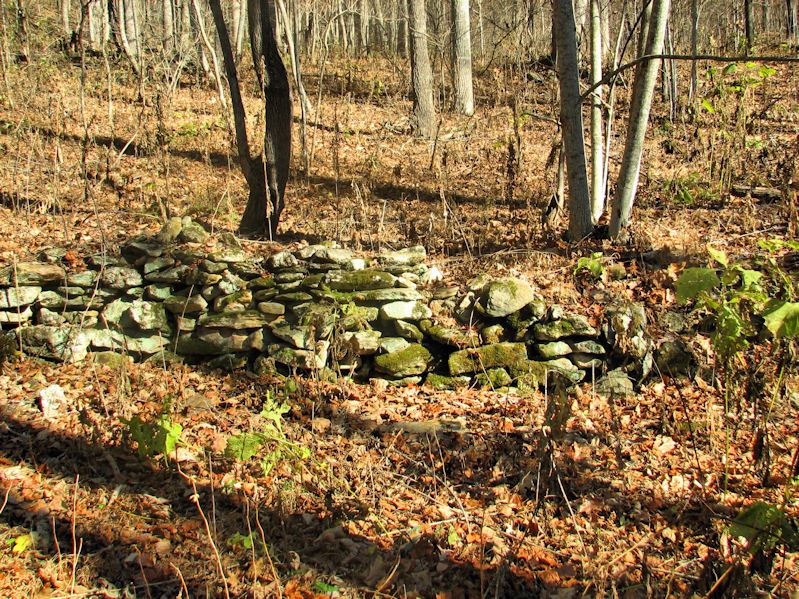
A stone wall at the Track Rock Terrace Complex.
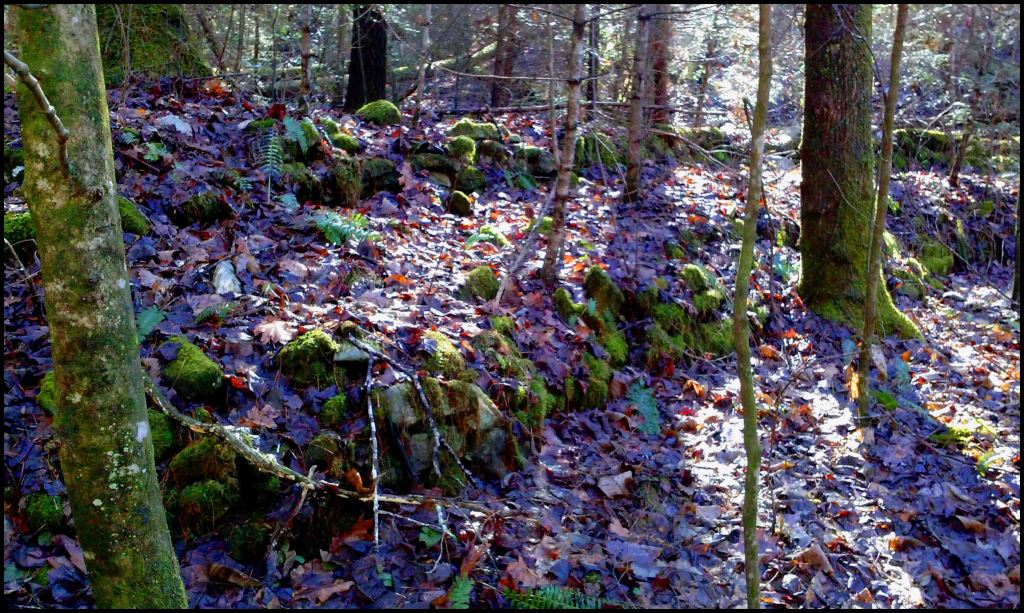
The Rich Mountain, GA complex contains this interesting double wall.

The terrace walls at the Sandy Creek, GA complex are superior in construction to most of those built by the Mayas and indigenous peoples in Central Mexico . . . except within Maya cities.
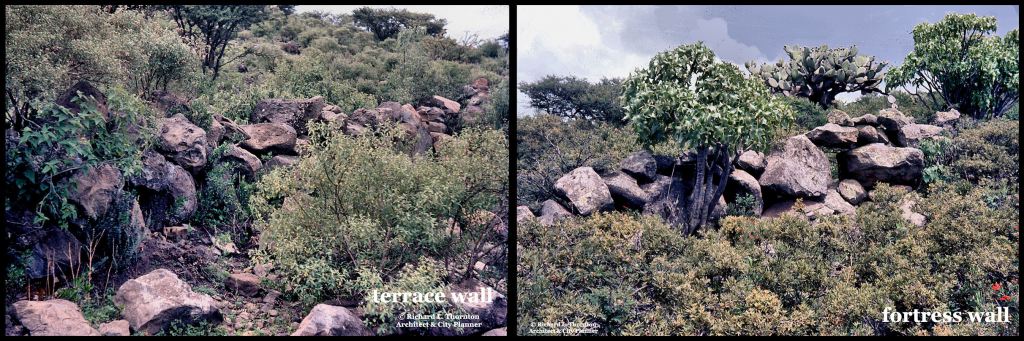
Typical terrace and fortress walls on the slopes and crest of Cerro Gordo. The fortress walls are built with boulders that could only be moved by several men.
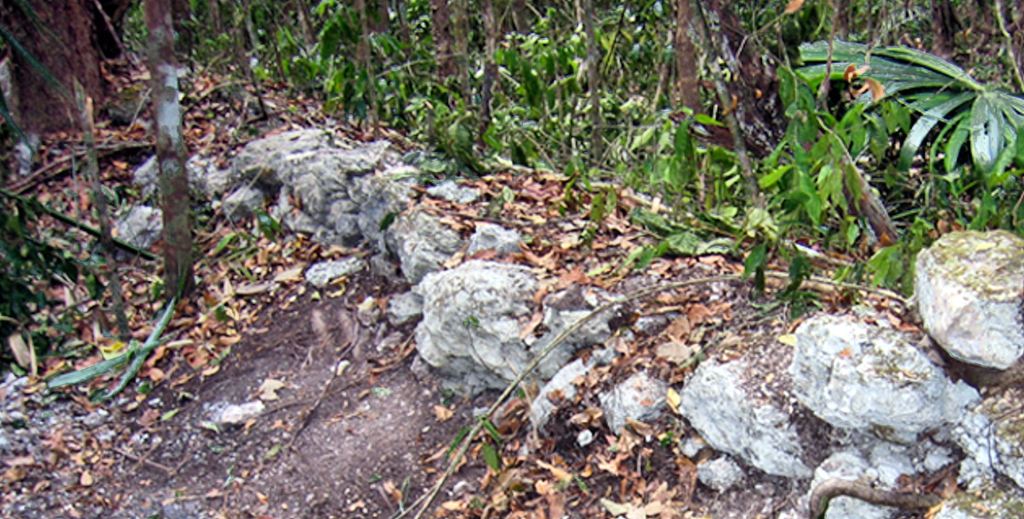
This is an old terrace wall in the Puuc Hills region of eastern Campeche. It was overgrown by jungle like most of those in northern Georgia.
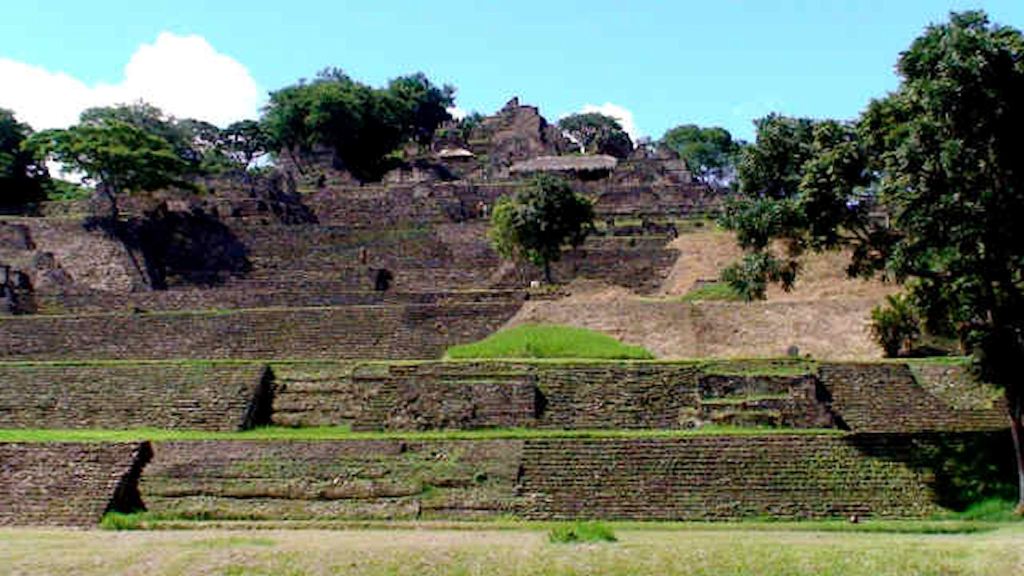
Agricultural terrace walls near the Maya city of Tonino, Chiapas
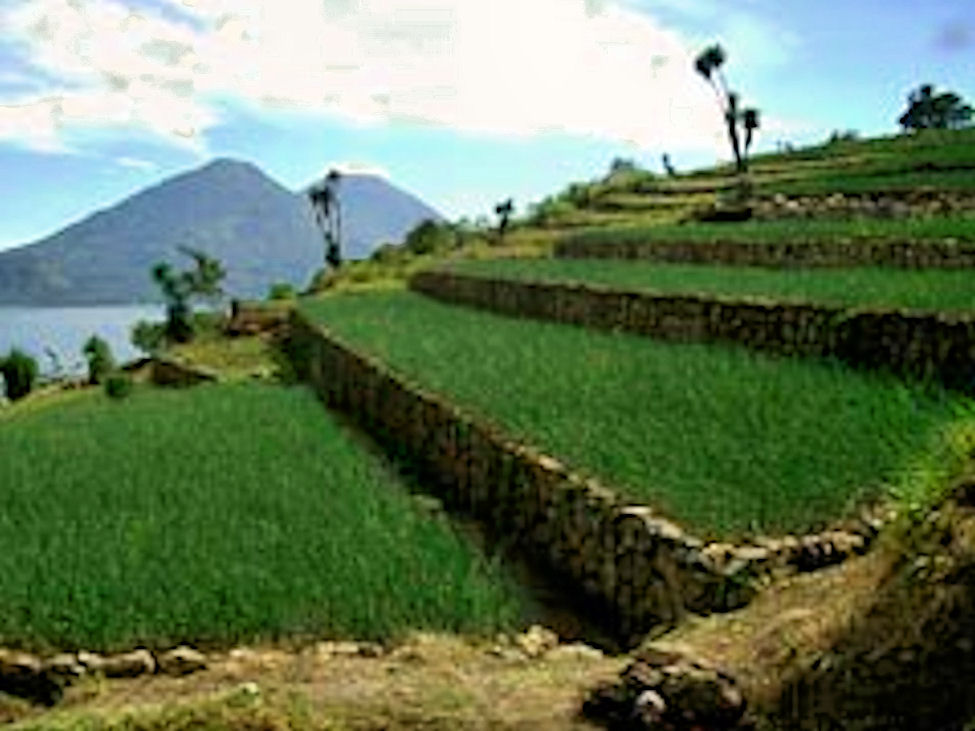
These carefully lain stone walls near Santa Caterina Polopo, Guatemala are an exception. At the top of the lakeside slope was the ruins of a Maya district administration center. It is now a charming colonial-era tourist oriented town.
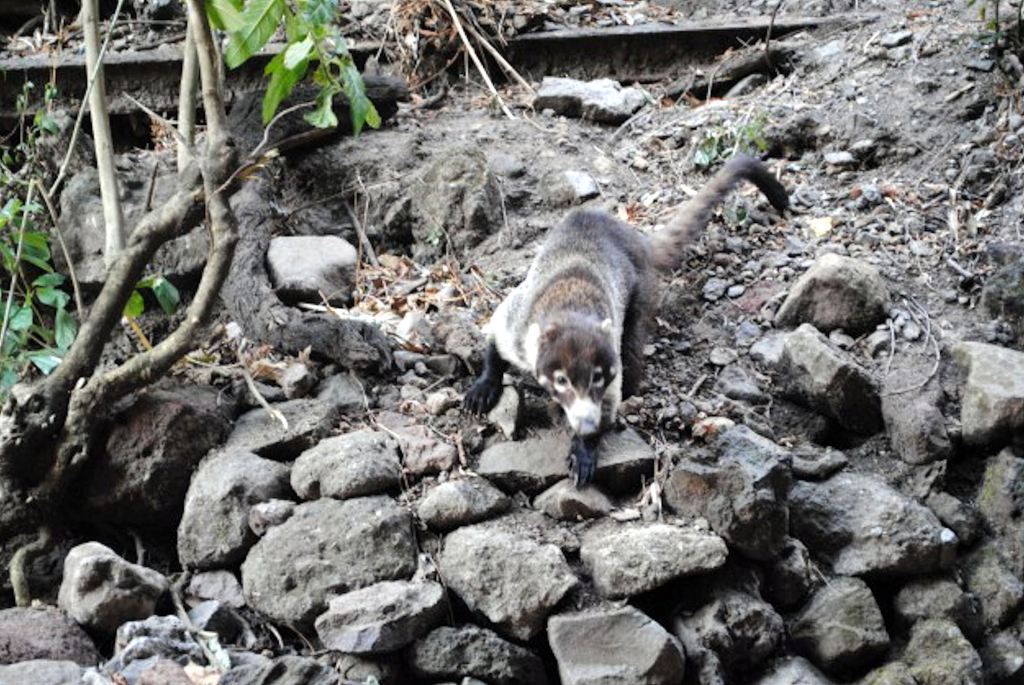
An abandoned agricultural terrace wall on Tepotzteco Mountain near Tepoztlan, Morelos in Central Mexico. Nearby, in 1980, archaeologist Alejandra Arredondo and I found petroglyphic boulders identical to those in the Etowah River Valley of Georgia and in County Kerry, Ireland!
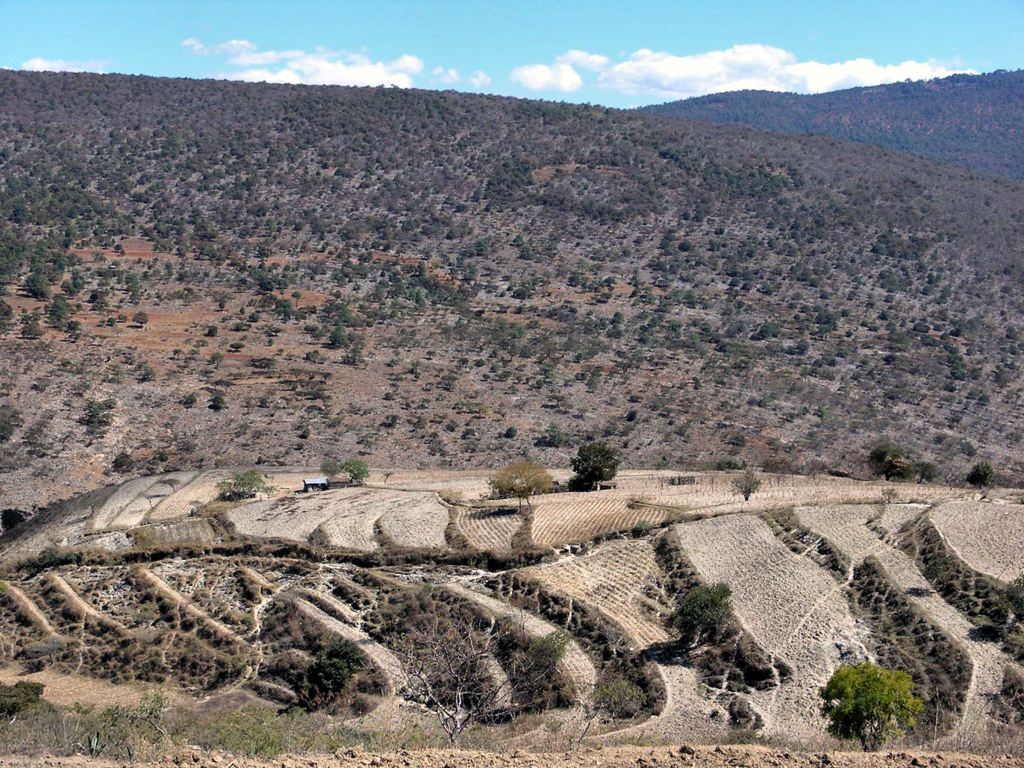
Cultivated, ancient terraces near the great ruins of Monte Alban near the city of Oaxaca. If you look carefully beyond, you can see that the whole mountainside was once terraces, before the land became a semi-desert.
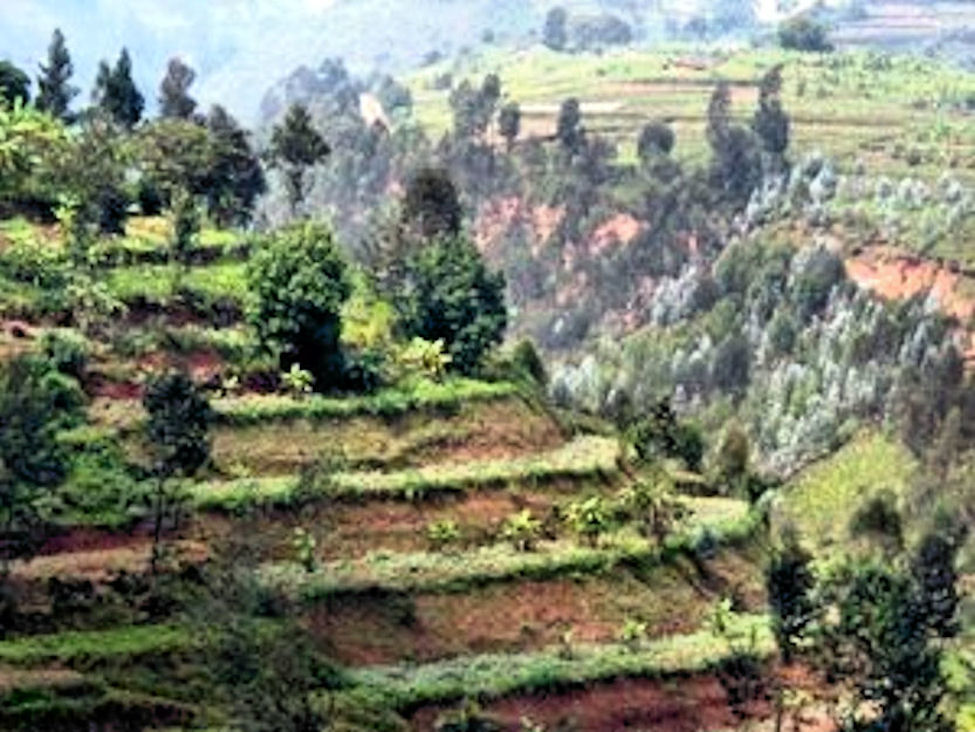
A partially cultivated terrace complex in eastern Chiapas
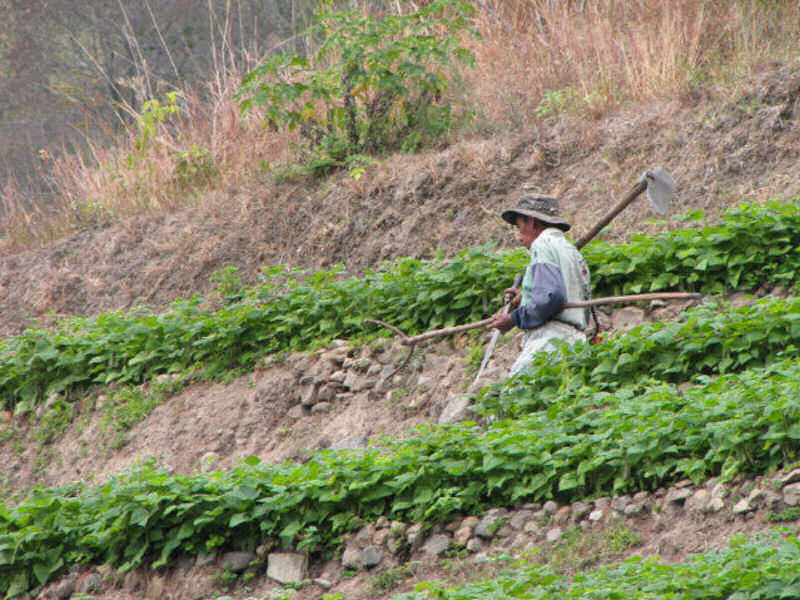
An Itza Maya cultivating beans on a mountainside near Lake Atitlan, Guatemala
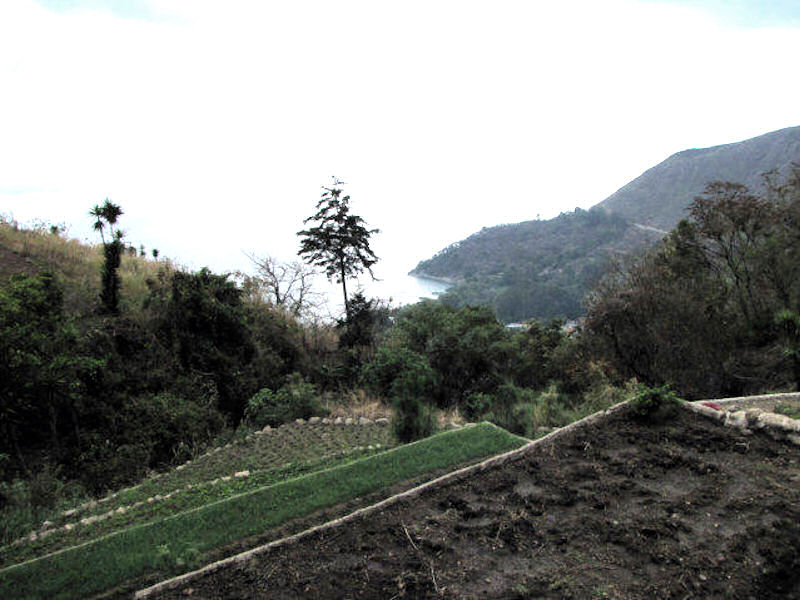
Actively cultivated terraces near Lake Patzcuaro, Michoacan
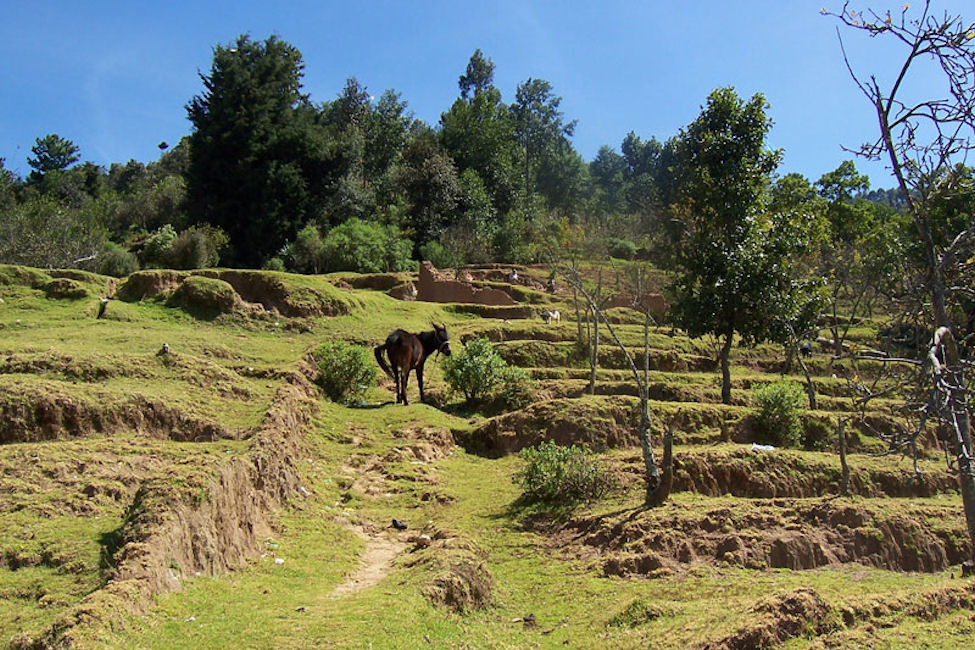
An abandoned terrace complex in western Chiapas. These terraces originally had log walls, but the wood has completely decomposed. One can see rock-less terraces at Little Mulberry River Park near the town of Auburn in Gwinnett County, GA . I suspect that many of the terrace complexes in Georgia began as log walls. Several portions of the Track Rock Terrace Complex look like that small stones have been added to existing terraces after the logs decomposed.
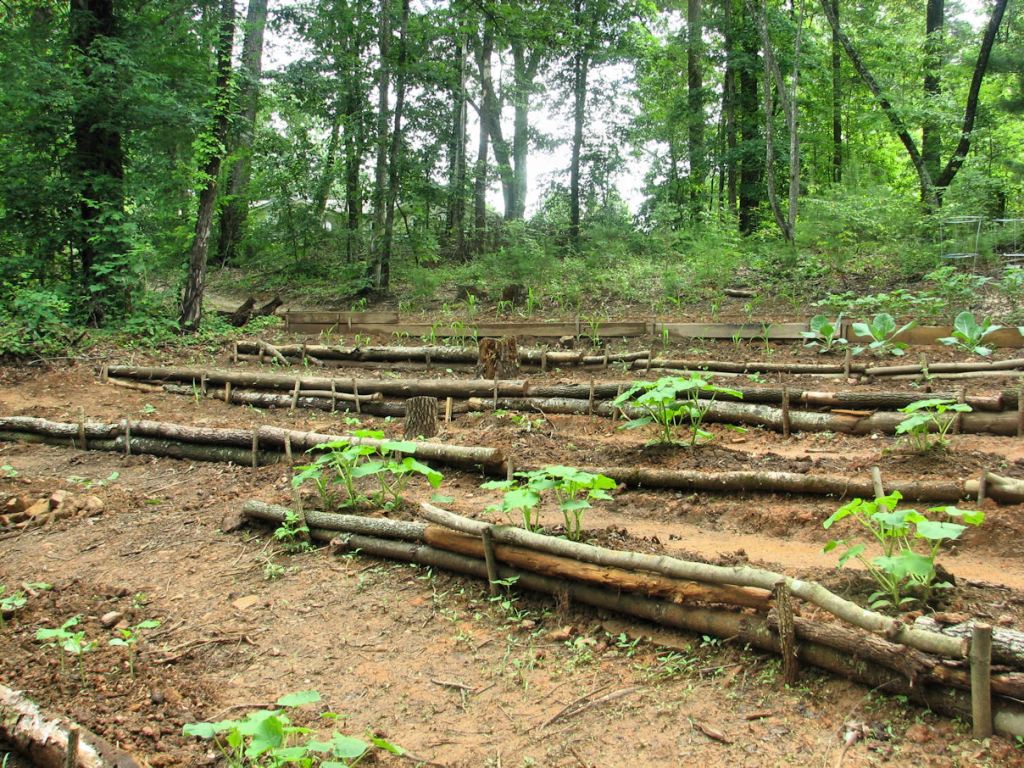
This is how the Georgia and Maya Highland terrace complexes began.

In 2013, built this stone wall in my large terrace garden for a Public Television documentary crew to film, so they would not focus on the ratty rental cabin I was living in . . . like the History Channel crew did the previous year.
Life is Stranger Than Fiction
While hiking on a trail to the Ejército de Dios guerilla army camp in the Guatemalan Highlands I spied a particularly interesting terrace complex overlooking a gap in the mountains. The guerillas were originally armed by the Irish Republican Army, but were getting heavier weapons that had been stolen from U. S. military bases near Washington, DC.
Naval Intelligence wanted me to check them out. My cover was that I was a college reporter for the Great Speckled Bird hippie newspaper, based in Midtown Atlanta. I actually did write an article for the Great Speckled River on the 1968 Tlatiloloco and Politechnico student massacres, while in Mexico . . . so my cover would have checked out.
The Ejército de Dios was based at a Maryknoll Mission in the Highlands. The two nun-nurses lived together as a couple. The two Maryknoll brothers had Maya wives and children. The Maya soldiers were encouraged to have wives or girlfriends live with them in the camp, so it would look like a Maya village from airplanes above. The guerilla unit turned out to be a “Christian pro-Democracy” militia that protected Maya villagers from warring Marxist and Fascist armies in Guatemala.
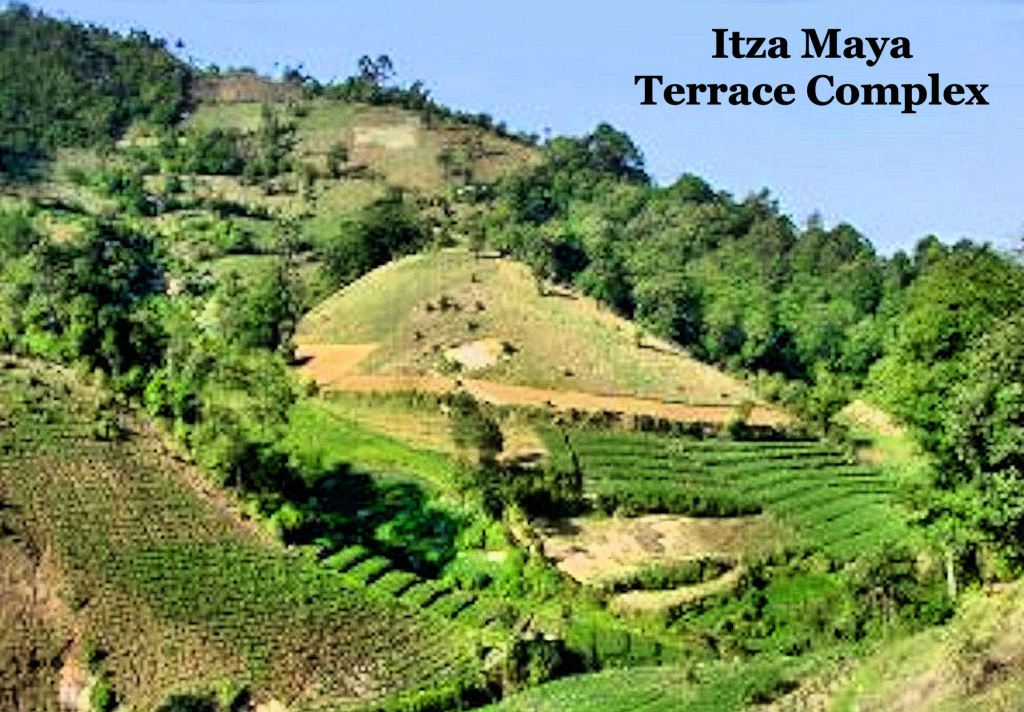
Forty-one years later, I would be standing on the slopes of Track Rock Gap in the Georgia Mountains. I would become astonished, when remembered this spectacular archaeological zone was identical in size, locale and appearance to one I had visited in Guatemala.
+
In 1970, the upper parts of this Maya terrace complex was used for pasturage. On top were the stone ruins of a former acropolis . . . just like at Track Rock Gap.
Lower terraces were used for growing beans (left) and corn (right). Tobacco, tomatoes and peppers were grown in the rich top soil along a small creek. Just like at Track Rock Gap, the terrace complex was bounded on its edges by small streams, which were used to irrigate the crops.
One never knows when we see something that seems inconsequential at the time . . . that will have a major impact on the world, years or decades in the future.
 The Americas Revealed