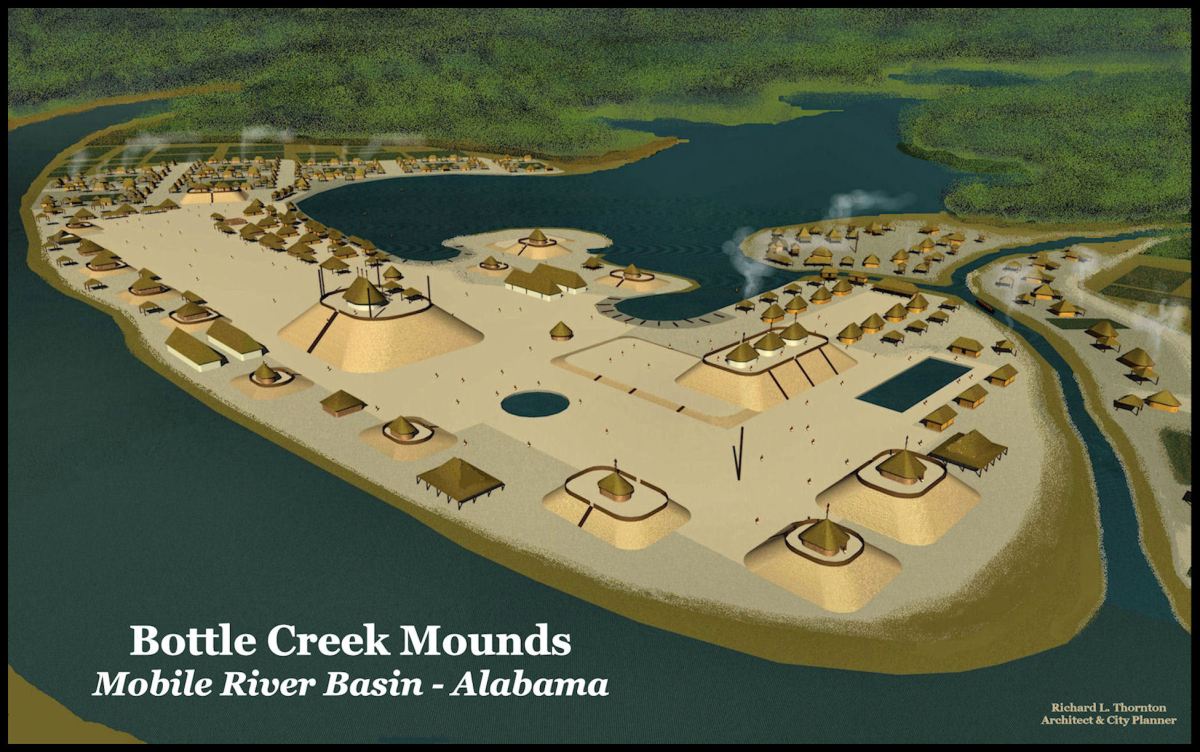
Twenty years of research went into proving that multiple bands of peoples migrated to North America from Mesoamerica and South America. This article will soon be followed by one on the words from the Caribbean Basin and South America. Most of South Atlantic Coast’s Indigenous words are from South America! Later in 2025, these two articles will be combined and expanded into a published book.
by Richard L. Thornton, Architect & City Planner

Chontal Maya town on the coast of Tabasco State, Mexico
Key Mesoamerican words
Note: In the Southeastern United States, the Itza Maya suffixes tee(people or tribe), haw (river) and hawche (shallow river) are frequently found attached to Muskogean root words. Most of these hybrid place names were not included in this list. The Itza prefix “I” or “E” can also be seen on several place names. It was placed before a tribal or town name to indicate the capital of a province.
Other common Mesoamerican words in the Southeast, Lower Mississippi River Valley and Southern Plains include:
Am (prefix) = place of, al (prefix) = place of, kalle = large house or residence of prominent person, chia = grain salvia, chichi = dog, chiki * = summer house or house, choko * = winter house or house, Etula = principal town or capital, haw = river, hawche = shallow river, ixim =- maize (American corn), kaw = eagle, mako or meko = king or town chief, chichi = dog. no-haw (noa) = river basin (territory), pa or pas (suffix) – place of, tama = trade or commerce, tamahi = trader or merchant, teka (suffix) = people or tribe, teo = god or deity, tl or tli (suffix) = place of, tula = town
*All of the Muskogean languages use choko, chiki or both words as their word for a house. This is highly significant.
References
(1) Itza Maya – JIILT’AN MAYA ITZA’ – Vocabulario Maya Itza’ – Itza’ — Español ~ Español — Itza’ Academia de Lenguas Mayas de Guatemala – Ciudad de Guatemala, julio 2021.
(2) Chontal Maya Dictionary – Keller, Kathryn C.; Luciano G., Plácido (1997). Villahermosa, Tabasco, Summer Institute of Linguistics.
(3) Diccionario Chol y Cho’I Maya de Chiapas (1999) – Aulie, H. Wilbur, Evelyn W. de Aulie, y Emily F. Scharfe de Stairs. Mexico, DF – Instituto Linguistico de Verano.
(4) Maya (Yucatec) Dictionary & Phrasebook – Montgomery, John (2004) New York: Hippocrene Books, Inc.
(5) The Modern Yucatan Dictionary – Hollman, Ralf (2013) Merida, Yucatan – Hamaca Press
(6) Chichimeca-Nahuatl – ONLINE NAHUATL DICTIONARY – Wired Educational Projects – College of Education, University of Oregon – 2025.
(7) Diccionario Totonaca (1973) – Silvia y Aceves, Mariano. Mexico, DF – Instituto Linguistico de Verano.
(8) Glosario de la lengua huaxteca (teenik) – Atlas cultural de Mexico: Linguistica. Mexico, DF: Instituto Nacional de Antropologia e Historia.
(9) Corachol – Glosario de las lenguas cora y huichol – Atlas cultural de Mexico: Linguistica. Mexico, DF: Instituto Nacional de Antropologia e Historia.
(10) Zoque (Soque) – Diccionario zoque de Francisco León (1987) – Engel, Ralph and Doris A. Bartholomew. Mexico, DF – Instituto Lingüístico de Verano
Format
English/French/Spanish word (place or tribe) – original word – [language] = original meaning
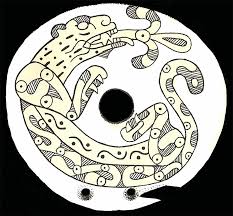
Jaguar gorget from Missouri
Alabama
Alabama (river, tribe & state) – Ali Baalumo & Al baalum haw [Chontal Maya] = Principal Living Place of the Jaguar {People} and Place of the Jaguar River
Note: In 1700 AD, explorer John Lawson wrote that while between the Savannah and Chattahoochee Rivers, a massive, almost extinct lion was the top predator, west of the Chattahoochee had the jaguar as the top predator.
Amichel (coastal province) – Am Ixchel (Yo’kut Maya) = Living Place of the {goddess} Ixchel
Note: Amichel is the Spanish name for three locations on the periphery of the Gulf of Mexico . . . (1) the tip of the Yucatan Peninsula, (2) the region around Tampico Bay, Tamaulipas and the section of the United States Gulf Coast between Mobile Bay, Pensacola Bay & Apalachicola Bay. These three geographical areas form an equilateral triangle.
Chehaw (mountain & NA town) – Chia-haw [Itza Maya] = Salvia River
Note: See “Cheoah” under North Carolina Mesoamerican words.
Coosa (river & county) – Kawshe (Itza Maya) = Eagle – Descendants of
Etowah (county) – Muskogee word, Italwa, derived from Itza Maya word, Etula = Principal town –
Mabila (Native town & province) Mapile [Chontal Maya-Totonac dialect] = Trade People
Note: Mabila is the Spanish derivation from Mapile.
Mobile (river, bay & city) – Mapile = Trade People [Chontal Maya-Totonac dialect]
Note: The French name, Mobile was derived from the Spanish word, Mabila.
Tallassee (tribe & hamlet) Tullashe [Itza Maya] = Descendants of Etowah (Etula) or possibly, “Descendants of the Toltec Capital of Tula”
Yama (NA province) – yama [Veracruz Chontal Maya] = agricultural field cleared from forest
Note: The name may indicate immigrants from the Yamapo River Basin in southern Veracruz. The Yama Province in Alabama was composed of the Mobile/Tombigbee River Basin in southwest Alabama. The word, yama, is the equivalent of the Yucatan Peninsula word, milpa.
Arkansas
Haw (creek) – Haw [Itza Maya} = River
Tula (tribe) – Tula [Itza Maya] =word for town & tribe with Mesoamerican traditions
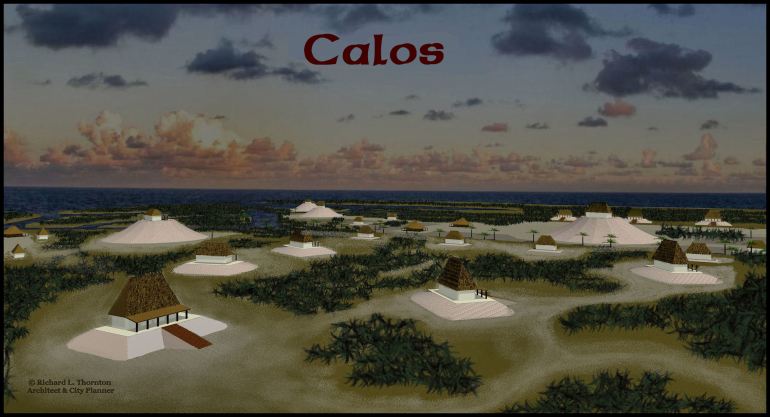
The Caloosas occupied a province in southwest Florida. Construction of their capital on an island near present-day Fort Myers, FL, began around 0 AD.
Florida
Amichel (coastal province) – Am Ixchel (Yo’kut Maya) = Living Place of the {goddess} Ixchel
Note: Amichel is the Spanish name for three locations on the periphery of the Gulf of Mexico . . . (1) the tip of the Yucatan Peninsula, (2) the region around Tampico Bay, Tamaulipas and the section of the United States Gulf Coast between Mobile Bay, Pensacola Bay & Apalachicola Bay. These three geographical areas form an equilateral triangle.
Caloosahatchee (river) – Kalosa Hawche [Itza Maya] – Calusa River – Shallow
Miami (city) – Miami [Chontal Maya] = Island (People) – place of – principal
Note: This is the actual source of the ethnic name, Maya, which the Mayas in Mesoamerica never called themselves, until the Spanish told them that was their new name. Unlike the Itza, the Mia People were short in stature.
Miccosukee (tribe & town) – Meko Soki [Dialect that mixed Zoque with Itza] = Leader of the Sokee (Zoque, Soque)
Note: In the early 1950s, the Bureau of Indian Affairs told the indigenous people of southern Florida that they would not be federally-recognized unless they stopped calling themselves Mayas. They chose the Anglicized name of their principal town as the new name for their tribe.
Potano (tribe & stream) – Potano [Yo’kat Maya] = traders ~ a branch of the Chontal Maya in the northern Yucatan Peninsula
Tallahassee (city) Tula Hiwalsi [Itza Maya] = Town – Highlanders or possibly in the Creek languages (Tulu hvse) Town of the Sun.
Note: Some 19th or 20th century academician speculated that “hassee” mean “old” in Creek. Everyone has been copying him ever since. The Muskogee-Creek word for “old” or “ancient” is leske. In 1653, French natural scientist, Charles de Rochefort, correctly stated that the large town, where the City of Tallahassee is to today, had this similar name, because it was established by Apalachete Creeks from the Georgia Mountains.
Tequista (tribe, lake, stream) – Tekeste [Hybrid Tolteca-Itza Maya} = A Toltec tribe in southern Veracruz and a tribe in southeastern Florida.
Note: Tequista is the Spanish spelling. Both peoples were said to be very tall and warlike. This may be the same ethnic group, which captured Chichen Itza around 1000 AD.
Timucua (tribe) – Tamakoa [Hybrid Chontal Maya – Arawak] = Trade People
Wakate (Spanish – Guacata) < Waka’te [Totonac > Itza, Chontal & Peten Maya] = promontory, acropolis, elevated center of a city.
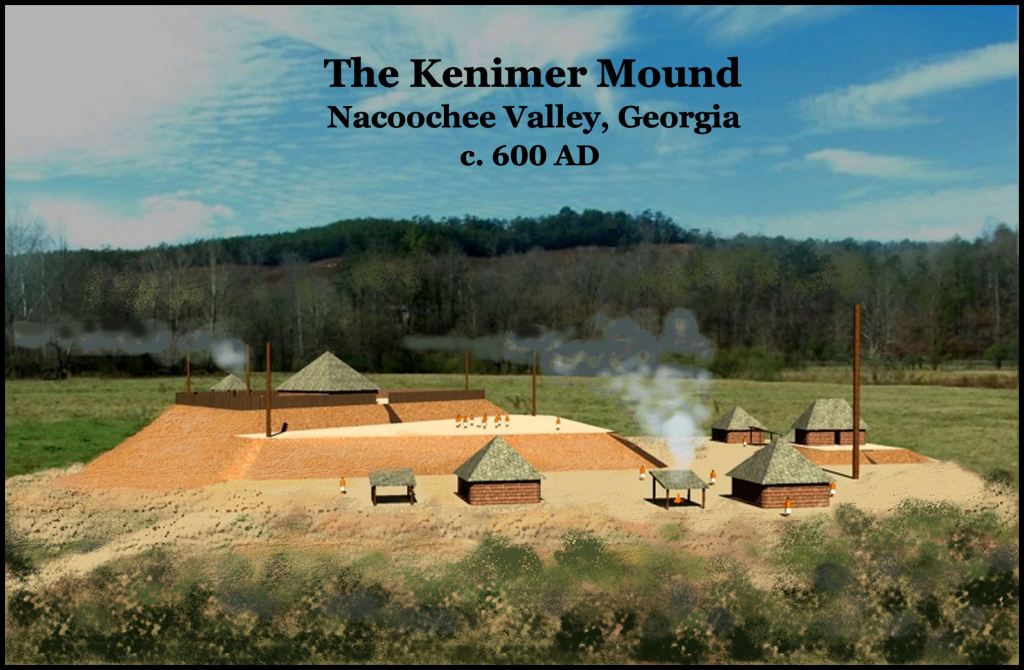
Earthen pyramids, almost identical to this one, can be found in Chiapas State, the Guatemalan Highlands and western Belize. This pyramid overlooks the Chattahoochee River, which is also a Maya name.
Georgia
Altamaha (river) – Al Tama Haw [Itza Maya] = Place of Trade – River
Alapaha (River) Harape Haw (Chontal or Itza Maya) = river named after Eastern Creek people, who formerly lived in northeastern South Carolina.
Note: The town of Harape’s name was Europeanized in Colonial times as Harape, Halape, Ilape and Hillabee. The regional ethnic name was recorded as Vehite, Vehide and Pee Dee. This word means “bow people” or archers. The river first appeared on Colonial Georgia maps as Arapaha. However, Creeks rolled their R’s so hard that the sound was typically recorded as a “L”. Later maps spelled the river’s name as Alapahaw, Alapihaw and then Alapaha.
Anneewakee (stream) – Anawak-ke (Hybrid Nahuatl-Muskogee) = Central Valley of Mexico – People
Cataula (hamlet) – Kataale [Eastern Creek] = Crown – People
Note: This region on the Middle Chattahoochee River is where the remnants of the Kataapa People settled in the late 1700s, after migrating southward from the Upper Chattahoochee River Basin.
Chattahoochee (river) – Cha’ta Hawche [Itza and Highland Guatemalan Maya] = Carved stone – shallow river
Chestatee (river) – Cho’usta’te [Hybrid Itza Maya-Uchee] = Mouse Uchee People
Chickamauga (streams & town) – Chiki Mako [Itza Maya] = House of the king or chief
Chehaw (stream) – Chia haw[Itza Maya] = Salvia River
Note: The Chiahas moved southward into present-day Georgia from the North Carolina Mountains in the late 1600s, after a series of European pathogen epidemics.
Choestoe (hamlet) – Cho’ust’toa [Hybrid Itza Maya-Uchee] = Mouse Uchee Clan
Chote (NA town) – Cho’te [Itza Maya] = Mouse People ~ Former name of Helen, GA until 1822.
Notes: (1) The site of Chote in Georgia has been almost continually occupied by humans, at least since around 1000 BC. There are many errors in the official early history of Tennessee, because Tennessee academicians are completely unaware that the original Chote was a Creek town in Northeast Georgia and that it outlasted the Tennessee Chote for over three decades.
(2) The Cherokees described encounters with the Mouse People, when they entered western North Carolina . . . in particular around Franklin, NC.
Colima or Colimo (tribe) – Kolimo [Cora-Huechel] – People from the Colima region of northwest Mexico.
Note: In both northwest Mexico and Georgia, they were noted for making effigy jars of indigenous dogs.
Coosa (river, tribe, capital town, province) – Kawshe [Itza & Highland Maya] = Eagle – Descendants of
Coweta (tribe, county, stream) – Kawitaw < Kawi-te [ Muskogee Creek < Itza Maya] = Kaw – principal – people
Cusseta (town) {from Cusate on Colonial Era maps} – Kawshete [Itza & Highland Maya] = Eagle – Descendants of – People
Eastanolee (town, stream) Ues-te-noa-re [hybrid Gaelic-Itza Maya–Itza Maya–Gaelic or Galician] = Water-People-River-kingdom or tribe.
Note: Indigenous and Gaelic “re” sounds were usually written as an “ly” or “ley” by English speakers.
Echota (NA town) – Echo’te [Itza Maya] – Principal town of the Mouse People.
Note: See Chote under Georgia and Tennessee listings. This was the name that Cherokee chief Charles Hicks gave in 1825 to the new capital of the Cherokees in Northwest Georgia on the Oostanaula River. Hicks had grown up about 10 miles north of the Georgia Chote, whose land had been sold in 1822 to land speculators from North Carolina. The Tennessee Chote was completely abandoned by 1795. It is not clear, which Chote, Hicks named the new capital for.
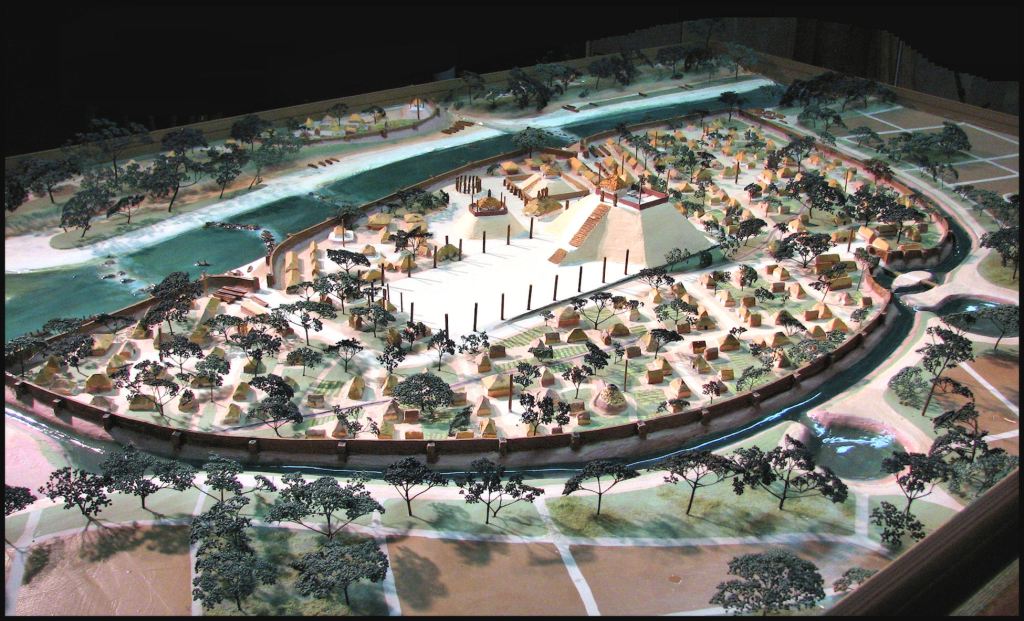
Etowah Mounds
Etowah (N.A. capital town, river) – Italwa < Etula [Muskogee Creek < Itza Maya] = Principal Town
Haw (creek) – haw (Itza and Highland Maya) = river
Hightower (streams, roads) Etalwa < Etula (Muskogee Creek < Itza Maya = Principal Town
Itsate (NA town) – Itz-haw-te [Itza Maya] – Magic Water People
Note: This was a very large Proto-Creek town in the Nacoochee Valley, adjacent to the headwaters of the Chattahoochee River. Several public buildings and churches are now located on its platform mounds. The location is now called Sautee, because the Sautee post office moved from the original location of Sautee, three miles to the northeast, to there in 1924.
Itsate Gap (physical feature) – Itz-haw-te (See previous word.)
Note: Itsate Gap is an unusual opening through the Blue Ridge Mountain Escarpment in Rabun County, GA which allows the Little Tennessee River to flow northward into the Western North Carolina Mountains.
Kataapa (tribe) – Kataapa [Itza Maya] = Crown – Place of.
Note: Colonial Era maps show the Kataapa occupying the region between present-day northwestern Atlanta northward to the Cohutta and Rich Mountains of present-day Georgia. As few as two Kataapa towns migrated eastward and established of confederacy of small tribes and individual villages along the Catawba, Wataree and Santee Rivers. Collectively, this confederacy was known as the Catawba by South Carolina settlers.
Kolomoki (tribe & town) – Kolomo-ki [Hybrid Cora-Huechel and Muskotee- Creek] = People from Colima in northwestern Mexico
Oostanaula (tribe, town, river) Ues-te-noa-re [hybrid Gaelic-Itza Maya – Itza Maya – Gaelic or Galician] = Water-People-River Basin-kingdom or tribe.
Note: Indigenous and Gaelic “re” sounds were usually written as an “ly” or “ley” by English speakers.
Sautee (hamlet) – Sōte [Itza Maya] {originally pronounced in all spellings as Zjō: tē.} = Itza Maya and Creek name for Zoque People.
Soque, Sokee, Jokee, Soquee, Sukee (tribe, river & town) – Sōke [Zoque-Mixteca] {originally pronounced in all spellings as Zjō: kē.} = Itza Maya and Creek name for Zoque People.
Notes: (1) It is interesting that the tradition Norse name for the Sea Sami was Sjöke, which is pronounced almost exactly like Zoque and means “Sea People or Tribe.”
(2) The Soque-Miccosukee Migration Legend begins in western Tabasco State, Mexico. In response to raids by Nahuatl tribes in the Valley of Mexico for slaves and sacrificial victims, bands of Zoque/Soque migrated along the edge of the Gulf of Mexico until they reached the mouth of the Apalachicola River. From there they migrated up the Apalachicola to the Chattahoochee Headwaters, where they settled lands adjacent to their long time allies, the Itzas.
Soquehatchee (river) – Sokehache [Soque/Itza Maya] = Sokee-Shallow River
Note: Name of the Broad River in NE Georgia until after the American Revolution.
Tallassee (stream & town) – Tulasi [Itza Maya] = Descendants of Etula (Etowah Mounds)
Talaxi (NA village, mission, stream) Tulasi [Itza Maya] = Descendants of Etula
Tallulah (river & gorge) – Tulala [Itza Maya]= small town – district administrative center with one mound
Tama (tribe & reservation) –Tama [Totonac & Itza Maya] = Trade
Notes: (1) The once powerful Tama Province was located on the Upper Altamaha River in present-day central Georgia.
(2) In the mid-1970s, Neal McCormack, an Upper Creek country-western musician from the Yellow River Basin of SW Alabama, moved to the SW corner of Georgia to start the Lower Creek Muscogee Creek Tribe and once state-recognized, to build the Tama Tribal Town reservation. Creeks in southwest Georgia traditionally spoke the Itsate (Hitchiti) Creek language and the Province of Tama was in Central Georgia . . . but also spoke a dialect of Itsate.
Tamale (tribe & mission) – Tamaale [Hybrid Huasteca-Chontal Maya) = Trade People
Tamahiti (job title, tribe) – Tamahiti [Itza Maya] = Merchant or Trader People
Note – Tamahi is the Totonac word for a trader. The Itzas added their word for a “People or Tribe” to describe entire villages, devoted to trade. After the Tamahiten (Tomohitan) tribe disappeared in Virginia in the early 1700s, its name briefly appeared on some maps in southeastern Georgia..
Tybee (island) – Tawbe [Itza, Highland and Chontal Maya] = salt
Note: Tybee Island is located at the mouth of the Savannah River. It was a major center of the Native American salt industry.
Ustanauli (tribe, town, river) Ues-te-noa-re [hybrid Gaelic- Itza Maya – Itza Maya – Gaelic or Galician] = Water-People-River Basin-kingdom or tribe.
Note: Indigenous and Gaelic “re” sounds were usually written as an “ly” or “ley” by English speakers.
Yamacraw (village & physical feature) – Yama Kora [Mapile Chontal Maya] = Yama People
Yamassee (tribe & stream) – Yamasi [Mapile Chontal Maya] = Descendants of the Province of Yama – this could mean either the Yama along the Mobile River in Alabama or the Yamapo River Basin in southern Veracruz State, Mexico.
Wauka [NA acropolis, mountain) Waka [Totonac > Itza, Chontal & Peten Maya] = promontory, acropolis, elevated center of a city. Waka was probably also the original name of the Acropolis at Ocmulgee Mounds National Historical Park.
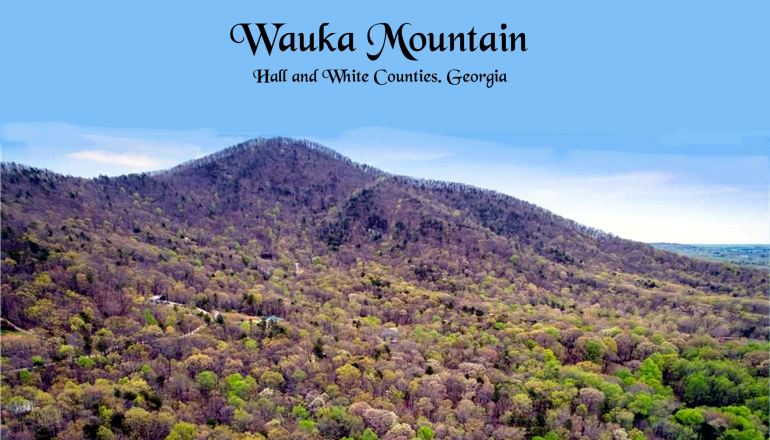
Kansas
Edzanoa (NA town) – Itzanoa [Itza Maya] = Itza River
Note: See Itsate under Georgia listing.
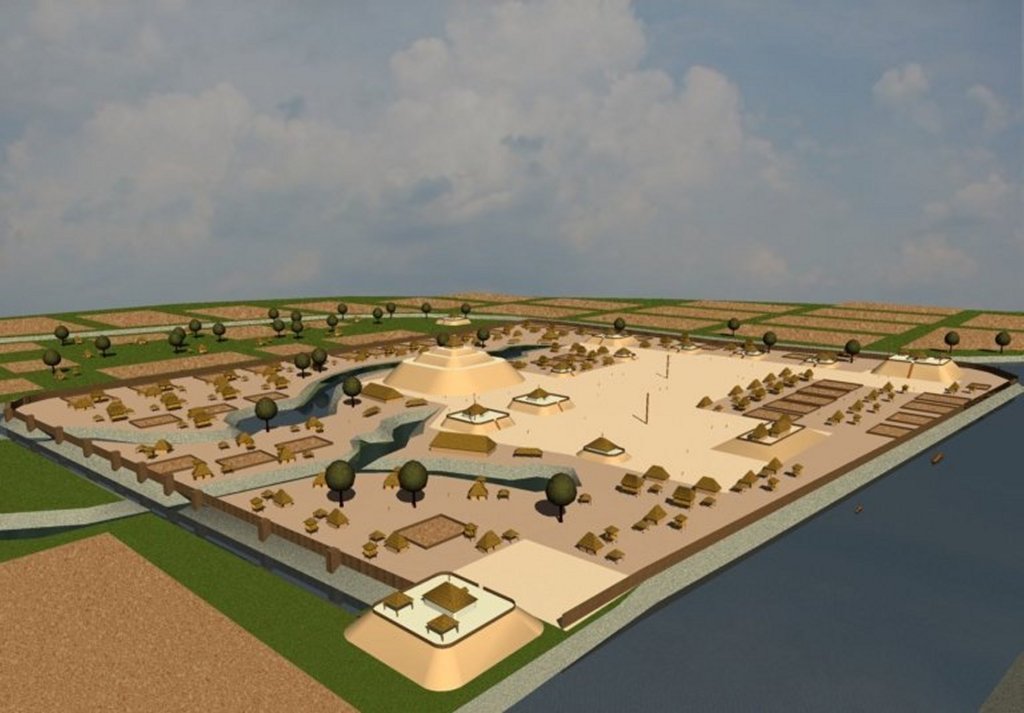
Troyville Mounds in Jonesville. Louisiana – Large quantities of Maya Blue stucco has been found near the footprints of temples on the larger mounds.
Louisiana
Coushetta (tribe & town) – Kawshete [Itza Maya] = Descendents of Eagle People
Tama (hamlet) – Tama [Totonac & Itza Maya] = trade (means “town” in Chickasaw.

Emerald Mounds ~ Natchez, Mississippi
Mississippi
Pee Dee (stream) – vehite [Itza Maya] = bowmen or archers
Tallahatchie (river) – Tula hawche [Itza Maya] = Town – shallow river
Tallahoma (stream) – Tula homa [hybrid Itza Maya – Chickasaw] = Town Red
Tallula (town) – Tulala (Itza Maya) = district administration village with one modest mound
Tula (hamlet) – Tula (Itza Maya) = town
New Mexico
New Mexico (state) – Mēxihco [Nahuatl] = Land and people of the Aztec Triple Alliance.
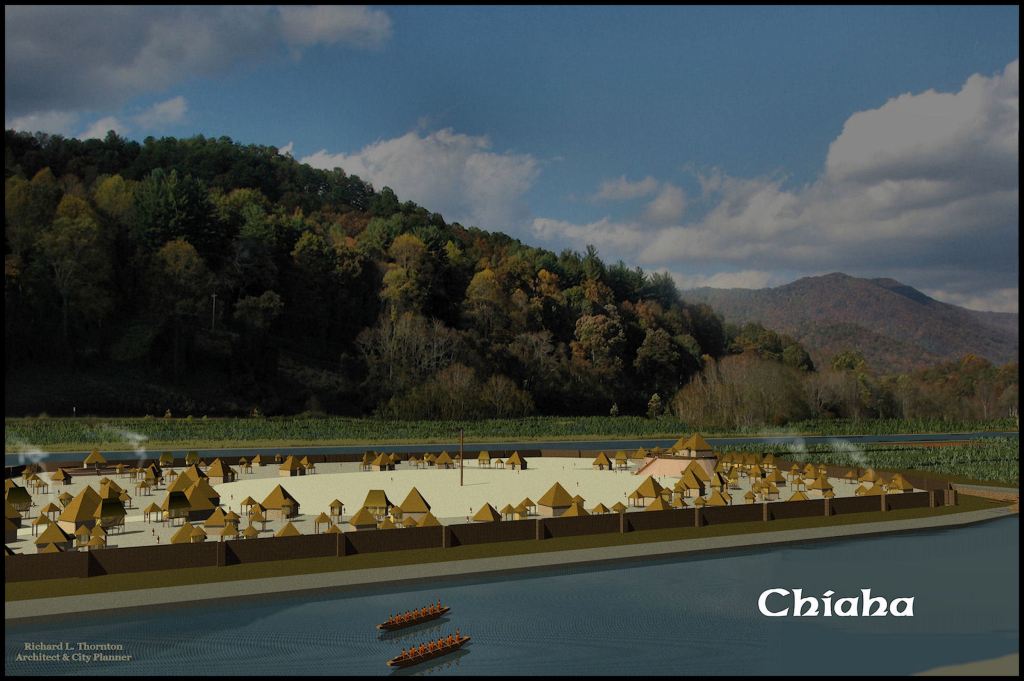
Chiaha (under Fontana Lake) in Graham County, NC
North Carolina
Catawba (tribe & river) – Kataapa [Itza Maya] – either “crown-place of” or “river cane-place of” Note: See Kataapa under Georgia list of Mesoamerican names.
Cheoah (river & mountain) – Chia-haw [Itza Maya] – Salvia River
Note: Chroniclers of the De Soto Expedition (1540 AD) described massive fields of salvia growing along the rivers leading to the town of Chiaha. Cheoah is the Anglicization of the Cherokee-nization of Chiaha.
Cowee (NA village, hamlet) -) – Kawi< Kawi [ Muskogee Creek < Itza Maya] = Kaw – principal – people
Note – This was the mother town of the prominent Kawita branch of the Creek Confederacy. It was occupied by the Cherokees in the 1700s.
Coweeta (NA town, stream, mountain, road) – Kawi-te [Itza Maya] = Principal Eagle People
Etowah (town) – Etalwa (Muskogee) < Etula (Itza Maya) = Principal Town
Haw (stream & river) haw (Itza Maya) = river
Tallassee (hamlet) – Tulasi [Itza Maya] Descendants of Etula (Etowah Mounds)
Talula (NA town, stream) – Tulala [Itza Maya]= small town
Note – district administrative center with one modest mound
Tomatly (NA village, hamlet) – Tamatli [Central Veracruz Chontal Maya] = Trade People
Tomatla (town) – Tamatli [Central Veracruz Chontal Maya] = Trade People
Soco (gap) – Soque, Sokee or Zoque [Zoque-Mixtec} – tribe in Mexico and Georgia
Note – This is a band of Soque from Georgia, which settled the boundary between the Cherokee and Shawnee on the eastern edge of the current Cherokee Reservation in North Carolina. They were forced to join the Cherokees on the Trail of Tears, then allowed to return home.
Swannanoa (river) – Suwani – noa [Itza Maya] = Shawnee River Basin
Waxhaw (tribe and hamlet) – Wax Haw[Itza & Campeche Maya] = Foreigners – River
Oklahoma
Coweta (city) – Kawi-te [Itza Maya] = Principal Eagle People
Heneha (hamlet) – Hene Ahau [Itza Maya] = Sun Lord (sibling of king)
Tulsa (city) – Tulasa < Tulasi (Upper Creek < Itza Maya = Descendants of Etowah Mounds
Ontario, Canada (before 1650 AD)
Tiononetecaga (tribe) – Teononeteka [Chichimeca-Nahua] = Silent God People – People (Algonquin suffix)
Note: This is the French version of the word, which adds a “ga” to approximate the Algonquin “ge” suffix for “people or tribe.”
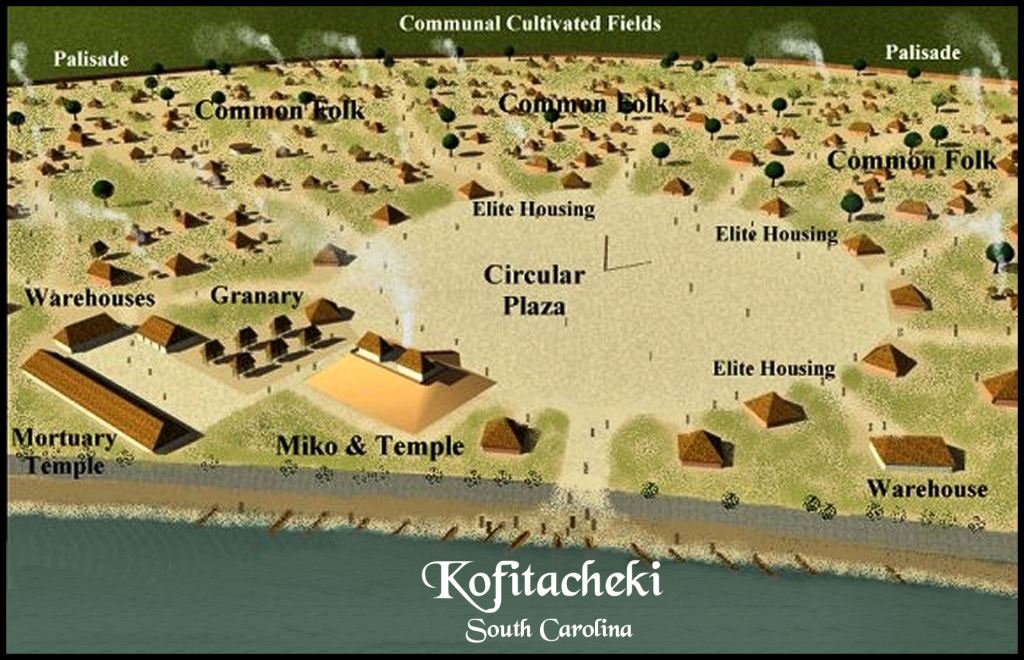
Birdseye view of Kofitacheki (Cofitachequi in Spanish) based on De Soto Chronicles
South Carolina
Catawba (tribe & river) – Kataapa [Itza Maya] – either “crown-place of” or “river cane-place of”
Note: See Kataapa under Georgia list of Mesoamerican names.
Coosaw (town) – Kawshaw < Kawshe [Muskogee Creek < Itza & Highland Maya] = Eagle – Descendants of
Joccassee (town, river) – Sokashe [Soque, Zoque] = Soque/Zoque – descendants of
Pee Dee (tribe & river) – Vehite [Itza Maya] = Bowmen, archers
Waxhaw (tribe & town) – Wax Haw[Itza & Campeche Maya] = Foreigners – River
Yemassee (tribe & town) – Yamasi [Mapile Chontal Maya] = Descendants of the Province of Yama
Note – this could mean either the Yama along the Mobile River in Alabama or the Yamapo River Basin in southern Veracruz State, Mexico.
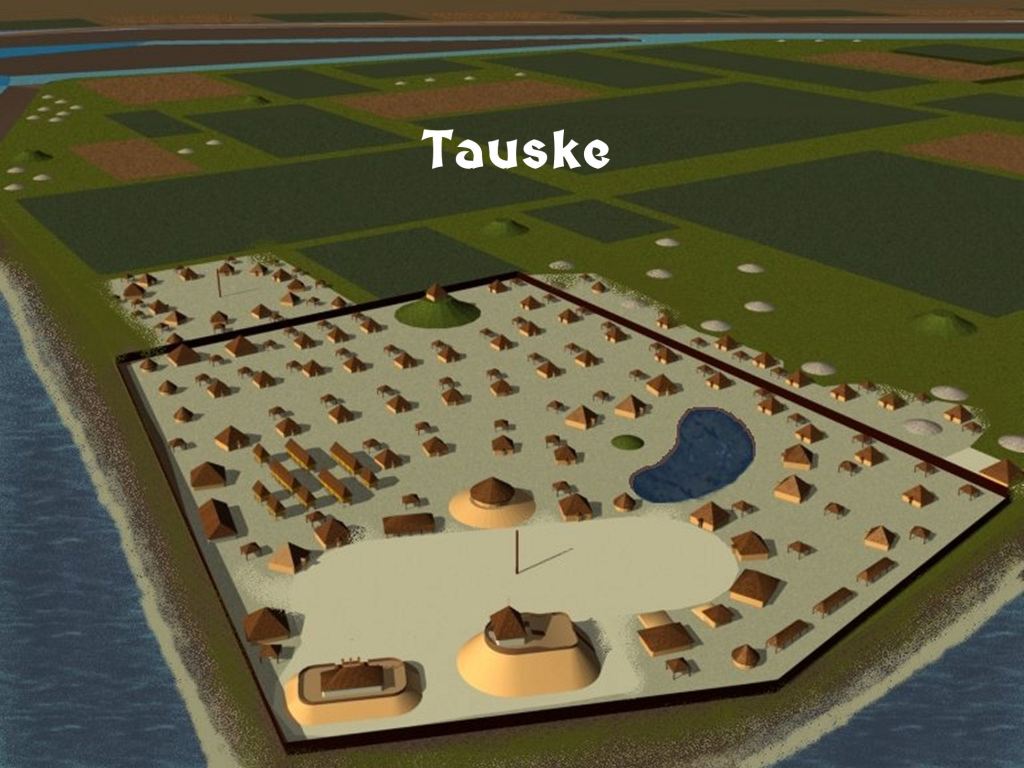
Birdseye view of Hiwassee Island, Tennessee
Tennessee
Callemacco (river) – Calli Mako [Chontal & Veracruz Maya] = House of the King
Note: This was the name of the Tennessee River until around 1788.
Etowah (town) – Italwa < Etula [Muskogee Creek < Itza Maya] = Principal Town
Hatchie (river) – hawche [Itza Maya] = Shallow River
Tallassee (hamlet) – Tulasi [Itza Maya] Descendants of Etula (Etowah Mounds)
Tullahoma (city) – Tula Homa [hybrid Itza Maya & Chickasaw = Town Red
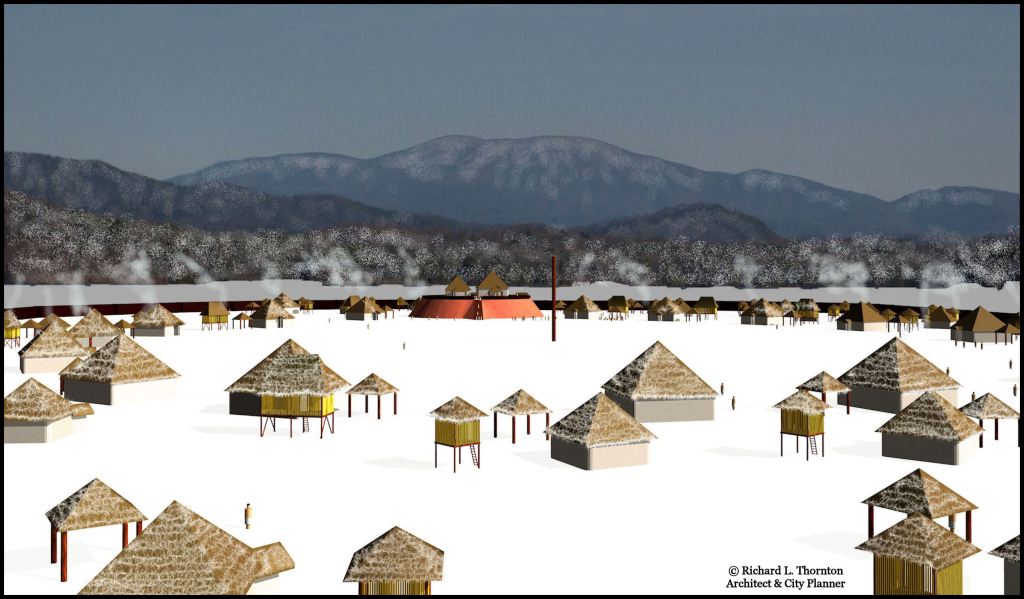
Tamahiten town in the Shenandoah Valley
Virginia
Catalpa (community) – Kataapa [Itza Maya] – either “crown-place of” or “river cane-place of”
Note – The name of this Virginia community probability referred to the Catalpa Tree. See Kataapa under Georgia list of Mesoamerican names.
Tomahittan (tribe & road) – Tamahiten [Itza Maya] – Trader Peoples (plural form of Tamahiti)
Note – See Tamahiti under Georgia list of Mesoamerican names.
West Virginia/SW Virginia after 1650 AD
Tiononetecaga (tribe) – Teononeteka [Chichimeca-Nahua] – Silent God People – People
Note – This is the French version of the word, which adds a “ga” to approximate the Algonquin “ge” suffix for “people or tribe.”
 The Americas Revealed
Fascinating stuff, Richard, and much like your many books that point to much of the language origins, meanings, connections, this post no less helpful. One of my “waking” moments that more than intrigued me and opened my eyes to how poorly I’d been educated along with how meager our educational system really was, is when seeing the film,,based on the autobio, “Cabeza de Vaca,” and the wonderful visual depictions of Floridian and other tribes across the explorer’s journey in terms of clothing, body decoration, homestead, etc. It remains today one of my favorite films and historical accounts of one man’s journey. I raise the subject for the point of interest that it is, but also because your article here sparked a memory from the film where Alvar Núñez is still captive under the character I’ll describe as the pygmy medicine man with lack of arms, legs, yet had feet and hands. In one scene I believe the pygmy, like a slave driver, is madly driving de Vaca down a path, menacingly chanting “CHI-CHI CHI-CHI” over and over which meant nothing to me at the time but even a naive watcher like myself understood it to mean something rather lowly. It’s a terrifying scene! Great flick!
LikeLiked by 1 person
Congratulations on what must be an amazing body of research.
Joe
LikeLiked by 1 person
Thank you sir! I learned a lot in the process of pouring through Indigenous American dictionaries.
LikeLike