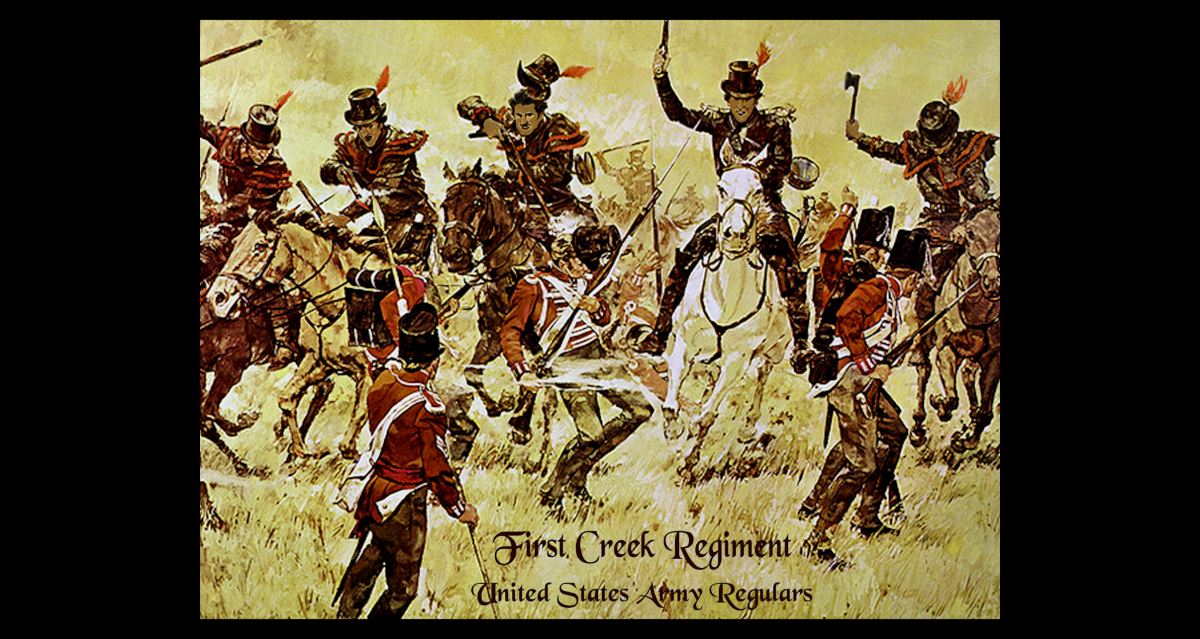
The First Creek Regiment was the first Native American regiment in the Regular United States Army. It evolved into what essentially became America’s first Delta Force.
Brig. General William McIntosh, Micco of the Creek Wind Clan, was the first Native American to be awarded by Congress the rank of general. He commanded all state-mustered Native American volunteers in the War of 1812.
Creek & Chickasaw members of the Georgia Rangers were the first Native Americans to serve as scouts attached to the Continental Army during the American Revolution. They then were assigned to patrol the frontiers of Georgia to keep out Upper Creek allies of the British, plus Chickamauga Cherokee war parties.
During the darkest days of the American Revolution, the Raccoon Regiment was raised from Creek, Uchee and Chickasaw volunteers, living along the Savannah River . Their assignment was to fight the Tory Dragoons raised by British General Charles Cornwallis and serve as scouts for the South Carolina and Georgia Militias.
Creek, Chickasaw and Uchee members of the Georgia Rangers served as scouts for the combined South Carolina and Georgia state armies, which fought the last battle of the American Revolution . . . The Battle of Long Swamp Creek on the Etowah River near present-day Jasper, GA.
In addition to the Regular Army Creek Regiment, which served on the South Atlantic Coast during the War of 1812, several hundred Georgia Creeks served in a state-mustered volunteer army, which fought the renegade Red Stick Creeks in Alabama. After this war, General Andrew Jackson remarked that it took 40 white soldiers to match the fighting ability of one of his Creek soldiers.
by Richard L. Thornton, Architect & City Planner
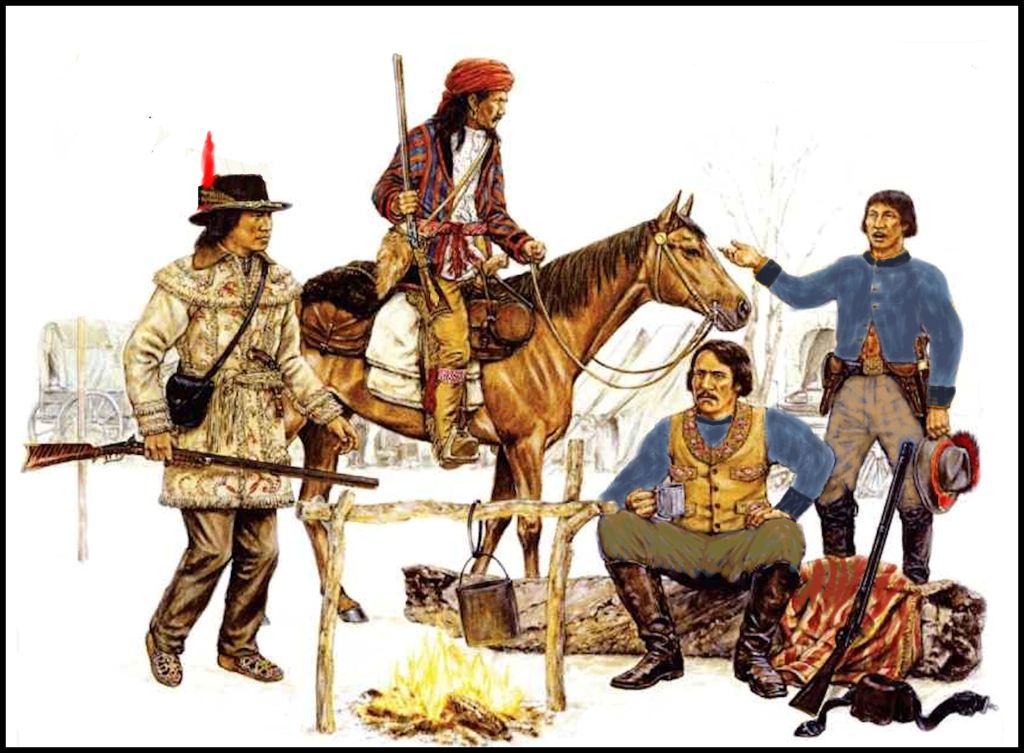
These Native American Patriots helped bring democracy to North America.
It is a fact, left out of our high school American and state history textbooks. Most Creek, Chickasaw and Uchee descendants, living in Georgia and South Carolina today trace their heritage to ancestors, who fought for the United States in the American Revolution, War of 1812 or both wars. I was given membership in the Sons of the American Revolution, based on the service of a gggg-grandfather, Sgt. Jack Bone, who served in the Georgia Rangers, a scout in the 1776-1777 Cherokee War, then spent the next three years of the war fighting Tories and pro-British Indian allies within the interior.
He died in October 1779 during the siege of Savannah. This article is dedicated to him. His widow, also Creek, was given a double veterans reserve on the Savannah River. Their children and descendants never left the Southeast.
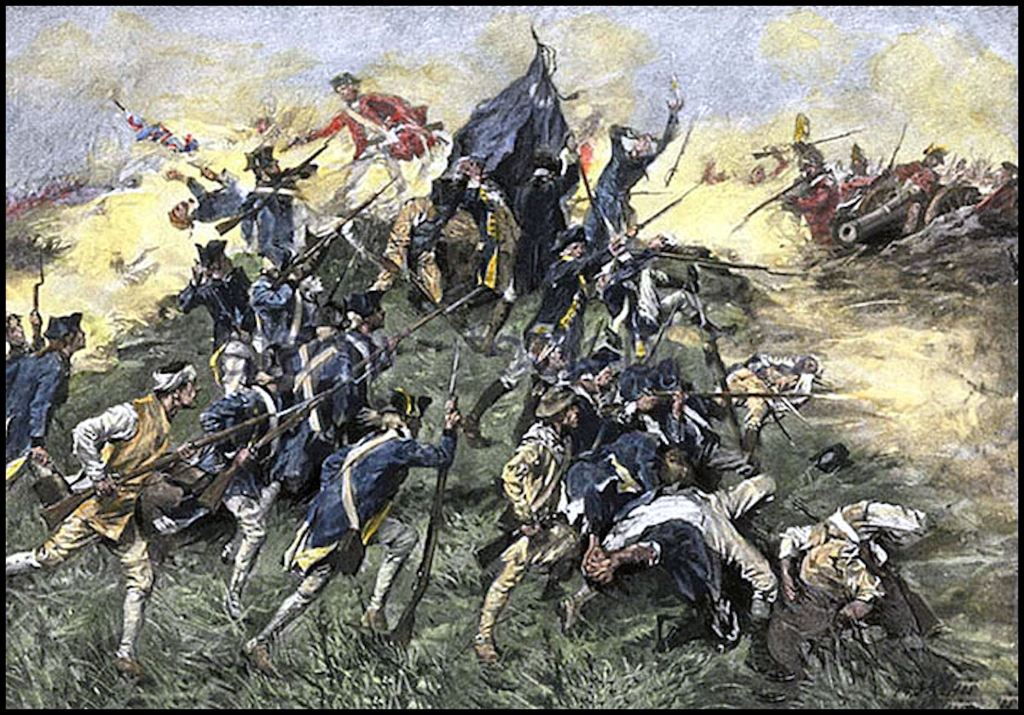
The Siege of Savannah during the autumn of 1779 was a costly defeat for the American Patriots and their French allies. The French fleet in the Savannah River wasted its cannon ammunition destroying the City of Savannah rather than reducing the fortifications on the rim of the city. Both the American and French troops fought bravely, but lacked the heavy field artillery to weaken the earthen forts and breastworks around Savannah.
The major exceptions are those, who hid out during the Indian Removal Period, in a meteor crater in West Georgia . . . then were forgotten . . . Uchees and Upper Creeks, who lived in the Cohutta Mountains of North Central Georgia or several Creek and Uchee communities in remote, swampy regions of Southeast Georgia or coastal South Carolina. Back in 2006, an officer of the Trail of Tears Association analyzed census figures for 1810-1840. She was shocked to learn that far more Creeks and Uchees stayed in Georgia than those, who moved to Alabama or were later forcibly moved to the Indian Territory (Oklahoma).
These veterans or their Native American widows were awarded Veteran Reserves on choice bottomland tracts. Veterans Reserves were immune to treaties between Indian tribes and the United States or individual states. Their descendants lived in traditional rural Creek or Uchee communities until the mid-20th century.
The 1937 Creek Court Docket ruled that these traditional Creek communities, were federally-recognized Indians, eligible for forming federally-recognized tribal towns. However, at the time, these families were too poor to think about forming tribes. Very quickly after World War II, all of the riverfront Creek communities were gobbled up by the U.S. Army Corps of Engineers and are now under reservoirs. The World War II generation scattered to the winds to obtain a better living in urban areas.
United States History that’s left out of the textbooks
This unit is a particularly interesting story, which is never mentioned in textbooks our students are issued. When Congress declared war on Great Britain on June 18, 1812, the United States Army barely existed as a fighting force. What few federal troops, existed in Georgia, were sent to Savannah or up north to protect the region near Canada.
Southeastern Indian Agent, Benjamin Hawkins recruited young Creek men living on the Georgia side of the border with the Creek Confederacy to serve in the garrison of Fort Hawkins. The fort was on the outskirts of the new town of Macon. The Creek men were viewed as citizens of the United States and so were inducted into the Regular U. S. Army. This was a first!
After several Creek tribal towns in Alabama allied themselves with the British, the Creek garrison was expanded into a regiment to defend Macon and the “Friendly Creeks” in western Georgia against attacks by Redstick Creeks. At this point, the Redstick War was theoretically a civil war between the Redstick Creeks in Alabama and the non-belligerent Creeks in Georgia and the eastern edge of Alabama.
The First Creek Regiment marched back and forth through the Friendly Creek territory without seeing combat. Meanwhile, small bands of hostile Upper Creeks were slipping through the southern end of the Cherokee Nation and massacring individual white and Creek farmsteads.
The situation changed overnight after the massacre of Fort Mims, Alabama in August 30, 1813. The pro-American losses were double that of the much better known Massacre at the Little Big Horn. At least 265 militiamen were killed; 252 civilians were killed or captured . . . while the number of wounded is unknown.
The United States government declared war on the Redstick Creeks in Alabama. Tennessee, Georgia and Mississippi each raised militia armies. which included a substantial number of Native American soldiers, drawn from within tribal territories. The Volunteer Creek companies took over responsibility of protecting Friendly Creeks in western Georgia.
In the autumn of 1813, the armies of Great Britain and Portugal thoroughly defeated the remaining French forces in Spain. Afterward, an increasing number of British troops and ships were available for duty in North America. Battle-hardened British troops began making sporadic raids on Georgia coastal towns. plantations and farms. Meanwhile, both the British and the Spanish were arming the Seminole Creeks in Florida and urging them to make raids into Georgia. The Seminoles were really Creeks, who had formerly lived in northern Georgia or western North Carolina.
The situation was complicated by the fact that since 1810, private citizens and militiamen, mostly from Georgia, had occupied northeastern Florida. They were the first filibusterers, but called themselves, “The Patriots.” They never had the military strength to capture St. Augustine, but did establish a few forts within the interior of Northeast Florida . . . and on several occasions sought to be annexed by the US Government.
Great Britain and the restored monarchy of Spain were now allies. The British offered to furnish troops to drive the filibusterers out of Florida. What the British really planned to do was use an army of Napoleonic War veterans and Seminole allies to invade Georgia . . . converting the southern part of the state back into being a British colony. The coastal raids were really probes for carrying out this scheme . . . and profit-making ventures of the British elite.
The First Creek Regiment was sent to the Georgia Coast and reconstituted as an amphibious rapid response force, little different in concept than today Delta Force Special Ops teams. They were furnished horses and flat bottomed galleys, similar in appearance to the landing boats at D-Day. These marsh boats would allow Creek regiment rapid response squads and their horses to move quickly across the shallow marshes to confront British raiders on coastal islands.
The details of this new kind of asymmetric warfare are poorly documented. The combat seems have consisted of many fire-fights in which the Redcoats had to flee back to their boats with nothing to show for their losses.

The hardened Redcoat veterans of the Napoleonic Wars were not prepared for the type of warfare that would occur in Georgia’s maritime forests. This is a photo on St. Catherines Island, GA . . . one of the many island raided by the Redcoats.
It was one thing for the Redcoats to ravage and burn undefended island plantations. No Redcoat soldiers were harmed, while their officers and the ship captains became rich by the cotton, indigo and rice stolen from the plantations.
It was another thing to march across the wide Georgia beaches as Creek sharpshooters picked them off with rifled muskets. Fighting the Creeks in the jungle-like maritime forests was not fun either. They rarely saw their enemy, while their comrades were being killed in a seemingly alien world. An invasion of Georgia from Florida would involve marching through endless miles of such misery.
By the autumn of 1814, when large numbers of Redcoats were available from Europe, the British government decided that it might be more profitable to send an army to capture New Orleans rather than have Georgia on their mind. The venture in Louisiana did not go well either. By the time, though, that the Redcoat’s were mowed down on the fields of Chalmette Plantation, southeast of New Orleans, the Treaty of Ghent had been signed . . . ending the War of 1812. It had all been for nothing.
To date, I have been unable to find the type of information on the First Creek Regiment, Regular Army that is available for “white” military units during the War of 1812. Such detailed data is even available for the Cherokees and “Friendly Creeks” at the Battle of Horseshoe Bend in Alabama. There is no complete list of all First Creek Regiment officers or soldiers . . . no casualty list . . . no list of engagements . . . no list of mustering in or mustering out.
Their status as Regular Army veterans, who had been assigned European names, seems to have given them complete protection from the outrages committed during the Indian Removal Period. They returned home to be considered full citizens of the United States and the State of Georgia. Their descendants are proud of their Creek heritage and “good looks,” but have completely assimilated into the mainstream culture. I dated one of their descendants during my Freshman year at Georgia Tech.
Now you know!
 The Americas Revealed
So, instead of making creeks war heroes, they stole their land and gave it to the Cherokees, but not just their land a place where they worship for hundreds and hundreds of years. I admire that you have the guts to go against all of their lies. A lot of people have been re-posting your post on Twitter. Just in case you didn’t know, Wikipedia has a article on Coosa Carters Lake, and they call it little Egypt.
LikeLiked by 1 person
Yes, it was the archaeologists who gave the archaeological site that strange name. For unknown reasons, Georgia archaeologists have consistently used Anglo names for Native American pottery styles and town sites.
LikeLiked by 1 person
Looks like home, on the coast of Savannah. I enjoy reading your posts. There are many McIntoshes in Savannah, still. Also, the War of 1812 is almost ignored in US history courses, but James Madison was president then. I believe his wife, Dolly, saved George Washington’s portrait when the city was burned by the Brits.
Also, the Indian Revoval Act of 1830 is what stimulated Davy Crockett to break from Andrew Jackson. He joined the independent Republic of Texas and was later killed in the Alamo.
LikeLiked by 1 person
Great article, and very interesting as I’ve researched many muster calls myself while diving into my ancestry down along the FL/GA border area. One of the branches of my family responsible for the majority of our native ancestry went by Folsom. He was mustered into a regiment that served building fortifications and such near Savannah. Many of my other relatives during this period through the 1830s, were listed on several mustered regiments such as mounted volunteer militias that patrolled the border of Alabama to the Okefenokee and down into Florida, engaging leftover Redsticks from Alabama that were headed to meet up with the Seminoles at the Okefenokee. Much like the Folsom in Savannah, I wondered how much of these regiments were comprised of Creeks with European surnames. Fantastic work, keep it up!
LikeLiked by 1 person