Several Indigenous towns and/or provinces in Georgia, South Carolina, eastern Tennessee and western North Carolina had South American Carib names.
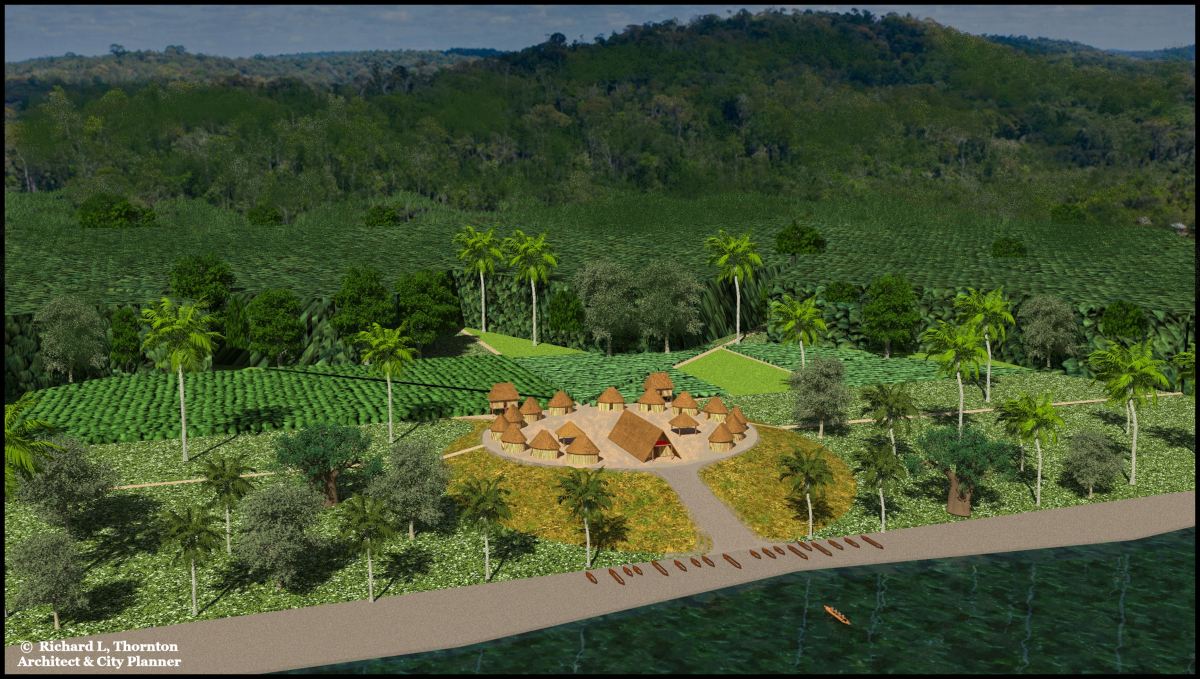
Prior to the massive number of deaths in the 16th century due to European diseases, the Amazonian Caribs erected their villages on somewhat oval platform mounds. These ovals were astonishingly similar to the curviture of our planet Earth. The villages were interconnected by straight paths and causeways, which created a precise geometric pattern similar to that of a spider web.
The South America and Caribbean Basin Series
by Richard L. Thornton, Architect & City Planner
The Canela Tribe was one of the last Amazonian Carib tribes contacted by anybody other than traders. This video provides readers an introduction to their complex cultural traditions.
 The Americas Revealed
So these mounds are big enough to accommodate a whole village? Are they like ‘tells’ in the middle east?
LikeLiked by 1 person
Yes, some are quite large, but rarely more than 10 meters/32 feet high . . . for “capital” towns. However, most villages contained 100 – 500 people. Large towns required walking long distances to get to the cultivation fields.
LikeLike