
To this day, the terrorist attacks that caused President Johnson to order combat troops to Atlanta and their presence on the Georgia Tech campus, have been a tightly held secret.
If you query Google Artificial Intelligence about these incidents, she will know nothing about them. Of course, she also does not know that before ABBA, Agnetha was a sweet country gal, who liked to wear pigtails, dreamed of performing on Broadway and loved to sing at rural barn dances!
by Richard L. Thornton, Architect & City Planner
This day began with President Trump and Defense Secretary Hegseth announcing their intent to order active duty U.S. Marines into California because of the insubordination of its governor. They intended to have him arrested for treason, since he had allowed political demonstrations against ICE raids. A broad political spectrum of journalists are today parroting each other by saying that a U.S. President has not ordered active duty military personnel into combat duty against civilians since 1932. That is not true.
It is true that in 1932, about 17,000 World War I veterans camped out in Washington, DC to peacefully request a bonus from Congress to help them survive the Great Depression. President Hoover panicked then ordered General Douglas McArthur to command a battalion of US Army soldiers to drive the veterans out of their camp and burn their jerry-rigged huts. The nation never forgave him.

The Way We Were
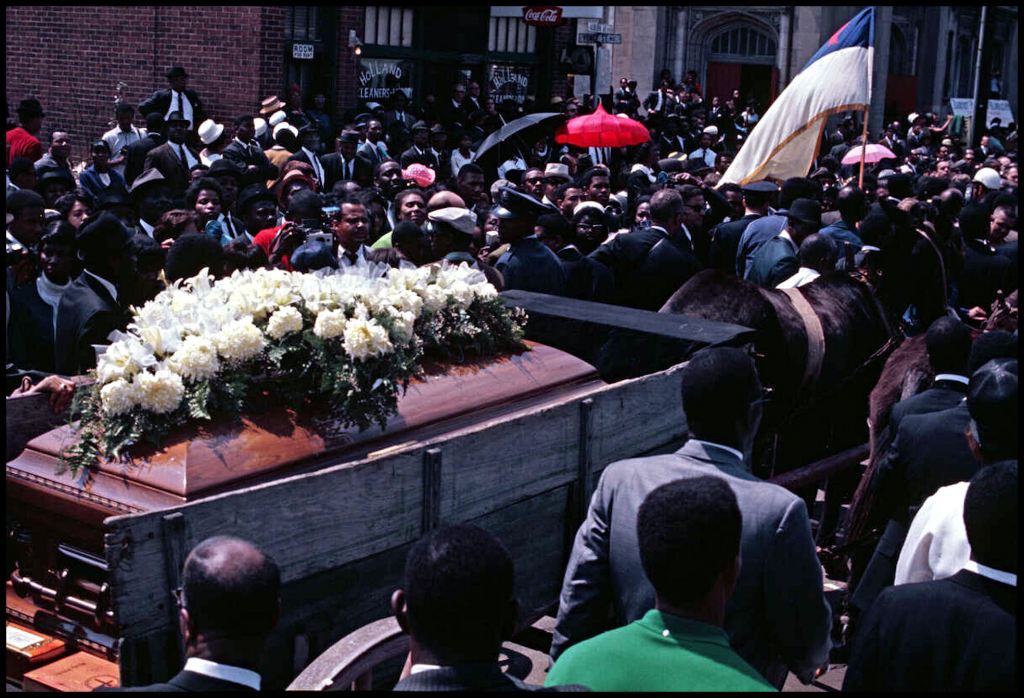
Once upon a time, when “Sitting on the Dock of the Bay” by Otis Redding was No. 1 and the United States was becoming unhinged by the Vietnam War. Nobel Peace Prize winner, Rev. Martin Luther King was assassinated in Memphis, TN. The eyes of the world were turned on Atlanta, which until then, was little known outside of North America.
The government said that James Early Ray, a rightwing political extremist, did it. The U.S. Navy officers, who taught our NROTC classes said that Ray was a patsy, while U.S. Army sharpshooters actually killed Rev. King, but were themselves, along with their families, soon liquidated in ways that seemed accidental.
There was a news blackout in Atlanta. We were initially unaware that massive, highly destructive, riots were occurring around the nation. The only reason that we knew about the news censorship was from calls made by anxious parents to their sons in the fraternity. I did learn from a NROTC instructor that there had been several attempts to steal weapons from the Naval Armory, next to the football stadium.

Spring 1968 – My first Georgia Tech coed girlfriend – All I remember about her was that she was on the GT Pep Squad and on dates, she drank hard liquor incessantly. The drinking age was 18, but I couldn’t afford her. She soon flunked out because of the boozing.
Tech’s president commits a major booboo
No one expected any problems at Tech. It was the first university in the South to voluntarily desegregate, There were no racial tensions. While most college campuses were in turmoil because of the Vietnam War, Tech had never experienced ONE political demonstration.
All the other colleges and universities in Georgia announced that they would suspend classes during Rev. King’s funeral. Tech President Edwin M. Harrison announced that our classes would be held as normal. All hell broke loose.

The Lambda Chi Alpha Fraternity House at Georgia Tech, during happier times.
The first night, carloads of angry people drove through campus shooting guns. Two of our fraternity house’s window were shot out, but fortunately the bullets missed sleeping fraternity brothers. My parents and friends from high school freaked out, when they saw on the TV news that multiple gunshots “had been heard” at the Lambda Chi Alpha fraternity house at Georgia Tech. Yep, the guys “heard” the bullets bouncing around their fraternity dorm rooms!

The military grade fire bombs shot flames out the dining room windows, but did little harm to the rest of the fireproof, reinforced concrete building, other than applying a layer of soot.
The next night, there were shots just after sunset, knocking out some more window panes in the fraternity house. Then around 3 AM, someone broke the plate glass windows of our dining room and threw in three industrial strength fire bombs. It is an absolute miracle that none of the occupants were injured. What I did not know . . . as was the case for the rest of the people in the Atlanta Area that the Naval Armory had also been bombed . . . in an unsuccessful effort to get to the weapons inside.
At lunchtime the next day, our fraternity house mother, Gladys Jones, handed me an envelope, containing a Western Union telegram from the Secretary of the Navy.* I had been called to Active Combat Duty and was to report to the Armory after classes to be issued combat gear and a rifle.
Great! I had never even held one of the rifles used by most Midshipmen to march with each week. I played drums in the Navy Band! While most Midshipmen had learned how to disassemble and assemble those Korean War era rifles, I had been taught how to build bridges and artificial ports in a day.
* I was one of the Science & Engineering Contract Midshipmen. In return for some financial assistance in college and a choice of what branch in the Navy to serve, I had obligated myself to be called to active duty by the President at anytime up to age 65. I could be called to duty outside a combat zone at anytime until the time I croaked.
By 6 PM when I got out of classes, calmer minds had prevailed in the Pentagon. There was very little ammunition anywhere for the M1 Garand rifles and more modern, M4 Carbine rifles in the Naval Armory. None had been fired since the Korean War.
Active duty Marines from Parris Island, SC and Camp LeJeune, NC with combat experience had been flown into Dobbins AFB. They were already building a massive sandbag fort on the traffic island on Techwood Drive near my fraternity house. The Marines also built sandbag machine gun nests (image at top) for heavy caliber machine guns, pointed down each street. What can I say? Surrealistic.
A massive riot crowd did try to storm the Georgia Tech campus that night, but the combination of seeing tear gas mortars fired at them and seeing nasty looking machine guns pointed at them caused them to turn around without anyone being seriously harmed.
The following morning, after receiving calls from Governor Maddox and President Johnson, Tech President Harrison announced on national media that our campus would be closed during the funeral. The campus quickly returned to a degree of normalcy . . . if you discount the many armed Marines and US Army MP’s, standing around with loaded weapons. Later that year, Harrison turned in his resignation.

The next year, a Naval Riverine Warfare officer & NROTC instructor, who had been awarded the Congressional Medal of Honor in Vietnam, explained to me that the Contract Midshipmen at Georgia Tech were considered the sharpest Midshipmen in the Navy . . . superior to Naval Academy students for land-based combat. Most of us were destined to never serve on a sea-going ship, but be assigned classified tasks that we couldn’t talk about. It was assumed that we would learn urban warfare very quickly on the job in Atlanta. That was probably true. Exactly two years later, I would be given only a few weekends to learn guerilla warfare sufficiently to survive in the mountains and jungles of Mexico and Guatemala . . . where multiple armies were fighting wars not even mentioned by the news media in the States.
The Rev. Andrew Young never really got over the moment, when he was standing beside MLK, when he was murdered. As part of the healing process, he took a job as the Assistant Pastor for the Wesleyan Fellowship at Georgia Tech. It was the campus chapel for the United Methodist Church.
Yes, one of the other extraordinary experiences of my life was for the next four years being able to sit on the couch on Sunday morning at the Wesleyan Foundation beside Andy Young and learn about his experiences in the Civil Rights Movement.
Just like the surrealistic events that have unfolded in our nation during and since the Pandemic, those days from long ago seem like a dream . . . or perhaps a movie I watched back then. However, they really happened, despite what Google AI tells you.
Now you know!
Those were the days my friends. No song better captures the surrealistic aura of the times than this one!
 The Americas Revealed
I always loved that song! Yes, things were surreal back then. And they still are.
LikeLiked by 1 person
I’ve been starting to genuinely hate my country.
LikeLike
Well, in this situation two wrongs don’t make a right. African-Americans suffered terribly during and after the days of slavery, but to throw fire bombs at a progressive fraternity on the camps of a progressive university was not right either.
LikeLike