After the Spanish subjugated the Georgia Coast, they migrated up the Altamaha River System to present-day Northeast Georgia, where they joined the Creek Confederacy.
The former Muskogee-Creek word for an herbal healer, now meaning a medical doctor, alek, is a Viking Age Scandinavian word for “herbal healer.” The word was not used by Scandinavians in the Colonial Period. However, alek is one of many Indo-European core words in the Muskogee language. Both Muskogee words for water are pure Indo-European, not Asiatic. The Latin word for water, akwa, also appears in many Creek words, having to do with water, but is not used for “water” , per se.
Excerpts from two landmark books being published this summer
by Richard L. Thornton, Architect & City Planner
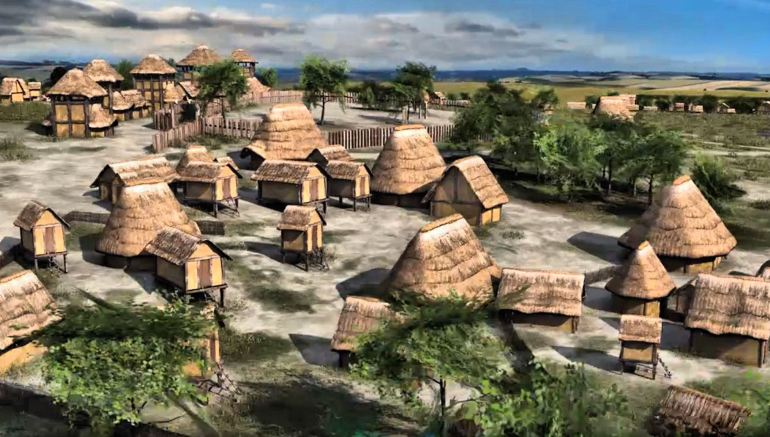
Archaeologists unearthed a village near Asheville, NC on the Swannanoa River, which had a large livestock pen in the center. It was abandoned around 1500 AD. Similar villages were described in the Carolinas and Tennessee during the early Colonial Era.
Linguistic analysis of surviving words spoken by the indigenous peoples of Georgia’s Coast and Coastal Plain confirms the diverse ethnicities suggested by concurrent DNA analysis. These ethnic identities are starkly different than those presumed by anthropologists over the past century.
Surviving indigenous tribal names, village names, personal names and words along the Georgia Coast during the Colonial Period have been translated, utilizing numerous published dictionaries. The tribal names reflect origins from the Caribbean Basin, southern Mexico, Eastern Peru, the Amazon Basin, Polynesia, Ireland and Scandinavia.
DNA testing confirms the validity of these translations. Recent DNA testing has confirmed Mesoamerican, South American, Sami/Proto-Finnish, Austronesian, Polynesian, Proto-Scandinavian, Bronze Age Greeks, Basque, Iberian, Italic, Illyrian and Sardinian ancestry among living Native American descendants of Georgia’s Creeks and Uchees.
These genes arrived in the Americas before the voyages of Christopher Columbus! They are classified as “minority genes” by consumer-oriented genetics labs and assumed to have arrived in the Americas after the voyages of Columbus.
The Alekmanni
This was one the most difficult translations that I have ever attempted. The Commander of Fort Caroline, Captain René de Laudonnière, stated that the Alecmanni’s name meant “medicinal herb-people” and that one of their villages was on the May River, near Fort Caroline. Their capital was about 20 leagues (44 miles) upstream from the fort. Doctortown, GA is 42 miles upstream from the probable site of Fort Caroline in Georgia. In Colonial times, it was a Creek community, named Alek Town.
De Laudonnière stated that the Alecmanni grew many medicinal herbs, but the one which particularly made them wealthy was the Cinchona Tree, from whose bark, quinine was made. His statement seemed totally implausible. Wikipedia tells us that the cinchona tree only grows in the tropical, Andean Foothills of northwestern South America.
For over a decade I searched every possible Indigenous American Language for the words, Alek Manni” meaning “Medicinal Herb-People.” There were no Indigenous American words other than “alek” in Muskogee Creek that were even close. However, “manni” had no meaning in the Creek languages or any other in the Americas.
Then I remembered from my Latin classes in high school that most of the Germanic tribes in what is now Belgium, the Netherlands, southern Denmark and northwest Germany had “manni” in their name. Articles on the internet told me that “manni” was the plural of “man,” which was only used with the nobility. It could have easily evolved in the New World to mean “people” in general, if the original colonists considered themselves to be nobility.
Then I remembered from my time, working in southern Sweden, that in English alphabetic letters, the Swedish word for medicinal herb was “leka.” The Swedish word for an herbal healer and now a medical doctor was lekare. I closely examined the dictionaries of Archaic Scandinavian languages until I was astonished to discover Archaic English . . . Anglisk . . . was the only language in which those two words could have meant “Medicinal Herbs – People.”
Alek, today, is the Muskogee word for a medical doctor, but originally meant “an herbal healer”. That is also its meaning in the language spoken by the Angles, when they lived in southern Scandinavia and first settled in southeastern Britain. They eventually switched to the equivalent Saxon word, which was læke then later, leech.
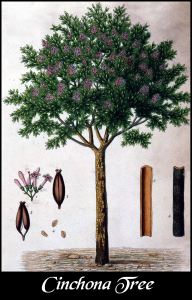
Feral Cinchona trees were still growing along the Altamaha River in southeast Georgia, the Ocmulgee and Oconnee Rivers in the Piedmont and in the Northeast Georgia Mountains during the 1700s and 1800s, when settlers were moving into the interior.
They were called “Fever Trees”, because quinine reduced fevers and suppressed symptoms of several diseases. I found that quinine was the only drug that gave me significant relief from Lyme Disease. Now, the only known clusters of wild Cinchona Trees are intermittently discovered along the Altamaha River.
The actual presence of Cinchona Trees in Georgia means that the Alekmanni first explored the interior of northwestern South America before establishing colonies in Georgia. Of course, their existence is left entirely out of history textbooks.
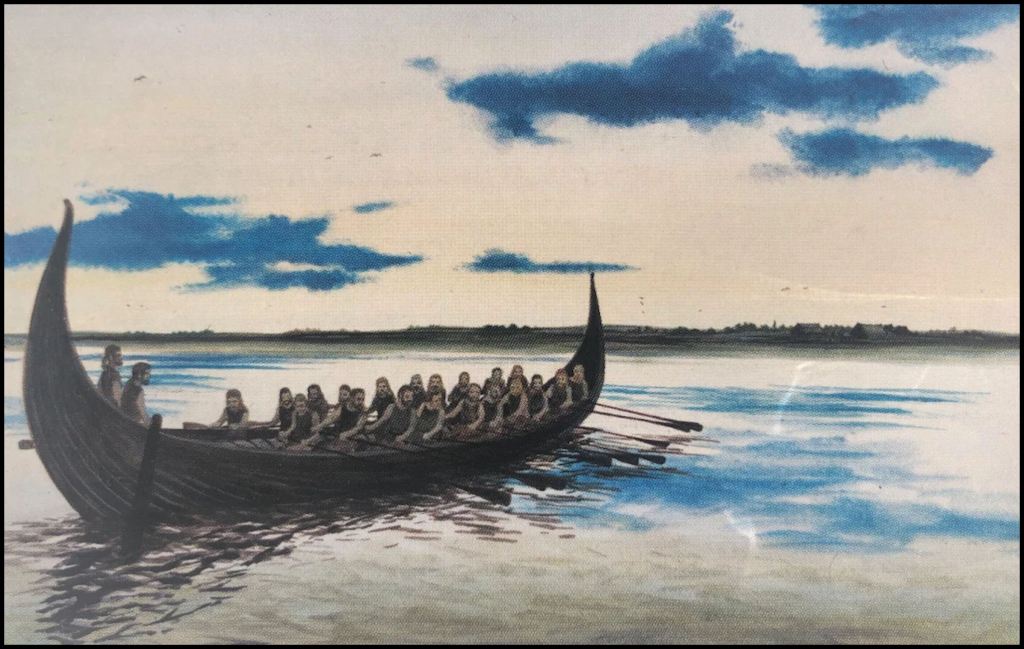
A Frisian Nydam Boat, which was used to transport bulk goods on rivers and coastal waters
The Frisians in Georgia
Captain René de Laudonnière stated that the Thamacogen lived in villages along the Middle Section of the Altamaha River and were on good terms with the Alekmanni. They specialized in hauling bulk goods along the Altamaha-0conee-Ocmulgee River System, which interconnected the Appalachian Mountains, Piedmont, Coastal Plain and Coast. He also stated that there was extensive trade in salt, Indian corn, smoked-dried fish, shells, high quality pottery clays, greenstone, copper, gold and gems between these reasons and that this trade was a primary reason why the Native provinces along these rivers were both wealthy and culturally advanced.
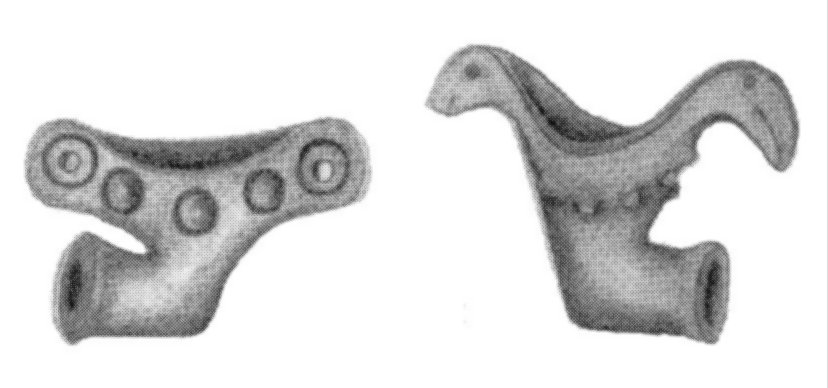
Creek Indian “boat” pipes from Central Georgia
After the Spanish began colonizing the South Atlantic Coast, the Thamacogen moved to what is now Jackson County, GA in NE Metro Atlanta. The original name of Jackson’s county seat was Thamacogen. It is now named Commerce, GA.
“Kog” was originally the Scandinavian word for a tooth, but by the early Medieval Period meant the wooden tendons on a boat or house that held timbers together, almost simultaneously being a synonym for a “connector.” By the Late Medieval Period it had come to mean a tooth on a gear wheel.
Anglisk (Ancient English) was originally a Scandinavian language. The earliest homeland of the Angles was in southern Sweden. Gamla Norsk and Anglisk words formed a plural by adding an “a” at the end. Now, Swedish, Norwegian and Danish add “or” or “er” at the end.
Here is an example. Around 600 AD the modern English word, ox-oxen, was oks-oksan in Frisian, okse-oksun in Aaltsächsische (Old Saxon), okse-oksa in Gamla Norsk, okse-oksa in Anglisk and okse-okser in Gamla Svensk (Old Swedish), When Anglish merged with Saxon, the plural form became oksan.
So, the “en” suffix for Thamacogen” is either Late Roman Period-Early Medieval Period Frisian or Saxon. Only the Frisians had sailing vessels capable of making long ocean voyages.
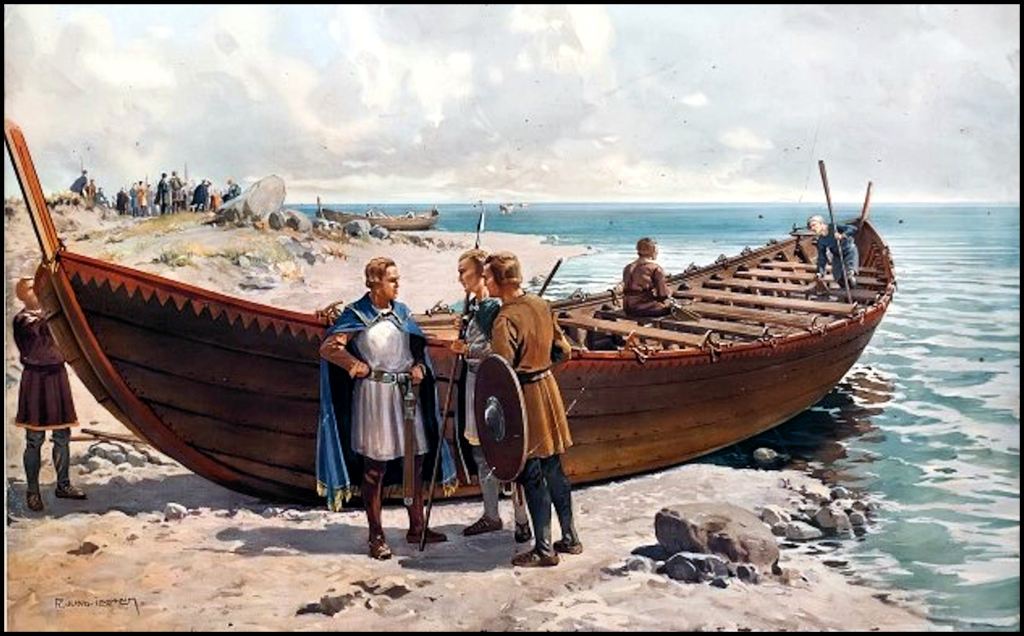
A later style of Frisian Nydam boat, framed with cogs . . . wooden tendons
The Odin Gene
Yes, those indoctrinated with anthropological orthodoxy will find this article to be ludicrous and downright threatening. The only problem is that my linguistics and the genetic lab’s DNA research match perfectly. Creek, Seminole and Chickasaw descendants carry surprisingly high levels of the Odin Gene . . . a combination of DNA test markers associated with Bronze Age Scandinavians. They looked more Asiatic than modern Scandinavians.
We also have unexpected levels of the Helen Gene . . . DNA test markers associated with the infamous Bronze Age Sea Peoples of Illyria, Greece, Crete, Cyprus and western Asia Minor. This seems even more implausible than the Odin Gene.
The strangest thing is that the traditional clothing of the Panoans of eastern Peru and the Seminoles of the Southeast . . . PLUS THEIR ART . . . are pretty much the same as that of the Philistines . . . one of the Bronze Age Sea Peoples. To this day, both male and female Panoans wear the fez hat with geometric motifs that the Philistines wore.
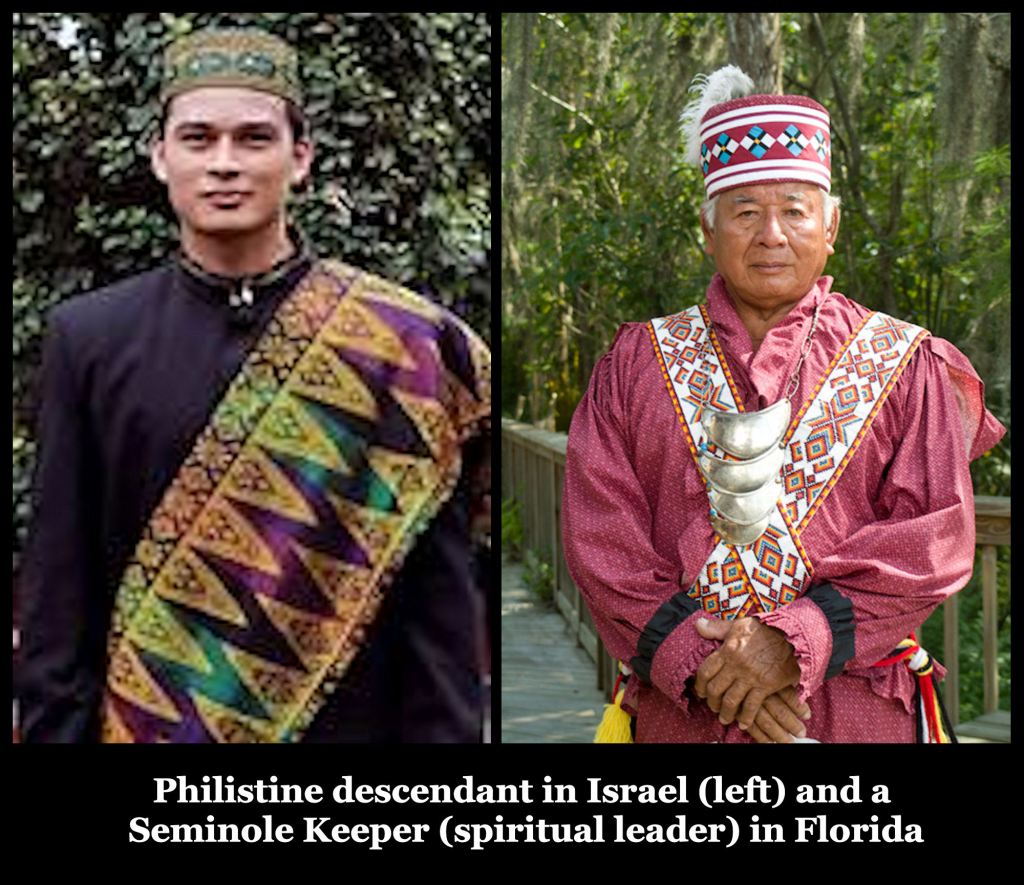
Now you know!
 The Americas Revealed
I may have said this before, but the Ukrainian word for doctor is лікар, pronounced likar, and the word for hospital is лікарня, pronounced likarnya.
LikeLiked by 1 person
That should be no surprise. Swedish Vikings founded Ukraine. The Swedish word for a Viking (pirate) is Rus. I bet there are some other Swedish words in Ukrainian also.
LikeLiked by 1 person
Thanks for great research! I suspected years ago that finnscandia and Eastern Europe genes probably predated Colombus,and you appear to prove it! Archeology and genetics companies are politically motivated,to honor the accepted narrative! You are breaking that! Keep it up !
LikeLiked by 1 person