
Mikko (Muskogee) and Mākō (Eastern Creek & Maya) are the words for a town chief or minor king in the Muskogean and Maya languages. They are derived from the Yamnaya (Southern Steppes Indo-European) word for “great” . . . mik.
The Many Peoples of the South Atlantic Coast Series
by Richard L. Thornton, Architect & City Planner
Even my own life history is stranger than fiction
Officially, for the next 20 years, I was a recent graduate of Georgia Tech . . . who somehow had been awarded a job with the Landskrona Stadsarkitektkontoret, without applying for it. Only my fraternity dorm room mates knew that the job offer had been preceded by a telegram from Crown Prince Karl Gustaf of the Swedish Royal Navy and an approval letter from the Georgia Tech NROTC battalion commandant. A year later, Karl Gustaf would become King of Sweden.
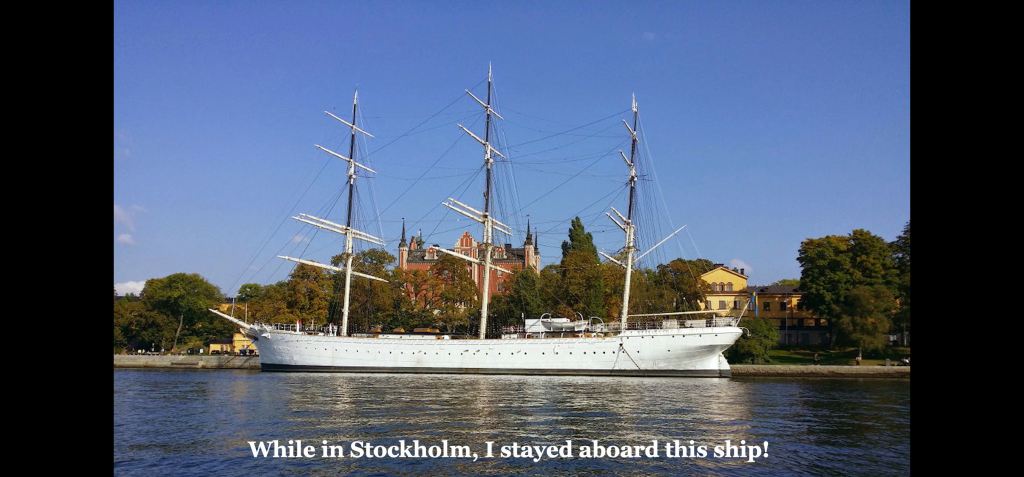
I was already intrigued by the similarity of Swedish Bronze Age petroglyphs to Georgia Mountain petroglyphs, when I received orders on short notice to stop drawing a pedestrian village on Ven Island and instead spend two weeks in August 1972, exploring Lapland with a female NATO biologist. I was to go first to Stockholm and stay on the MS Af Chapman, a 19th century sailing ship, where the daughter of a Danish Royal Navy ship captain would tell me what in the heck was going on.
She was a doctorate level anthropology student at Upsala University. She decided to “kill two birds with one stone” by driving me to a village near Nyköping, where she could visit the excavation of some strange petroglyphs and simultaneously tell me why I was taking a 1,141 kilometer (876 miles) train journey to a city well above to Arctic Circle.
Only two years before then, I had been in Mexico on a fellowship and so instantly recognized the similarity of these newly revealed petroglyphs to the earliest form of Maya writing. However, not in a million years would I have guessed that the snapshots I took would have relevance to an article I would be writing on July 15, 2025. Heck, when you are young, you can’t even imagine being that old.
Flash forward five decades and the only social opportunities I have had here in Habersham County, Georgia is having local married women think that they can trick me into being seen with them, so their husband won’t suspect that she is in a long term relationship with another married woman. LOL No, I refused all offers and no, I am not kidding. This nation has become that evil.

Notice that these 4,000 year-old petroglyphs also include the Maya numerical system!

The earliest examples of the Maya writing system are found on the Baltic Coast of Sweden near Nyköping (c. 2000 BC) and at Track Rock Gap near Blairsville, Georgia, USA (c. 1700 – 1200 BC ?), plus other locations in Northeast Georgia.
Etymology
According to the Maya Migration Legend, they originally were Eurasian people, living in cold land, covered in ice, where they were persecuted and eaten by red-haired giants. They began migrating southward along the edge of the Arctic Ice Cap until they reached North America. Here they migrated southward until they reached the tip of Florida then most of their people continued by boat to Yucatan, a land where there was no ice cap or snow.
The Yamnaya People domesticated horses and oxen then migrated westward into Europe. Today there is a concentration of Yamaya type haplogroups in southern Scandinavia and certain Indigenous tribes in Eastern North America and certain parts of Mesoamerica and South America.
The Yamnaya word, Mik became the Proto-Scandinavian and Archaic Anglisk word, mikil. Proto-Mayas added an “o” at the end to form the noun, miko, which meant “to be great”. This evolved into mako among most Maya tribes, but in southern Veracruz and western Tabasco, the word for “town chief” remained “mikko.” Most of the branches of the Creek Confederacy came from either these regions or the Highlands, where the people still used the word, mako.
During Late Medieval times, mykel became mye in Norwegian, megal in Danish, mycket in Swedish and mychel in English then muche.
This Indo-European root word is not only found in Nordic lands, but also in the Eastern Mediterranean Basin and Middle East. For example in ancient Greek, it was μέγας (megas). The original “g” sound of the Eastern Mediterranean Basin, Middle East and India became a “k” sound in Scandinavia. This is further confirmation of the accuracy of the Maya Migration Legend, in that they picked up the Nordic version of “great” while residing in that region.

Muskogee-Creek probably began of the South Atlantic Coast
I have identified words from many languages in Muskogee, Itsate-Creek, Upper Creek and Koasati in a happenstance way as I researched topics more directly related to architecture. These words were borrowed from Chickasaw, Itza Maya, Chontal Maya, Panoan (Peru), Southern Arawak. Carib, Gaelic, Archaic Swedish, Anglisk, Italic, Pre-Roman Iberian, Illyrian and Ancient Greek.
Descendants of the Apalachete-Creek elite in Northeast Georgia, such as my mother’s family, typically carry the “Helen” Gene. It is proof of Pre-Columbian descent from the Bronze Age Greeks. This seems totally implausible, but as we discussed in a previous article this year, the traditional clothing of the Apalachete was identical to that of the people of Pelos, Greece during the Bronze Age.
At the time of the first contacts between the Spanish and Indigenous Peoples of Southeastern North America, Muskogee-Creek words were confined to an arc-shaped corridor that began on the central coast of South Carolina, Central Appalachian Mountains of North Carolina and the French Broad River. The place and tribal names, recorded by Spanish and French expeditions in western North Carolina, eastern Tennessee and Georgia were either Itza Maya, Chickasaw, Apalachete-Creek, Itsate-Creek, Archaic Gaelic, Anglisk, Taino, Panoan, or Carib.
The polyglot nature of the Creek languages suggests that they began at major ports such a Winyah Bay, Charleston Bay, Port Royal Sound, Wassaw Sound, Altamaha Sound, St. Andrews Sound, Apalachicola Bay, Mobile Bay and Pensacola Bay then evolved as bands of peoples moved inland. Each people, who they interacted with or intermarried with added to the richness of these languages.
 The Americas Revealed