Neither did Scandinavians during the Late Viking Period . . . However, Pre-Germanic Nordic peoples DID sail to eastern North America during the Bronze Age.
All of the oldest DNA samples from human remains in the Southeastern United States are Proto-Sami from Northern Europe! Only until around 5,500 BC do human remains start showing up that are a mixture of Proto-Sami and Siberian Amer-Indians.
Most of petroglyphs in the Georgia Gold Belt, including the famous rock carvings at Track Rock Gap and on the Tugaloo River are identical to those in Southern Sweden during the Bronze Age. They even display several types of Bronze Age sea-going vessels and the Pan-European symbols for gold, silver, the solstices and phases of the moon.
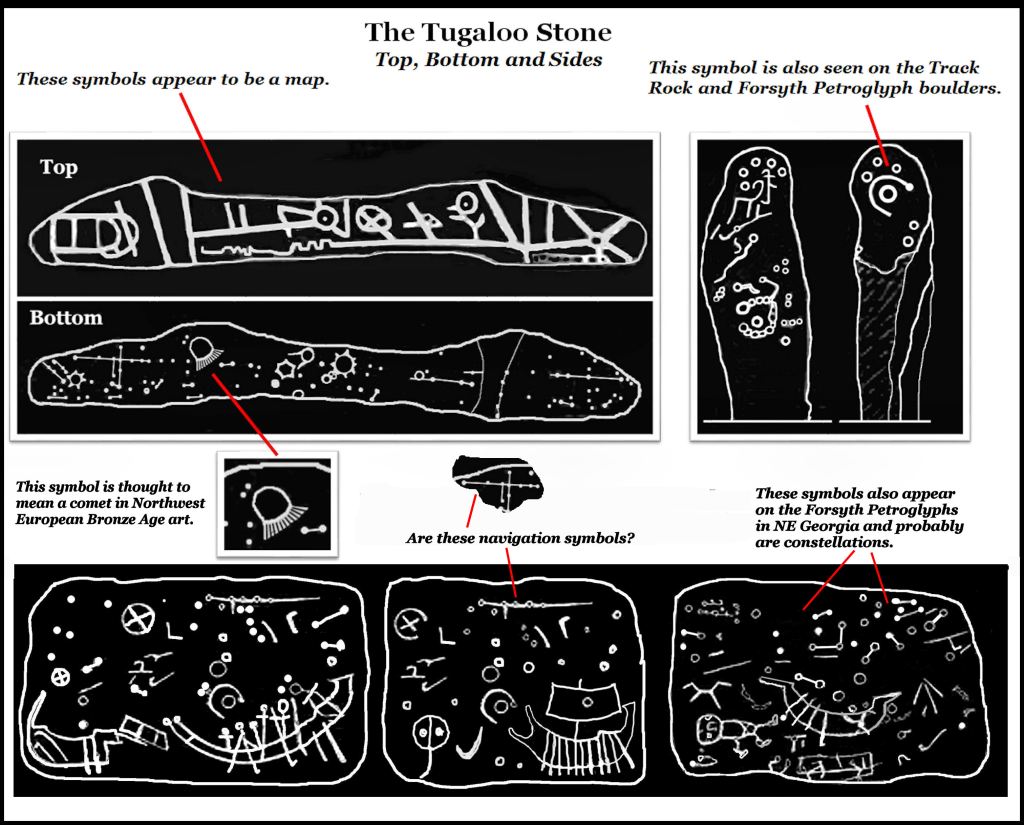
The Tugaloo Stone was discovered in 1795 and is on display at a state museum.

The earliest known examples of important Maya glyphs and the Maya numerical system can be found, carved on boulders near Nyköping, Sweden. They have been firmly dated by geologists to around 2000 BC!

Furthermore, many key Indo-European and some Austronesian words can be found in the major languages of the Amazon Basin, southern Mexico and the lower Southeastern United States. Several of these words from outside the Americas were recorded by the Columbus expeditions or later first contacts by other Spanish and French explorers.
For example, Muskogee-Creek is essentially a hybrid Indo-European language that later mixed with Panoan from Peru, Itza from Mexico and then Chickasaw. The Maya and Creek word for a regional king was “mikko”. In Pre-Christian Scandinavia, it was “mikke!” The Amazonian word for a village leader was Orata. The same word was used in Ancient Greece. The Aztec word for a god (deity) is the same as the Classical Greek word – theo (θεό).
by Richard L. Thornton, Architect & City Planner
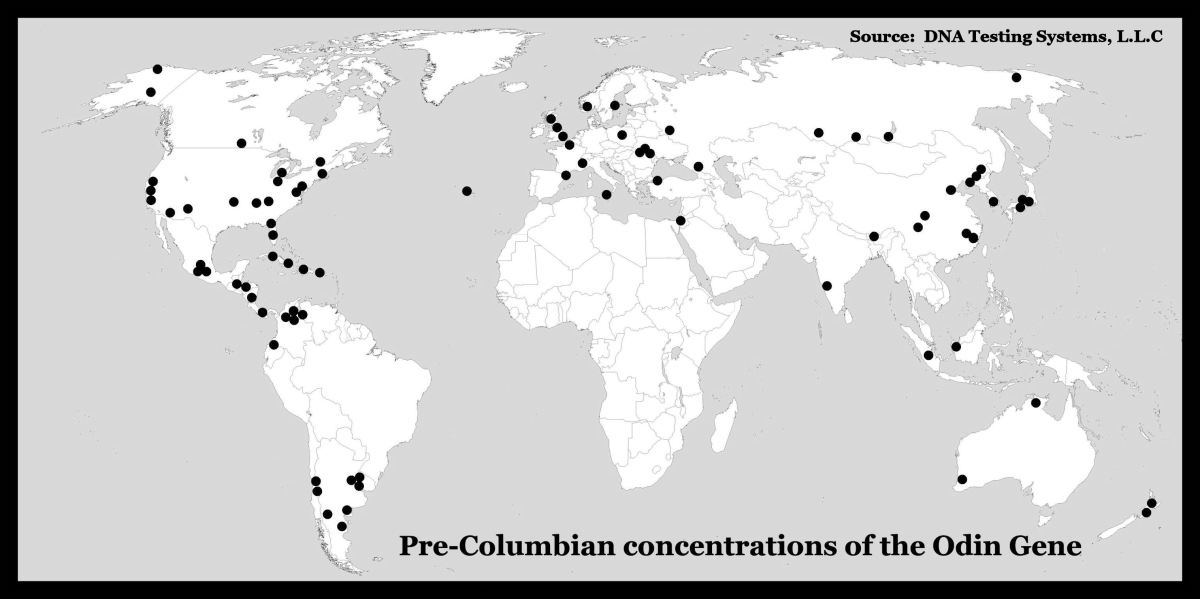
MAP at top of page – The Odin gene first appeared in southern Eurasia at the end of the last Ice Age. It was carried into Europe by Yamnaya horsemen-herdsmen during the Middle Bronze Age. The people of southern Sweden and Denmark carry the highest percentage of this DNA in Europe. The Odin gene could not be present in so many Pre-Columbian Native American remains unless it had arrived in person, many centuries before Columbus.

Uchee children in Oklahoma
Exposing the “smoke and mirrors” of North American archaeologists
Several professional geneticists around the world have been paying close attention behind the scenes to the highly publicized claims by archeologists in the United States that they had found “proof” that all Native Americans only carry pre-Columbian genes from Siberians, who crossed over the Bering Land Bridge. Anyone that tries to portray a different situation is quickly labeled a “pseudo-archaeologist” or more typically, in recent years, just shunned.
First of all, that is just not true. The tall, red-headed coneheads of the Paracas Plain (Peru), central Mexico and the State of Georgia are definitely descended from red-haired Eurasians in southern Ukraine. Very ancient Australoid (different than Austronesian) human remains have been found in the Amazon Basin and Patagonia.
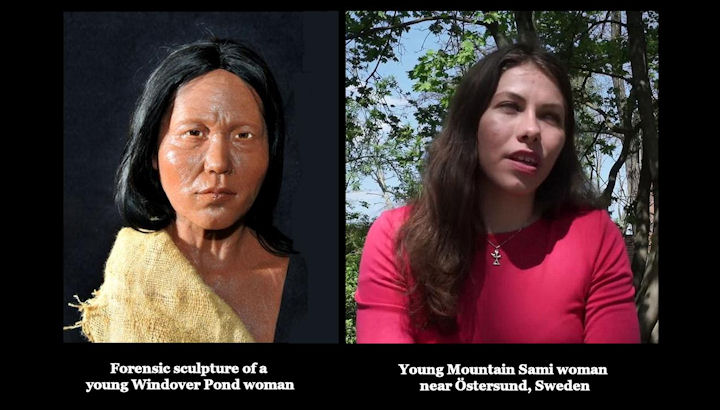
Three years ago, archaeologists in Florida announced that they had proven that the 8,000-year-old underwater burials at Windover Pond, FL were Asians . . . but didn’t provide the actual DNA test reports to journalists. Scientists at the University of Copenhagen and Upsala University in Sweden DID get copies of those reports. The DNA profiles AND burial practices of the Windover Pond people were identical to those of the Proto-Sami and Proto-Finns living in eastern Scandinavia 8,000 years ago. Yes, the Sami and Finns did originate in western Asia, but they were not Siberians.
Dr. Don Yates in Colorado studied the Uchee (Yuchi) DNA tests for three years. This was in response to numerous Creek clients showing up with Austronesian, Sami (Lapland) and Polynesian DNA that could not be explained by their family trees. The common factor that these Creek descendants shared was that they also had known Uchee ancestry from the Savannah River Basin.
The Euchee (Uchee) in Oklahoma were at first reluctant to give DNA test samples to labs, since earlier researchers had told tribal members, who thought of themselves as being “full-bloods” that they had almost no Native American ancestry. Dr. Yates convinced Uchee subjects that he would be more thorough in his testing procedure. He determined that the Uchee of the Savannah River Basin were descended from Austronesians, who originated from the island of Taiwan, off the coast of China. Indeed, there is a Yuchee tribe in the mountains of Taiwan!
Readers have heard my complaints, ad nauseum, about the Southeastern archaeologists never bothering to do etymological studies on Indigenous American words before slapping grossly inaccurate tribal labels on archaeological sites. The same thing happened in the new world of genetics.
The University of Copenhagen’s scientists and Dr. Yates realized that North American consumer-oriented labs and paleo-archaeologists were ignoring “minority genes.” They were only looking for the combination of three or four Siberian genomes which mixed to form Amer-Indian type DNA. That is a big problem . . . because many of those minority genes in Pre-Columbian human remains were from Europe, Eurasia or even the Pacific Basin.
For his book, The Counter-currents of Prehistory, Dr. Yates used computer programs to map out the occurrence of these minority genes among Pre-1492 human remains throughout the planet. The results were astonishing and absolutely change our understanding of mankind’s past.
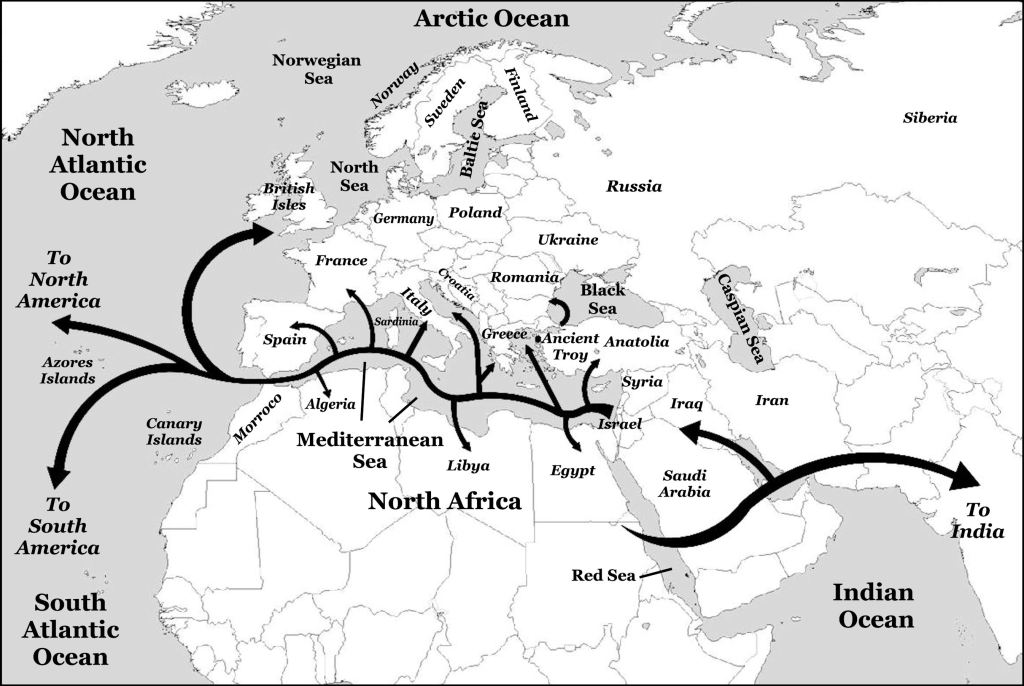
Readers have seen the Odin Gene map, which shows the impact of Pre-Columbian Nordic colonization in the Americas. Yates was also curious if there was evidence of early settlement in the Americas by peoples of the Mediterranean Basin during the Bronze Age. He chose the Helen Gene,, which came from a Bronze Age burial in Troy. We really did not expect many “hits” to occur in the Americas . . . if any.
I was curious if my discovery of many South American tribal and place names in the Southeast would be reflected by the Helen Gene. Indeed . . . some of the strongest evidence of Bronze Age Greek men having babies in the Americas was WITHIN the Amazon Basin. The map then showed the descendants of Bronze Age Greek daddies and Amer-Indian/Austronesian mommies migrating northward across the Caribbean Islands into the Southeastern United States as far north as Ohio.
The Aztecs supposed originated in the Lake Athabaska region of Manitoba Province, Canada. They then followed the Rocky Mountains into central Mexico. How in the world did they have any contact with Bronze Age Greek explorers in which they absorbed the Greek word for a god? I have not a clue!
 The Americas Revealed