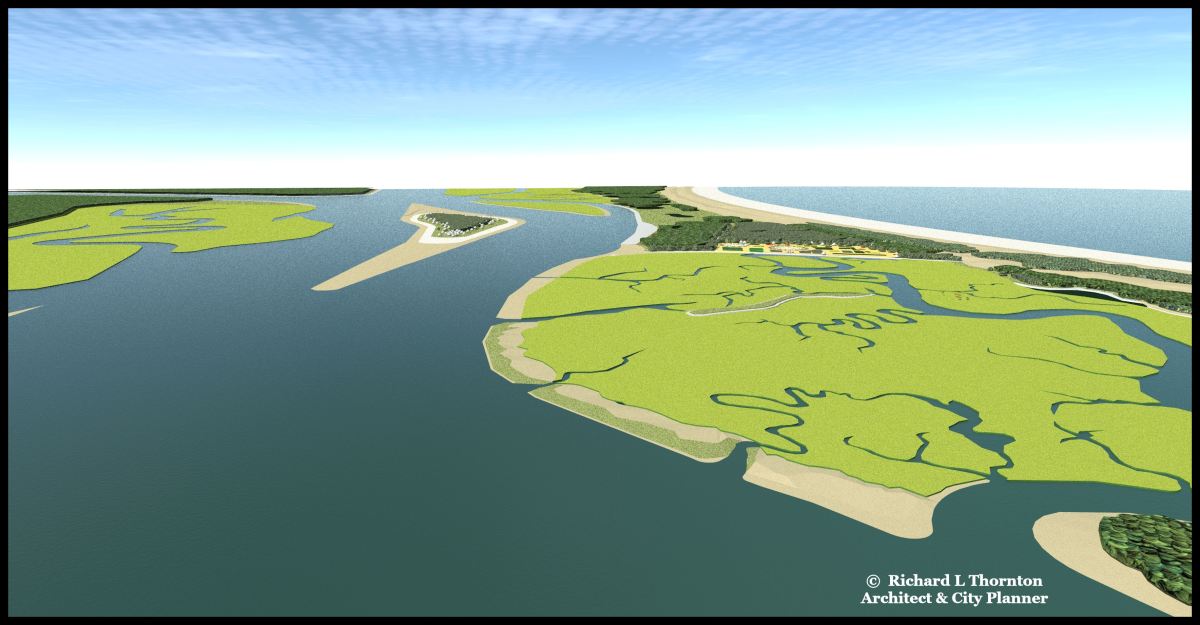
There were stark cultural changes north and south of these points on the Atlantic Coast.
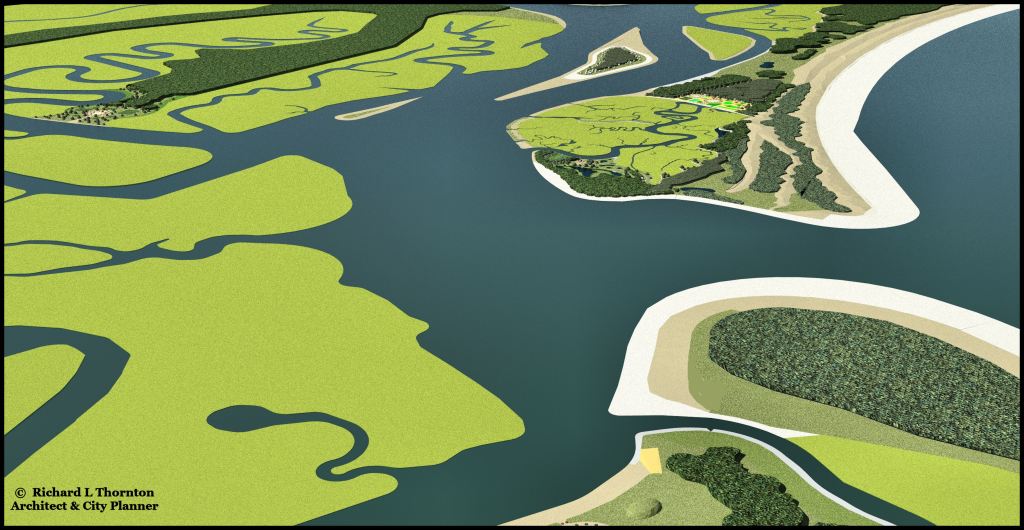
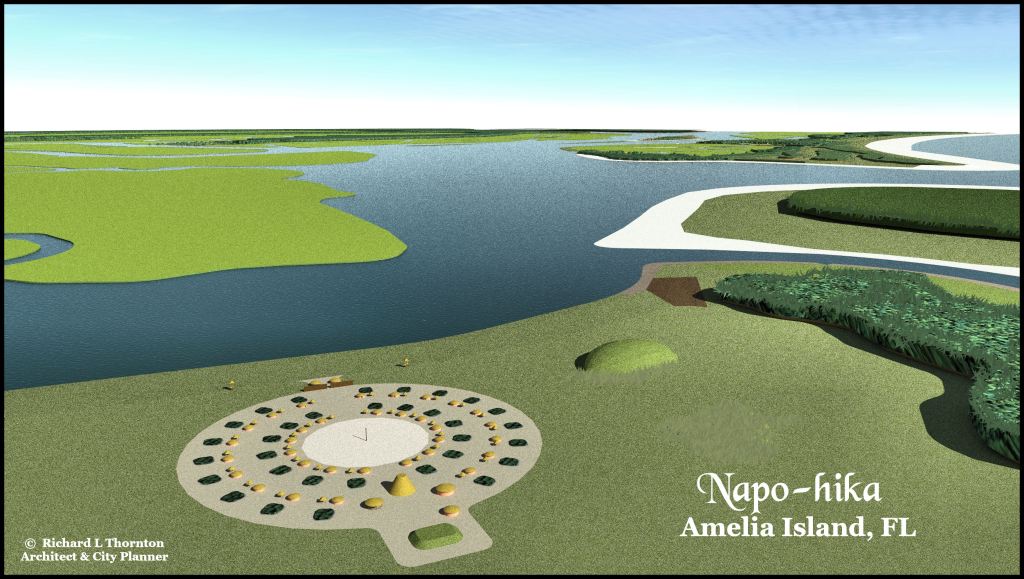
What is now called the Intercoastal Waterway is a deep channel running between the mainland and barrier islands, which was protected somewhat from major tropical storms. It facilitated north-south trade between peoples living in the Coastal Plain between Amelia Island , FL and Winyah Bay, SC.
Most of Florida’s Atlantic Coast was occupied by peoples, who depended on fishing, hunting and gathering of wild edibles to survive. North of the St. Johns River were far more sophisticated peoples, who were heavily involved in long distance trade, built mounds and grew a variety of crops. However, maize only thrived in the mouths of the Altamaha, Savannah and Santee Rivers, which received mineral nutrients washed down from the Blue Ridge Mountains.
This resulted in a corridor of hybrid languages, which contained words and grammar from many lands including Muskogee, Itza Maya, Chontal Maya, Mexica (Aztec), Panoan (Peru), Carib, Tupi-Guarani, Peruvian Arawak, Taino, Timucua, Amazonian Arawak, Medieval Gaelic, Old Norse, Illyrian, Latin and Bronze Age Greek!
The Many Peoples of the South Atlantic Coast Series
by Richard L. Thornton, Architect & City Planner

+

+
+

+

+
 The Americas Revealed