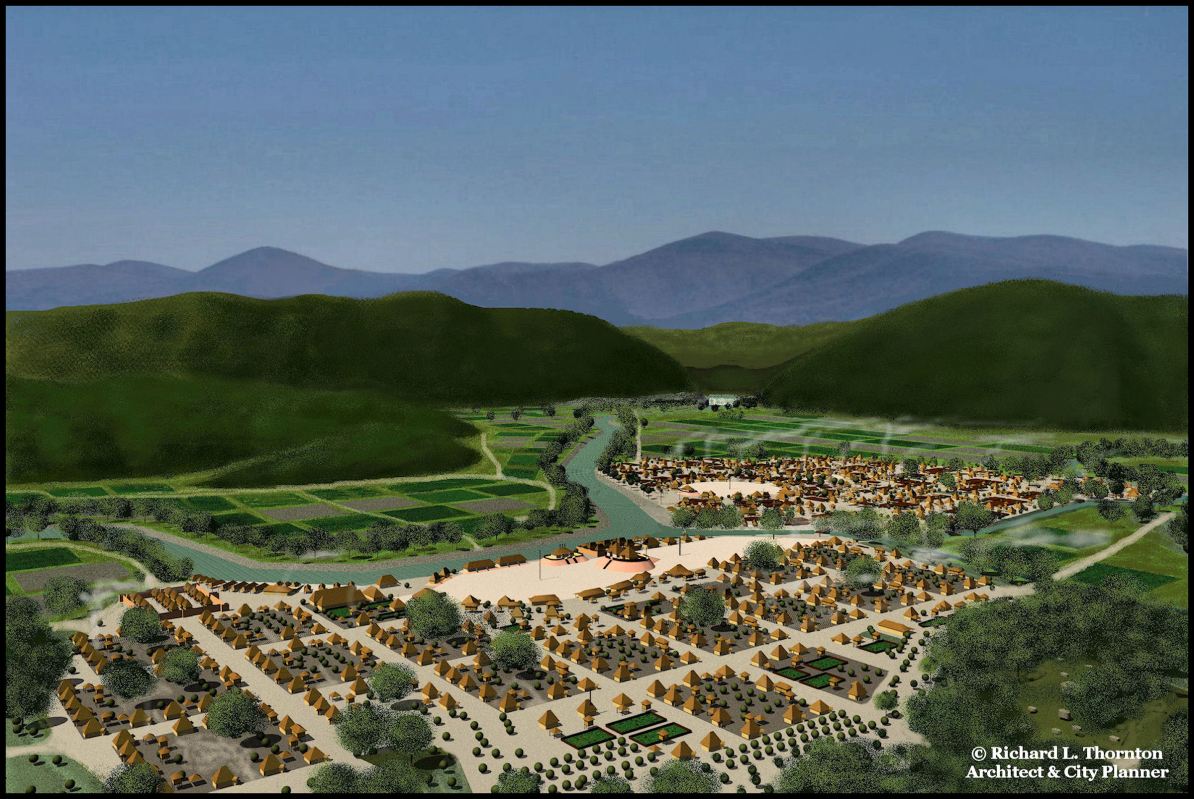
Throughout most regions of the two future states, it was common for peoples, who originated in very different lands and spoke mutually unintelligible languages to live side by side for hundreds of years!
Also, school children around Gainesville, GA are taught . . . and Wikipedia continues the lie . . . that their land was once the home of the Cherokee Indians. It actually was the home of a Chontal Maya tribe, known as the Kataapa, They joined the Creek Confederacy and so between the American Revolution and 1818, maps showed their county to be in Creek Territory. That is the reason that the dominant mountain of the county has a Chontal Maya name. Wauka.
Just look at the maps, instead or relying on tourist brochures !
Native American Heritage Month
The Many Peoples of the South Atlantic Coast series
by Richard L. Thornton, Architect & City Planner
As work continues on my latest book, I am seeing the exact same pattern in the South Carolina Coastal Plain as was observed in Georgia . . . such as in the Coosawatee River Valley, pictured above. In the Coosawatee Valley, Chickasaws, Earthlodge Siouans, Panoans (Peruvian Amazon Basin) and Proto-Creeks lived in close proximity.
Santee is a Peruvian word, meaning “colonists.” At least seven different distinct ethnic groups lived in close proximity along the Santee River alone. The villages were dispersed, not clustered together in tribal territories. Explorer John Lawson stated that almost every village along the river spoke a different language than its neighbors.
I have identified the following ethnic groups along the Santee:
- Panoan
- Middle Arawak (Venezuela)
- Caribbean Arawak
- Amazonian Arawak
- Muskogee-Creek
- Chontal Maya
- Carolina Siouan
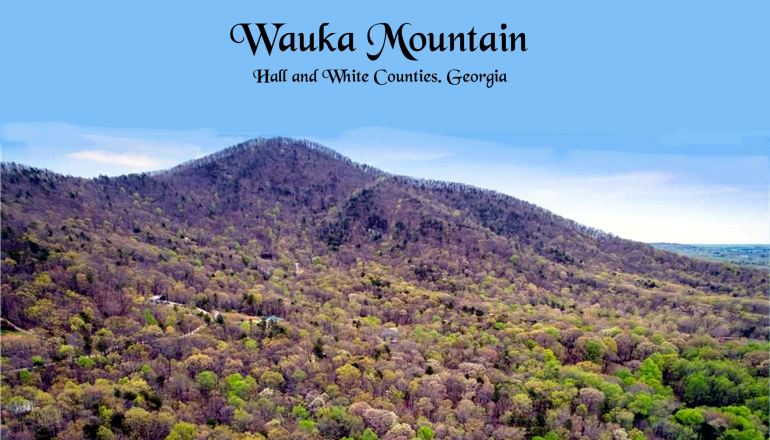
Wauka Mountain in Hall & White Counties, GA, has a Chontal Maya name.
Who the Catawba’s really were
Because most anthropologists in the Southeastern United States refuse to learn the translations of surviving Native American tribes and words or look at historical maps. they have often created then fossilized inaccurate history.
Catawba is the 18th century Anglicization of the Chontal Maya word, Katawpa, which means “Crown – place of” OR “river cane – place of.” The Spanish used the word, Catapa. for them, while Colonial Era maps usually spell their name Kataapa, Cataapa or Catalpa. Their main territory was in what is now Hall, Forsyth and Gwinnett Counties, GA, west of the Chattahoochee River. Maps published after the American Revolution show them living on the east side of the Chattahoochee River in west-central or southwest Georgia

The capital town of the Kataapa was always shown on the west side of the Chattahoochee River, until many moved southward. Then they were on the east side.
At some point in Pre-Columbian times, a band of the Kataapa migrated to what is now South Carolina and established a confederacy of the multi-ethnic tribes along the Wateree River in present-day South Carolina. It was extremely powerful until decimated by European plagues, Rickohocken slave raiders and a long war with the Iroquois Confederacy.
It is quite possible that the surviving Chontal Maya and Muskogee Creek members of the Confederacy migrated westward, when their confederacy was decimated to join with their kin on the Chattahoochee River.
Whatever the case, by 1784, the Katawpa Alliance in South Carolina only had a population of around 250 people. Thus, the language that is called Catawba today, is really the result of around 250 tough survivors blending their native languages together.
Conclusion
Similar multi-ethnic patterns are seen along other bays and rivers all the way southward to the St. Johns River in Florida. It characterizes Georgia from the mountains to the sea. This fact seems refute the long established anthropological orthodoxy that the Southeast was divided up into mono-ethnic tribal chiefdoms.
 The Americas Revealed
Great article. I totally agree with you and all your statements. The fossilization of inaccurate history is disheartening but a very true thing. I strongly feel that one of the most important things for us to accomplish is putting a stop to that trend; and surprisingly, it does not take a seasoned researcher to see that a lot of this fossilization of history that is completely inaccurate is often based on evidence that is blatantly incorrect and fairly obvious without much digging at all. I am currently working on a few books myself, several which share these very same topics you have been discussing here, so it’s been great to read!
LikeLiked by 1 person