
Constructed on an island between present-day Maine and New Brunswick, it began a program by King Henri IV of France to colonize what is now Canada. During his reign, French Protestants actively participated in the colonization efforts. French Protestants, who were small minorities in hostile Roman Catholic regions, were encouraged to immigrate to Nouvelle France.
Samuel de Champlain had learned from the mistakes made in the planning of Fort Caroline in the 1560s. The rocky islets around the main island protected the colonists from both naval and land-based attacks. The new colony was far removed from Spanish military bases and naval operations. Perhaps, most importantly, the colonists included farmers, hunters and fishermen.
Slide Show
by Richard L. Thornton, Architect & City Planner

=

On November 8, 1603, Henry IV of France granted a Protestant nobleman, Pierre Dugua, Sieur de Mons, a monopoly for the conduct of the fur trade and the title of lieutenant governor of the territory between the 40th and 46th parallels known as La Cadie. In return, De Mons was expected to colonize the country and convert the First Peoples to Christianity.
Prominent members of the expedition included the explorer/geographer/architect, Samuel Champlain; the Sieur de Poutrincourt, who had a special interest in farming; and François Pontgravé, who, like Champlain, had been involved with an expedition up the St. Lawrence the year before. De Mons also brought along a surgeon, a miner, a Roman Catholic priest and a Protestant (Huguenot) minister to look after the spiritual needs of the colonists. The group included a sizeable contingent of Huguenots.
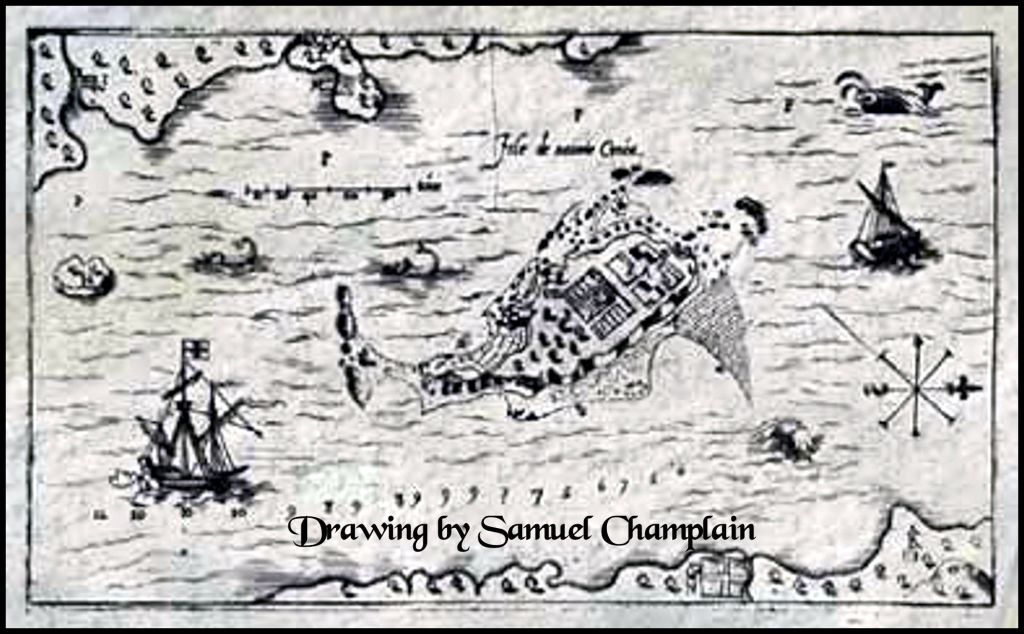
The expedition sailed from Havre de Grâce (now Le Havre), France in March 1604. Arriving at Sable Island on May 1st, they divided-up; three ships headed up the St. Lawrence to trade, Pontgravé sailed for Canso, and De Mons, Champlain, and Poutrincourt explored the coast of Nova Scotia and the Bay of Fundy. Throughout the summer De Mons searched for an appropriate site for a settlement while Champlain carefully mapped the inlets and harbors of the rugged coastline.
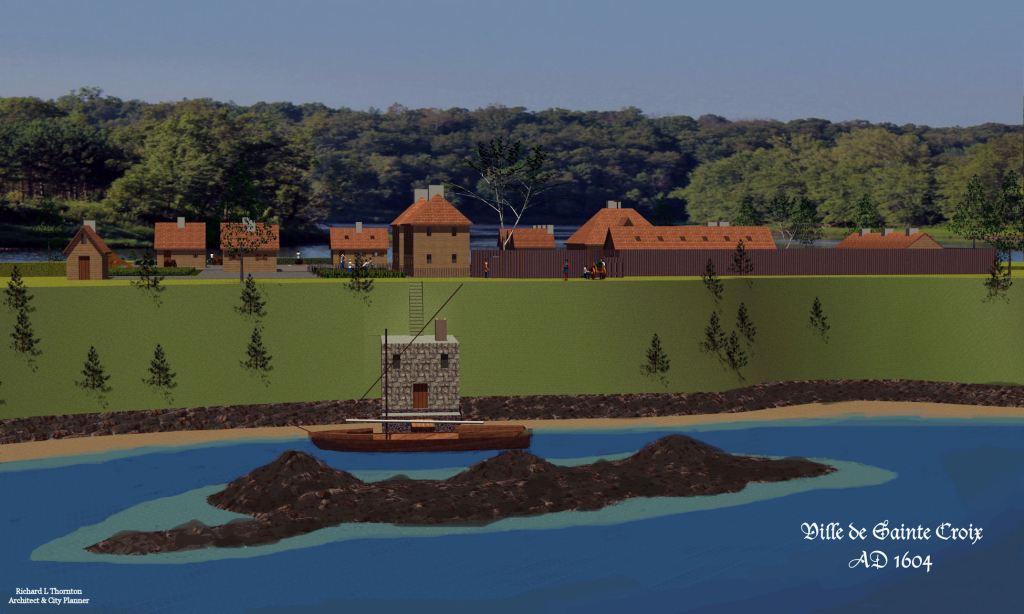
At the end of June, after exploring the mouth of the St. John River, the group arrived at Passamaquoddy Bay. Here they found an island situated inland near the confluence of three rivers. Blessed with an abundance of resources, especially herring and bass, and easily defended against possible attack, it seemed a promising site for a settlement. De Mons named the island Île-Sainte-Croix.
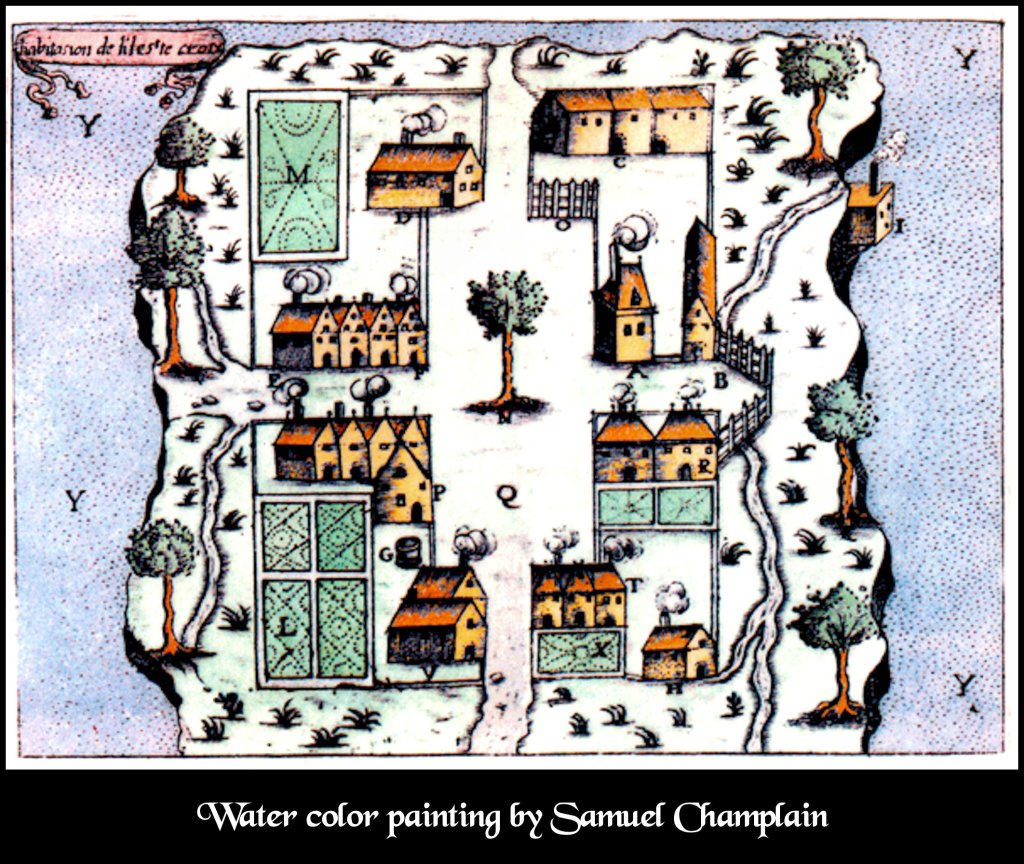
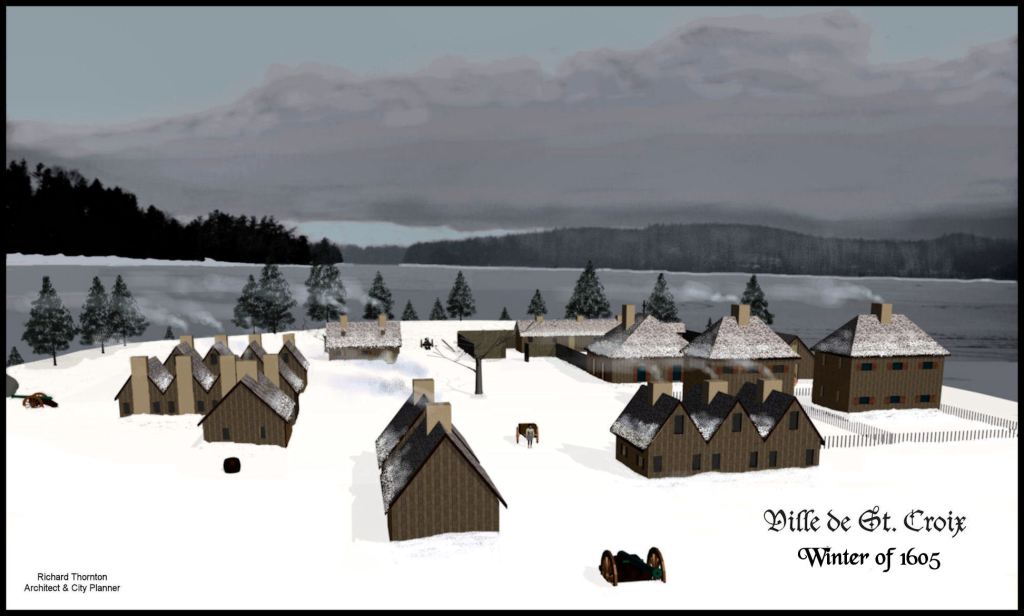
The snow came early that year. The situation of the colony quickly changed. During the first winter there more than half the settlers perished due to a “land-sickness” believed to be scurvy. Sympathetic Native Americans, living nearby showed the colonists how to make a potion from the needles of conifer trees, which both prevented and cured the “land sickness.”
The following spring, Champlain and François Gravé Du Pont moved the settlement to a new location on the southern shore of the Bay of Fundy that Champlain had found during a shoreline reconnaissance for a more suitable site. Called Port-Royal, it became the first permanent European settlement in New France.
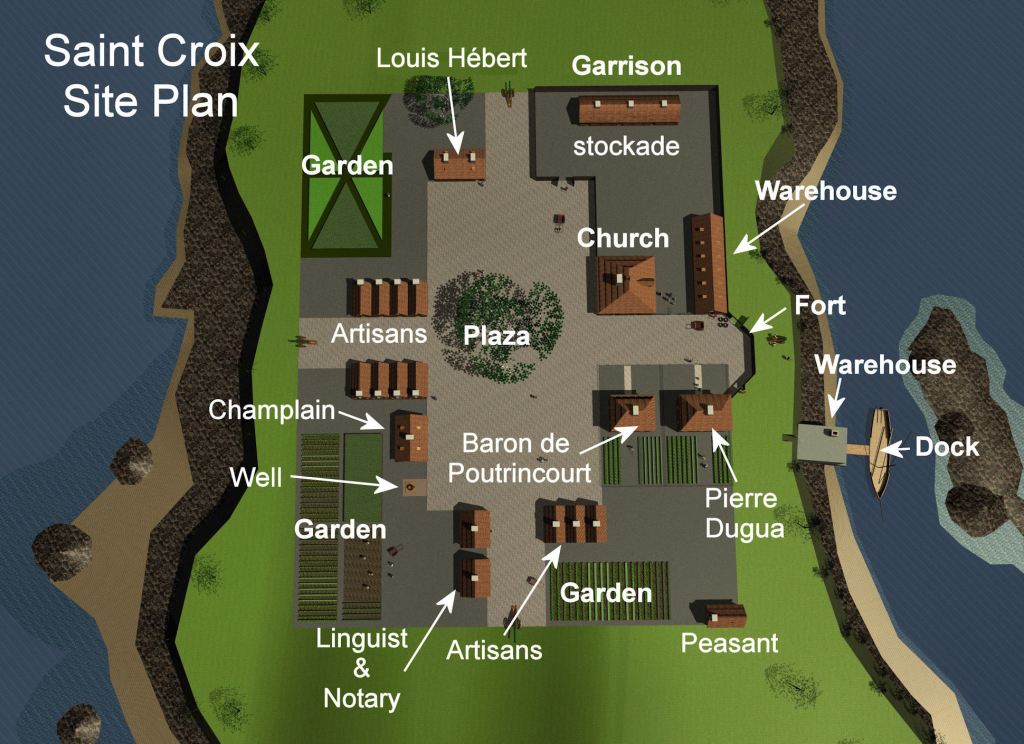
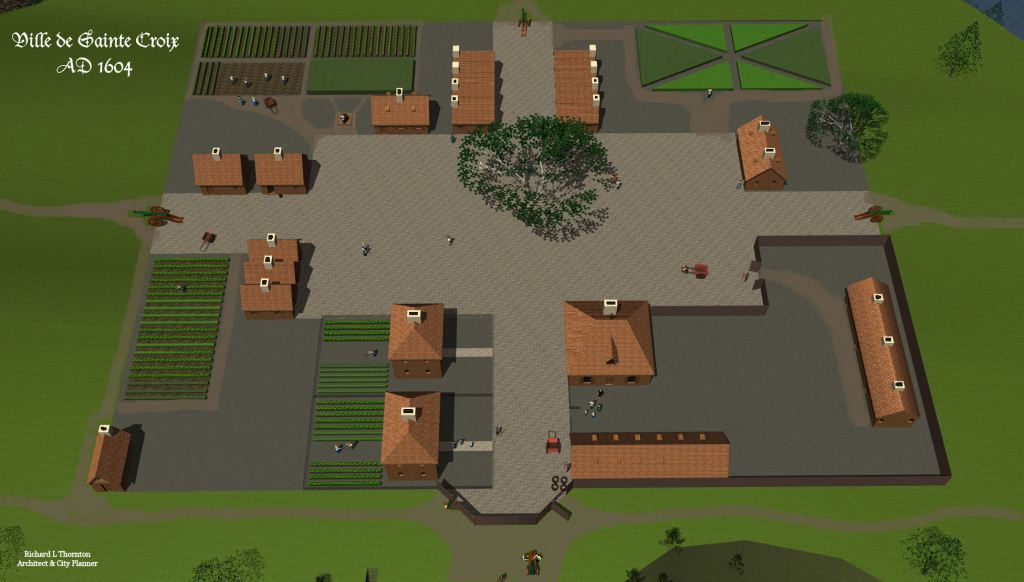
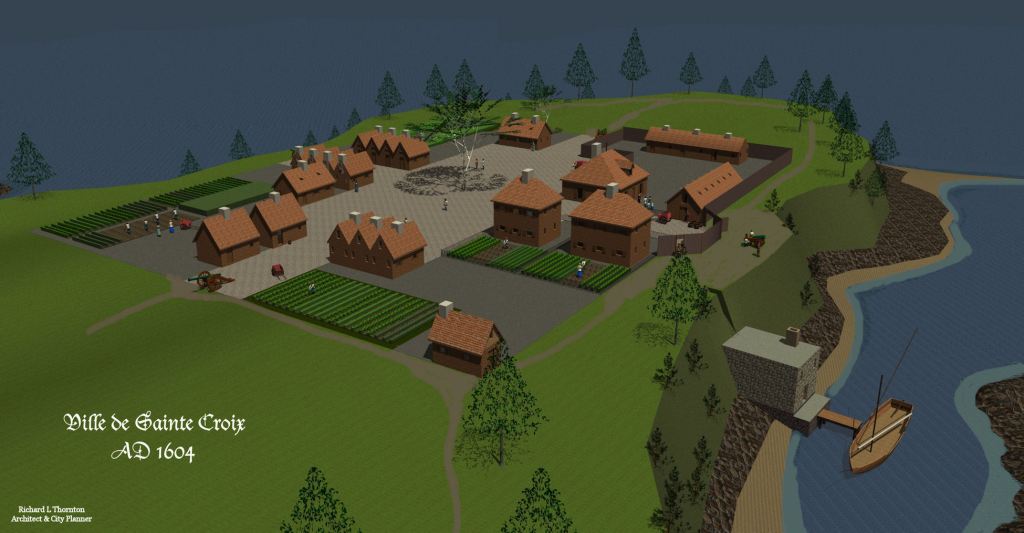
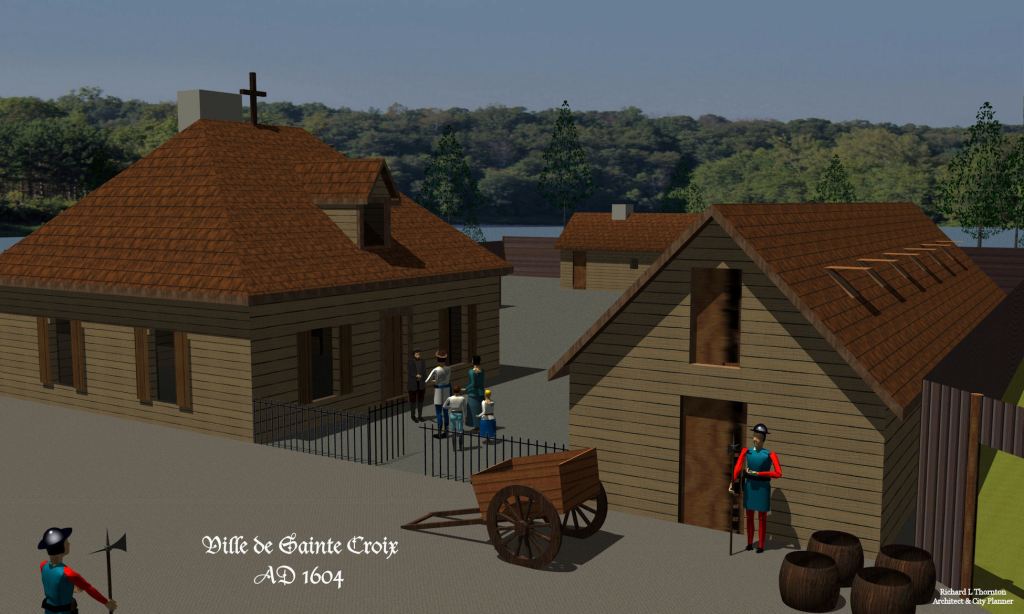
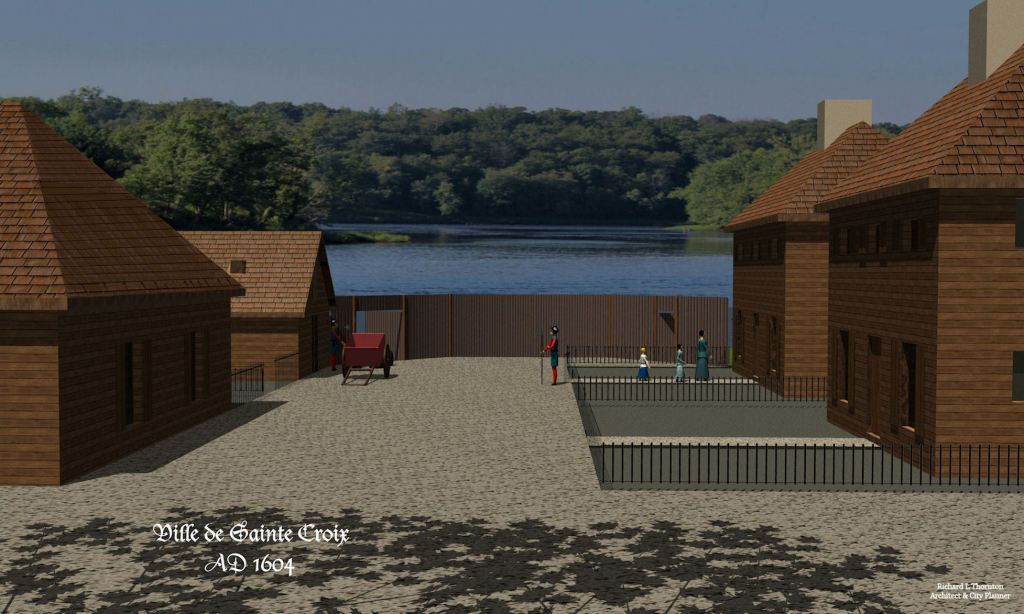
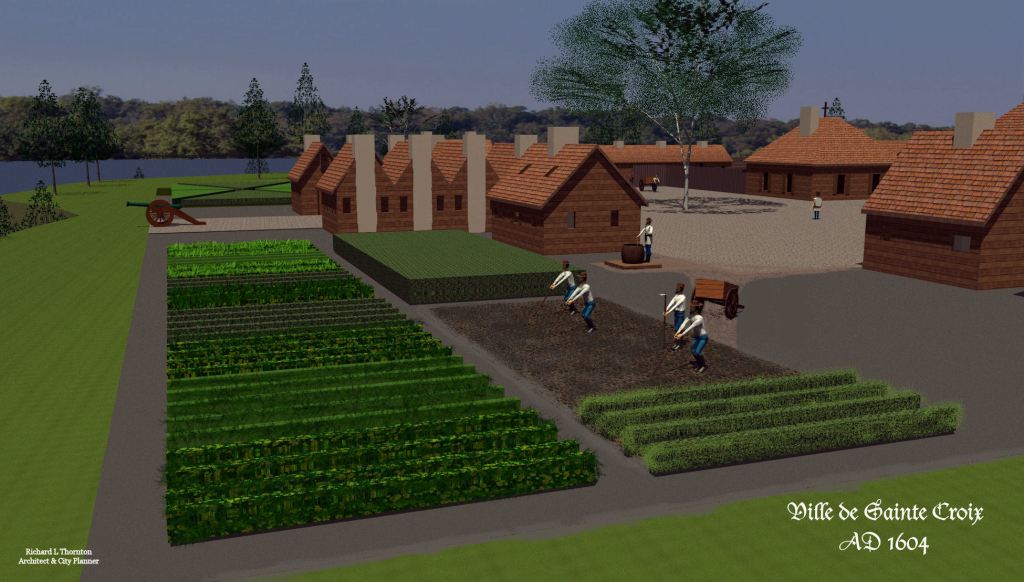
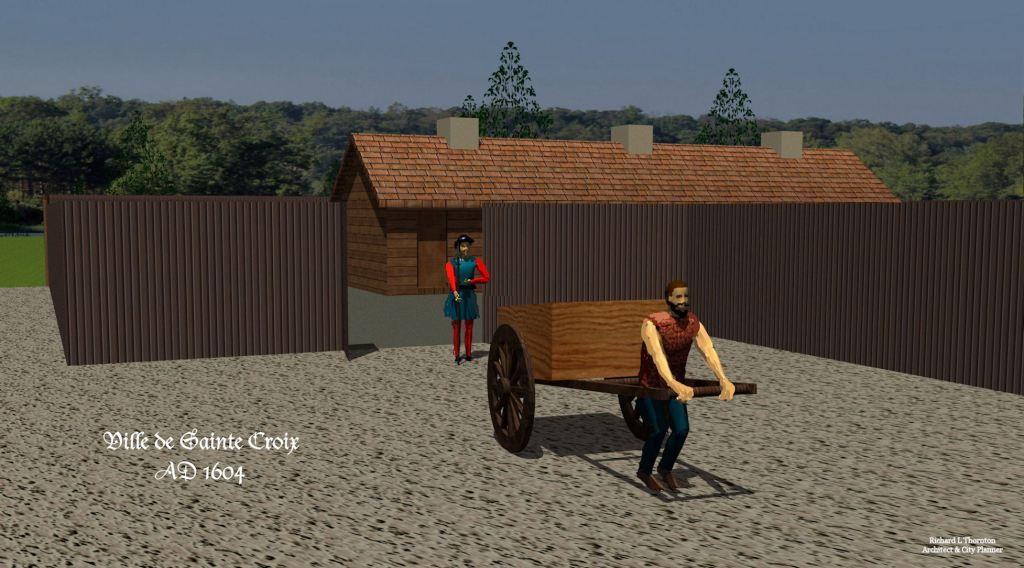
The Architecture of Ville de St. Croix
–
–
–
–
–
–
–
 The Americas Revealed
That’s a cool piece to bring to light Richard, a whopping 3 years before the Popham Colony.
Very Respectfully,
Zac
LikeLiked by 1 person
Drawings of the Popham Colony are coming here in March or early April. I need to finish the French colonies and then do the Spanish colonial architecture.
LikeLike
I think it is great that two established forts were in present day Maine or right near the border of Maine and Canada at least.
What a beautiful state Maine, If you’re ever up in present Phippsburg, ME, I believe that was the site of the Popham colony, coastal Maine is next level pretty.
LikeLiked by 1 person
Seems like being a notary was a good gig in The New World!
LikeLiked by 1 person
Champlain went on to become unofficial governor of Nouvelle France – plus simultaneously chief architect, chief surveyor, chief engineer and commander of French soldiers in Nouvelle France. I hope the kings paid him a good salary.
LikeLike