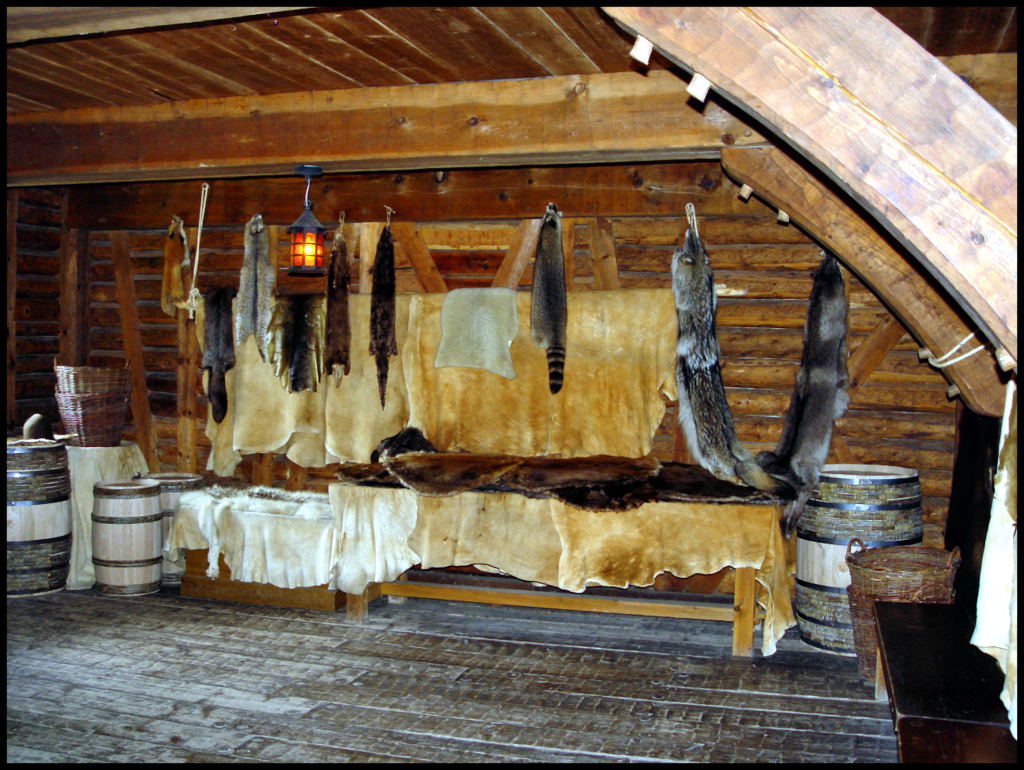
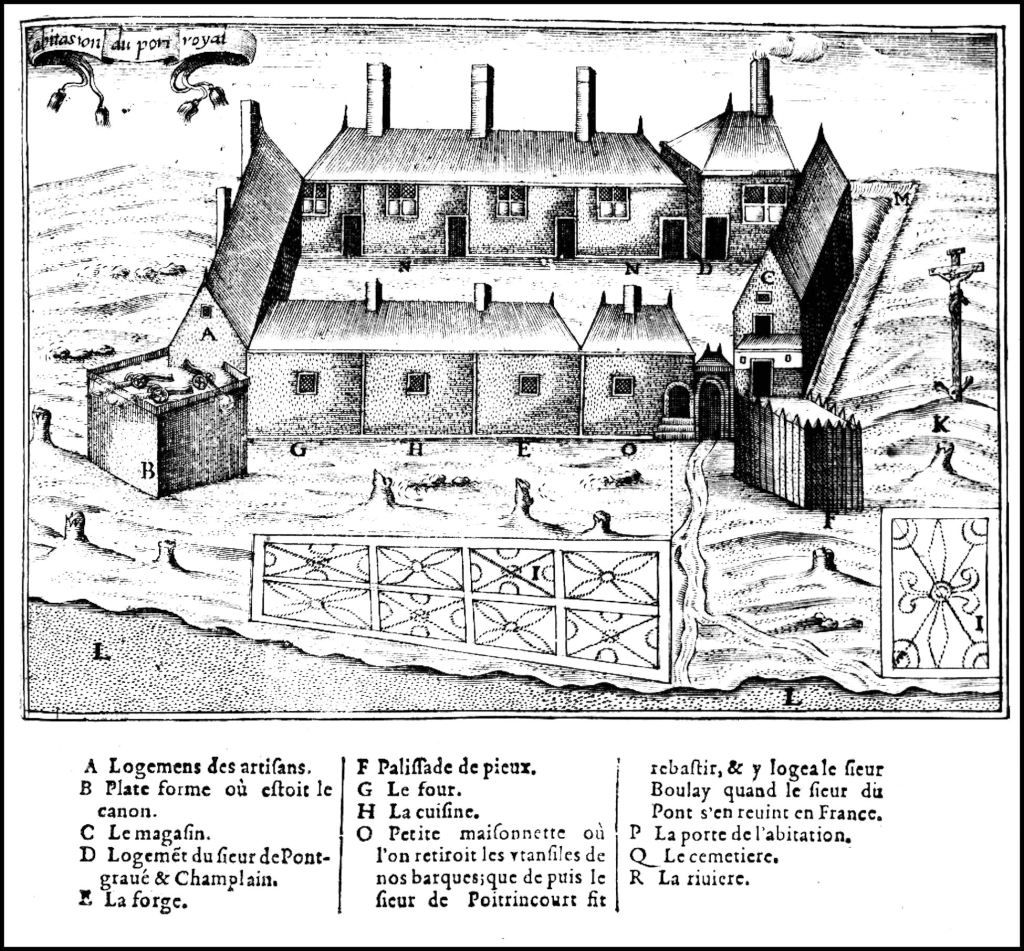
Founder, Pierre du Gua de Mons, chose to name this successful “Habitation” after France’s first attempt at colonization in 1562 on the South Atlantic coast near present day Beaufort, South Carolina. The fortification and buildings were designed by Samuel de Champlain.
Slide Show
by Richard L. Thornton, Architect & City Planner

Port-Royal was settled in 1605 after the expedition, led by French Protestant nobleman Pierre Du Gua de Mons, spent a disastrous winter in Île-Saint-Croix. He was accompanied by Samuel de Champlain and Jean de Biencourt de Poutrincourt et de Saint-Just. They decided to move their settlement to the north shore of present-day Annapolis Basin, a sheltered bay on the south shore of the Bay of Fundy, which had been discovered by Champlain earlier in the spring of 1605 during a coastal reconnaissance.
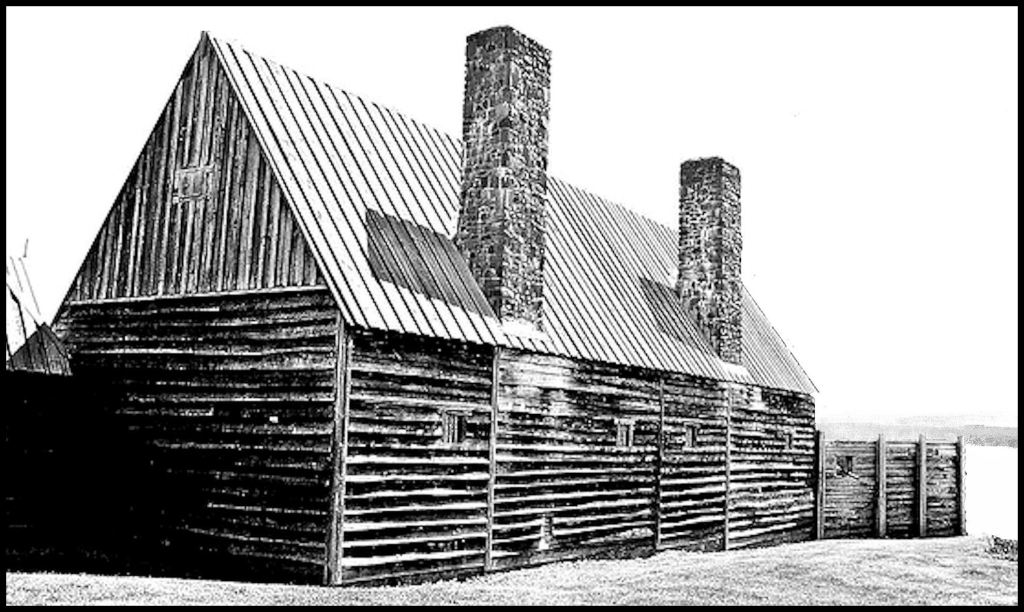
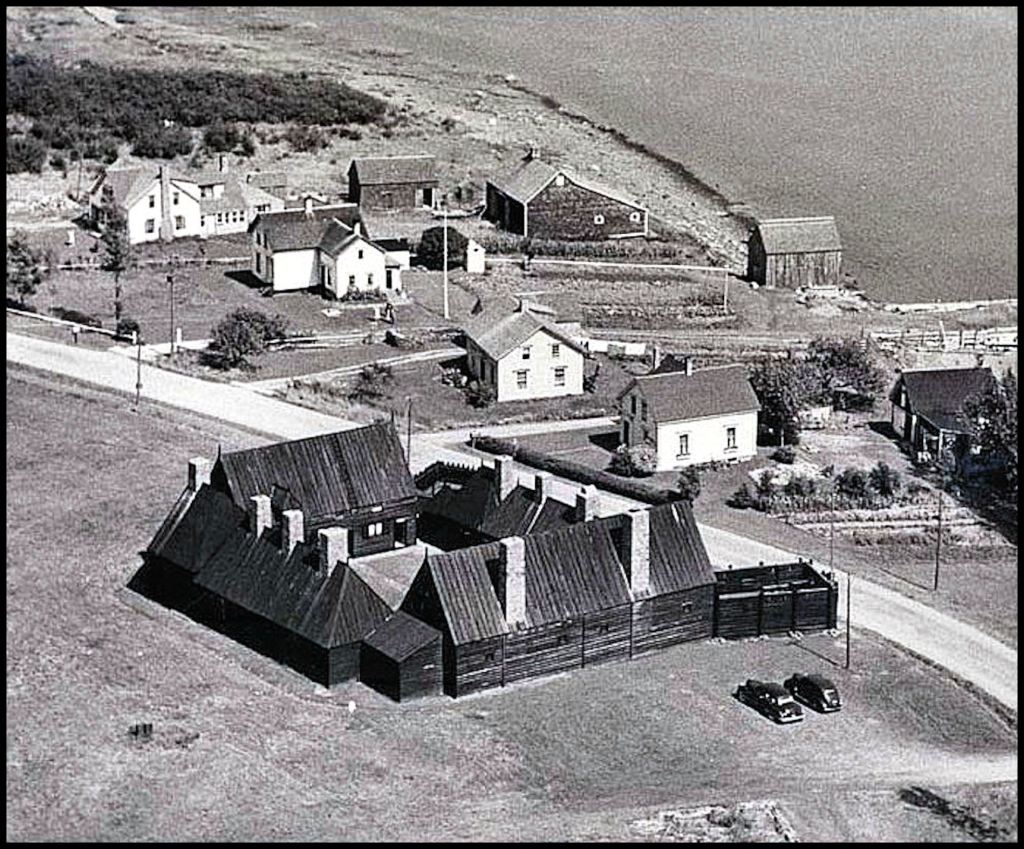
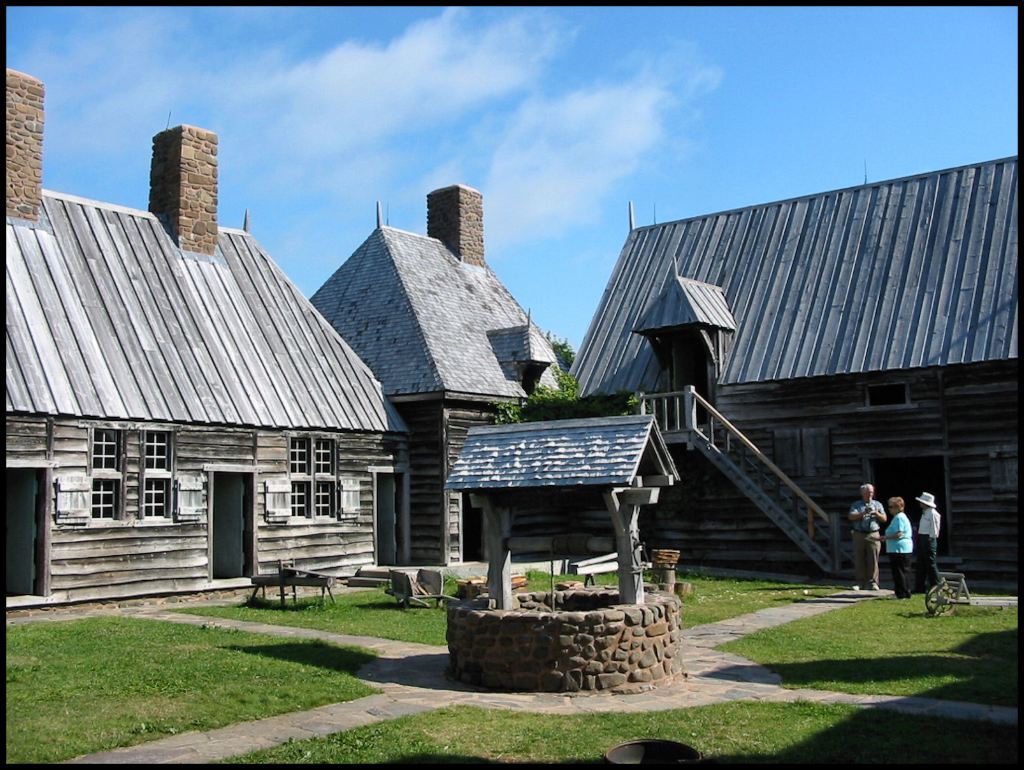
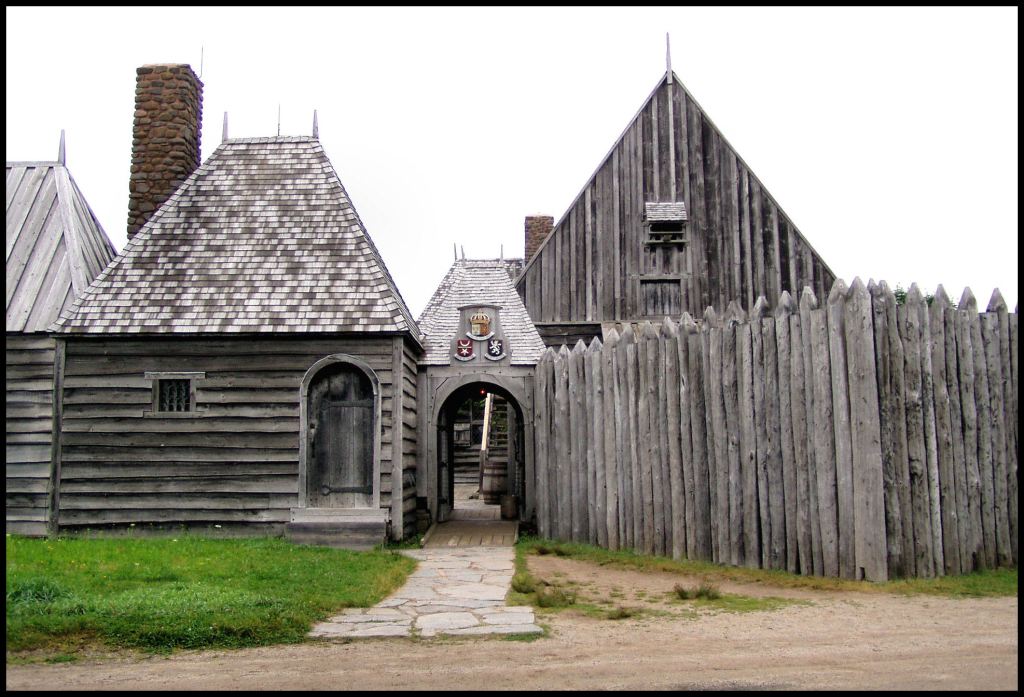
The colonists constructed a log stockade fortification called a “habitation.” With assistance from members of the Mi’kmaq Nation and a local chief named Membertou, coupled with the more temperate climate of the fertile Annapolis Valley, the settlement prospered.
After its destruction by raiders from Virginia in 1613, Port-Royal was re-established on the south bank of the river 8 km (5.0 mi) upstream. The British renamed Port-Royal at this new location as Annapolis Royal following their conquest of Acadia in 1710.
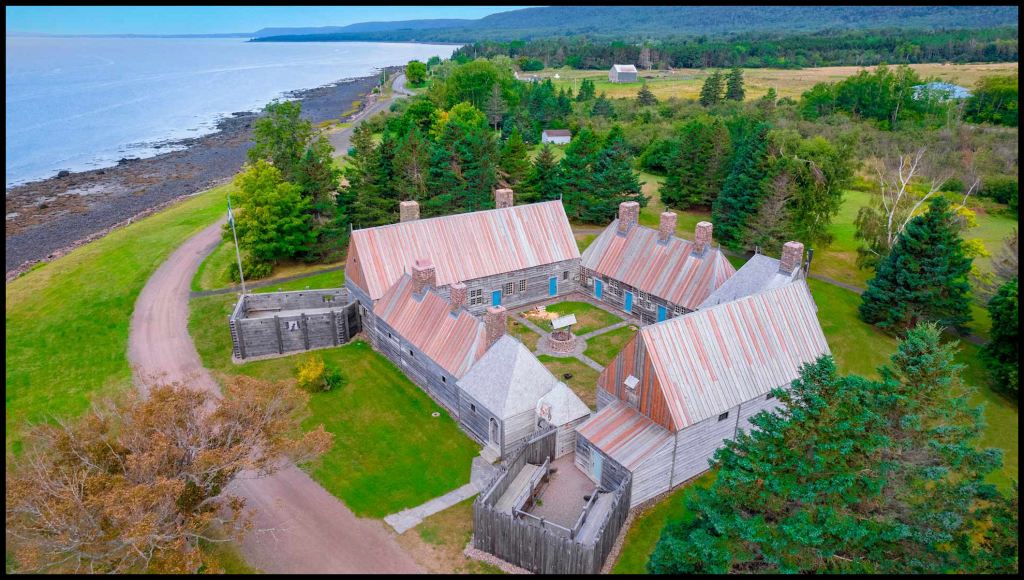
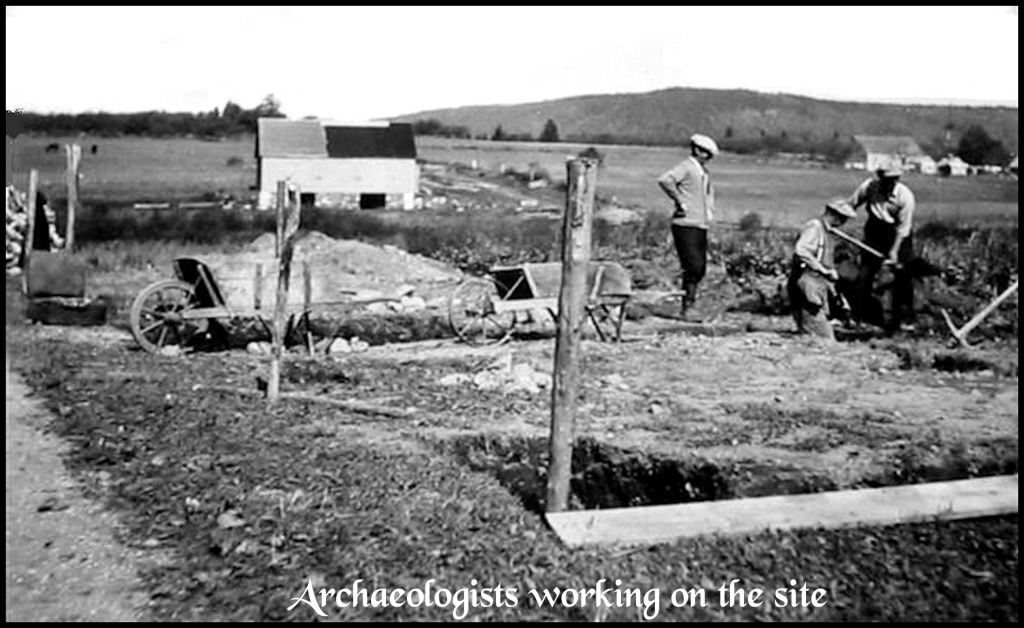
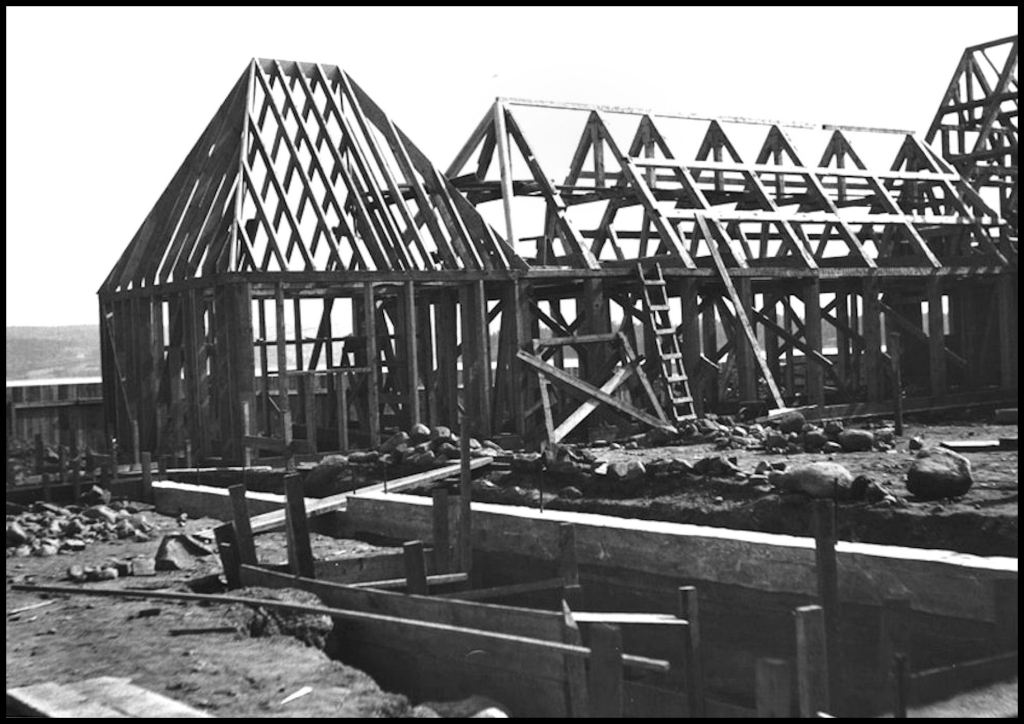
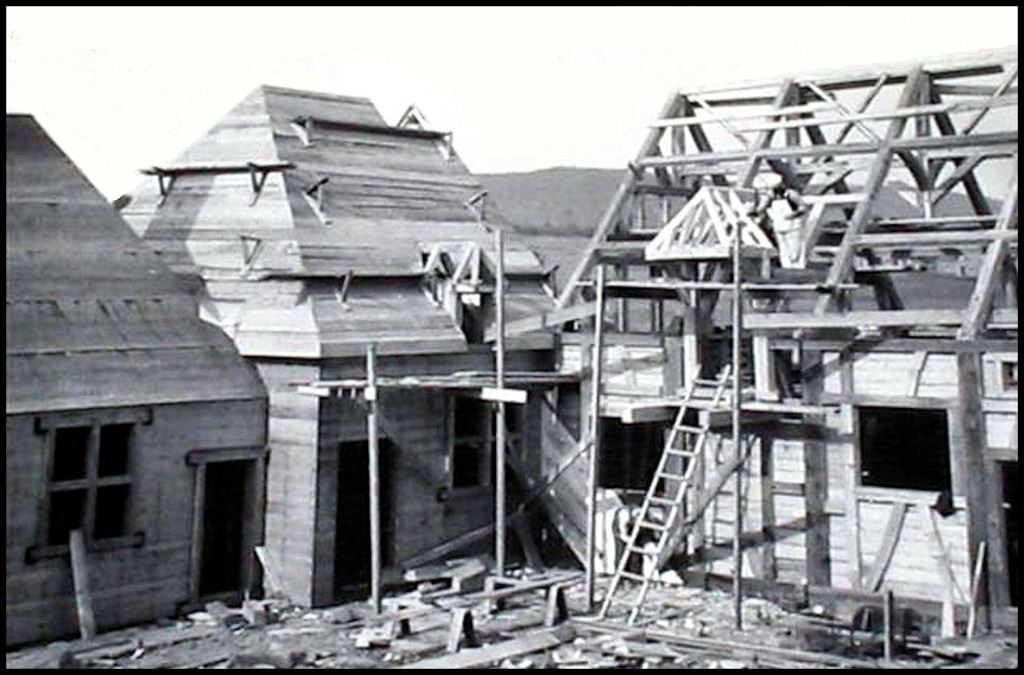
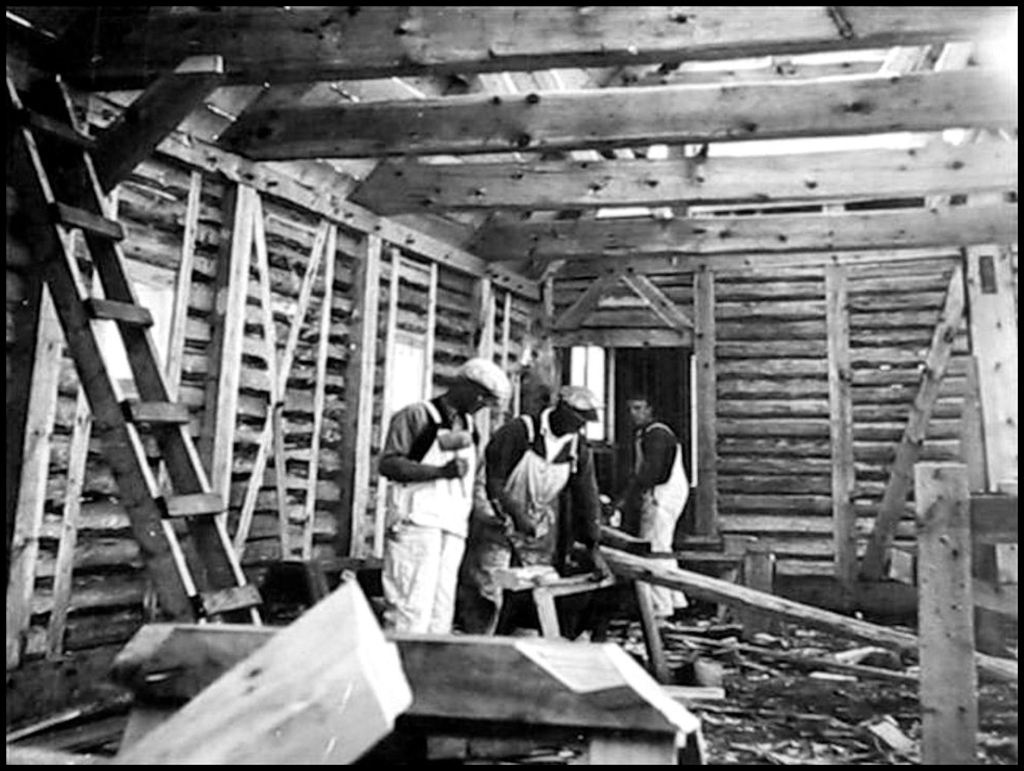
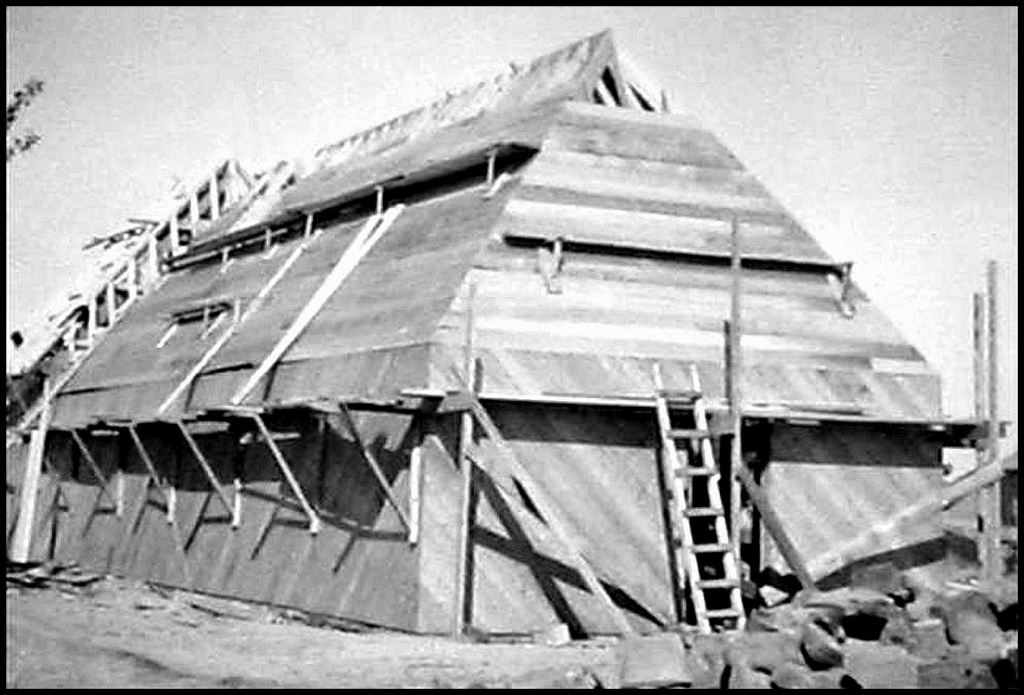
During the mid-20th century, the provincial government of Nova Scotia and federal government of Canada went to great expense to create an authentic reconstruction of the original buildings . . . including the interiors. These structures have been allowed to age naturally, so today many tourists assume that they are visiting the original buildings.
Reconstruction of a National Historical Site
Photographs courtesy of Nova Scotia Tourism
–
–
–
–
–
–
–
–
–
–