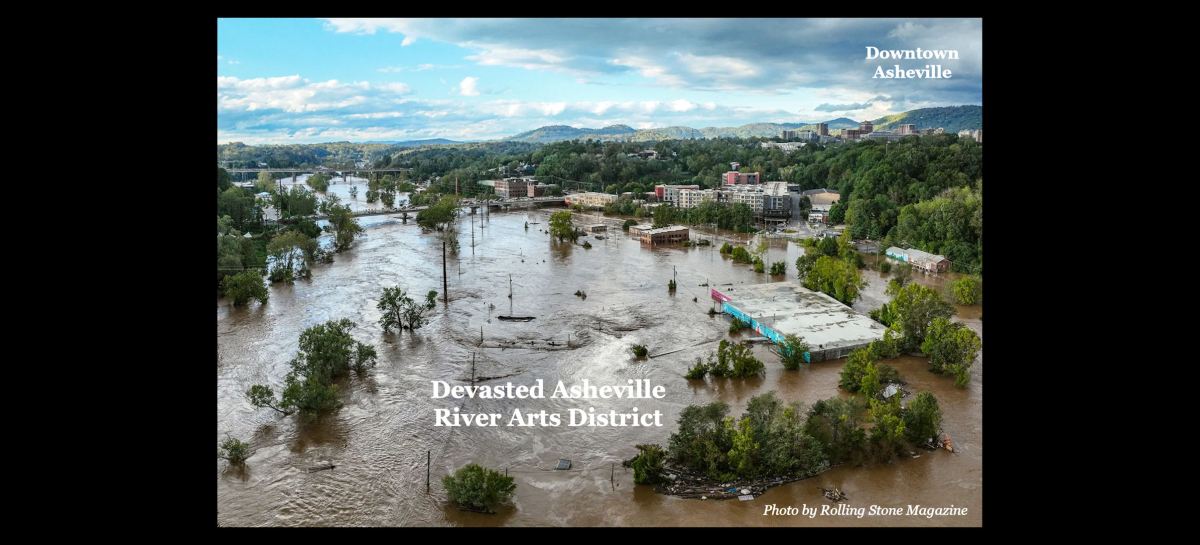
YouTube and other social websites on the internet continue to be flooded with talking heads trying to make themselves to appear to be experts on the operation of disaster relief efforts or more often, just spreading false information.
What made me this most angry were the talking heads, who drove into Asheville, NC wearing “working man” type cloths then set up a filming site in the center of the disaster, They interrupted the people doing the clean up work then criticized them for not making enough progress then drove back to Greenville, SC to drink at the bar . . . not having done anything to help the misery of the people in Southern Appalachia.
I was in New Orleans two weeks after Hurricane Katrina. My two herd dogs and I helped find the remaining human cadavers, You can imagine how both New Orleans and my clothes smelled. I am no expert on the subject, but my impression is that the Hurricane Helene Disaster Relief Effort is much better organized than the one for Hurricane Katrina. Here is FEMA’s report issued today on the progress made so far:
https://www.fema.gov/blog/one-month-after-hurricane-helene-recovery-continues
 The Americas Revealed
Of what practical value is FEMA?
LikeLike
Without FEMA, western North Carolina would have chaotically devolved into the Stone Age and it would have stayed that way for decades. There would have been no one to make emergency repairs to washed out roads so food and water could reached flood survivors. I saw what happened when FEMA was very slow in arriving in New Orleans after Hurricane Katrina. Most of the deaths in New Orleans occurred because no one was there to rescue people and the Bush Administration made no effort to provide food or water to the survivors for days.
LikeLiked by 1 person
I noticed, from the sidelines, that there was so much confusion, that nobody had a coordinated response about how to help. Individuuals did what they could, and local support teams did too. But the federal government is too distant and removed to work effectively on local problems.
LikeLike
We could do well with some Stone Age Know-How.
LikeLike
Most of the infrastructure (roads, railroads, utilities) were destroyed along a 60 mile swath through Western North Carolina. Most of the emergency road repair is being done by US Army personnel. Without getting those roads open, the local communities were/are completely paralyzed. Over 130,000 people in and near Asheville still do not have running water. Most rural areas of the region is still without electricity. The power companies and coops are waiting for roads to be opened so they can get their trucks to replace long stretches of broken power poles and downed wiring.
LikeLiked by 1 person