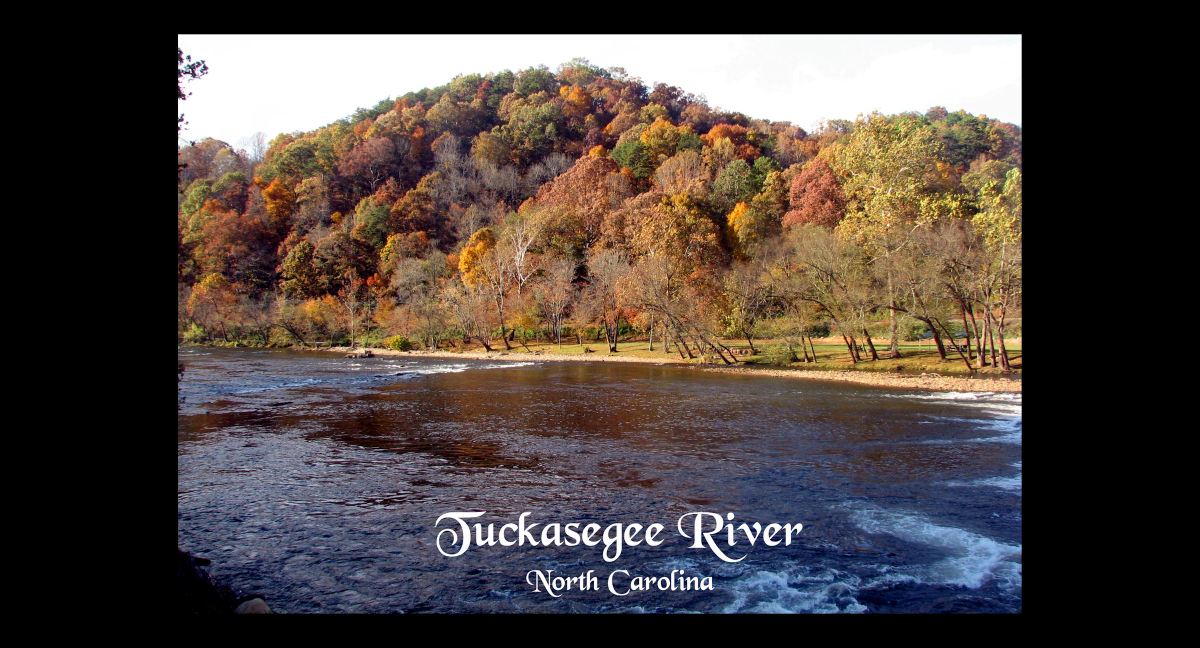
Reference for . . .
The Peopling of Eastern North America Series
by Richard L. Thornton, Architect & City Planner
Tuckasegee: Tokoh (“Principal” in Gaelic) : se (“descendants of” in Muskogee) : ghe (“people” in Gaelic and Muskogee). With so many Maya, Toltec, Panoan (Peru), Gaelic, Scandinavian, West Germanic, Illyrian and Italic words in Muskogee, it is obvious that the Muskogee branch of the Creeks began as a mixed race tribe. In fact, that is what the actual Native American word, Maskogi, means!
Perhaps, it was the Creek tribes’ hybrid vitality was what enabled them to survive the impact of European pathogens. It is a fact that the Creeks were the only indigenous population in the Americas, who repeatedly defeated the Spanish Empire and blocked its expansion. A Spanish army was devastated (95% dead or wounded) at the Battle of the Flint River in 1703. The battle was fought with European firearms.
Official North Carolina Native American history is poppycock!
Immediately after receiving an M.S. in Urban Planning, my employer dispatched me to Cherokee, NC to help them with their land use practices. Houses were sliding off the mountainsides and floods were washing away buildings along the Oconaluftee River. At the time, the tribe’s tourist brochure stated that the Cherokees arrived in western North Carolina about the time that Charleston, SC was founded. They encountered very few people living there and did not build any of the mounds. However, they did place their council houses on top of the old mounds.
Flash forward to 1978. I am living in Asheville and preparing the Downtown Asheville Plan. As standard in such documents, I provided readers an overview of the region’s history. I did not know the meaning of any Indigenous American words in the United States at that time in my life. I did know some Maya, Totonac and Aztec from the fellowship in Mexico, but it would have never dawned on me to use that knowledge. My text was based solely on historic maps.
I briefly mentioned that the Asheville Area was occupied by Shawnee Indians until the end of the French and Indian War. Downtown Asheville was the site of a large Shawnee town . . . so was Biltmore Village. The boundary between the Shawnee and the Cherokees was 40 miles to the east at Soco Gap.
I also mentioned that the Uchee occupied villages at the eastern foot of the Blue Ridge Mountains near Old Fort, Marion and Lenoir, NC. Most of the region to the south and southeast of Asheville was Muskogee-Creek.
Well-l-l, out of the blue, I received a stern letter from City Manager Ken Michelove, ordering me to immediately remove all references to Indian tribes other than the Cherokees from the Draft Downtown Revitalization Plan. The Mayor of Asheville had been reprimanded by a state senator. It seems that in 1976, the North Carolina General Assembly had passed a LAW stating that all American Indian sites and artifacts in western North Carolina were to be labeled “Cherokee”. The official law and policy of the State of North Carolina was that Cherokees were the only Indians, who ever lived in the North Carolina Mountains and they had been there for at least 10,000 years!
It was no big deal to me. I removed all references to the other tribes as ordered . . . even though the state law seemed downright bizarre. Nevertheless. I never forgot my puzzlement in the fact that a large territory of the western North Carolina Mountains near Asheville. Hendersonville. Brevard, Highlands and Franklin, NC had been occupied by Muskogee Creek Indians.
River and stream etymologies
In 2017, after completing my research for the Native American Encyclopedia of Georgia, I planned to work on a companion book for Western North Carolina. I only got as far as the chart below. Book sales in general were starting to plummet in the United States. People were becoming addicted to Smart cell phones and Youtube. Books were a great way to discipline research, but were a waste of time, financially.
I switched to producing educational videos without advertising for Youtube and public presentations. Let’s put it this way. During the past 18 years, I have sold 28 copies of my book on Etowah Mound. I worked on it for about a year. As of today. during the past five years, 21,000+ people have watched my YouTube video on Etowah Mounds.
The Western North Carolina book only got as far as the chart below. I was shocked that no major rivers in North Carolina had Cherokee names and only a few streams had Cherokee names. The main river through the Cherokee Reservation was a Creek word. Most of the rivers had Itsate-Creek or Apalache-Creek names, but in that region south and southeast of Asheville, the only streams with Native American names were Muskogee-Creek names! Was this where the Muskogees originally lived?


 The Americas Revealed
In his history of Asheville and Buncombe County, Sondley mentions that Jon Lederer, under the patronage of William Berkeley, Governor of VA, explored Western North Carolina in 1669-1670. He mentioned a “Ushery Lake,” which historians have never placed but may be the valley of the French Broad. Do you have any idea if this lake existed and where it may have been?
LikeLiked by 1 person
Lederer never entered the Carolina Mountains. He traveled along the eastern escarpment of the Blue Ridge Mountains. Ushery would be an Anglicization for Uchee word that means “Uchee People.” The Uchee were concentrated during much of the 1700s in an area around present day Old Fort, Lenoir and Marion, NC . . . which makes me speculate that the lake was in that region.
LikeLike