
An explanation of events twenty years ago.
As readers might have suspected, this recently divorced archaeologist also had a social-romantic agenda for attending the SEAC* conference in Charlotte, NC. However, she was consistently shunned by other male and female attendees, until she sat down beside me. While in Charlotte, she ate every meal alone.
While Pilar and I were driving up to the North Carolina Mountains, I told her about my experiences in Mexico. One of the most memorable were the six days that I spent with Ana Rojas, when we both had just turned 21 . . . in the then unmapped tierra incognito of eastern Campeche. Ironically, Pilar was a friend of Ana!
The Peopling of Eastern North America Series
by Richard L. Thornton, Architect & City Planner
*SEAC is the commonly used name for the Southeastern Archaeological Conference. My first mentor, Dr. Arthur Kelly, played a major role in its founding. It was originally based at Ocmulgee National Monument.
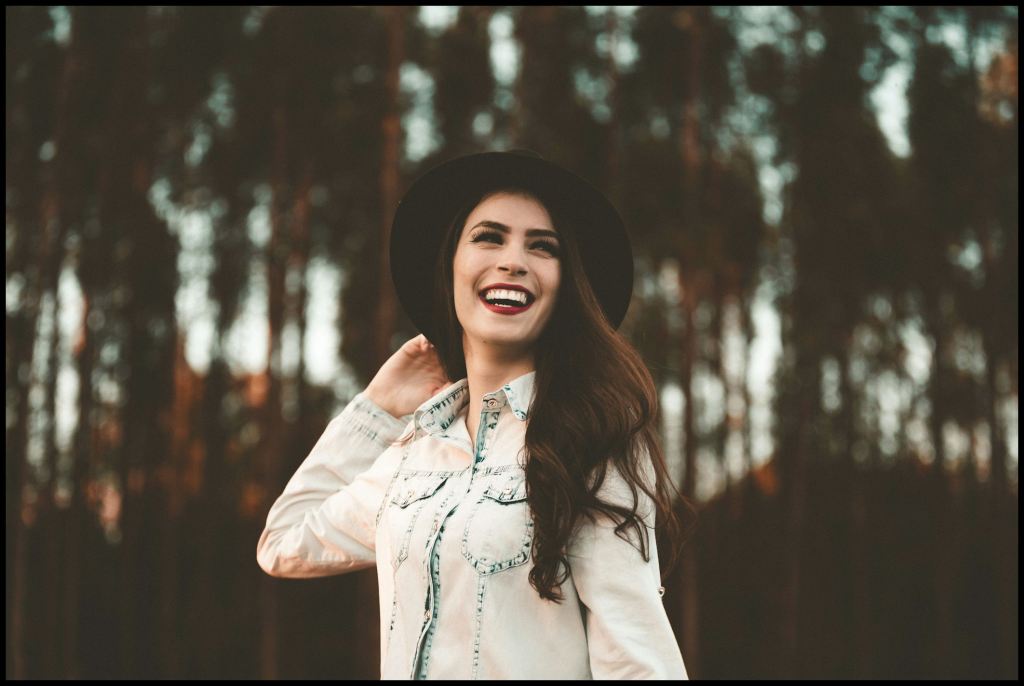
Pilar at Bonds Swamp near Macon, GA. This fascinating labyrinth of cool streams spouting from artesian springs is now part of Ocmulgee National Historical Park. She thought the swamp had been intensely cultivated by Native Americans. We will discuss her other impressions of Bonds Swamp and Ocmulgee in the next article. She was 42, when this photo was made.
In the previous article, a lovely Latin American archaeologist suddenly sat beside me at a Saturday morning workshop on Spanish colonial activities in the Carolinas. She was dressed like she was about to attend a reception at the White House. I was dressed like Crocodile Dundee and anxious to get away from the conference, so I could go hiking with my dog along the Chattooga River, where the movie, “Deliverance” was filmed. It was clearly a case of “The Princess and the Frog.”
Twenty years ago, Colombia was still suffering from drug cartel-related violence and chronic poverty. Today, it is one of the few places in Latin America where there is universally-available fresh, potable drinking water. That is certainly not the case in Mexico, where the public water systems are more toxic and undependable than ever. As of 2024, Colombia is considered a thriving, predominantly middle-income, market-based nation with a growing economy . . . currently ranking as the fourth largest economy in Latin America.
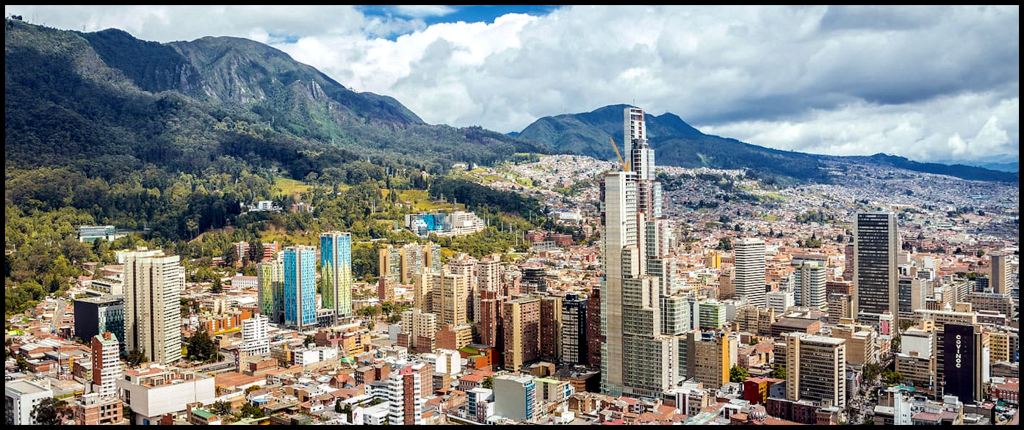
Bogata, Colombia is one of the largest cities in the world. It has year-round spring-like climate.
Also, disappointed with the lack of intellectual stimulation from the presenters, Pilar began passing notes to me. My first response was in Spanish, where I told her that I was impoverished, ignorant Native American goatherd. That self-effacing comment in Spanish . . . seemingly the only Gringo at the conference on Spanish history, who could speak Spanish . . . combined with my Crocodile Dundee attire, made her assume that I was an incredibly wealthy international explorer like Englishman, Richard Branson. She observed that I didn’t give a flying flip what other thought of my casual attire.
Why would a prominent academician from a wealthy family in Colombia start acting like a teenybopper then ask to run off to the North Carolina Mountains with a stranger and his herd dog? She was recently divorced and looking for an affluent, educated man, who would not treat her like one of the older sports cars in his garage. It was common in Colombia for wealthy men to acquire multiple mistresses, after his first wife had produced heirs.
However, Pilar’s situation had degenerated to the point, where she lived a lonely nun’s life and her two pre-adolescent children never saw their father. She refused to emulate many of her peers at the university, who had responded to such situations by embarking on a lifestyle of secret, meaningless trysts.
Architecture, Civil Engineering and Archaeology are the most respected professions in Latin America. Architects and Civil Engineers there typically earn much more than medical doctors. Archaeologists don’t earn nearly as much, but archaeology is considered an ideal vocation for young Upper and Upper-Middle Class women. Thus, Pilar assumed that I had a standard of living that would support a dual-nation lifestyle.

Rob Roy is elated to be finally answering the call of nature outside of Charlotte.
Getting to know each other
Thus, at around 10 AM on a Saturday morning, we suddenly shifted from being two strangers, to being together 24-7 for several days. It was my dog, Rob Roy, that made her throw caution to the wind. The happiest days of her life . . . both growing up and throughout her miserable marriage . . . had aways been with her beloved farm dogs, horses and sheep on her parents’ hacienda in the northern tip of the Andes Mountains. I was surprised when she told me that the climate at her hacienda was like spring and fall in the Appalachians. The climate of the enormous metropolitan city of Bogota was not much warmer.
There were no awkward moments. We instantly adored each other. I had been thoroughly immersed into Latin American family life in Mexico, plus had lifelong Mexican friends. She spoke perfect English and had traveled in several parts of the United States, but never the Appalachians.
Pilar bought some casual hiking clothes at a Walmart to match mine then ordered me to accompany her to her hotel room to help her change and pack. Her excuse was that we were going to be together all the time, so we might as well dispense with the silly games that dating couples play. Well-ll then she added . . . “Tambien Richard, I am afraid that you might get . . . how you say? “Cold feet” . . . if you do not soon see the reward that you receive for being the only friendly man in Charlotte. “
Afterward, we dropped off her rental car. She beeped my car horn playfully as we headed west on Interstate 85 then turned off to US 74, which was the closest route to Asheville, NC.
Pilar soon grasped the economic reality of our professional situations. Anthropology programs were disintegrating in the United States, because of the lack of demand for their graduates. At the National University of Colombia, she was royalty. If she could even get a senior faculty position in the United States, it would probably be at Harvard, Columbia in New York City or Tulane . . . not in Georgia. There was no possibility for me to practice architecture in Colombia. My Georgia license and national certificate were not valid in Colombia.
Pilar knew Ana Rojas! Ana now used two first names and an ex-husband’s family name. Ana had been in a string of relationships that never lasted very long. She had three children with three different men. One time, when both were attending a conference in Cancun and consuming a lot of wine, Ana told her the story of the romantic time she spent in the jungles of eastern Campeche with an architecture student from the Estados Unidos. A tipsy Ana told her that the biggest mistake that she had ever made in her life was not getting on the bus with me that was headed to Tabasco.
While we were taking a pit stop at Lake Lure, NC, Pilar hugged me and said, “Richard, I know now that there is no future for us . . . but I wanted you to know that at this moment, I am the happiest I have been in 16 years. While we are together, can we pretend that it is forever? We can learn much from each other. In my heart I feel that all those experiences in Mexico, your magical time with Ana and now, us being together, were meant to be. Someday, you are going to be famous for archaeological discoveries, not the buildings that you designed.”

Strange behavior of the people at the conference
During the initial part of our journey to the mountains, Pilar complained about the lack of depth in the presentations at the conference. She said that almost all of their information could have been obtained from an encyclopedia or several recent English language books on Spain’s activities in the Southeastern United States during the Colonial Period. These were based on limited archival research, not archaeology. Her impression was that despite Spain’s three century long presence in the Southeast, there had been very little effort to pinpoint the settlements with the skills of her profession.
That was a fact. In 2007, I was retained to prepare architectural drawings from the ongoing archaeological work by the American Museum of Natural History on St. Catherines Island, GA. Most of what we know about Spanish colonial architecture comes from there and St. Augustine. The subject is generally ignored by Gringo archaeologists. Thanks to the inspiration of those also magical days with Pilar, the focus of much my current work is bringing Spanish and French colonial communities to life.
Latin American archaeologists tend to be extremely intelligent, egalitarian and extroverted. That certainly was the case with Dr. Román Piña Chan, plus my two past love interests in the profession, Ana Rojas and Alejandra Gonzalodo. Pilar quickly discerned the majority of attendees to being either introverted or else ethno-centric and primarily concerned with promoting their image as being intellectual giants.
Pilar made the mistake of wearing a casual dress to a cocktail party. Professor Charles Hudson was one several archaeologists there, who didn’t even look at her name card. Because she was a mestizo Latin American, they assumed that she was a Mexican waitress, employed by the hotel. Hudson literally asked her to bring him a cocktail then became agitated when she instead tried to start up a conversation with him about his book on the De Soto Expedition. He turned his head, backed away then said there was someone he needed to talk to.
Pilar told me about her multiple rejections at the conference: “Richard, they would not even look me in the eye. No one spoke to me, so I tried to start conversations with both men and women. I would introduce myself. If it was someone sitting next to me, they either said, “Hello” and turned their head away . . . or else just said nothing. If we were in breaks, they might say “hello” and maybe even their name . . . but the conversation stopped there and they turned to talk to someone else.”
What I told Pilar after hearing about her cruel treatment was that perhaps they thought she was one of the speakers at the conference. Thus, she would be the only person at the conference, who had substantive knowledge on the subject! LOL
In retrospect, however, I think the problem was deeply embedded in their psyches. I have noticed a profound trend for anthropologists in the eastern United States . . . outside of my close friends in Washington, DC . . . to view Native Americans and Latin Americans as inanimate or extinct objects for scientific study.
In retrospect, the problem extends to North American society as a whole. There is very little human interaction here in North Georgia between the half million+ Latin Americans and Anglo resident majority. Thousands of Mayas and part-Mayas live in my immediate area. They are totally unaware that Chattahoochee is a Maya word!
In our next article, Pilar and I continue on to Asheville, NC. We ate lunch at a Greek Restaurant that I designed, then drive on to Knoxville, Tennessee, where the outstanding McClung Archaeological Museum is located.
Until then . . .
 The Americas Revealed
Nice post Richard Thankyou for sharing your outstanding knowledge.
LikeLiked by 1 person
Pilar was definitely a princess but wouldn’t cast yourself too froggy my friend! Then or now! I am continually reminded by your posts, that we’ve lost our ability to see life, lands and more, for their greater layers. Its like public education to higher, pop culture, sports, and too much television and movies, paint things in the most linear ways when in reality, there’s so much more complexity to be inspired by and understood, and in many cases, much more beauty to be appreciated. In fact, I sometimes think children should be raised with whole state and national maps where they’re constantly being shown how this continent looked with mounds, pyramids, 1000s of village names, long before they ever study the history of the current country or USA. Or something like that. I’d have eaten that up as a kid because now as an adult, I feel like I’m struggling to work the other direction and shouldn’t be! Although already “there” on my own in some ways, I feel your writings and education, gives me more permission to look at history, heritage and what’s before me, in more critically thought out ways. As I expressed to a group tour last evening, “I’m less interested in parables and more after the truth.” All that said, the way you describe some of the interactions Pilar had, yourself over the many years, reminds me of Hollywood parties where there’s lots of judgement and a culture where people are only interested in who you know and how you can advantage them. But you also have to fit a look or whatever it is in their minds. As an aside, of all of the women you’ve spoken of, I think I like Pilar for you the most! Can we get her on the phone? Hah!
LikeLiked by 1 person