
Somebody carried Yamnaya DNA and Indo-European languages to eastern North America and Peru prior to the voyages of Christopher Columbus!
It could have been the Paracusa “eggheads” of coastal Peru, southern Mexico and the State of Georgia. They were from southern Ukraine and in the path of Yamnaya invaders . . . it could have been other anonymous immigrants . . . but right now, no one knows.
An astonishing number of Creek core words are Indo-European, which have the same meaning in Gaelic, Iberian, Swedish, Anglisk (Archaic English), Latin or Illyrian!
by Richard L. Thornton, Architect & City Planner
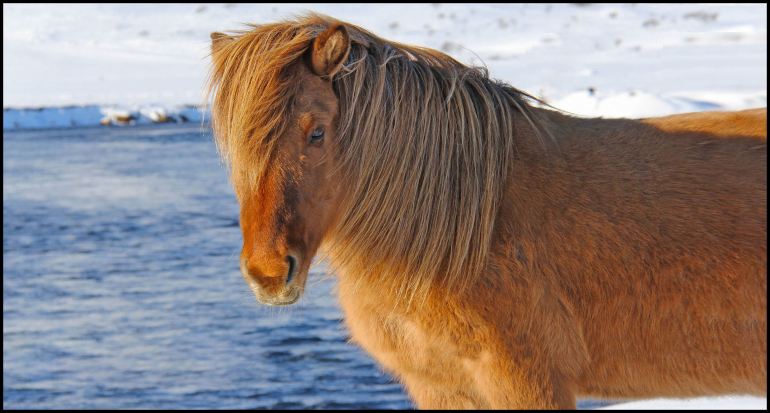
The indigenous horses of Iceland and Lapland are direct descendants of the Yamnaya horses.
The Yamnaya People incubated on the plains of the southern Steppes, immediately north of the Caucasus Mountains. From that locale we get the official racial name of the peoples of Europe, Caucasian . . . except the Basques, Sami, Finns and Huns (Hungary). They were descended from a mix of Eastern European hunter-gatherers, who weathered much of the last Ice Age in apparent isolation in the mountains of the Republic of Georgia.
They spread onto the Steppes, when the climate warmed. Around 3,500 BC, they stopped hunting horses, wild sheep and wild cattle by learning how to domesticate them. They transitioned from being hunter-gatherers to being skilled herdsmen. Then later they learned how to ride horses and use cattle to pull carts. During this era, they also began burying their dead in shallow pits, covered by earthen mounds.
All Indo-European languages are descended from the language spoken by the Yamnaya. They had brown hair, brown eyes and light tan skin pigmentation. They were NOT blue-eyed blondes, as portrayed by NAZI propagandists. Again, in contradiction to NAZI propaganda, the highest proportion of Yamnaya DNA markers is in Cossacks of southern Ukraine, not Germany.
The Yamnaya are currently believed to be the first people, who domesticated horses and one of the first, if not the first, to domesticate cattle and sheep, plus weave wool. They developed bronze weapons, which were superior to those used by the early Bronze Age civilizations of the Mediterranean Basin and Europe. The Yamnaya also invented two-wheeled chariots and four-wheeled wagons. Their wagons were typically pulled by oxen. Smart folk!
Around 2,800 BC, bands of Yamnaya families began heading westward, causing a dramatic genetic change among the Neolithic agricultural peoples. In some regions, the original population was almost instantly erased genetically. In other regions, the Yamaya intermarried with the locals. Whatever the case, by the end of the Bronze Age most peoples in Europe spoke languages derived from the Yamaya tongue.
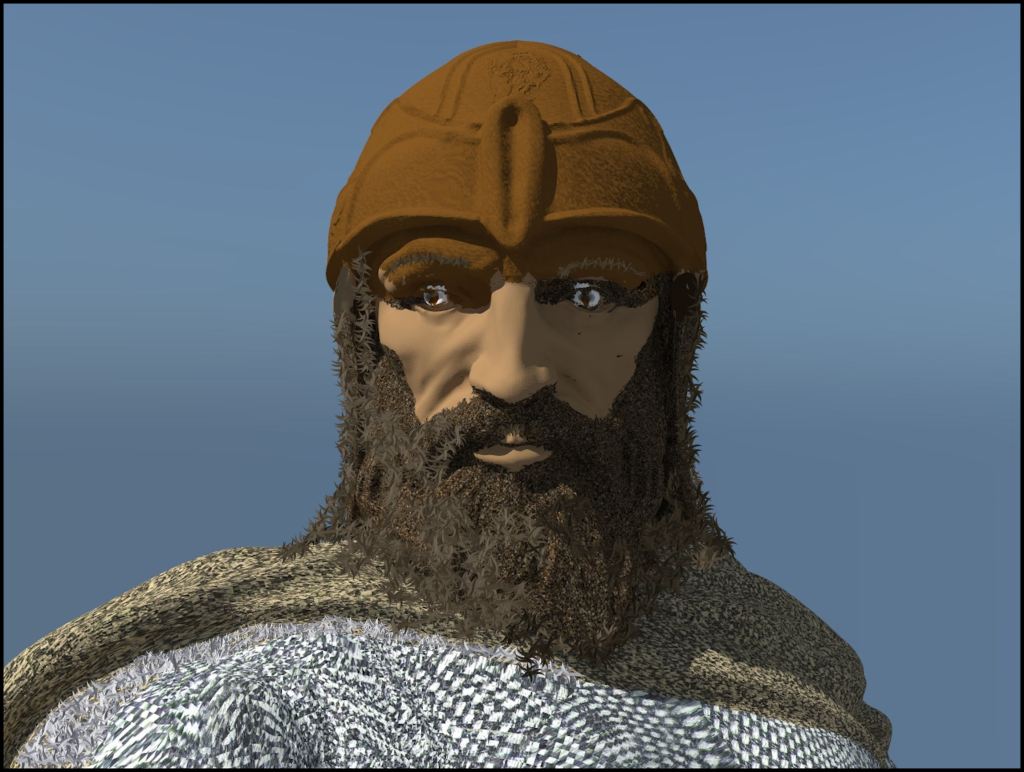
Physical appearance of a Yamnaya man
Don’t believe me?
Muskogee (Maskoki) is entirely an Indo-European word! It combines the Iberian word for “mixed” with the Gaelic and Gamla Norska word for “people or tribe.” This suffix is written as “ge, ghe or gy” in modern Irish and “ke” in Gamla Norska, but it is pronounced the same as in the Muskogee language.
Tuckabatchee (a principal Creek town) is an Indo-European word. It is the frontier Anglicization of Tokah-baw or Tokah-bo. Even today, tokah means “principal, first or elite” in Irish Gaelic. If you said Tokahbo to a Viking, he would say, Of course, it means “Elite – living place of.”
- I can translate the names of several of the prominent Uchee (Yuchi) and Creek tribes with a Gaelic or Archaic English dictionary! The Angles, Jutes and Frisians were the first Vikings . . . during the Late Roman Era.
- Both words for “water” in Creek are Indo-European. They are “ue” and “akwa”. “Akwa” . . . the word for water in old Italian languages such as Latin, is no longer used by the Creeks alone, but is a root word for many Creek words, having to do with water.
- The Creek word for a canoe or boat, perro, is written the same or as pirro, in many European languages and means the same.
- The Creek words for tall, halwe and hilwa are pure Indo-European. The English word, high, is descended from hilwa. The German word for tall, hock, is descended from halwe.
- The Creek word, alek, now means a medical doctor, but formerly meant someone, who healed with herbs. The Anglisk word for a herbal healer was alek. The Swedish word for a medicinal herb is leka and a Swedish doctor is a lekare.
- Creek nouns are placed in the plural by adding “en”. The same grammar is used in the western and southern Germanic languages, plus Panoan in eastern Peru.
- The Creek word for a small residential out-building that is not a house is, hute, It is pure Indo-European. The French word for a cottage is also hutte, but the same or similar word is found in most Indo-European languages.
Now you know!
 The Americas Revealed
The Ukrainian word for doctor is лікар, pronounced likar, which is not dissimilar to the Swedish. (I’m studying Ukrainian.)
LikeLiked by 1 person
You are right! Swedish, like its cousin, English, adds an “er” or “ar” to a noun or verb to describe someone who does something with the root word. Lika is a widespread Indo-European word for “medicinal herbs,” It survives in modern English with the name of member of the the onion family – leeks.
LikeLiked by 1 person