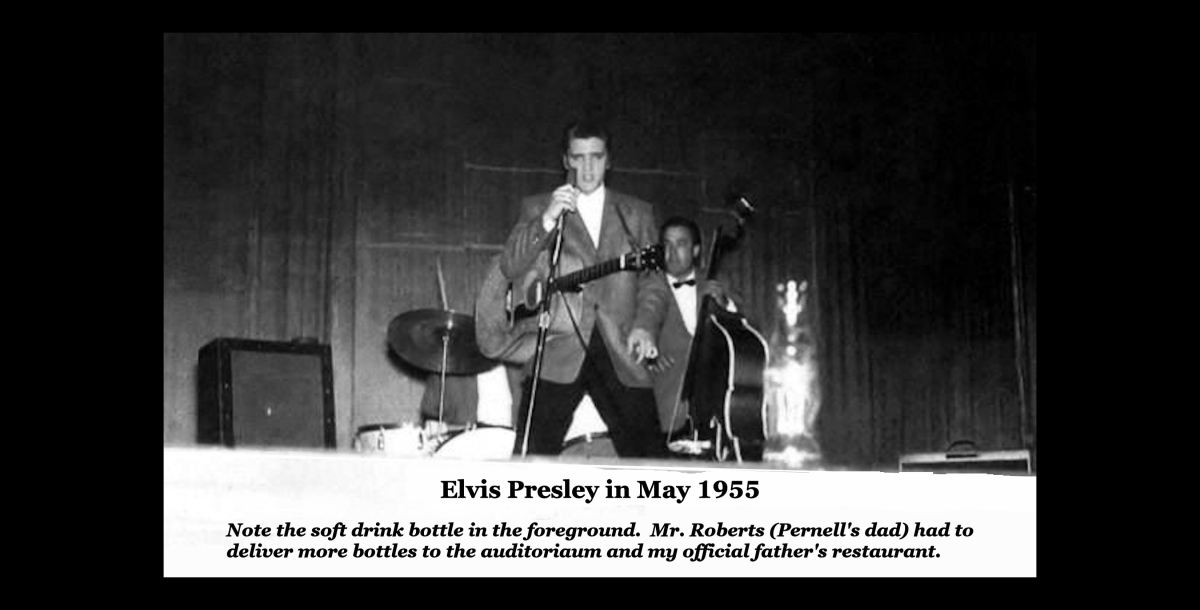
This was when Elvis was generally unknown outside of Memphis. At what was supposed to be a single gig at a fair in Tampa, Florida, a “carnie man,” who called himself “Colonel Parker,” convinced Elvis that he should give concerts on the way back home to Memphis. Elvis had performed at impromptu concerts in Orlando and Jacksonville, before arriving in Waycross . . . which back then was South Georgia’s only boomtown.
This was a radical idea. The concept of road tours did not exist in the record industry in 1955. Bands would travel to individual cities to perform at dances or appear on such permanent shows as the Louisiana Hayride and Grand Ole Opry. However, by the time he arrived home, his records were being played by radio stations throughout the South. Very soon, many rock ‘n roll bands began going on extended tours to promote their records.
SLIDE SHOW
The Many Peoples of the South Atlantic Coast Series
By Richard L. Thornton, Architect & City Planner
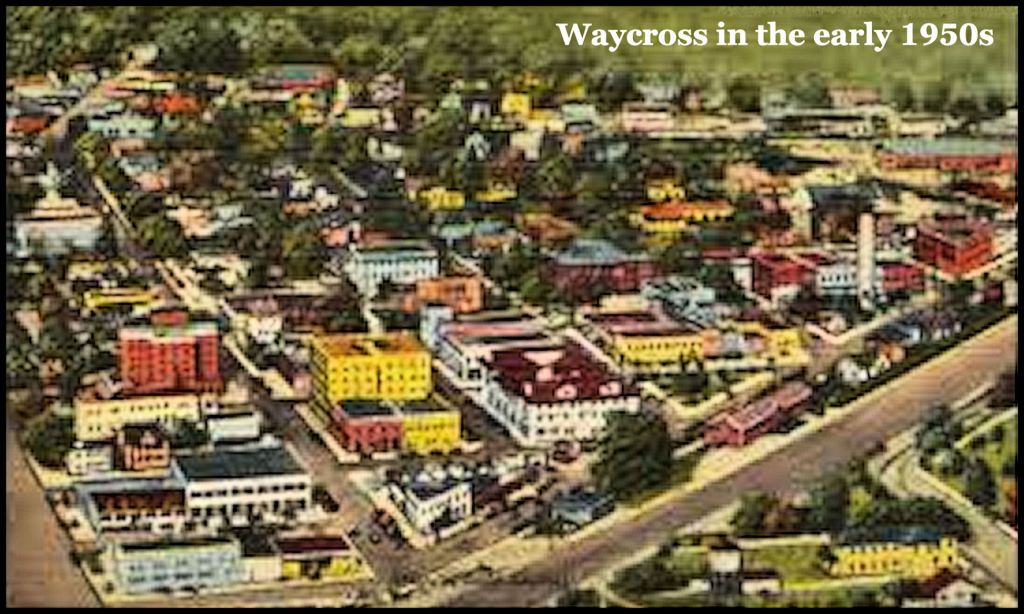
Downtown Waycross has changed very little since the 1950s, other than the intermittent demolition of buildings. Waycross was experiencing a boom because of the Atlantic Coast Line railroad’s repair shops being relocated there and the arrival from Jacksonville of Jack Williams, Sr. who doubled the area of Waycross with new residential neighborhoods. For the first four years of my life, my family lived in the garage apartment of the Williams Estate. Ironically, the Williams Family were some of the first settlers in the Nacoochee Valley, after the lands were sold by its mixed blood Native American-Jewish-Spanish inhabitants. They were the original owners of the Nacoochee Mound. After the Civil War, most of the family moved to Jacksonville, FL where they invested their Georgia Gold into raw real estate then became wealthier from its development.
Twice in my life, I have had conversations with musicians before they became internationally famous. The first time was on an exciting night in late May, 1955. I was five, about two months from turning six. The second time was a brief friendship with a pig-tailed Agnetha Fältskog, in late June and early July, 1972. In two years, she would become the blond A in ABBA.
The night when Elvis Presley performed in Waycross is one of the few remaining vivid memories of my early childhood. Of course, in my brain, what I have are images of a huge crowd between the Waycross Auditorium and my official father’s short order restaurant . . . the crowds packing into the restaurant . . . chatting with the star of the show at the auditorium, while he nursed a black eye then ate a hamburger and French fries. Everything else, I have learned from the internet. Most of the Kodak Box Camera photos in my mother’s scrapbook just show large crowds first waiting to get in the auditorium or then waiting to get inside our restaurant.

The 1933 Waycross Auditorium – The building’s entrance was directly opposite my parent’s restaurant, but now that block is a parking lot.
What I know now is that Elvis Presley, his small band and Colonel Parker made the hour-and-half drive to Waycross then began knocking on doors at local radio stations. They then went by the city hall to rent the auditorium for a night. They then went by a printing company to print signs to hang around downtown and fliers to hand out at the A&P and Winn-Dixie grocery stores.
My mother was a teacher at Williams Heights Elementary School, but when it became obvious that a huge crowd was coming to watch Elvis, she dragged me to the restaurant, so she could help out in the restaurant kitchen.
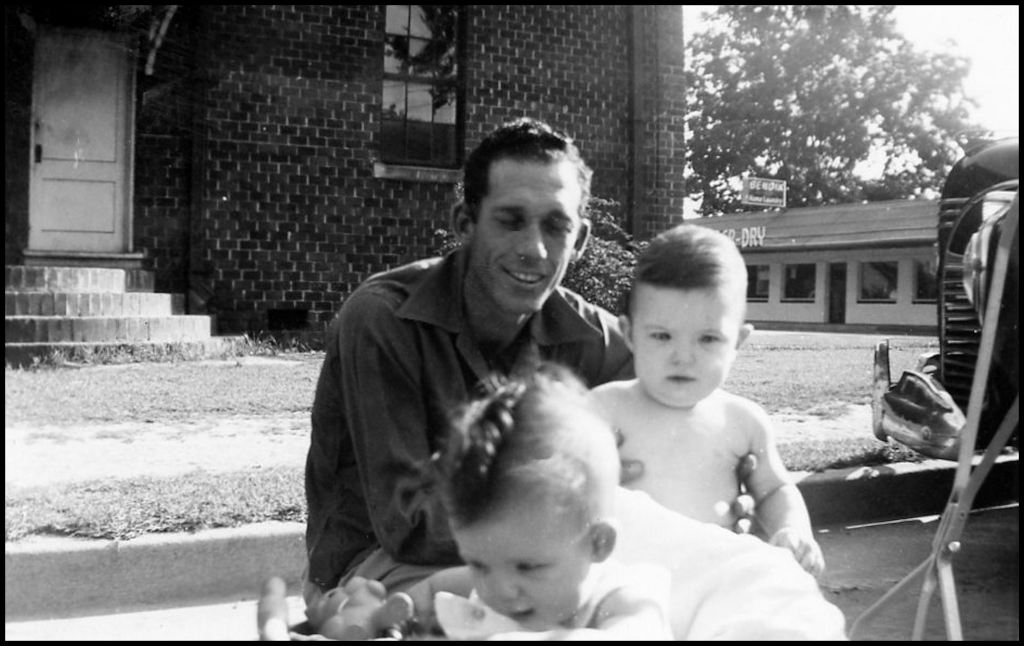
A brother of Pernell Roberts, Sr with me and his daughter at the Oak Street side entrance of the Waycross Auditorium in 1950. Pernell, Sr. delivered soft drinks to my parent’s restaurant. His son, Pernell, Jr, would not appear on television until 1956.
Back then it was typical for short order restaurants to serve soft drinks in a glass bottle with an accompanying paper cup, filled with ice. The drink bottles were stored in rectangular coolers, filled with ice. Customers would grab a bottle then go to a table to wait for their meal. Drinking glasses were a nuisance to wash, since they frequently broke. One of my chores, when things were busy, was to wash out the soft drink bottles, so they could be returned to the bottler for a cash deposit.
Since the restaurant was busy, my mother let me stand on the sidewalk outside to listen to this new-fangled thing called rock n’ roll. COOL as grits!
Then Mr. Roberts came by. The auditorium had called him to say that they were running out of soft drinks. He brought some cases of drinks inside the restaurant, knowing that they would need them after the show. He then invited me to accompany him to the auditorium. We could get in free at the service entrance. I got to see Elvis performing to a standing room only crowd. Notice above how simple . . . downright crude . . . both the stages and the sound equipment looked back then.
Right after the music ended . . . quite awhile later . . . Elvis suddenly appeared at the entrance to the restaurant, escorted by at least three Waycross policemen. Elvis had a blackeye and some blood speckled on his shirt. One of his band members, I think, asked for a steak to put on his eye. A jealous boyfriend had hit Elvis with a Coca-Cola bottle after his girlfriend screamed with delight over Elvis’s music. Elvis came on in and the policemen shut the restaurant door.
After I brought Mr. Presley some steaks, the band went back to the auditorium to pack up equipment and hit on the girls. Of course, they had no “road crew.” All the restaurant had were real thin breakfast steaks , but they seemed to help his eye. I then brought him a bottled Coke and later a hamburger plate with French fries.
Of course, I was very young and it’s been a long time, so I don’t remember any specific conversation. I do remember that he never sat down, but put his plate on the table beside him. He leaned back against the wall and held the steak with his left hand, while he ate with his right hand. I do remember him being a nice man. That’s all. Of course, I did not realize that he was soon to become very famous after appearing on the Ed Sullivan Show.

Pernell Jr.’s first movie role was as a Native American. He had substantial Creek and Uchee heritage, but kept it a secret after the first movie. However, throughout his life he put many young Native American men and women through college and served on the Board of Directors of the foundation at the Muscogee-Creek Nation that funded my research for five years.
What about Pernell Roberts, Jr.?
Did I meet Pernell, Jr. before he was famous? Probably so, but I don’t remember it. I now know that he would return regularly to Waycross from his home in Washington, DC to visit his parents and attend Trinity Methodist. Ironically, I would come to know him during the last 10 years of his life . . . but did not know it was him, until he had passed on.
However, I do remember his parents. His father dropped me headfirst on the concrete floor of the restaurant when I was six months old. That’s why I am so bullheaded. Generally, his parents, my mother and my official father went out to dinner once a month, after services at Trinity Methodist Church in Waycross.

Trinity Methodist Church in Waycross, GA
Using the alias, “Gator Joe from Georgia”, Pernell, Jr. was the first person to subscribe to “The People of One Fire” newsletter, which evolved into this website. He was also the first person to donate to my research. I did not solicit donations, but he started intermittently sending me “gas money” checks with instructions for me to use the money to explore the Lower Southeast . . . not sit at a desk and talk about the Creeks like most academicians.
We traded emails through the years, where he encouraged me and I asked him questions about his experiences as a Creek growing up in Georgia before our economy boomed. His email address was “proberts,” but I was stupid. It didn’t dawn on me that anyone as famous as Pernell Roberts would want to be friends with me. My last email to him, in early 2009 contained a copy of my rendering of the Trail of Tears Memorial in Tulsa. He wrote back, “I am very proud of you.” I never heard from him again. Pernell was dying of pancreatic cancer.
In early February 2010, Eleanor Criswell Roberts, Pernell’s widow, sent me an email asking me to remove Pernell’s email address from our subscription list. Only then did I realize that my friend was THE Pernell Roberts. A few weeks later, I received a package from a California law firm, containing a scrapbook that either Pernell or perhaps his wife or secretary created.
I was astounded! For the first 19 years our lives had been almost identical. We both loved wandering through the woods as soon as we could walk. We both were simultaneously stars on a championship football team, played in the high school band and played in a dance band. We both loved girls . . . especially at school dances . . . were remembered by former girlfriends as being very respectful of them, but not wusses.
Both of us dreamed of becoming architects. However, Pernell flunked out the first year at Georgia Tech. I obviously didn’t. That is the reason that Adam Cartwright on the blockbuster TV series, “Bonanza” portrayed an architect, who had returned back home to help run the ranch.
Pernell played the drums in the U.S. Marine Corps Band. I played the drums in a US Navy Reserve Officers Band. There are probably more similarities that I don’t know.

The Green Frog Restaurant was the center of social life for Ware County’s white middle class citizens. This was where we typically ate after church or when relatives visited from out-of-town. It was located next to the railroad underpass, at the edge of Downtown Waycross. The restaurant served delicious food at a modest price . . . a strategy that kept the tables occupied. The only way that the county’s many “Colored” citizens could eat there was in the kitchen as menial employees.
Social dining in a Dry, Segregated county
Waycross’s tiny aristocracy dined socially at the country club or Elks Lodge, where alcoholic drinks were served . . . despite being illegal in the city and county. The Ware County Sheriff’s Department claimed an exclusive right to distribute and sell alcoholic beverages. Anybody, who didn’t buy alcoholic beverages from them, were immediately raided and arrested.
Segregation was a lie. In the 1950s, “Colored” citizens were not provided separate, but equal facilities. They got next to nothing in Ware County. They could not attend events in the city auditorium or dine at our family restaurant.
I don’t recall seeing any “Coloreds Only” restaurants or motels in Waycross. Perhaps some were hidden on the backs of buildings in Colored Town at the lower end of Tebeau Street, but I looked at my mother’s photos of Tebeau Street and didn’t see any signs of such facilities.
Possibly some barbecue stands or country style diners at the edge of Waycross, that catered to Blue Collar White clientele, would let “Coloreds” buy take-out orders. Apparently, Black tourists from up North, headed to Florida, were expected to just keep on driving until they reached Jacksonville.

The City of Waycross provided chilled water to white citizens. visiting its downtown, but black citizens were expected to bow down lower and drink lukewarm water. In the summer of 1956, I was angry because my black playmates in the neighborhood were not allowed to attend Vacation Bible School at Trinity Methodist. In protest, I drank from the Coloreds Only drinking fountain next to the family restaurant. After a Waycross policemen notified my official father of my criminal behavior, he beat me with a leather belt with rhinestones on it . . . leaving bleeding welts on my legs.
Scary! The new house that we moved to on Suwanee Drive in the Cherokee Heights neighborhood, when I was four-years-old, is now a historic house in a historic district!
Life is indeed, stranger than fiction
 The Americas Revealed
https://rumble.com/v6xd1ww-how-cool-are-these.-id-buy-them.-inca-whistling-vessels-sound-like-animals.html
LikeLiked by 1 person
Hi Richard.
I found a video that I wanted to share with you and your readers showing whistling jugs from Peru. If you could make some of these jugs I would buy one in a heartbeat. They are very cool.
Keep up the great work!
LikeLiked by 1 person
My kiln was stolen from a rental locker in Blairsville, GA in March 2012. The cost of replacing it far exceeded any income that I could have made and sold in a market that has lost interest in Native American ceramics. If you would like me to post the video, I will do so, if you provide me its URL. .
LikeLike