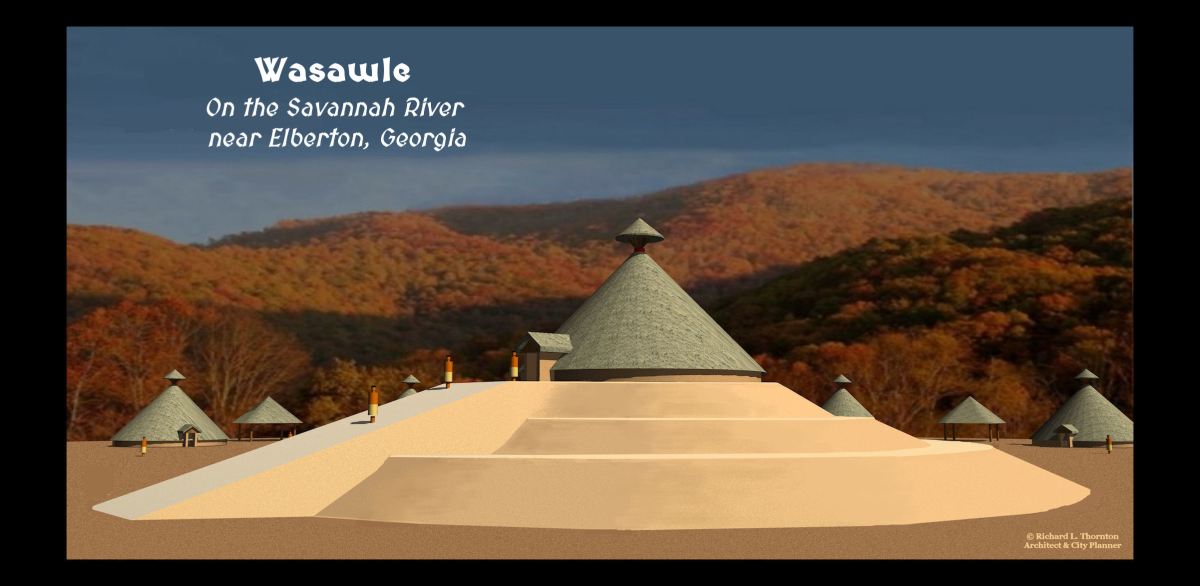
This is what my Grandmother Mahala’s farm (The Old Bone Reserve) looked like in 1500 AD. It was supposed to become a Creek Tribal Town after World War II, but instead is now under Lake Russell.
The Many Peoples of the South Atlantic Coast series
by Richard L. Thornton, Architect & City Planner
Over the past 25 years, many Eastern Creeks and members of the Thlopthlocco Tribal Town in Oklahoma have been puzzled by the presence of Polynesian and/or “Southeast Asian” DNA in their bodies. The Southeast Asian is actually Austronesian, the people who were aboriginal to Taiwan, but populated coastal regions of Southeast Asia, plus the entire Pacific Basin. The Thlopthlocco Creeks originated in Habersham County, GA . . . where I now live.
The presence of Polynesian DNA in the Southeastern United States seems impossible and is unknown to most anthropologists in the United States. They still parrot the old mantra that there is no evidence of Polynesians in the Americas . . . because that is what their professors told them in college. We now have the answer.
Working with DNA scientists this past year was an extraordinary learning experience for me. In particular, Dr. Donald N. Yates’ three–year study of the Uchee (Yuchi) People of the Savannah River Basin revealed that they were not American Indians, but Austronesians, whose ancestors came from Taiwan. The Austronesians also mixed with Australoid peoples in Borneo and New Guinea to create the Polynesians. Samoans and Fijians look just like the famous “Olmec heads.”
My supportive research for Dr. Yates included analysis of surviving “Native American” place names on the South Atlantic Coast and Savannah River Basin. The first thing that I noticed was that many of the “Creek” tribal names were actually words for “Ocean” or “Ocean People” in languages from around the Americas, but also including Scandinavia, Ireland, the Atlantic Coast of France/NW Iberia and Polynesia.
This is the reason that my new book is entitled, The Sea Peoples of South Carolina, Georgia and Florida. It will be in full color, but hopefully concise enough to retail under $25.
There were five principal ethnic groups on the Savannah River. Their elite, the Apalashikora (Apalachicola) lived in separate, palisaded villages. Here are the etymologies for their tribal names.
1. Uchee or Yuchi – [Austronesian]– Large tribe in the mountains of Taiwan, but also the word for water in Archaic Taiwanese and Archaic Gaelic.
2. Yamakora (Yamacraw) – [Chontal Maya] – Grassy Plain (or tidal marsh) Tribe
3. Aparashikora (Apalachicola) – [Panoan from Peru] – From Ocean – Descendants of – Tribe
4. Savanu (Savannah) – [Samoan] – People from the largest island in Samoa
5. Wasaw or Wasawle – [Samoan & Austronesian with Archaic Gaelic suffix for “Kingdom”] – “Ocean” and “Ocean Kingdom.”
- The Spanish spelled this word, Guaxuli or Guasali. One of their villages was visited by the De Soto Expedition
- The French spelled this word, Oisauli. One of their villages was visited by Lt. LaRoche Ferriére from Fort Caroline.
Wasawle Slideshow
Botanist William Bartram (1774) and Archaeologist Robert Wauchope (1939) visited this town site which is at the confluence of several creeks with the Savannah River in Elbert County, GA. Given its size, it was probably the capital of the Wasawle. My Uncle Hal took several of us cousins there prior to the basin being filled with water. An expedition from the University of Georgia thought they were going to this site, but came after the lake filled and therefore visited the ruins of a Chontal Maya and Proto-Creek town, name Wahashi, which was the confluence of the Savannah River and Wahatchee Creek. They named the wrong site Rembert Mounds in their report. The real Rembert Mounds is the one I saw and is no longer visible.
Wasawle was unique because it contained massive, rectangular platform mounds, constructed of black tierra preta (man-made) soil. The village was on a low platform to prevent damage from flooding. The houses and temples were on round platforms of varyingsizes.
The first slide is an oil or fat lamp made by my grandmother. While a teenager and young woman, she liked to make reproductions of the broken pottery that her father and brothers dug up from the bottomlands while plowing.
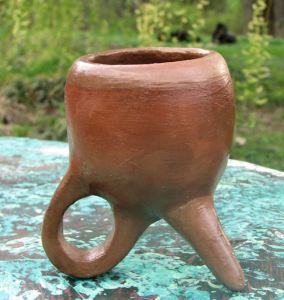
Reproduction of a Wasawle lamp by Mahala Bone in the early 20th century
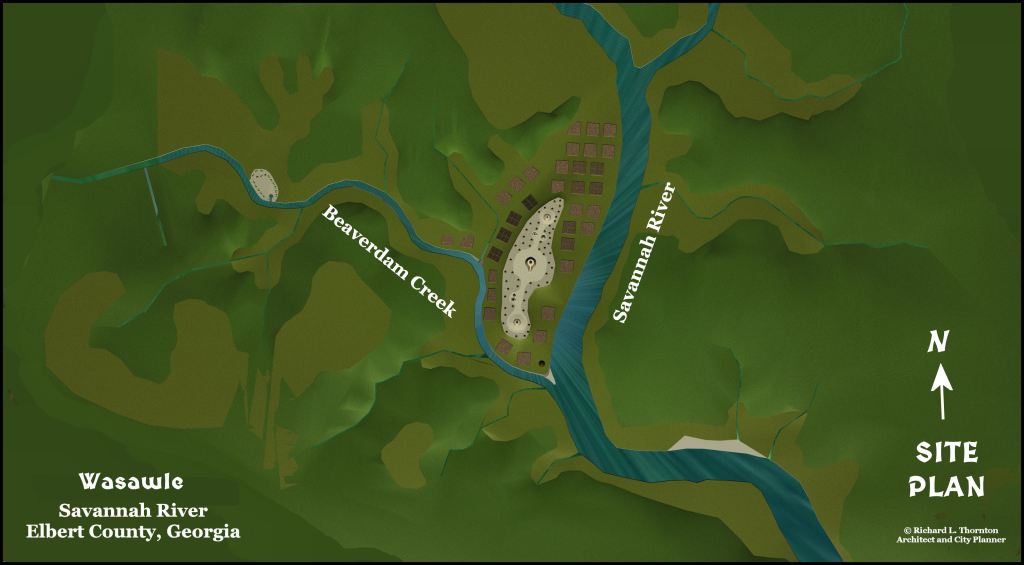
Villages clustered near the town
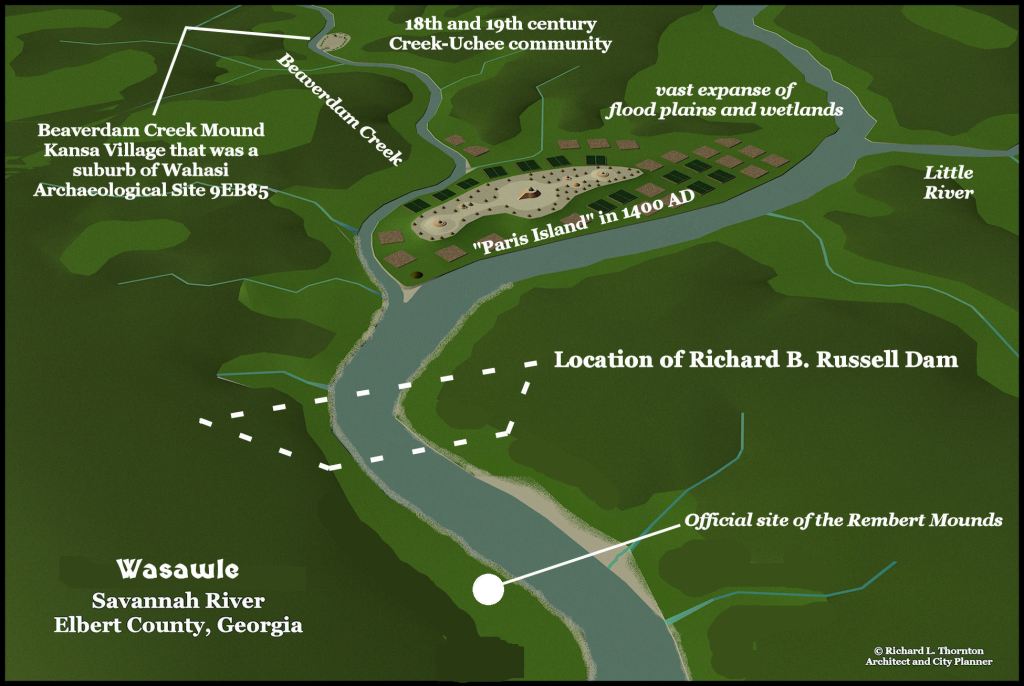
Savannah River looking northward
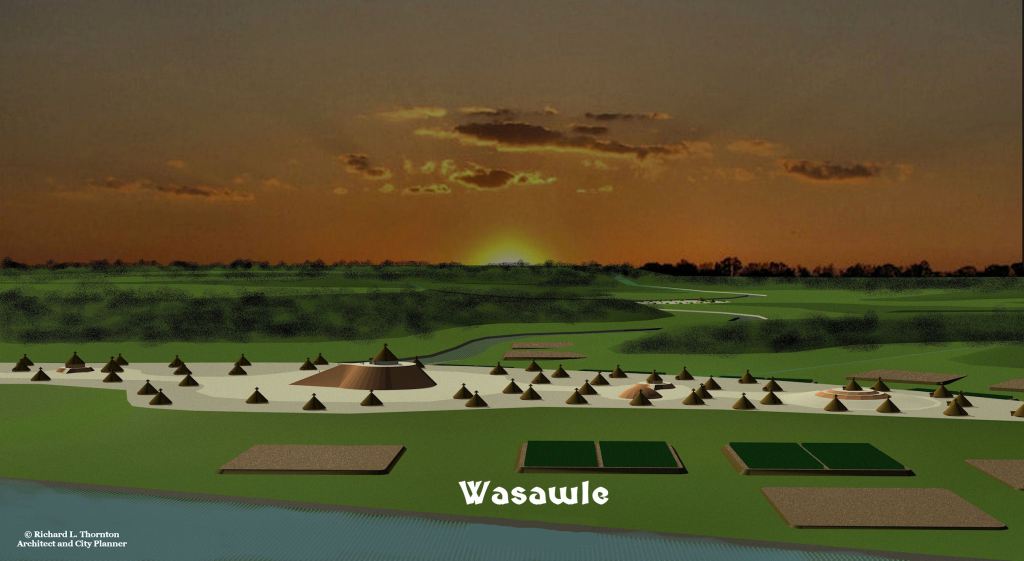
Main town looking westward
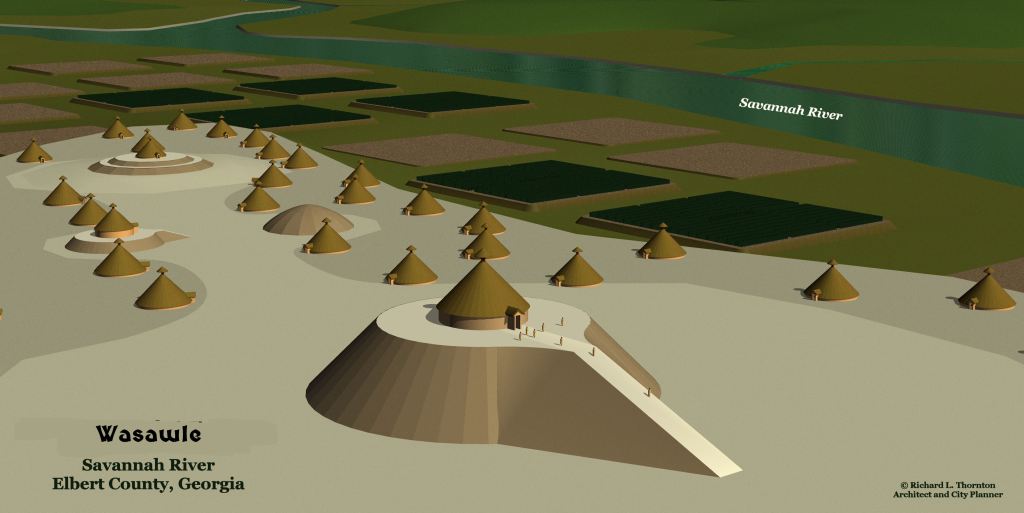
Principal mound
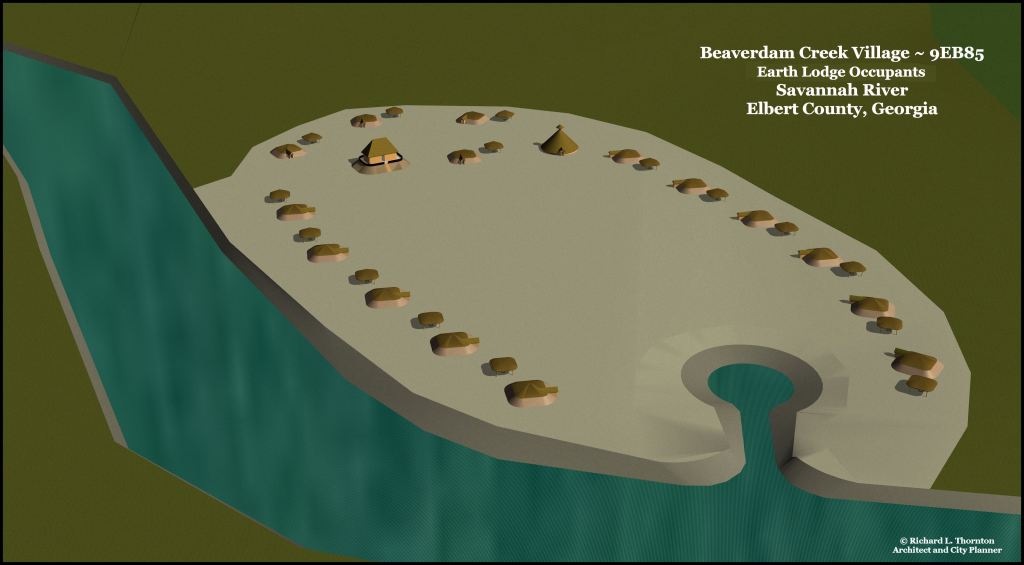
Beaverdam Village
In an earlier article in this series, we mentioned the common practice in Georgia of multiple ethnic groups living in close proximity. Because most archaeologists in the Eastern United States do not translate place names or seriously analyze architecture, this unusual cultural trait has been missed.
Ancestors of the Earth Lodge Peoples on the Western Plains lived in at least one village near Wasawle. There were probably more such villages that were missed by archaeologists when they were carrying out a survey prior to the filling of Lake Russell. Archaeologists did identify a Uchee Village near my grandmother’s farm.


Yes! Taiwan also to us west coast,then to Hawaii As you know,admiral Zheng He 1423? To Americas several years ago .a us DNA Company working with gavin Menzies, The author,recorded so west Chinese dna all along the coast of north and South America!
LikeLiked by 1 person