There are now approximately 250,000 first and second generation Mayas living in the State of Georgia . . . mostly in its mountains and upper Piedmont. The irony is that they carry pretty much the same indigenous DNA markers as Georgia’s aboriginal Creek Peoples.
Most of Georgia’s 1.2 million first and second generation Latin American population carries substantial Indigenous American DNA, but not necessarily Maya. The exact numbers are becoming increasingly difficult to pen-point, because just as 2 1/2 centuries ago, when the fledgling Province of Georgia had by far the highest percentage of mixed Native American-Old World Peoples intermarriages in the British colonies.
Today Georgia appears to have the highest rate of intermarriage between Second Generation Latinos and Gringos. Elsewhere, during the 1700s and 1800s, marriage of Middle Class Native Americans and Middle Class Europeans was a social faux-pas. In Georgia, Creek and Colonial leaders encouraged intermarriage as a means of cementing good relations and creatng a vigorous hybrid society.
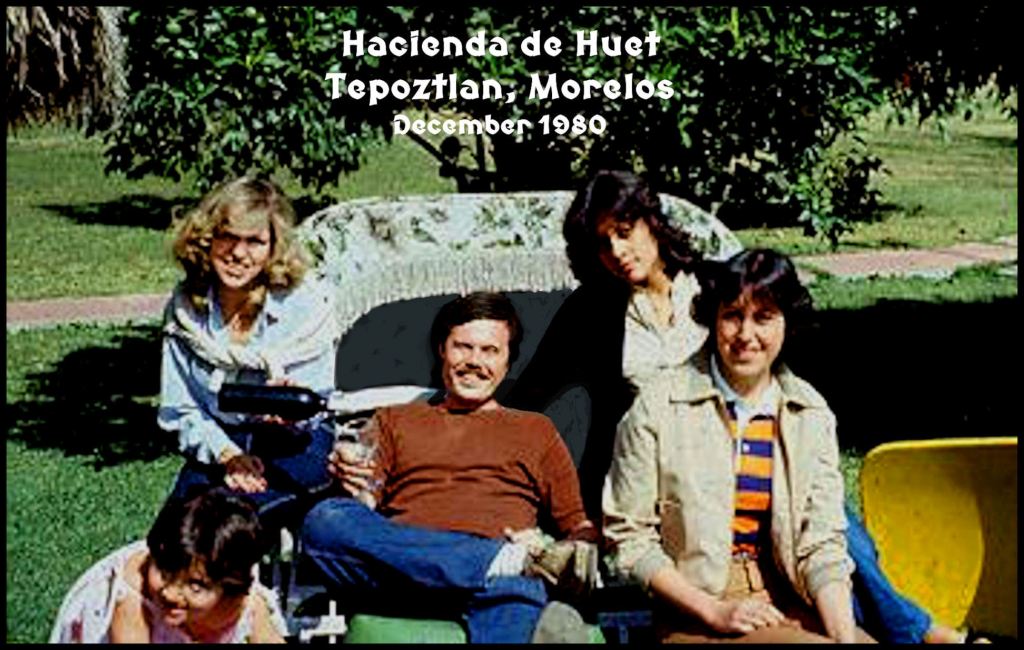
My married life would have certainly been happier, if there had been an international internet in the period 1970-1995. Because international telephone calls and plane tickets were expensive and mail very slow, it was difficult to maintain international romantic relationships until internet email became universally available. Note the hand of the lovely Mestizo Mexicana discretely behind my Mestizo Gringo neck. Both Latin American and French women discretely communicate interest with their fingertips. Vivi (Shenandoah Chronicles), the former actress and now successful restaurateur, is a French citizen, but she is 1/4th Tamulte Maya and adopted several orphaned cousins in Mexico.
An excerpt from The Sea Peoples of the South Atlantic Coast
by Richard L. Thornton, Architect and City Planner
One of the biggest surprises from my 20-year-long study of the South Atlantic Coast’s past, was the ancient history of Savannah. It contains some of the oldest man-made structures in the Americas, but in its last form. prior to the arrival of British colonists, was the Chontal Maya metropolis of Yamakora (English – Yamacraw=Yama People). Yama was the actual name of the so-called Olmec civilization. Yamasee means “Descendants of Yama.”
Ironically, the notes in my Barrett Fellowship journal foretold this discovery. In my first meeting with Dr. Román Piña Chán in his office at the Museo National de Antropologia de Mexico, he examined two books on the Southeastern Indians that I had given him. He suddenly exclaimed, “Your Indios in Georgia are the descendants of the Olmec and Epi-Olmec Gulf Coast civilizations! We always wondered what happened to many of the original peoples, when the Nahuas invaded. Now I know that they migrated to North America and continued their cultural traditions.”

The latest round of Maya immigration (excerpt from book)
In 1970, the year that I flew on one of the first direct flights between Atlanta and Mexico City, the population of the State of Georgia was 4,589,575. The Hispanic population of the state was so minuscule that it was not measured separately from other foreign born residents, but was about 18,000 . . . most of whom were Puertoricans, Cubans, military personnel from several Latin American countries, professors or college students with resident status.
Perhaps a better measure of the actual cultural situation back then is the experience of Ruth Soto Quinard. She was the youngest daughter of the Soto Family, who were my most hospitable hosts in Mexico City during my 1970 fellowship. After I returned to Atlanta, she lived with my parents in the Atlanta suburbs for three months.
Poor Ruth was “run-ragged” by invitations to dine with local families, plus go on dates with my fraternity brothers at Georgia Tech, speak to high school classrooms and local civic clubs. No one had ever met a Mexican and very few knew much about Mexico’s ancient history!

Northern Georgia has long been considered the “Poultry Capital of the World.” Modern techniques for growing and processing chickens originated here after World War II. In 1972, the chickens that I ate while working in Sweden came from the Gainesville, GA area. They were flash-frozen then shipped from Savannah to Sweden in enormous refrigerated ships. However, the poultry industry in Georgia is totally dependent on its Indigenous American workers, who immigrated to Georgia from southern Mexico and Central America.
In 2026, it is a very different situation in the Southeast. From the Shenandoah Valley southward to the southern tip of Florida, Latin American immigrants soon provided most of the labor for harvesting crops, but also are major components of the construction, landscaping, textile and meat-processing industries. The next generations are getting college educations and spreading across the economic activities of communities.
There are now at least 1.2 million first and second generation Latin Americans in Georgia. The number may be much higher, because Georgia also has one of the highest inter-cultural marriage rates. It is difficult to identify the children of a Gringo father and Latina mother since only the father’s name is used.
As a bloody insurgency, involving Mayas or related peoples, rebelling against five centuries of oppression, came to an end in El Salvador in 1992, the State Department of the George H, Bush Administration volunteered to relocate demobilized insurgents to the United States to relieve the economic pressure.
The program was extended by the Clinton Administration to regions in Honduras, where United Fruit Co. had closed its vast plantations then to Guatemala, when its civil war ended. First, came the former insurgents and later their wives then unemployed camposinos and their families. All quickly began having offspring here in the USA. The total number of recent legal Central American immigrants into the USA is now around three million.
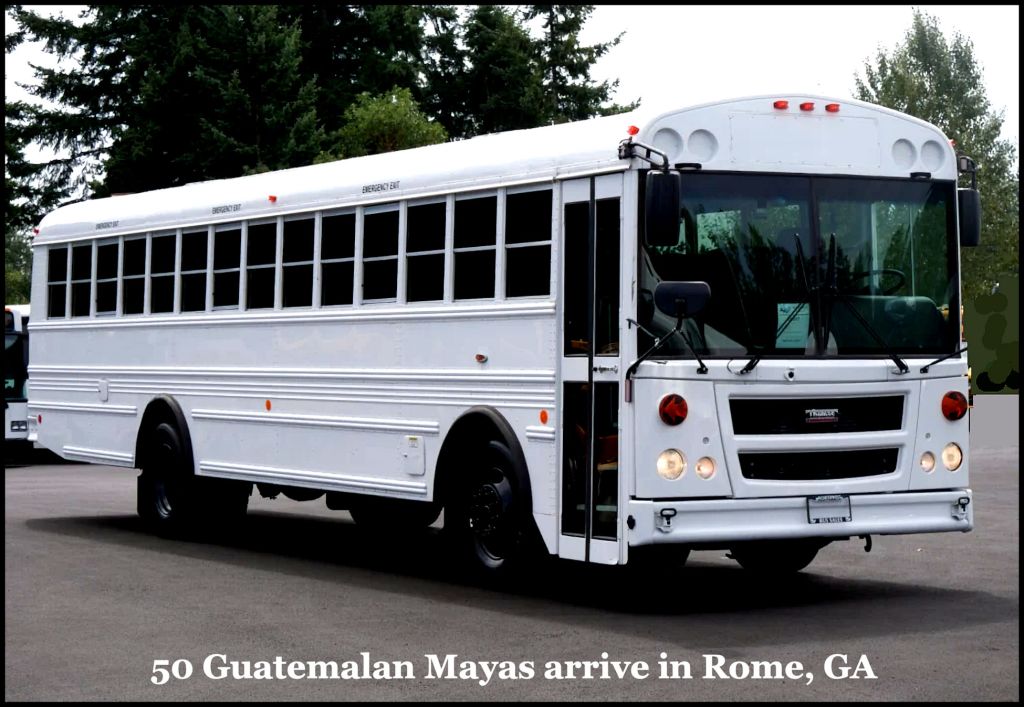
In regard to the “Maya thang” Georgia holds a secret, generally unknown to the news media and references elsewhere. Federal officials quickly realized in the early 1990s that Georgians were particularly welcoming to Latin Americans. Demobilized insurgents in remote jungle villages were loaded onto white FEMA buses, staffed by bilingual U. S. Military personnel . . . mostly Army and Navy Intelligence Officers . . . then driven almost non-stop to northern Georgia.
While temporarily living in Rome, GA during 1999 and early 2000, I observed these men and women stepping out of the white buses into a very different environment than they had always known. They were dressed in home-made clothing and appeared to be in a state of shock.
Initially, these Central American indigenous peoples were essentially serfs for Georgia’s poultry industry, but as time went on their much-needed labor was spread to the carpet industry and to large construction projects in Metro Atlanta. They married and raised families, so today there is something like 250,000 Mayas and Maya-related Indians in northern Georgia . . . maybe many more, if you count those females, who have married non-Mayas or the third generation of children.
 The Americas Revealed