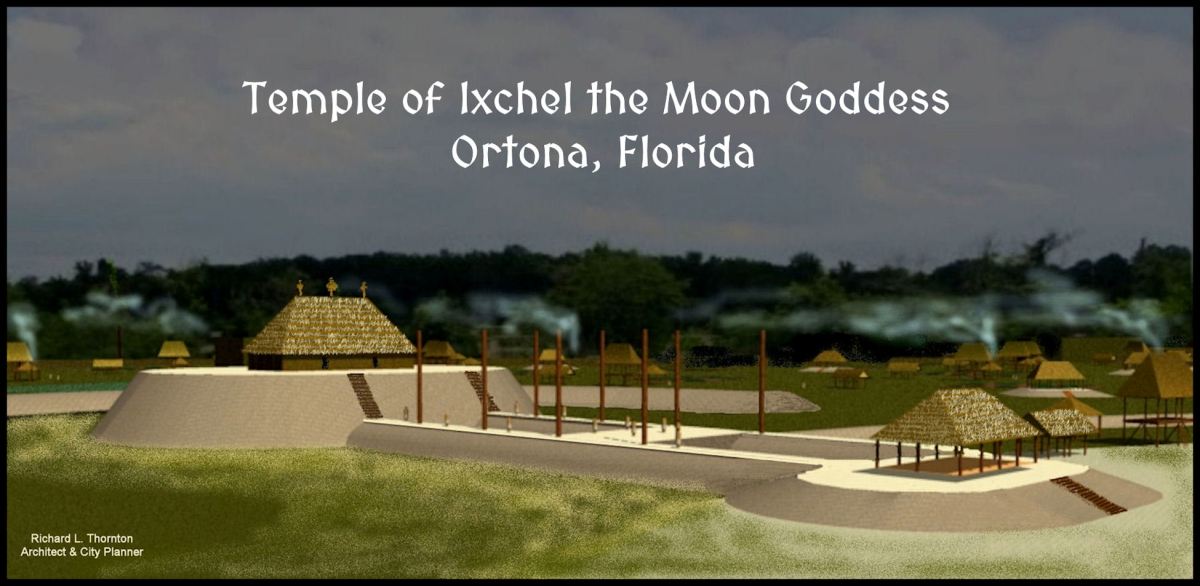
Where Itza Maya cultural symbols and engineering were introduced to Southeastern North America
Twenty years later, North American archaeologists, outside southern Florida, seem to have forgotten the headlines about this massive town in South Florida with Chontal Maya cultural traits, where “Mississippian” cultural symbols first appeared. We haven’t!
We don’t know the town’s original name, but do know that it was the starting point for hundreds of miles of canals and raised causeways that interconnected culturally advanced towns in the region. The largest temple complex in the town was dedicated to the Maya Goddess Ixchel, who was particularly esteemed by the Chontal Mayas.
Serious public works construction began around 300 AD, but some form of unified nation in South Florida reached its zenith in the period from around 900 AD to 1150 AD . . . the exact time period when the Ocmulgee Acropolis was fully occupied.
by Richard L. Thornton, Architect & City Planner
SLIDE SHOW
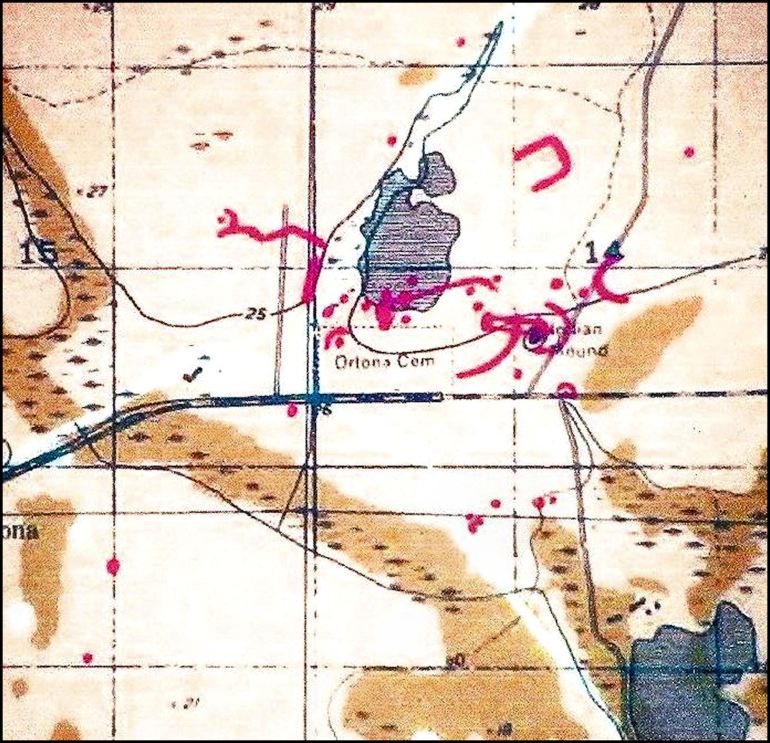
Site plan sent to me by Archaeologist Bob Carr in 2006
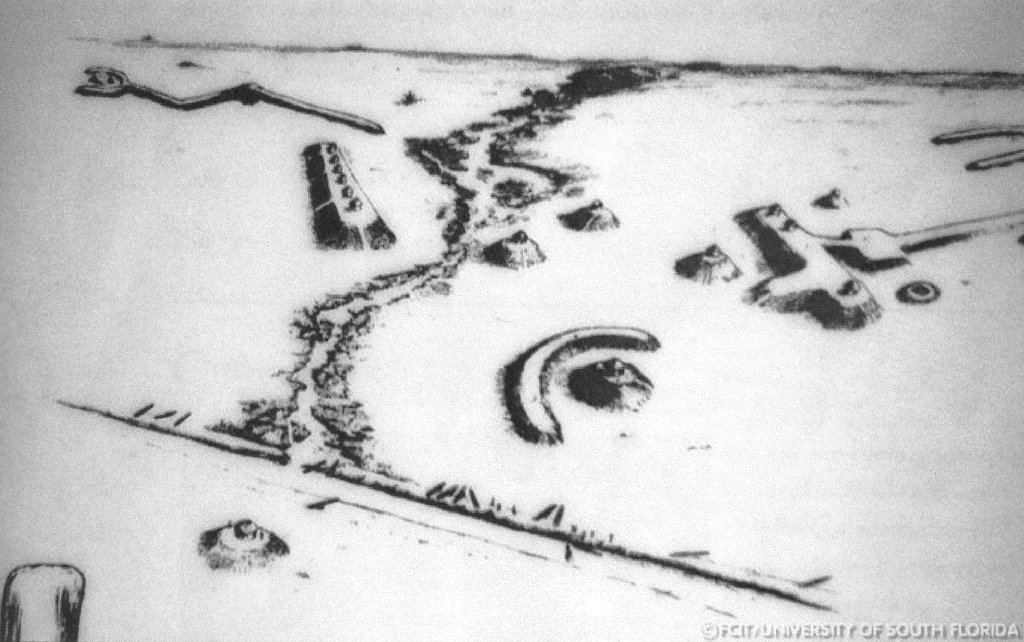
Sketch of the Ortona Site by an artist at the University of South Florida Anthropology Dept.
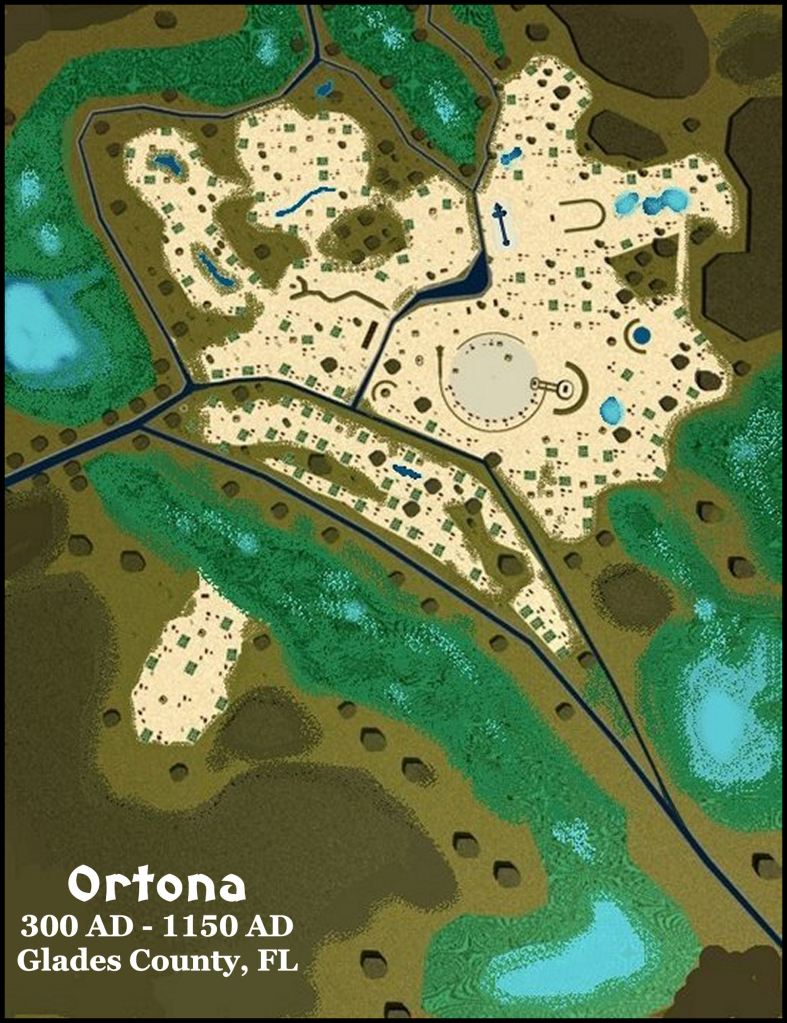
Site plan prepared by Architect Richard Thornton in 2006 – Note the canal system!
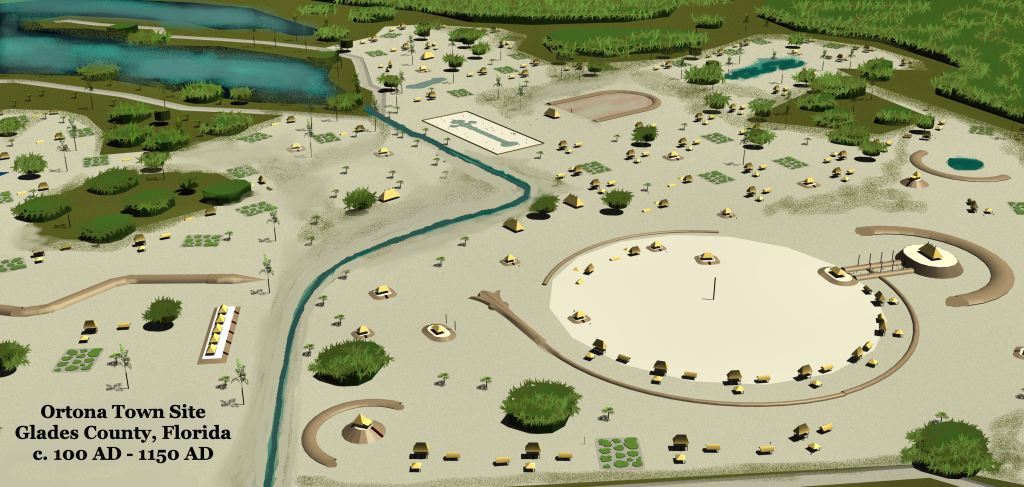
Birds-eye view of Ortona by Richard Thornton – Note the Mesoamerican ball court on the upper center.
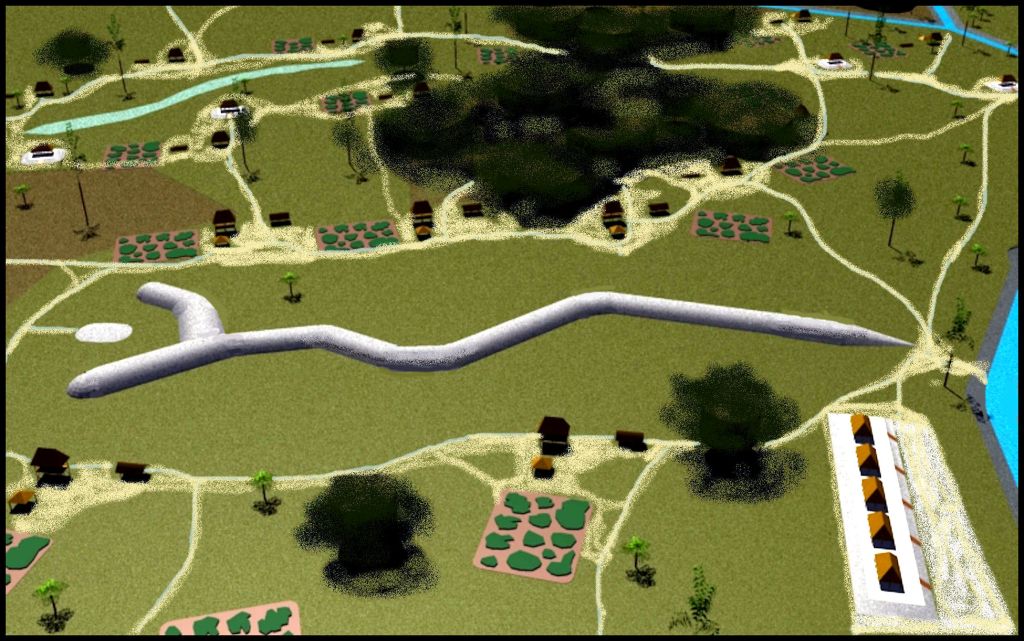
Ortona’s Great Serpent Mound probably predates the one in Ohio – by Richard Thornton
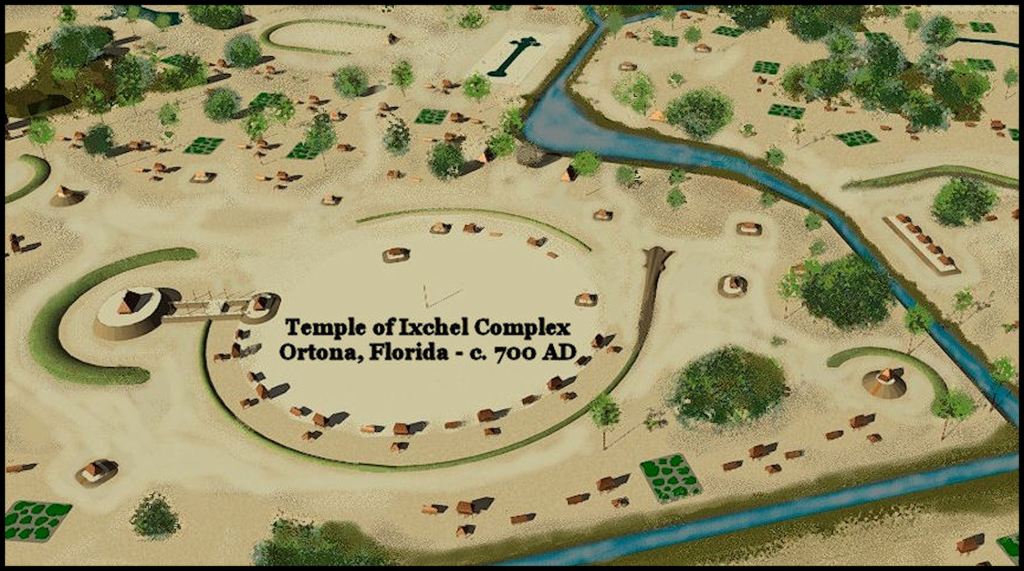
Birdseye view of Ixchel Temple Complex by Architect Richard Thornton
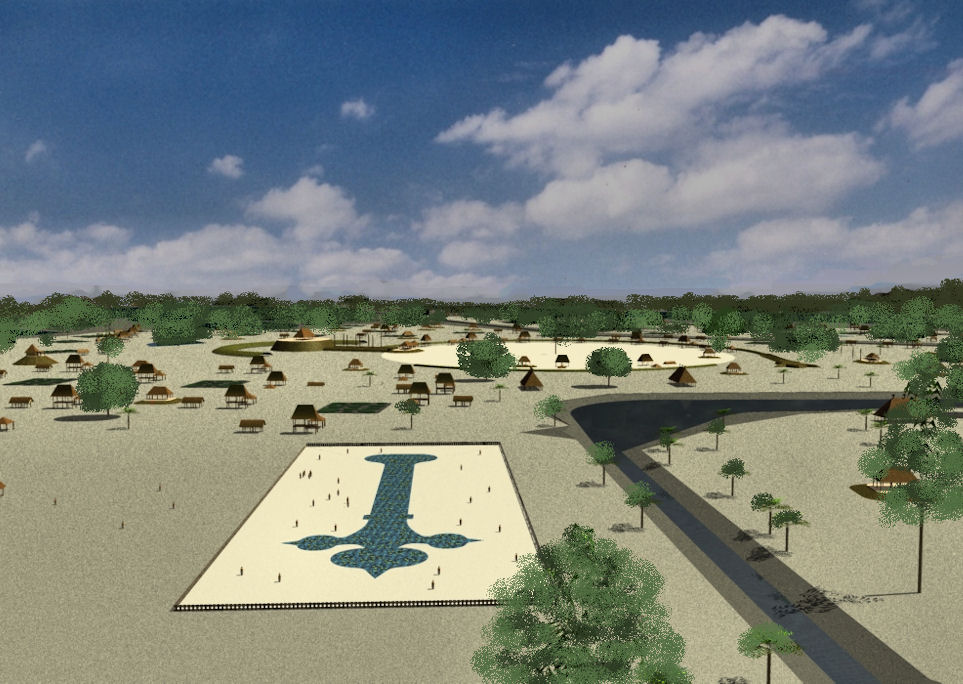
Another 3D view of a ceremonial mace and large canal
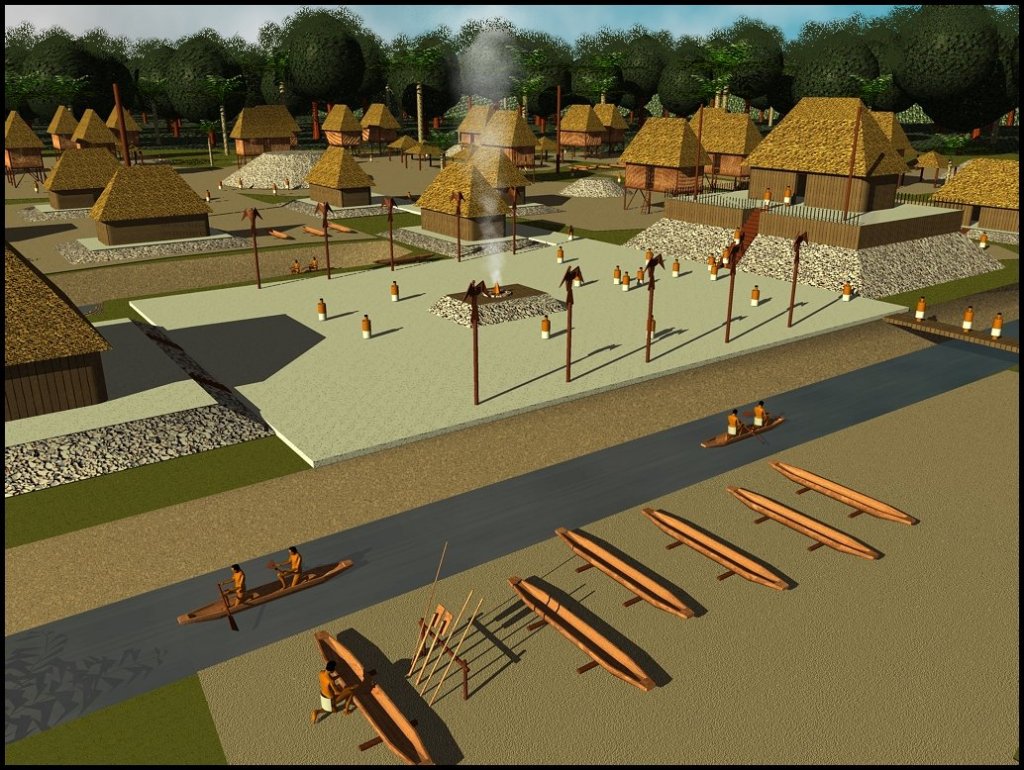
Wakate (Canoe People in Itza Maya) – capital of the South Florida indigenous nation from 900 AD to 1150 AD

