
History left out of the textbooks
My GGGG-Grandfather Sgt. Jack Bone was a Creek Indian and a member of the Georgia Rangers, which was renamed the Georgia Mounted Rifles during the American Revolution. He died in the Siege of Savannah before the Spring Hill Redoubt on October 9, 1779, fighting for the dream of an American Democracy.
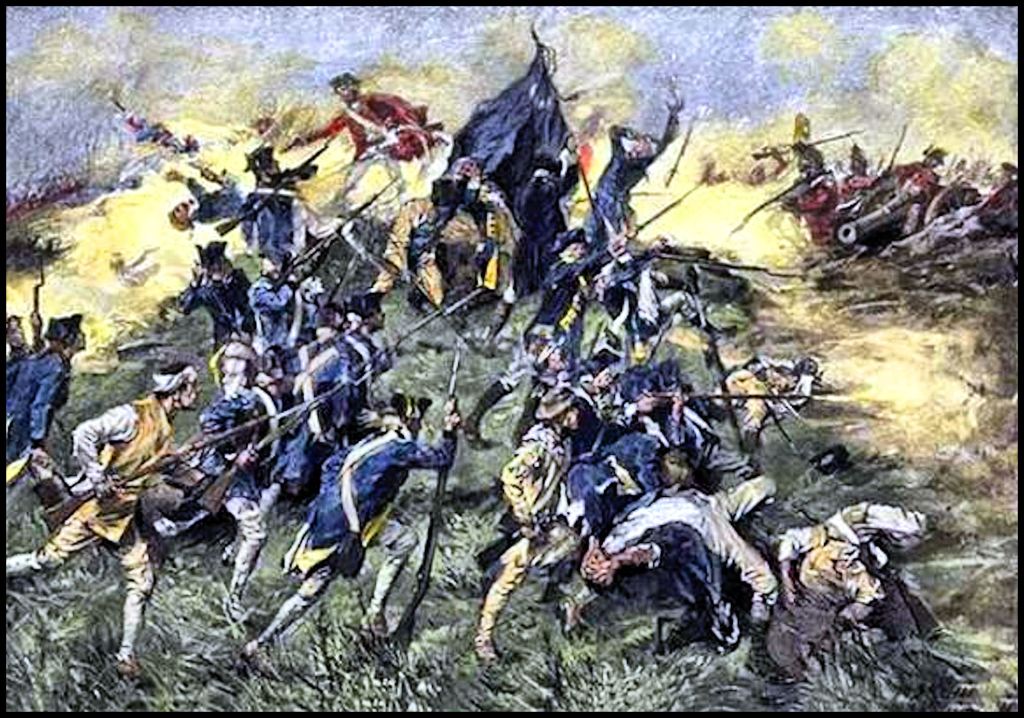
Attack on the Spring Hill Redoubt – Sept. 9, 1779
Like most of the Patriot dead, he was buried in an unmarked mass grave. This area is now preserved as Battlefield Memorial Park, located at the corner of Louisville Road and Martin Luther King, Jr. Boulevard in Downtown Savannah.
Did you know that that the last battle of the American Revolution was not in Chillicothe, Ohio (as Google’s AI tells you) in 1782, but near the Etowah River in Northwest Georgia a month AFTER the Treaty of Paris was signed in September 1783? The error can’t be corrected, because the Purple Guardians of Wikipedia delete any efforts to insert the correct description of this battle. For nine years, I lived near this near-forgotten battlefield.
You will learn that the official version of “Cherokee Heroine” Nancy Ward’s life in Wikipedia, various state history encyclopedias, Cherokee History books and two plays is a complete fairytale.
Another interesting fact that you will learn is that companies of mixed White and Eastern Creek Patriots PROTECTED friendly Creek towns from attacks by British Tories and Alabama Creeks, allied with the British.
Honoring all those Patriots who gave their lives or their limbs so that so this land should not be ruled by a king in cahoots with arrogant, rich aristocrats.
by Richard L. Thornton, Architect & City Planner

The Raccoon Regiment of South Carolina
Formed in 1775, the “Raccoon Regiment,,” originally known as Capt. John Allston’s Racoon Company, was a South Carolina militia unit of 50 Pee Dee Creek (Native American) riflemen, but soon expanded with volunteers from several tribes along the coast and in the Coastal Plain. It was under the overall command of Colonel William Thomson of the 3rd South Carolina Rangers. James Bone of the Savannah River Bone Clan of Creeks was a member.
The Racoon Regiment escaped capture, when the British conquered Charleston and captured most of the Third Ranger Regiment. They shifted operations to the interior of South Carolina and assisted militia units, commanded by such famous leaders as Francis Marion and Andrew Pickens. After the American Revolution, most Pee Dee Creeks moved to Creek Confederacy lands in northern Georgia. My maternal grandfather was descended from them.
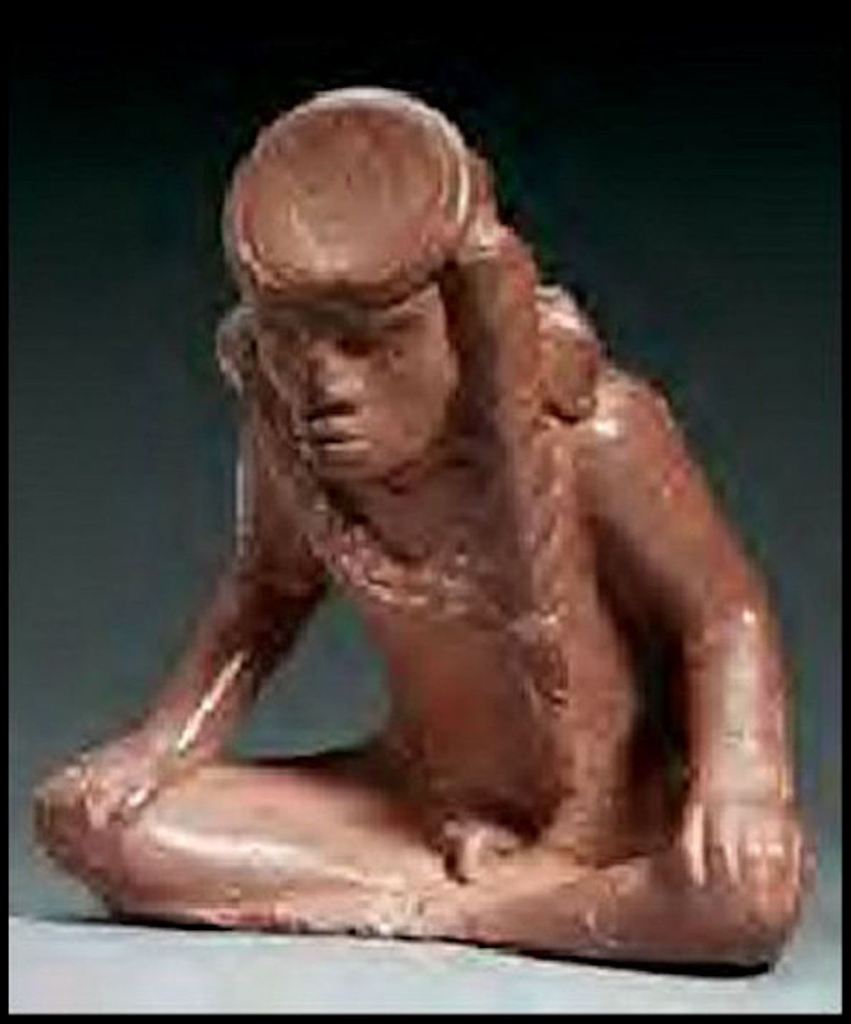
While not a massive traditional regiment, their specialized rifle skills and knowledge of the coastal terrain made them a vital defensive asset for the Southern Continental Army early in the Revolutionary War. The unit is best known for their critical role alongside the 3rd South Carolina Regiment at the Battle of Sullivan’s Island (Breach Inlet) on June 28, 1776, successfully repelling a major British amphibious assault.
The significance of the Raccoon name has baffled South Carolina academicians for 2 1/2 centuries. The Pee Dee Creeks, called Hillabee Creeks in Georgia and Alabama, were one of several Creek tribes, who were descended from Chontal Maya traders. Both in Mexico and in the Southeastern United States, Chontal Maya traders wore raccoon caps so they could be identified at a distance as being friendly traders, not the enemy.

The Georgia Rangers
The colonies of Maryland, Delaware, Virginia, North Carolina and South Carolina were originally intended to be divided up into large feudal estates. Extremely wealthy buddies of the King of Great Britain, such as Thomas Lord Fairfax and Sir William Berkeley, were granted enormous tracts of land, which were then sold to lesser nobility, who in turn initially rented out most of their land tracts. It was assumed that about 90% of the colonists would always be renters or tenant farmers. By the time of the American Revolution, this created great hatred by the inland tenants toward the aristocracy living on plantations near the coast.
In contrast, Georgia was conceived as a haven for middle class folks, even former inmates of debtor prisons. Colonists would be hand-picked, based on their skills and formal plans presented to the Trustees for how they would become prosperous from hard work. In return, land would given or sold at moderate prices. The colonial government was the colony’s principal real estate developer. Some proceeds from land sales were applied to continually improving the planned road system. Until the Civil War, Georgia maintained an office that planned its cities and towns in advance. The railroad system was built and owned by the state government.
The primary responsibilities of the Georgia Rangers were to (1) block squatters from crossing the Savannah to illegally farmstead on Colonial or Creek Indian lands. [All immigrants had to enter the colony through the Port of Savannah.] (2) Block South Carolina drovers from entering Georgia with diseased livestock and (3) Function something akin to the Royal Canadian Mounted Police.
during the opening days of the American Revolution, the Rangers transitioned from a Royal British police force to a Patriot paramilitary force. The situation was certainly not clear in 1774 to early 1776. Georgia did not send delegates to the first Continental Congress, but sent large quantities of food to support the hungry people of Boston. British Royal Governor James Wright was very popular, while many Georgia “regular folks” despised King George III and the British Aristocracy. As will be described later in this article, some prominent Colonial Rangers joined or even led British Tory units.
The Cherokee attacks on the Southern Frontier changed everything. It was the prime directive of the Rangers to protect the settlers and the Rangers probably, initially didn’t know that the Cherokees were launched by British agents,. After joining their Northeast Georgia Creek allies in beating back the initial attacks on Georgia farmsteads, the Rangers constructed and manned a chain of log forts along the south side of the Tallulah River, which was the demarcation line between Creek and Cherokee territory.
Bohurons – The region of the Georgia Mountains south of the Hiwassee River was protected by the Bohurans. Bohuron is a Sephardic and Arabic word that means “noblemen.” They were a mixed-blood tribe of Creeks living in what is now Banks, Hall, Jackson and southern White Counties, who were especially skilled horsemen. [See Nodoroc and the Bohurons by Marilyn Rae nd Richard Thornton (2013)] They originally had been a unit of cavalry, created by the Kingdom of Apalache (forerunner of the Creek Confederacy) in the late 1500s, when its capital was in the Nacoochee Valley.
Initially led by survivors of Fort Caroline and composed of Sephardic Jews, Dutch Jews, escaped North African galley slaves and English Protestants, their original purpose was to protect the southern frontier of the Georgia Apalache from Spanish Catholic incursions. The Kingdom of Apalache required all white male immigrants to marry Native women. So, by the 1700s, the Bohurons looked like full-blooded Creeks, but had European, Jewish or Arabic names.
After bands of Alabama Creeks and Tories began attacking Pro-Patriot Creek towns in what is now West Georgia and the Atlanta Metro Area, a company of Mounted Riflemen was stationed at the new location of Tuckabatchee, which is now Six Flags Over Georgia. This town site, which had at least three large mounds, was the original location of the tribe. They were forced to move from their better known location on the Tallapoosa River in Alabama because of attacks by pro-British Creeks.

Central buildings of Tuckabatchee
Academicians have long assumed that Tuckabatchee was located in Alabama, when visited by William Bartramin 1776. However, contemporary maps show Tuckabatchee by 1776 being located where Six Flags Over Georgia is now located. – their original Mother Town site. In 1775, Tuckabatchee was forced to relocate there, when it refused to join the Upper Creek towns, allied with the British. Simultaneously, the Bohurons established the large settlement of Sandtown, just downstream from Tuckabatchee, but on the east side of the Chattahoochee River. The two garrisons fof hosrse soldiers ormed a “Delta Force” read response defense that made raids into Georgia from Alabama very dangerous.
Throughout the American Revolution, Georgia Rangers and units of the Georgia Militia found a series skirmishes with Tory units after the British captured Savanah and Charleston. After Augusta, GA was captured by Loyalist forces led by Lieutenant Colonel Thomas Brown on June 6, 1780, . Fort James became the de facto capital and only stronghold of the Patriot government in Georgia. Leaders of the Patriot government were hiding in the mountains of Northeast Georgia. Although the British launched several expeditions to capture Fort James, they were never successful, whereas all Patriot forts in South Carolina were at least temporarily held by the British.
The final capture of Augusta by Patriot forces occurred on June 5, 1781, during the American Revolutionary War. General Andrew Pickens and Lieutenant Colonel Henry “Light-Horse Harry” Lee led a two-week siege on the British-held Fort Cornwallis. The Patriots successfully overtook the fort by constructing a 30-foot wooden tower, allowing them to fire artillery down upon the Loyalist garrison.

The commander of Fort James becomes the most notorious Tory
In 1773, Thomas Waters and his new business partner, Edward Barnard, moved from Augusta to the Ceded Lands of Georgia to survey the lands after the governor, James Wright, acquired the land that year. Future explorer William Bartram and his father accompanied Waters. They described him as an incompetent land surveyor. Eventually, Creek leaders convinced government officials to furnish their own, much more skilled, Creek surveyors, who finished the job and were paid the funds that had been allocated to Waters.
Earlier that year, James Wright formed a new colonial ranger troop to police the lands ceded by the Creek and Cherokee Indians in order to counter the threat of vagrants, whom Wright viewed as bandits. Fort James, on a promontory overlooking the Savannah River, was reconstructed at this time Waters joined the new ranger troop as a first lieutenant, and served under Capt. Edward Barnard until June 6, 1775, when Barnard died and Capt. James Edward Powell was named as Waters’ new superior.
Waters and his men operated from Fort James, and served alongside the St. Paul Parish militia in 1774 to counter any violent war parties, in response to their significant loss of land. However, both the militia and the rangers suffered a brutal defeat to a war party of Muscogee-Creeks. Most authors do not understand that the Muskogee-Creeks spoke a different language than the Itsate-speaking Creeks in northeast Georgia.
In 1774, Thomas Waters established multiple plantations on 4,500 acres of land across the Ceded Lands. The plantations were located on the Broad and Savannah Rivers, near Wrightsborough, and on the edges of the Ceded Lands. Waters placed 44 of his slaves and 12 of his skilled laborers onto those plantations, where they raised livestock and crops. He also owned a blacksmith shop, a fort, a two-story house, and three mills. Waters had also loaned money to more than 200 families in the Ceded Lands in order to afford their initial payments.
When the Ceded Lands opened 9n 1775, the early stages of the American Revolution had begun. Thomas Waters, and other people in the frontier, signed a public protest that opposed the rebellion towards the King. In that same year, Continental Army Captains Pannill and Walton arrived at Fort James and told the rangers to surrender their post. Capt. Powell and Lt. Waters firmly refused to surrender, but their colonial rangers promptly abandoned the fort and joined the Georgia Continentals.
Waters and Powell eventually left the fort. The Georgia State Rangers reoccupied the fort and remained in possession for the duration. On August 28, 1779, Thomas Waters stood before a Wilkes County grand jury and the court condemned Waters for aiding the Tories.
In 1780, British Lieutenant Colonel John Harris Cruger named Thomas Waters, Colonel of the Fifth Colonial Militia Regiment and ordered him to ravage through areas of Georgia still loyal to the Patriot Cause. Waters followed Cruger’s orders and raided all throughout the Ceded Lands, destroying more than 100 homes. 60 Patriots were captured by Waters’ men and imprisoned. Cruger did not consider these men to be prisoners of war and so ordered death sentences on all of them. Waters had begun his career as one of the most hated men in the South.
We will come back to him. Spoiler alert – The TV premier of “America Unearthed” was filmed on a road going past my former cabin that was named after Waters descendants.

Mahala Bone
Jack Bone’s widow, Mahala, was treated as a citizen of the new State of Georgia and given a double widow’s reserve around their original farmstead in the bottomland of the Upper Savannah River, adjacent to male Creek veteran’s’ reserves and the farmstead of Patriot Heroine Nancy Hart. That’s right. It was my mother’s ancestors, who gave Nancy Hart the nickname, War Woman! The Creek Revolutionary Veterans Reserves originally totaled over 3,000 acres! For the next five generations there was one girl selected to be a teacher of others and named Mahala Bone.
The Creek word, “mahala” means “teacher.”
From the handful of Native words passed down to me by my Great Uncle Sam and Uncle Hal, I can tell that my ancestors spoke a language similar to Miccosukee, not Muskogee. It is a dialect of Western Maya. The Miccosukee came from the Soque River Valley in Habersham County, GA, where I now live.
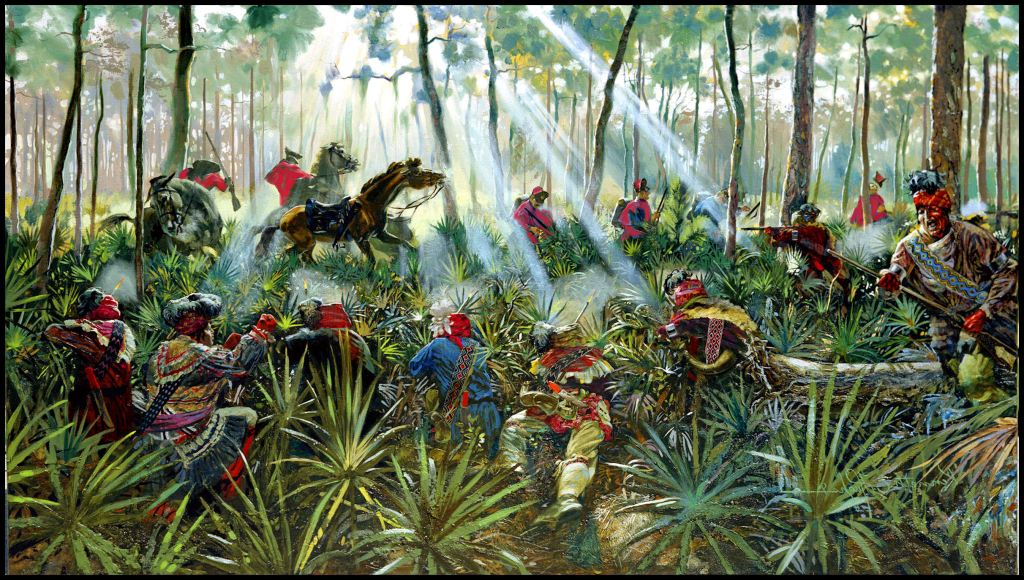
1779 – Tallasee Creeks from the present-day Athens, GA Area, wiped out a British foraging expedition on the Augusta Road near Savannah. Afterward, the British imported a Pro-British Alabama Creek company to help protect British troops, who were raiding farmsteads to obtain food.
The Cherokees and Creeks during the American Revolution
Official histories of those times briefly mention that both the Cherokees and the Creeks were British allies during the American Revolution. Things were not so simple. We will explain.
The Eastern Creeks in Georgia and South Carolina and the Upper Creeks in NW Georgia usually were allies of the Patriots, because they had many familial and commercial ties with their middle class white neighbors. Eastern Creek farmsteads in South Carolina were attacked and sometimes massacred by Cherokee war parties.
Creeks in middle, west-central and southwest Georgia either tried to remain neutral or only were involved in combat when neighboring Creek towns were attacked by British Allies.
Although based in Savannah during the American Revolution, Scottish Highlander and Tory, Lachlan McGillivray (c. 1718–1799), played a key role in recruiting Creeks in central and southern Alabama to fight for the British. Their sons and grandsons became the Red Stick Creeks of the early 1800s. Lochlan’s first wife was the beautiful elite lady of mixed Koasati-French ancestry, Sehoy Marchand. This gave him many commercial and political connections in the Creek Confederacy – particularly in Alabama.
Sehoy soon got tired of him being gone all the time and divorced McGillivray to a marry a Creek man, but their son, Alexander, was raised as a Creek. After the American Revolution declared himself to be Principal Chief of the Creek Confederacy.
The Eastern Creeks and Hitchiti Creeks never voted for Alexander and thus began the schism that caused the largest, most powerful tribe in North America to fragment into smaller tribes and Secret Creeks. A Trail of Tears Organization study of census data in 2006 determined that over half the Creeks in Georgia and South Carolina did not move to Alabama, when the Creek Confederacy ceded all of its lands Georgia during 1827. They elected to assimilate with their neighbors in Georgia and South Carolina.
Some Upper Creek and Shawnee towns in Central Alabama became allies of the British Army. Their unprovoked attacks on Creek towns in Georgia began a long schism, which did not end completely until the 20th century. There were several Apalachicola Creek towns near Pensacola, West Florida , that expressed an alliance with the British, but there is no record of them attacking Patriot farmsteads in present-day Georgia.
The Watauga Cherokees near present-day Franklin, NC and the Uchees in the small section of Northeast Georgia within Cherokee domain, had friendly relationships with White neighbors and in fact, warned Explorer-Naturalist William Bartram when s Pro-British Cherokee war party was in-route to murder him. Bartram stated in his famous book that he raced southward to the southern bank of the Tallulah to the safety of the Creek Nation.
The majority if Cherokee warriors did fight for the British during the first two years of the Revolution. However, the atrocities that they committed against politically neutral white settlers on the Southern Frontier ultimately played a major role in the British defeat at Yorktown. Their treachery turned the previously indifferent Highland settlers into a Hornet’s Nest of Patriot fervor.
In retaliation for the Cherokee surprise attacks on White AND “Friendly” Indian farmsteads, Virginia Governor Patrick Henry commissioned an army of about 1,800 volunteers led by Colonel William Christian. The Virginia militia marched into the Overhill Cherokee towns, finding many of them abandoned, and systematically destroyed them.
A combined force of 4,500 Patriot soldiers led by Brigadier General Griffith Rutherford (NC) and Colonel Andrew Williamson (SC) launched a scorched-earth campaign. They were augmented by scouts from the former Georgia Rangers and the Georgia Militia. Very often any Cherokee seen, regardless of age or gender, was killed on sight. They burned crops, killed or ate livestock, and burned about 50 Cherokee towns across North Carolina, and South Carolina. The Cherokee Tribe Nation never really recovered from these laws and was never again able to fight United States troops in conventional warfare.
Negotiated separately by Southern colonies to end frontier fighting and establish boundaries, the Treaty of DeWitt’s Corner (May 20, 1977) and the Treaty of Long Island of the Holston (July 20 & 26), 1777 cost the Cherokee nearly all of their land in South and North Carolina.
Sour Mush, a leader of a small band of Cherokees, refused to sign these treaties and announced his intent to continue hostilities with the Patriot governments. He, plus Dragging Canoe, John Watts, Doublehead, Pathkiller and Major Ridge were banished from the boundaries of the Cherokee Tribe, Sour Mush led his 50+ followers southward to the North-Central Georgia Mountains, where they were allowed to settle on Long Swamp Creek in present-day Pickens County by the Upper Creeks, who owned the land. At that time, there were only about a dozen scattered Creek villages in the region. occupied by by mixed-bloods, descended from 17th century European gold miners and Native American wives.
Just before June 5, 1781 when the garrison of Fort Cornwallis in Augusta surrendered to Patriot forces under the command of Light-Horse Harry Lee (Robert’s father) and Colonel Andrew Pickens, Colonel Thomas Waters and several dozen Tory Rangers escaped and headed toward the Blue Ridge Mountains.. Waters was appointed Deputy Superintendent of the Cherokees by Sir Henry Clinton in January 1782. The Royal Rangers were accompanied by their British, Creek and Mixed-blood wives/children. They camped near Sour Mush’s village. . This band along with at least some of Sour Mush’s warriors almost immediately began to attack and often massacre white families in the Georgia frontier. This was done, despite the obvious fact after Yorktown, that the British had lost the war.
^ The Wikipedia article on Waters has some fiction in it, Among them is the statement that Waters commanded over a 1000 Georgia Cherokee warriors. That is nonsense. The first official map of the State of Georgia from 1784 labels almost all of North Georgia as being “The Lands of the Muskhoghe Creek Confederacy.” There were approximately 50 men, women and children in Sour Mush’s village.
The British garrison and Royal Governor James Wright abandoned Savannah on July 11, 1782, during the final months of the American Revolutionary War. Thomas’s Dragoons continued to ravage the frontier despite orders to somehow cross hostile Creek territory in Georgia to reach the relative safety of British East Florida. Thomas probably realized that he would be quickly hanged by the Patriots or burned alive by the Creeks, if captured.
The Treaty of Paris was signed on September 3, 1783, ending the American Revolution. However, neither Thomas nor Southern Patriot troops knew this for a couple of months. The combined forces of the South Carolina and Georgia Militias headed headed north in September 1783 from Fort James to three Native American towns in extreme northeast Georgia in search of Thomas’s raiders. They were nowhere around, but their leaders, Colonel Andrew Pickens and Major Elijah Clarke were told that the Tories were actually in Northwest Georgia, somewhere near the Upper Etowah River. Creek Indian scouts found Sour Mush’s village near the headwaters of Long Swamp Creek.

This opening scene in the premier of the History Channel’s America Unearthed (Dec. 21, 2012) was filmed on an old pioneer road, named after the descendants of Tory Colonel Thomas Waters. He was considered one of the most barbaric of Tory officers. He frequently executed Patriot militiamen that his Royal Rangers captured, even if arrested in their homes.
Last battle of the American Revolution
On October 2, 1783, the Patriots attacked the Cherokee village, which only returned a little musket fire before sending out a man with a white flag, who offered to surrender the village and sign a peace treaty with the Cherokees, plus cede their lands in northern Georgia. Of course, Sour Mush was on Creek land and had not authority to speak for the Cherokee leadership. Hearing a chance to obtain free Native American land, Pickens halted the search for Waters.
It was a ploy to give time for the families of the Tory Rangers to escape from their nearby village. Sour Mush gave South Carolina and ‘Georgia all of the Creek’s lands in Northeast Georgia. Once, Pickens realized that the Tory village was nearby, the Tory Rangers had already set up a rear guard action. A few Tories were killed. Six wounded were left behind. They were hung by the militiamen. In 1883, during the construction of the Marietta and North Georgia Railroad to the marble quarries in Tate, GA, six, rather aged, skeletons and some 18th century British military buttons were discovered. They are believed to be the remains of the executed Tories.
In official histories, the fate of the surviving Waters Rangers is left as a question mark. All that was known was that Waters abandoned his family somewhere in northern Georgia then somehow escaped detection, when he made his way to the Gulf Coast then hitched a ride on a boat headed to British owned possessions in the Caribbean Basin.
That riddle was soon solved soon after rented a dilapidated cabin near Amicalola Falls in western Lumpkin County, GA on Waters Road. Several of the families on this road were named Waters and claimed to be Cherokees. They had no explanation of how their Cherokee ancestors escaped the Trail of Tears.
They all looked Semitic or Iberian and not the least Native American. In fact, they looked far more Semitic than my dear, Hungarian Jewish friends in Asheville, NC . . . Harry and Lillie Lerner, who survived the Holocaust. That is actually the case for virtually all people in that part of Georgia, who claim to be Cherokee, The only ones with Native American DNA have the Southern Mesoamerican DNA and external occipital protuberance typical of Itzate Creeks.,
Out of curiosity , I examined the earliest road maps of Lumpkin and Dawson Counties, plus surviving names of some of Waters’ rangers. All of the names of Waters’ Rangers could be found as the names of original roads in northern Dawson and western Lumpkin Counties, Georgia. This region was also the heart of Georgia’s illegal moonshine industry.
The Chickamauga Wars (1776–1794 – Following the initial 1776 invasion, a faction of the Cherokee led by Chief Dragging Canoe rejected Patriot treaties and fought an ongoing guerrilla war to stop American settlement, frequently clashing with Patriot militias along the frontier. There was was an seemingly endless cycle of Cherokees murdering individual families of white settlers heading into Tennessee, followed by massacres of entire Cherokee villages by Tennessee Militiamen, Although there were several major battles fought in NW Georgia, Georgia troops took practically no part in the hostilities with the rogue Cherokees, but instead focused on actions against the Upper Creeks in what is now Alabama.
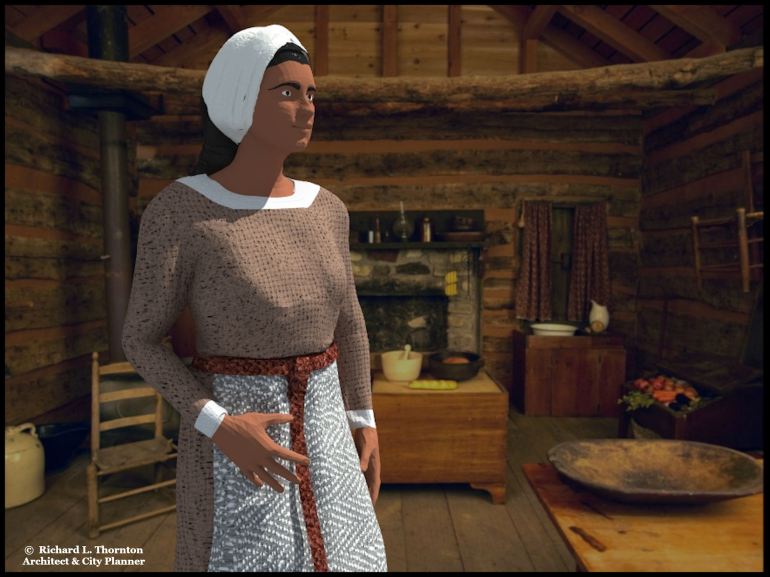
The real Nancy Ward
She had NO Cherokee ancestry!
Everything that you read and see about Cherokee Arch-Angel Nancy Ward’s life in Cherokee History books, plays and Tennessee Genealogical websites are mostly pure fiction . . . created by dime novel author in Tennessee, four years after her death or elaborated by late 20th century “Cherokee” authors and playwrights, plus decades of highly inaccurate genealogies, produced by people in Tennessee, who all claim to be descended from about five famous 18th century Cherokee leaders
In 2008, I first became aware that many of the historical markers in the Georgia Mountains and tourist-oriented books in Cherokee, NC are fairytales. A team of History and Law professors from the University of Oklahoma arrived in Georgia to study all of the correspondence and treaties involving the Creek Confederacy.
(1) Until 1785, the northern boundaries of the Creek Confederacy were the Hiwassee River in Tennessee and North Carolina and the Tallulah River in Georgia. A few Chickamauga Cherokees entered Georgia upon the invitation of the Upper Creeks during the American Revolution. The Cherokees never “conquered all of North Georgia.” They were given Creek lands in NW and Central North Georgia in a secret treaty with the Cherokees in June 1784 The Creeks did not find out about the treaty until 1790.
(2) There was no Battle of Taliwa and no Creek town named Taliwa in which supposedly Nancy Ward captured all of North Georgia by leading a charge of brave Cherokee warriors at age 16 after her husband, Kingfisher, was killed.
(3) Kingfisher died in the catastrophic defeat of the Cherokees at the Battle of Etowah Cliffs in 1793. He was an Upper Creek from /NE Alabama, fighting with the Chickamauga Cherokees, not the “Great Cherokee Warrior and Chief,” described in Wikipedia literature and historical markers. He was probably never the husband of Nancy Ward. The professors believe that the man who wrote the dime novel on Nancy Ward borrowed the death of the real Kingfisher in a battle on the Etowah River.. He probably also Cherokee-nized Etowah to make the fictional town name of Taliwa. The only 18th century or early 19th century source that mentions an earlier Kingfisher is this dime novel.
(4) Bryant Ward, Nancy’s real first recorded lover, never lived in Tennessee. He was licensed by the Province of Georgia to trade with Indians in Georgia . . . which then extended to the Mississippi River, but didn’t include Tennessee or North Carolina. After emigrating from Ireland with his family, he lived in Augusta, GA, Fort James, GA, what is now Stevens County, GA and Wilkes County, GA.
(5) Nancy Ward was never mentioned in the minutes of the Cherokee National Council. the Cherokee Phoenix Newspaper or The History of the Cherokee People [1826] by Principal Chief Charles Hicks. Nancy and Chief Hicks grew up a few miles from each other. She died only two years before Hicks” book was written. Surely, if she was an important Cherokee Clan Mother, he would have mentioned her. Nowhere except in publications written by whites after her death, is she labeled a “Beloved Cherokee Woman” or the last “Beloved Cherokee Woman.” Her Cherokee name of “Nanyihi” is a 20th century creation.

The surprising Georgia connection
With some clever sleuthing and some help from an AI computer, I was able to find the real Nancy Ward and her daughter Betsy. The results were astonishing., I quickly learned that if you compare the Wikipedia and Cherokee History articles on Nancy Ward and Betsy Ward, but much more detailed articles on Brigadier General Joseph Martin, from Virginia the chronologies just don’t jive.
They have all three people living in the East-Central Tennessee Cherokee town of Chota in 1776 and 1777, when the Cherokee War was underway. At that time Martin was commanding Virginia troops in Southwest Virginia or at their advanced base on Long Island in the Holston River in Kingsport, TN near the Virginia-Tennessee Line.
There is considerable information in Virginia on General Martin’s hook up with a teenage half-blood girl, named Betsy. He was at the same time married to two white women in Virginia. The hookup occurred in 1784 through 1785, while Martin commanded Fort Clarke on the Tallulah River in what is now Habersham County, GA. The site is near Batesville, GA. That was 12 miles from the South Carolina line and nowhere near Chota, Tennessee. Fort Clarke was also a trading post that catered to friendly Creeks and Sokees, living in Habersham County/ North of the Tallulah River lived Uchee Indians. They were served by a trading post called Fort Tugaloo on the Tugaloo River near where Traveler’s Rest State Historic Site is now located. Ward’s Creek flows nearby.
My AI computer could find no mention of Nancy Ward in Tennessee newspapers, but an astonishing amount of information in Northeast Georgia newspapers, including an obituary. None of the articles mentioned her Native American name, but many other aspects of her life suddenly had factual material to back it up. She was born where Alpine Helen, GA is now located . . .in the ancient town with a Maya name of Chote in the Nacoochee Valley of NE Georgia. There are mounds in Chote that date from around 1200 BC. The occupants of Chote sold their land to speculators in 1822 and moved to Creek Confederacy lands in Alabama. Chota, Tennessee was founded around 1750 and pretty much abandoned after 1776. Being born in a town with a Maya name has great significance for our story.
Despite the fact that Nancy cohabitated with a long list of men in her life . . . most of them appearing to be white . . . she was extremely popular with the people of Northeast Georgia. Even after she moved in 1795 to a tract on the Ocoee River within Cherokee territory, her returns to visit family and friends received front page articles. She was credited with persuading the Creeks and Uchees in Northeast Georgia and the Cherokees living around Franklin, NC to not become allies of the British and not attack white farmsteads.
My strong suspicion is that Nancy was a Creek Trade Girl. These were the prettiest and smartest girls in a village, who were given special educational opportunities such as learning multiple languages, geography and mathematics, which would enable them to thrive in both the European and Native American worlds. She would have been expected to be fluent in English, three or four Creek dialects and Cherokee.
Tennessee genealogies and Wikipedia tell readers that Nancy Ward only had one child with Bryant Ward and that Betsy Ward died shortly after General Martin returned to Virginia. That is because Tennessee genealogists could find no further mentions of Betsy Ward or any other offspring of Nancy and Bryant Ward in Tennessee. In contrast, contemporary Georgia newspapers mention that Nancy was in Georgia to visit her children, grandchildren and friends. did we mention that Nancy Ward has hundreds of descendants living in Georgia today?
DNA analysis provides a shocking answer to this riddle
Over the past two decades, DNA Consultants, Inc,. has tested thousands of people, who thought they were Cherokee descendants or were actually members of a federally-recognized Cherokee tribe, who wanted to know what was “Cherokee DNA.” The firm also intentionally tested many descendants of Nancy Ward and Betsy Ward in northern Georgia. Nancy Ward was a mixture of Sephardic Jewish and Mesoamerican ancestry. Her maiden family name would have been Sephardic Jewish..
Now you know!

