Native American Heritage Month
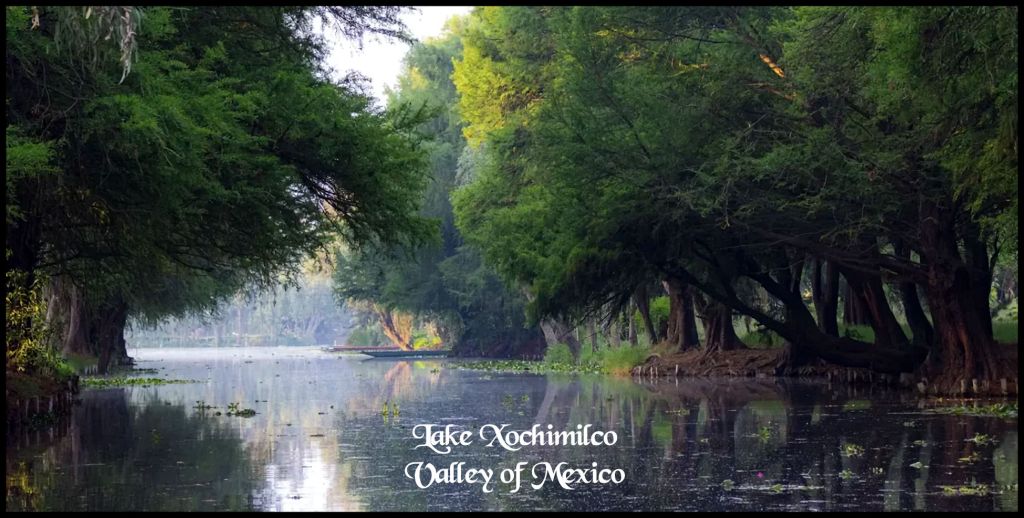
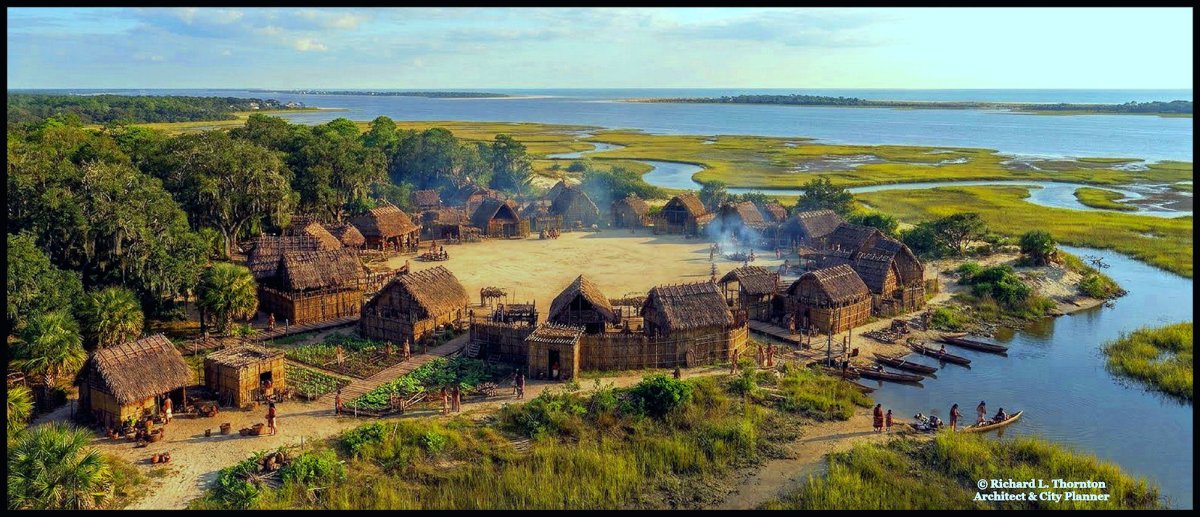
My AI computer combined with the Google 3 Search Program found 16th century sketches of Aztec villages around the marshes of Lakes Texcoco, Xochimilco, Chalco, Cico, Cacho, and Ceko at the Archives of the West Indies in Seville, Spain. From these sketches, it conjectured what they would look like on the coast of Georgia and thus showed Live Oaks and Spanish Moss.
The villages in the Valley of Mexico had rectangular plazas, but I suspected that they adopted the round plazas of neighboring tribes on the Georgia and Florida coasts. This speculation is based on the fact that other Mesoamerican colonists such as the Wahale (Chontal Mayas) were constructing round plazas at the time of contact with the French and Spanish
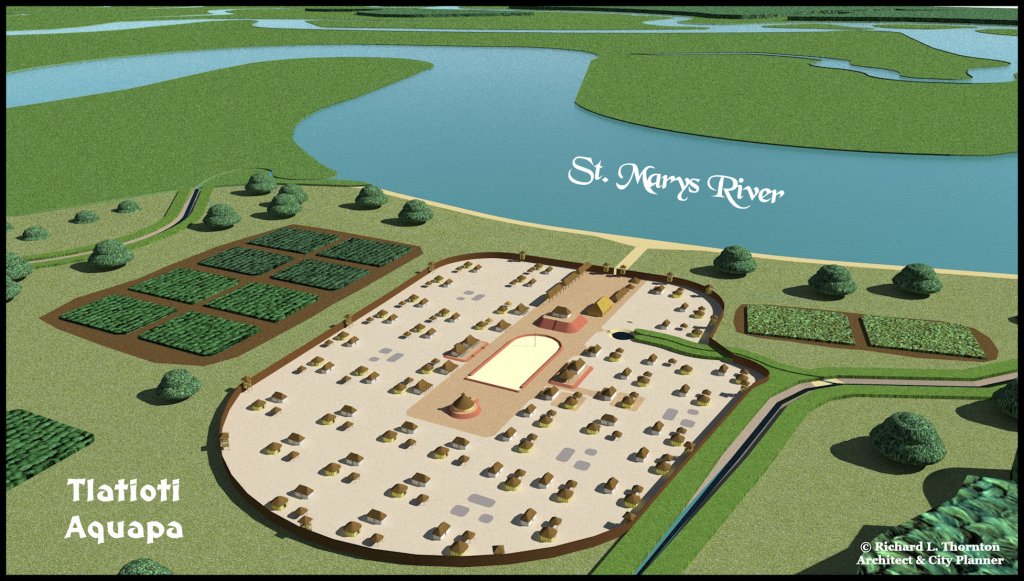
The capital of this Aztec-speaking province on the Georgia coast was located where St. Marys’, Georgia is now situated. It was named Tlatiolti Aquapa, which means “Earthen Pyramid Surrounded by Marshes.” This was a large town, which controlled the trade of the St. Marys River Basin and the Okefenokee Swamp. Again, I speculated that this was the original Aztec colony and thus, was laid out in a rectangular matrix, like the larger villages in the Valley of Mexico.
Note that the Aztec word for water was “aqua” – which is the same as the languages, such as Latin, in Italy, The Aztec word for a deity, “teo,” was the same as the Greek word for a deity. In both languages, it was pronounced, “theo.” I have no explanation, other than saying that there is much that we do not know about the past in the Americas.