Or when the Chontal Mayas came to Santee, SC . . . Charleston, SC . . . Catawba, SC . . . Pocotaligo, SC . . . Cataloochee, NC . . . Pocataligo, WV . . . Tellico, TN . . . Savannah, GA . . . Darien, GA . . . Pocataligo, GA . . . Cataula, GA . . . Wakah Mountain, GA . . . Helen, GA and even, Atlanta, GA
National Native American Heritage Month
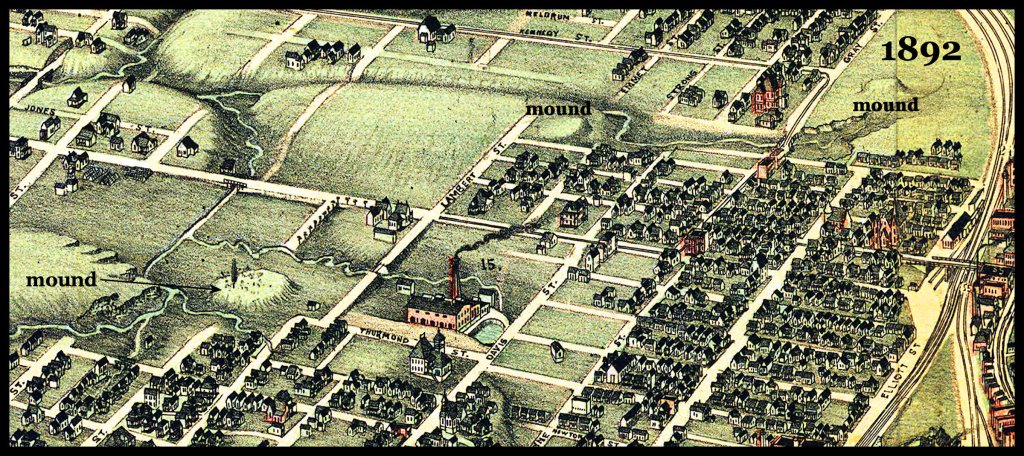
Atlanta, GA was founded on the site of a very large Chontal Maya town, with at least three large mounds, which evolved into a Creek town. The location is labeled, “Kataapa” on 18th century maps, which is a Chontal Maya word, meaning, “Place of the Crown”or “Place of the Cata People.”
For many years, I was unable to translate many place names around the Southeast. They seemed similar to Itza Maya, but were not quite the same. Then in 2025, a Chontal Maya-Spanish dictionary was finally published in Mexico. This dictionary changed the early history of the Southeast.
The town and village names of the Yamasee and Wahale (Guale) Peoples can be easily translated by a Chontal Maya dictionary from Mexico!
The Downtowns of Charleston, SC, Savannah, GA, Darien, GA and Atlanta, GA were originally Chontal Maya towns and trading centers. At least, three large mounds were still standing near the site of the Mercedes-Benz Arena in a 1892 birds-eye view of Atlanta (See above.)
Tahlequah, Oklahoma gets its name from the Cherokee-nization of the Chontal Maya town of Tellico on the Little Tennessee River. The Cherokees captured this town in the 1660s. Tellico is the Chontal Maya word for a town. Pocatellico is the Chontal Maya word for a provincial capital.
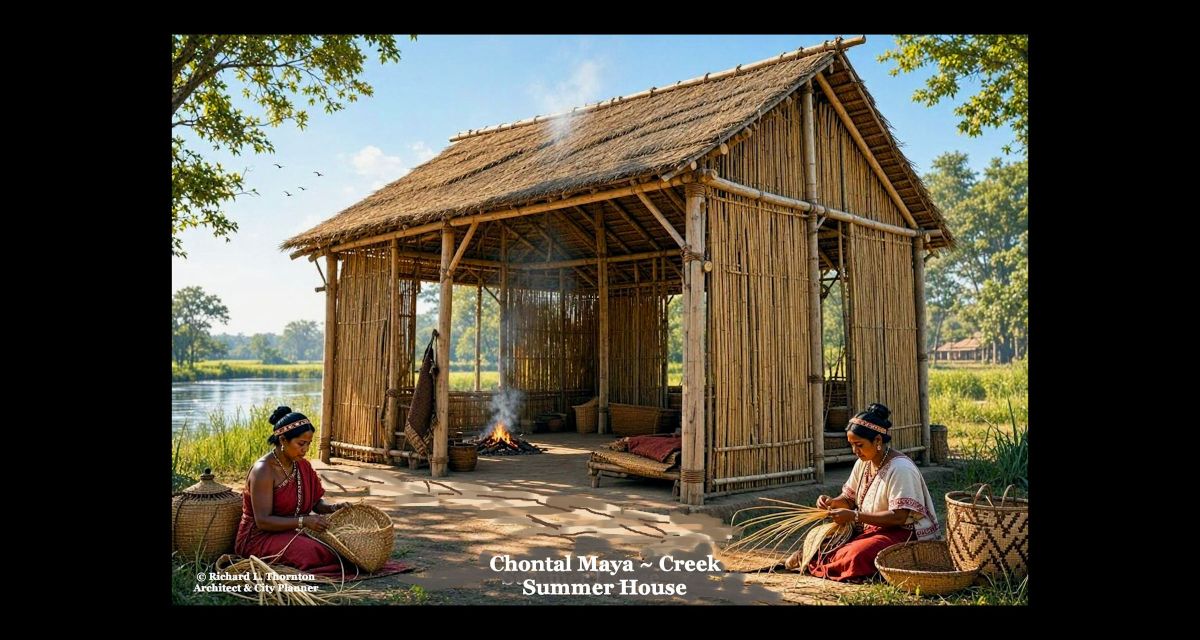
Maya and Creek Summer Houses

I learned about Summer Houses the good ole fashion way . . . not in a university classroom, but being based with future anthropologist, Ana Rojas, in an old Maya house in extreme northeastern Campeche during the middle of August 1970. The dilapidated structure was being used as a chicken house and pig barn at that time. The owner was the Site Manager for Labna and so, with the income earned, was able to build an authentic metal screen summer house next to her new home, provided by the Mexican government.
Summer houses were constructed by first building a frame from young tree trunks. Then panels were created on the ground from river cane stalks. The panels were suspended from the light timber frame. They could be added or moved around as needed. They functioned like a screen porch, if all areas of the walls were covered. Otherwise, they were sunscreens.
I have never heard of summer houses being discovered by archaeologists in any other section of the United States other than the Creek Homeland. The Creeks preferred to sleep in minimal clothing, so built heavily insulated winter houses that could be kept warm, even in the most extreme winter weather. The name of the winter house was choko, which means “warm” in Chontal and Itza Maya.

