Either the descendants or kin of its builders later settled in what is now Savannah and the Acropolis of Ocmulgee Mounds
by Richard L. Thornton, Architect & City Planner
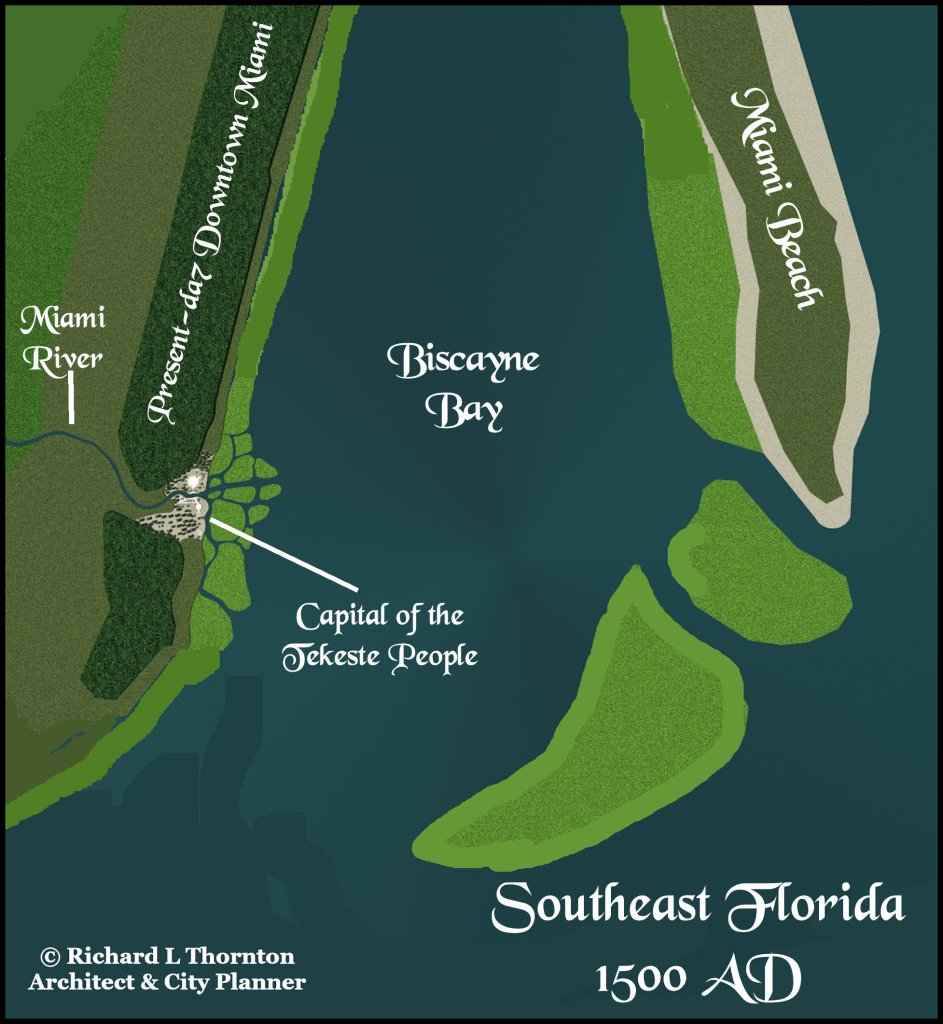
The Miami Circle, also known as the Brickell Point Site, is located at the mouth of the Miami River in downtown Miami, Florida, on a 2.2-acre parcel along Biscayne Bay. It was discovered by archaeologist Robert S. Carr and surveyor Ted Riggs in 1998 during a salvage archaeological survey, being conducted before the construction of a planned high-rise condominium tower. A 1950s apartment building on this site had already been demolished. The site is now a National Historical Landmark.
It is a cut-in-rock , circular structural footprint. They are at the site of the capital of the Tequesta (Tekeste) People in the late 1500s, but quite different from the oval, basket-weave houses built by the Tekeste, both during earlier times and at the time of contact with the Spanish.
Later archaeological digs on both the north and south sides of the Miami River in Downtown Miami have revealed even more architectural similarities to those structures erected by the founders of Ocmulgee. In both Miami and Ocmulgee, communal round structures tended to be 38-40 feet in diameter, while domestic structures tend to be 25-35 feet in diameter.
The builders of the walled village on Irene Island near Savannah and the original occupants of the Acropolis on Ocmulgee called themselves
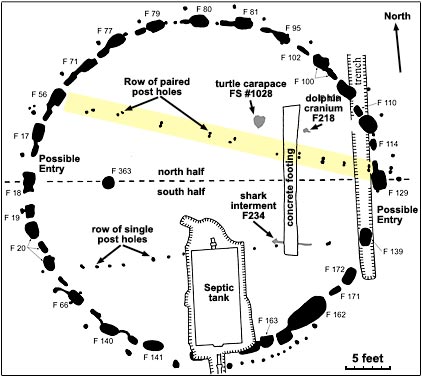
Miami Circle Site Plan discovered by Archaeologist Roberst S. Carr
The circular arrangements of approximately 25 to 40 feet diameter structures, found mostly on the north side of the Miami River are identical to those of the people, who settled on the Acropolis of Ocmulgee Mounds around 900 AD. Around 1000-1025 AD, a population building Southern Mesoamerican style structures became increasingly predominant at Ocmulgee. These were the large squarish houses of Chontal Maya and Zoque merchants, plus a wide variety of structures for storage, summer temperatures and meetings.
The original inhabitants of the Ocmulgee Acropolis and Irene island, GA called themselves Aparakura (“From the Sea People” which over subsequent generations evolved to Aparashikora (Descendants of People from the Sea) and later Aparasheti (Descendants of People from the Sea mixed with Itza Mayas).
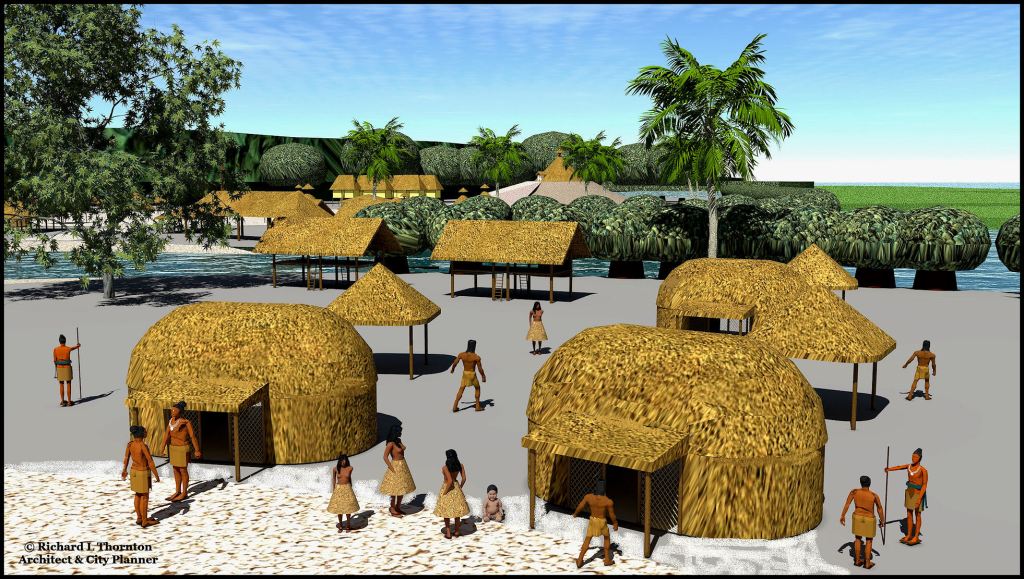
Traditional Teskete architecture was created by creating a large “basket” with interwoven saplings.
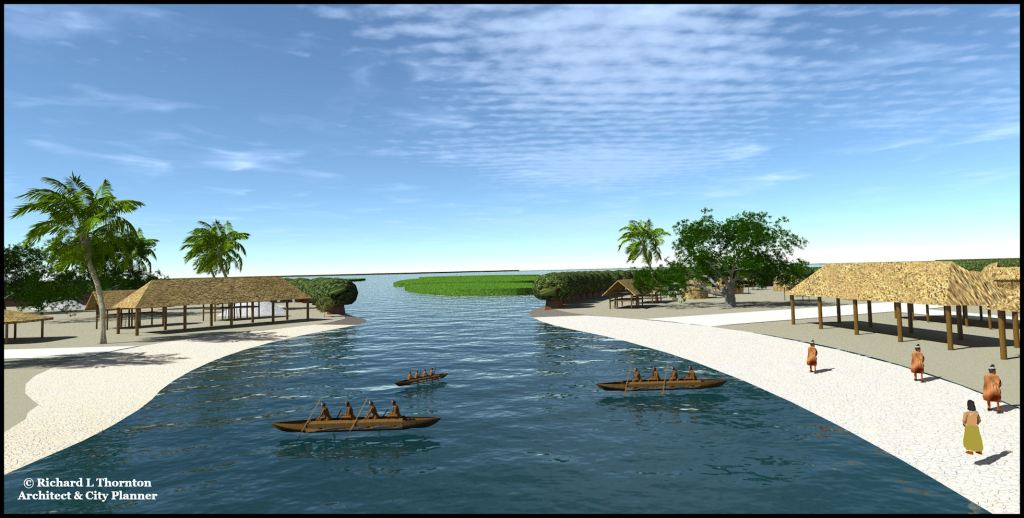
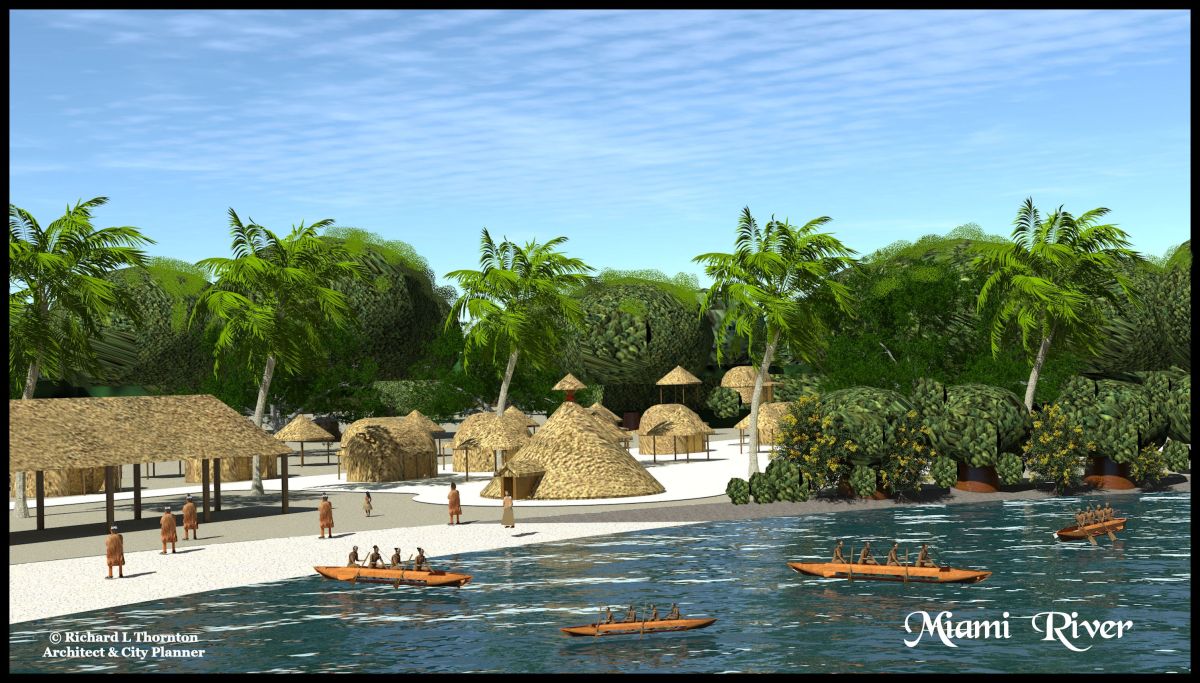
This is a view of the Miami River, looking eastward toward Biscayne Bay
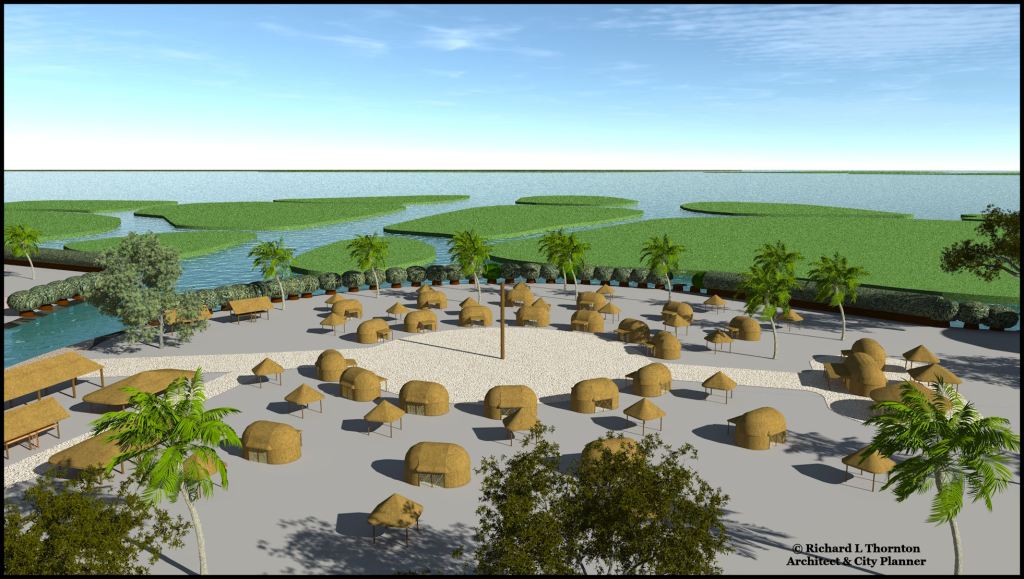
This is a view of the Teskete Village on the south side of the Miami River. The Miami Circle structure is out of view on the left. The original town on Hiwassee Island, Tennessee contained the same style houses, but their winter house walls were coated with a clay plaster to provide shelter from winter winds and snow drifts. The summer houses were identical. The Hernando de Soto Expedition called the people of Hiwassee Island, the Tasqui.
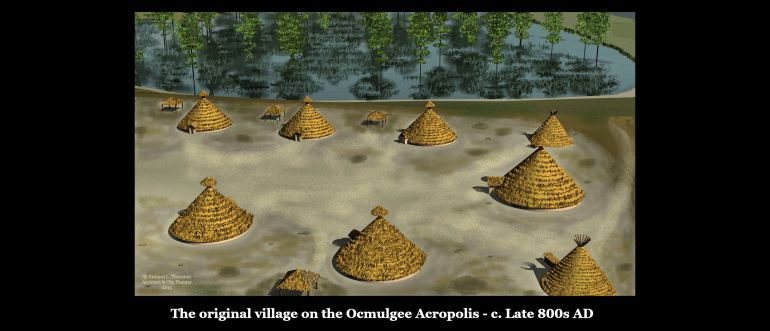
The tradition of twin towns
It was common for two ethnic groups to build adjacent towns in Central Tennessee, Eastern Tennessee, Northern Georgia and along the Savannah River. In our next article, we will introduce readers to the Aparakura town on the north side of the Miami River. It also contained a large mound, plus five smaller mounds . . . according to Spanish visitors.


Pretty cool, right? I don’t know if you believe in portals but the Miami Mall incident was quite close to that location. Believe I heard from locals down near Homestead that said it was once a ceremonial area.
LikeLiked by 1 person
There is something to portals. I do not know exactly what they are, but there have been too many accounts in the past that suggest their reality.
LikeLiked by 1 person
For sure, cant deny it. Its hard to find info on the Miami Mall incident, I believe they’re trying to cover up something. I’ve heard too many peoples accounts of seeing large shadow-like humanoid figures.
LikeLiked by 1 person