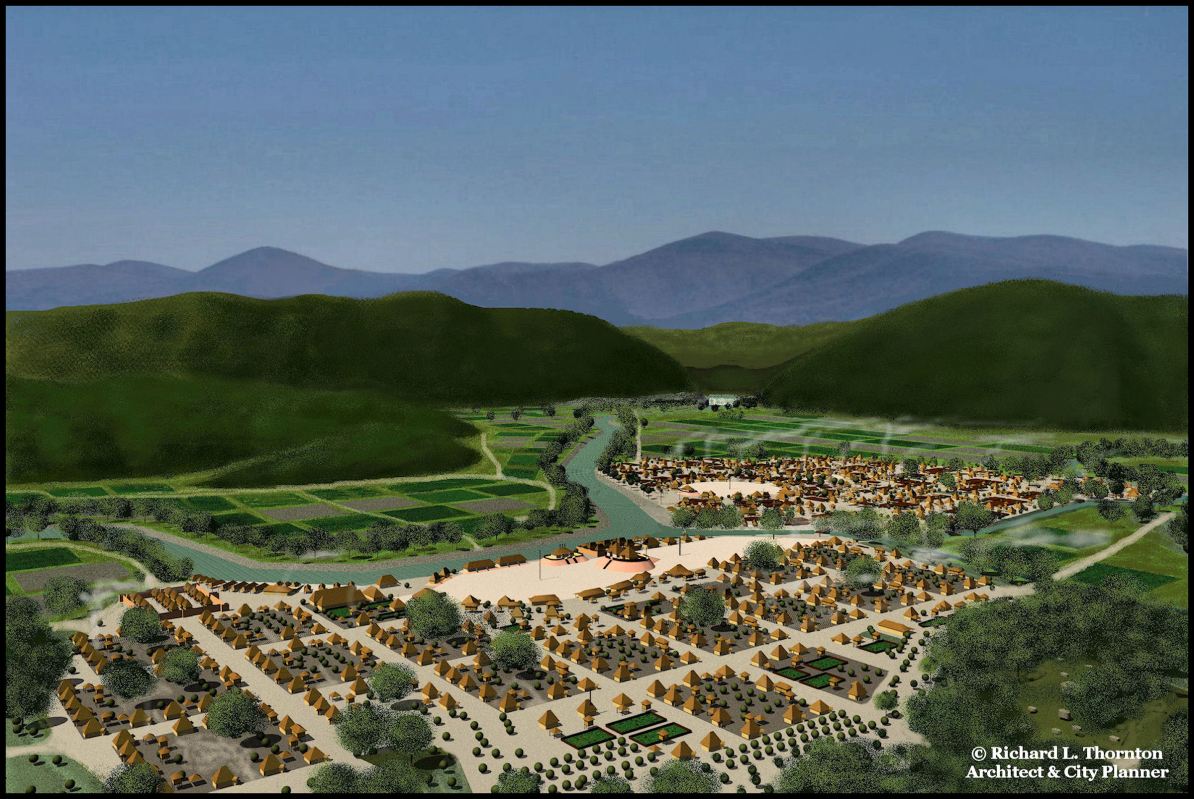
That is the reason that their capital had multiple villages. The Kansa lived in earth lodges. The elite lived in Mesoamerican-style rectangular houses on rectangular blocks with garden courtyards.
The Spanish spelling of this province, found in the De Soto Chronicles . . .Coça . . . is pronounced very similarly to their Mesoamerican name. The Creek Migration Legend is really just about the Kawsha or Kaushete, not other branches of the Creeks like the Muskogee-speakers, migration from southern Veracruz to the Upper Tennessee River Valley and then northern Georgia.
Cherokee Chief Charles Hicks intentionally located New Echota at the first Kansa village site in northwest Georgia, after the migrated around 1300 AD from an island near present-day Guntersville, Alabama. A foraging party from the Tristan de Luna Expedition stayed in this village, not the great capital, which was 10 miles upstream on the Coosawattee River.Some of the Spaniards had been part of the De Soto Expedition and so were shocked, when they saw only about 30 houses.
by Richard L.Thornton, Architect & City Planner
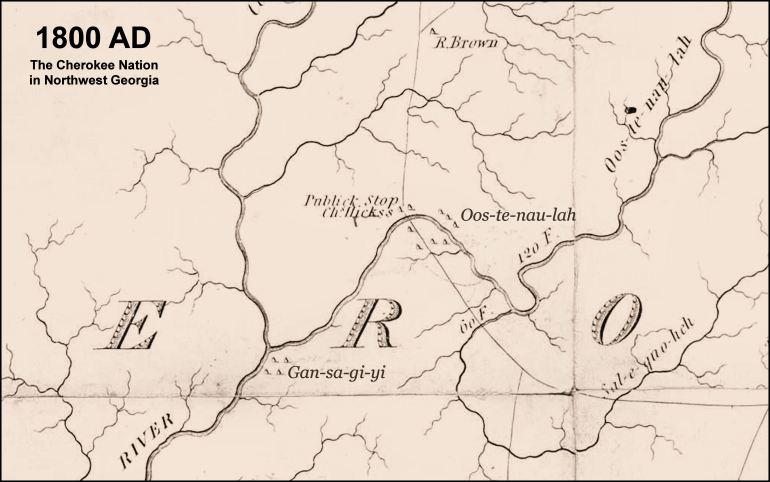
Gansagiyi is a Cherokee place name that means “Kansa-People-Place of.” Nearby Oostenaula was a Uchee-Chickasaw town until the United State gave Northwest Georgia to the Cheorkees in 1784
The heartland of the Coosa Province was severely depopulated around 1585, This was due to a severe drought and probably also the arrival of Europeans, allied with the Kingdom of Apalache. The silver crosses, found by archaeologists along the Coosawattee River were misinterpreted as being simple crosses given to local Natives by Spanish missionaries. These are French Huguenot crosses, which to this day are often worn by French Protestant women. The excavation of a silver mine at the base nearby Fort Mountain has been dated to about 1585=1600 AD.
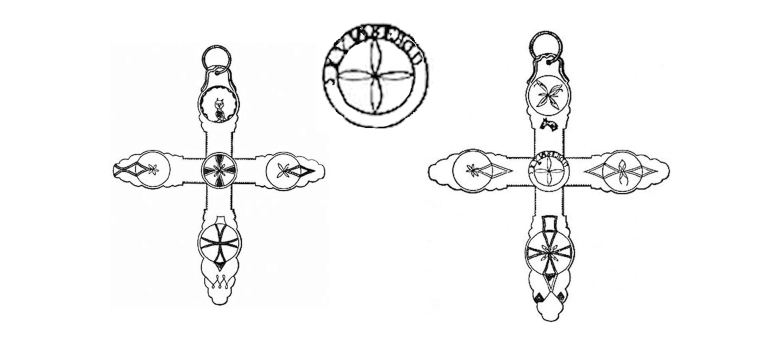
These crosses, unearthed in Northwest Georgia, are very similar to the crosses worn by three French Huguenot college coeds, who I camped with near Oaxaca, Mexico in late July of 1970. They are definitely not Roman Catholic crosses, since both have the Huguenot Double-Maltese cross on them.
Below are two popular documentary videos that I created for the People on One Fire Youtube Channel on the province of Coosa.
 The Americas Revealed