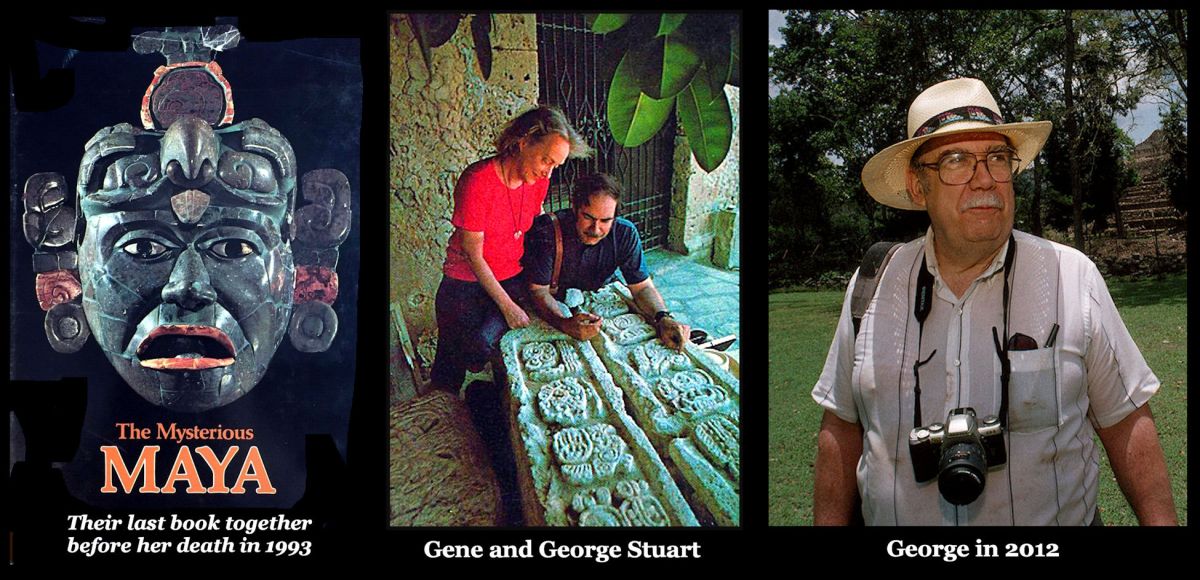
The National Geographic archaeologists from South Carolina, who presented the Maya Civilization to the world
A true story about the improbable confluences of several people’s life paths at two archaeological sites in Metro Atlanta and at the Maya city of Palenque, which totally changed their professional careers and brought about a new understanding of the past in the Americas.
This is an excerpt from the new book, Indigenous Architecture of the South Atlantic Coast, which is dedicated to George and Gene Stuart.
by Richard L. Thornton, Architect & City Planner
George, Gene and David (their son) Stuart have had an extraordinary influence on the world’s understanding of the Maya Civilization. George was employed by the National Geographic Society for 40 years, where he worked as an archaeologist, writer, photographer and administrator. He ultimately was selected as Senior Photographer and later Senior Editor of National Geographic Magazine. Gene was an archaeologist, writer and editor at National Geographic. Her final position was Director of the Book Publishing Division.
This dedication will provide biographical summaries of their professional lives then furnish personal glimpses of George and Gene from my perspective. You see . . . their lives, my life and those of David and Linda Schele became intertwined in most unanticipated ways . George’s articles and photos in National Geo articles, published while I was in high school and an underclassman at Georgia Tech are what propelled me to first want to be an architect and later, apply for and receive the first Barrett Fellowship from Georgia Tech. Gene played a key role in both promoting my goat cheese creamery and my architecture practice, while I lived in Virginia.
Life is indeed, like a box of chocolates
George Stuart
George Edwin Stuart III (April 2, 1935 – June 11, 2014) was an American archaeologist, cartographer, photographer and scholar best known for his contributions to Mesoamerican and Maya archaeology. He was born in Glen Ridge, New Jersey, but grew up in Camden, South Carolina. He considered himself to be a native South Carolinian.
He told me that at an early age, he became fascinated with Indian arrowheads . . . first in someone’s private collection and then that he picked up in newly plowed fields. As a teenager, he worked one summer at an archaeological dig near Camden. Then, while in college, he worked during the summer of 1955 under the supervision of the famous archeologists, Arthur Kelly and Lewis Lawson. Gene was living in Cartersville near the mounds at that time. Did they first meet that summer? Gene wouldn’t answer me. Methinks her silence meant yes.
The dig in Cartersville was also notable for bringing him to the attention of researchers working for the National Geographic Society in Yucatán, where he was hired as project cartographer, which led to a job as a draftsman with the magazine in 1960, after graduation from the University of South Carolina with a B.S. in Geology. He showed a talent for cartography and photography, which soon got him invited to a series of archaeological expeditions in southern Mexico and Central America.

Dr. Arthur Kelly – early spring of 1969 at Site 9FU14
How I became a different kind of architect
George Stuart played a key role in a famous series of articles on the Mayas in National Geographic Magazine, while I was in high school and an underclassman at Georgia Tech. For the next few years, I dreamed of seeing the ancient cities in person, but knew it was an impossible dream. I certainly didn’t even dream that I would meet and become friends with the photographer and one of the authors of those famous articles.
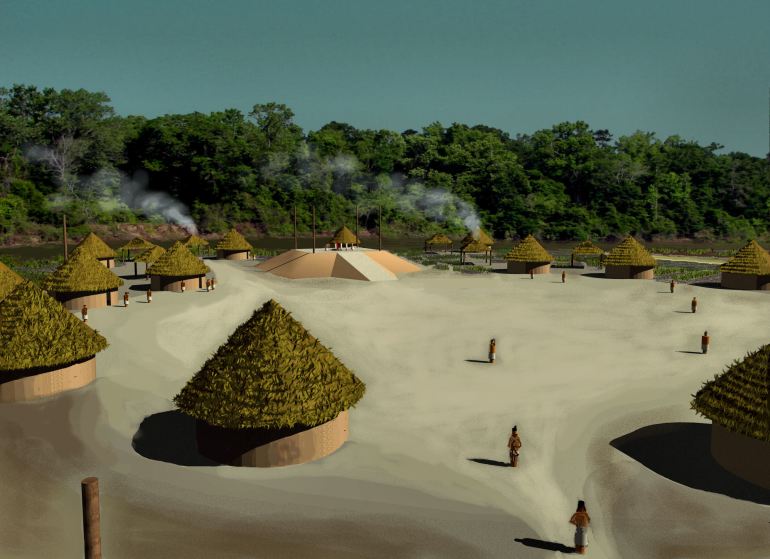
An architectural rendering of 9FU14 that I did about 14 years ago on the computer
My change of life’s direction occurred at the 9FU14 archaeological site on the Chattahoochee River near Six Flags Over Georgia. The same Dr. Arthur Kelly, who hired George, hired me to draw an ink-on-mylar plastic site plan of the archaeological site, when I was a sophomore. A year and a half later, Dr. Kelly endorsed my proposal for the Barrett Fellowship.
The fellowship required me to take five additional courses at Georgia Tech. This was followed by three months in Mexico, where I would visit all the major Pre-Columbian city sites in Mexico. However, my fellowship coordinator, Dr. Román Piña Chán tossed my Georgia Tech syllabus in the trash can then replaced it with one that immersed me into Mexican culture and took me also to remote, unmapped regions, where the ancient ruins had not been restored. Instead of traveling by passenger jet or chartered tour buses, I went by first, second or even third class common carrier buses.
It was on a first class bus that directly connected Villahermosa with Palenque, that I would get to know “David and Linda from Mobile” better. Had I taken the original package tour, I probably would have never met them.
An inconspicuous contact with unforeseen consequences
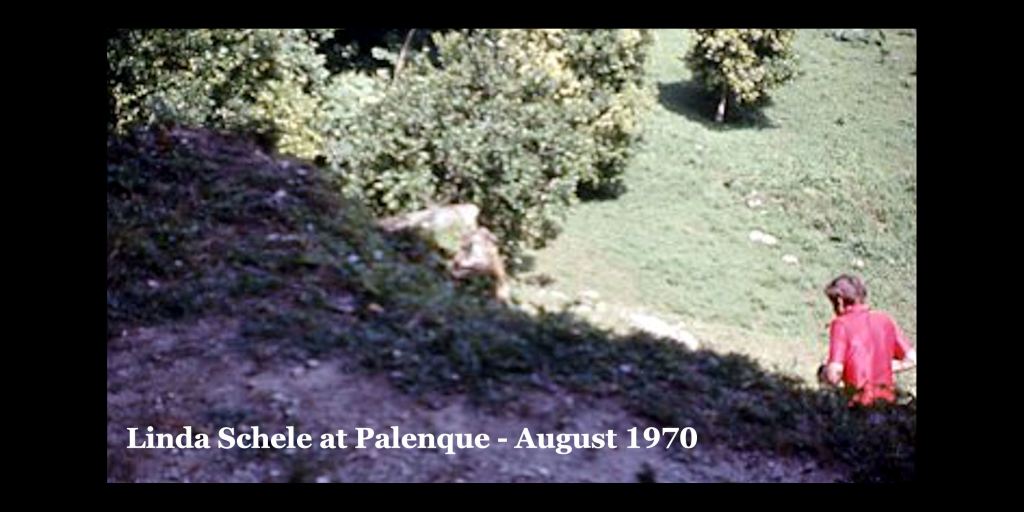
While in Yucatan on my fellowship, I had repeatedly bumped into a couple, who I listed in my journal as David and Linda from Mobile. David was an architecture professor at the University of South Alabama, who had received a grant to photograph some Maya buildings, while on a two-week vacation in southern Mexico. Linda was a Masters Level art student at USA. We became much better acquainted on the bus ride from Villahermosa to Palenque in mid-August 1970.
Whereas studying Palenque was required by my three-month-long fellowship syllabus, David and Linda told me that the two-hour bus trip to Palenque was a spur of the moment decision at the end of their two week long vacation. That decision would change their lives and history.
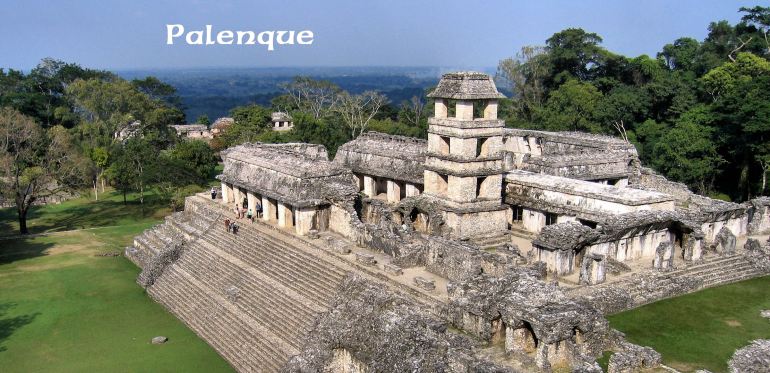
We first toured Palenque under the guidance of the famous Moises Morales. That night, Sra. Morales cooked the meals at the then-modest Palenque Inn. Their young son, Alfonso, served our table. Forty years later, Archaeologist Alfonso Morales, Chief Archaeologist at Chichen Itza, would play a key role in the premier of the History Channel’s, “America Unearthed.”
The plot of the program was my discovery of architectural, linguistic and genetic evidence that substantial numbers of Maya commoners had settled in Georgia. In that program Alfonso pointed out Maya inscriptions, which described visits back and forth between the lower Southeast and Chichen Itza. Later in the program, two scientists at the University of Minnesota announced a 100 % match between attapulgite, mined in Georgia and the Maya Blue stucco on the buildings in Palenque!
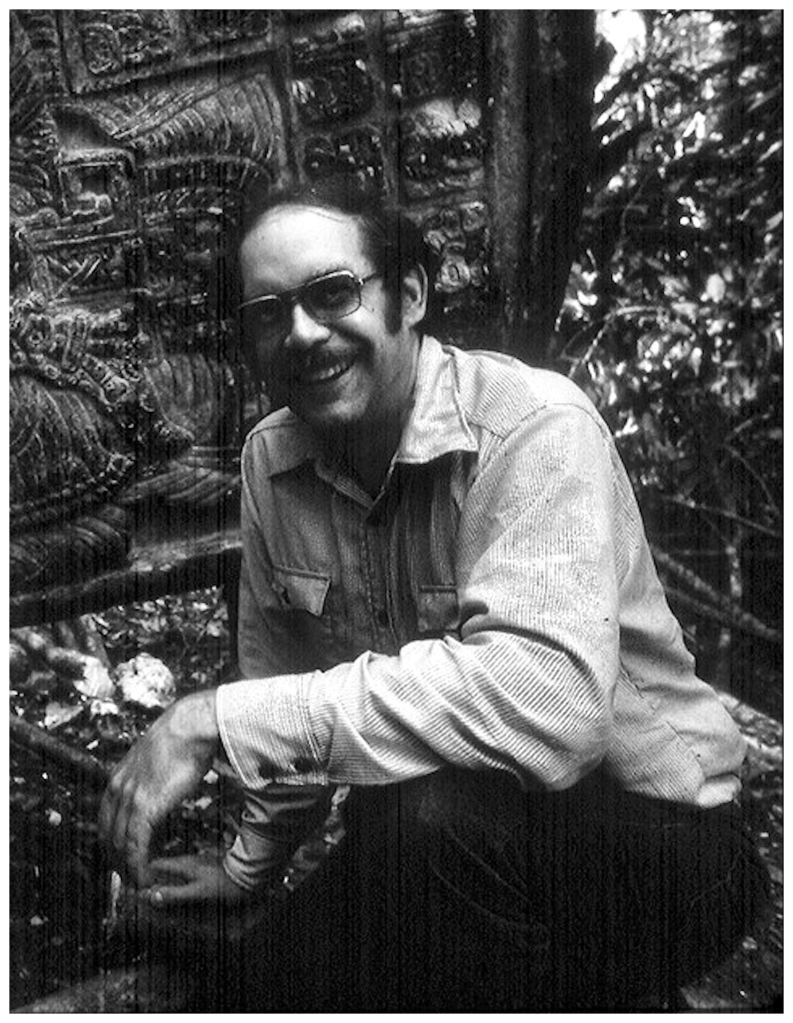
David, Linda and I first met George Stuart by happenstance in the ball court of the Palace at the beautiful Maya ruins of Palenque, Chiapas, Mexico. At the time, he had an undergraduate degree in Geology from USC and had just been awarded or would soon be awarded an M.A. in Anthropology from George Washington University. He was photographing stone engravings.
He introduced himself as an archaeologist from South Carolina, who was on his way back home from a site in Guatemala. No mention was made in my presence of him working for National Geo.
David and Linda (Schele) from Mobile continued to chat with George from South Carolina after I left the palace in order to climb the creek, flowing through Palenque, to its source in a mountainside temple. That conversation resulted in Linda being invited to a workshop at Palenque the next summer, co-directed by George. She would switch from a Master of Arts program to Anthropology. Fifteen years later, after collaborating with George’s son, David, she would co-write, Blood of Kings . . . the first book to translate Maya inscriptions.
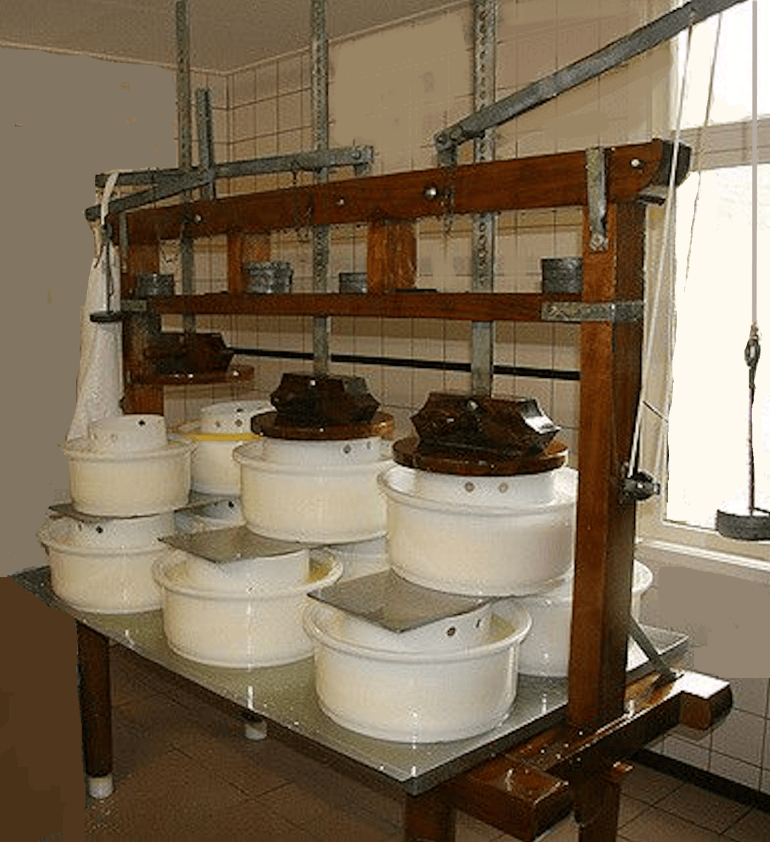
Reconnection at the dairy goat farm in the Reems Creek Valley
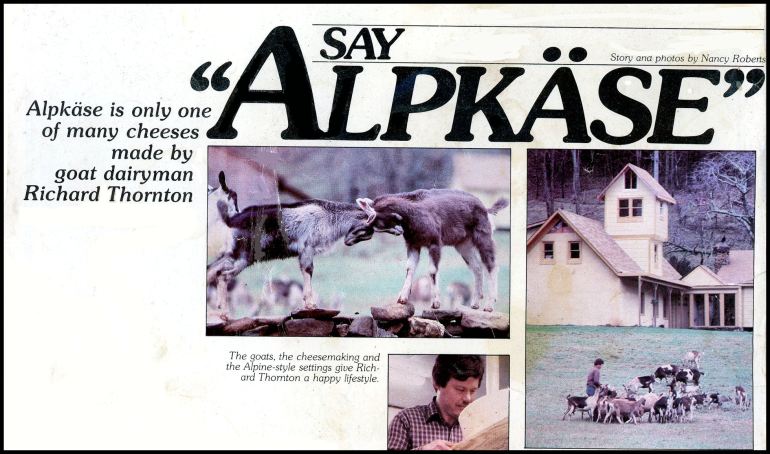
I would never see David and Linda Schele again, but George Stuart would appear at the front door of my farmhouse in the Reems Creek Valley near Asheville, NC late n the autumn of 1983. By that time, he had received his PhD in Anthropology from the University of North Carolina in 1975, but primarily now was involved in photography, not excavation of ruins. Handing me his business card, “Senior photographer of National Geographic Magazine,” he asked to take photographs of my farm for a book on the Blue Ridge Mountains. My former wife and I started the second licensed goat cheese creamery in the nation.
There were Mesoamerican ceramics on display in the living room. He never mentioned them nor told me that he was an archaeologists. He did mention that he and his wife owned a vacation home in Barnardsville, NC . . . which was “over the mountain” from our farm.
Most times, when George was staying at his vacation home, he dropped by the farm to say hello and buy goat cheese. He also took photos for another book on the Appalachians. Especially, because he never mentioned being an archaeologist and the fact that his hair had turned gray, I didn’t get the connection to the George at Palenque.
That changed in October 1985, when Gene accompanied George for the first time to our farm to pick apples, squeeze fresh cider and feast on barbecue. George asked me if I had seen the new plazas and fountains in Downtown Asheville. He added, “Someone knows what they are doing. Downtown Asheville looks entirely different than it did seven years ago.”
I responded, “Thank you! I designed those plazas and fountains, plus the plan for the entire downtown. I led the downtown revitalization program for the first five years. Now I am in private practice.” George and Gene were shocked. They thought that I had gone to the mountains to join the “back to the earth” movement that was being promoted by Mother Earth News Magazine in nearby Hendersonville, North Carolina.
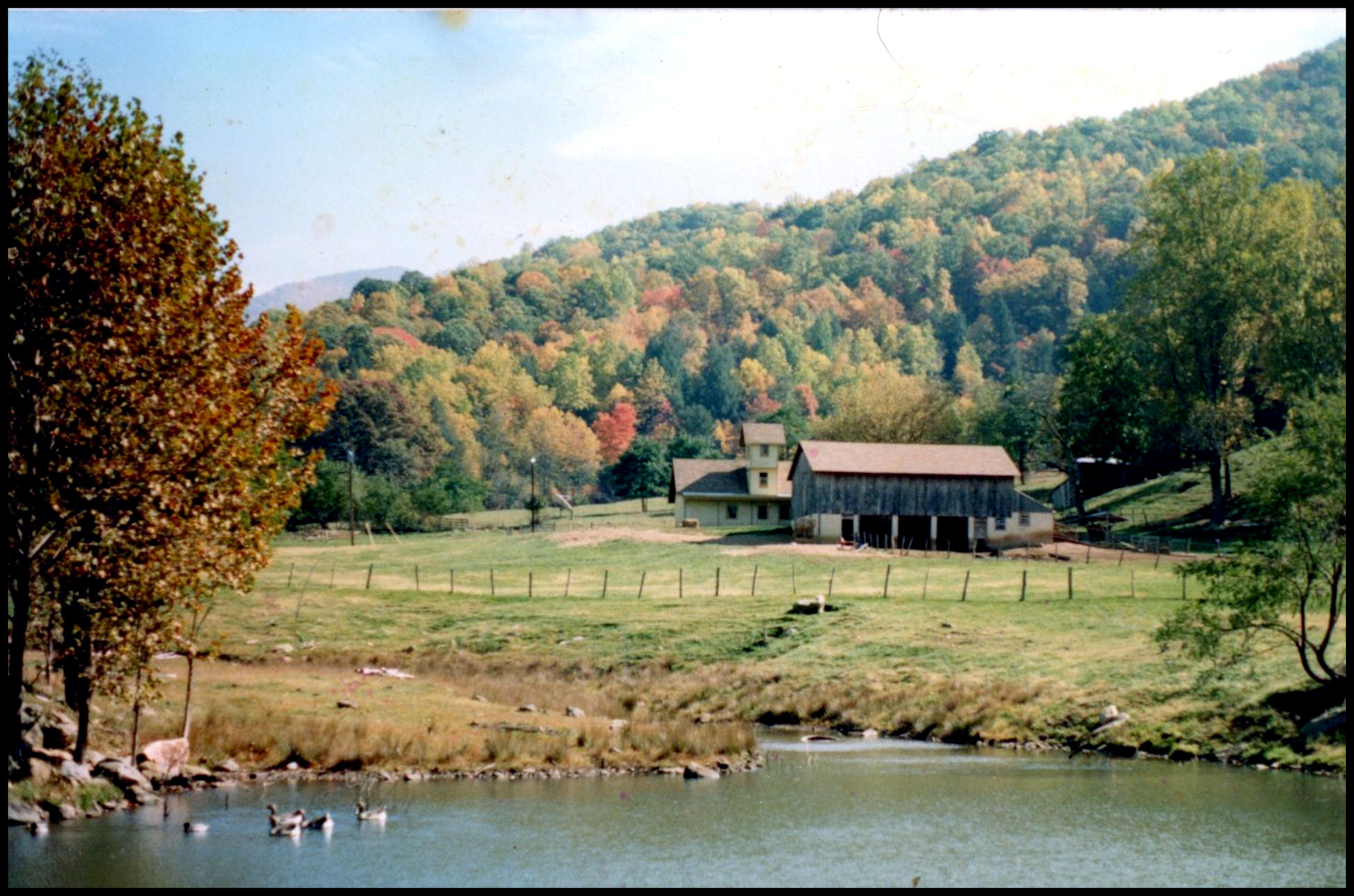
Our farm in the Reems Creek Valley of North Carolina
They then apologized profusely for “talking down to me.” They didn’t discuss their professional activities or educational experiences, because they assumed that I was someone, who had dropped out of college, but was still intelligent. Another big surprise was to soon follow.
Jene mentioned that their son, David, had been awarded a MacArthur Fellowship to study with the famous anthropologist, who had already been able to translate much of the Maya writing system. Off the cuff, she added that George had first met Linda at Palenque in August of 1970, when she was an art student. Bingo!
I had not written down the last name of David and Linda in my journal. I actually purchased Linda’s first book on cracking the Maya glyphs, Blood of the Kings, without realizing that I knew her. I asked George, if he remembered me being with David and Linda at Palenque. He first said know then . . . oh, there was an architecture student there . . . that was YOU!
We will next shift to telling readers more about the life of Gene S. Stuart. After the barbecue, Gene was in communication with me, fairly frequently. I saw George only five times, while living in Virginia.
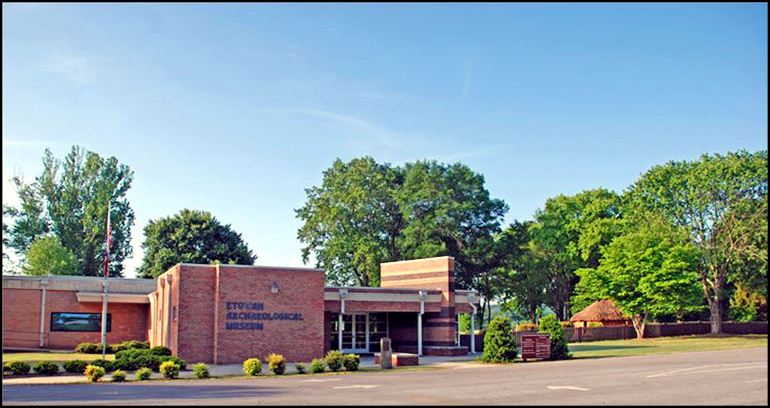
Etowah Mounds Museum
More about Gene S. Stuart
Gene Strickland Stuart born on October 22, 1930, in Goldville (now Joanna), South Carolina. Stuart earned a bachelor’s degree in English and Fine Arts from the University of South Carolina. She told me that she was not particularly interested in archaeology in college. After graduation, she was hired as an English and Art teacher by the Cartersville, Georgia School System. I asked her why she intentionally sought a job outside South Carolina. She said that at the time, Georgia was paying its teachers much better than South Carolina, plus she wanted to live somewhere different than the She purchased a house near Etowah Mounds, very close to where I lived 40 years later.
The archaeological digs at Etowah Mounds began in 1954. Watching the teams, under the supervision of Drs. Arthur Kelly and Lewis Larson whetted her interest in anthropology and the architectural traditions of the Creek Indians.
She began taking anthropology and archaeology classes at the University of Georgia then embarked on a master’s program in anthropology and art history at UGA.
She later pursued courses toward a combined master’s in art history and archaeology at the University of Georgia, and further developed her writing skills in creative American Antiquity at the University of North Carolina at Chapel Hill. This was presumably, while George was working on his PhD at UNC.
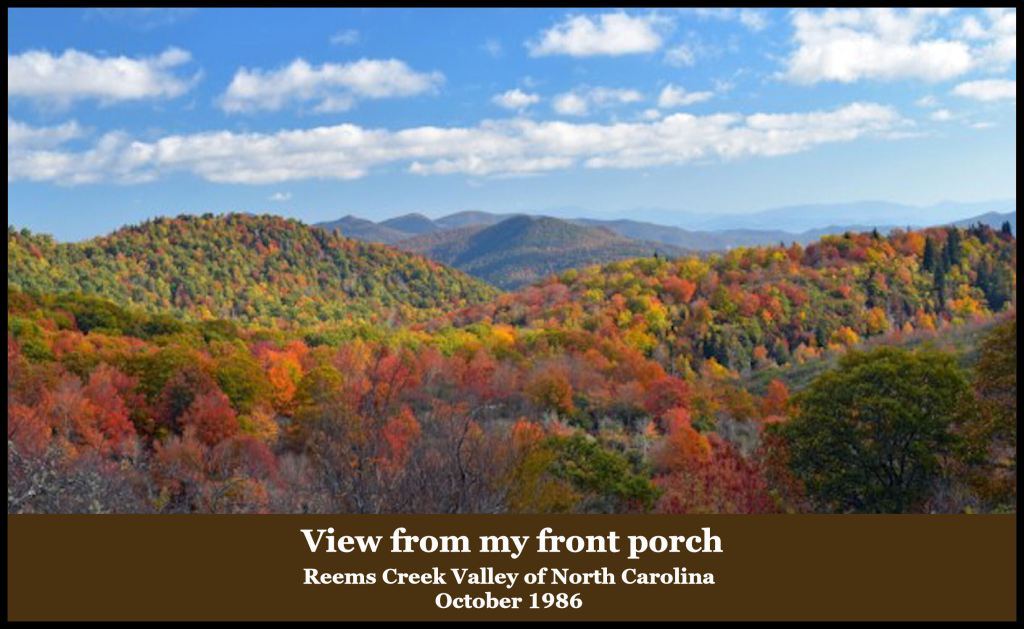
Becoming my No. 1 Cheerleader
As we feasted on barbecue and Brunswick stew and enjoyed the magnificent view of fall color on the mile-high mountains across Reems Creek, George and Gene remarked that we had a “million-dollar” view. I confided that one cannot eat beautiful views. We probably would be moving elsewhere soon.
Asheville had never recovered from the terrible three-year-long Reagan Recession. I had some very good clients in the Greek and Jewish communities there, but Asheville had way too many architects for the amount of work to be had.
Our nearest cheese customers were 235 miles away in Durham, NC. Most of the cheese was going to Virginia, Washington, DC and New York City. We initially had planned to locate to near the booming tourist mecca of Alpine Helen in Northeast Georgia. However, after the Atlanta Journal-Constitution ran a two-page-full color article on our cheese creamery, we had not acquired a single customer in Georgia.
Gene suggested that we relocate to Northern Virginia. I responded that Northern Virginia was at least 400 miles away. That was a long distance to haul all of our goats, farming equipment and dairy equipment. She responded that we should still consider the option, since that was where our cheese was selling.
There was a note, plus several real estate ads from Gene inserted in the Stuart’s Christmas card. She had asked around to her friends in the Winchester and Front Royal area. The region was booming. Winchester desperately needed more architects, with historic preservation experience, while Shenandoah County did not have a single architect.
Because strict zoning ordinances protected historic farms from redevelopment, we could buy a historic farm, twice the size of our mountain side farmstead with a huge house, massive barn and several outbuildings for about $35-50,000 less than what our farm would sell for. The Shenandoah Valley soil was vastly more fertile than the lands around Asheville. I was interested. I drove up to the Valley in February 1986. I saw several farms, we could afford with houses like ones you see in historic preservation magazines. First, we had to sell our house in North Carolina, though.
Later that year, Gene wangled me an invitation to sell my cheese at the Shitake Mushroom Festival in Front Royal, VA. Shortly, after Gene and a friend stopped by my booth, someone working for former Gov. Charles Robb* came up to me and asked if I could present a wheel of cheese to Mr. Robb on behalf of Virginia farmers. Robb had noticed that I had a clean-cut, military look to me, unlike the Virginia mushroom farmers at the fair. I said yes.
What I did not know was that Robb was announcing his plans to run for US Senator on that scaffold immediately before my presentation. Furthermore, he was considered to be a strong candidate for President. His father-in-law was Lindon B. Johnson. That evening, my cheese presentation was seen on all three major networks throughout the nation, plus that new one, called FOX. I am certain that Gene Stuart had something to do with that.
It was a pre-email world. Periodically, Gene sent me small note cards, asking when we were moving. Our farm in North Carolina finally sold in July 1987. I rushed up to Virginia and found a Colonial Era house that needed lots of work, but it had a huge barn, plus a former hen house that I could use a shop.
Several times, Jene brought her female friends to look at the work progress. George never came with her. Out of the blue, the U. S. State Department offered to sponsor a grand opening for the operation to celebrate June 1990 as National Dairy Month. The only stipulation was that we agreed to allow delegations of farmers and government agricultural officials visit the farm. Again, I strongly suspect that Gene or one of her friends made that possible.
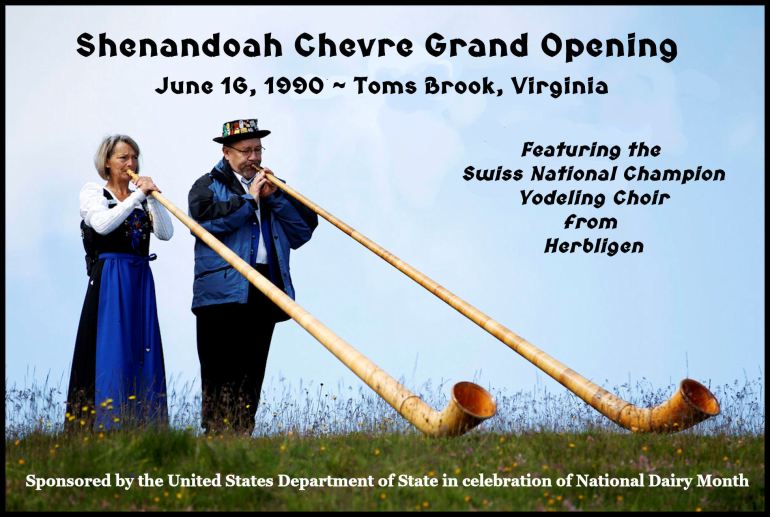
After the grand opening, Gene and several of her friends began inquiring about my marital situation. Gene finally confided in me that they had been appalled what my wife said after several glasses wine. She told them that she only married because I was the only man she knew, who had a steady job. I was nothing buy an old plow mule to her. She had been trying to make me as miserable as possible so I would get girlfriend. Then she could divorce me and get all the money from selling the restored house, farm and cheese creamery.
Gene reminded me that in Virginia and Maryland, unless there are young children, the marital properties are always split in half . . . unless one spouse has physically abused or tried to kill the other. She said that my wife was not only evil, but delusional. I needed to get a divorce, ASAP. She was right, but I moved too slowly on that prospect.
Eventually, Gene and her friends began introducing me to intelligent, educated women, who they thought would treat me the way that I deserved. Gene’s friends also promoted my cheeses at their favorite restaurants and gourmet stores, plus hired me as their architects for restorations of historic buildings. I didn’t have the time to be a playboy and lived too far away from Washington, to “date” any of these potential new wives, but the support of Gene and her friends was a morale booster.
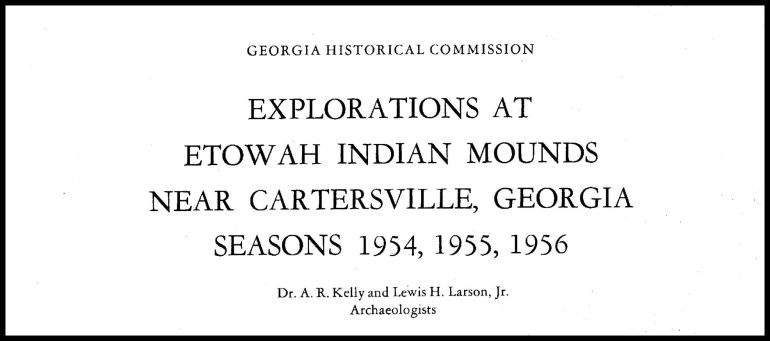
The archaeology report, which 21st century visitors to the site are told, doesn’t exist!
Dirty little secrets at Etowah Mounds
In 1991, George and Gene were writing an article on Etowah Mounds for National Geo, but didn’t tell me. Guess they still subconsciously thought of me as a marginally educated goatherd and master cheesemaker. The fact was that I had taught Pre-Columbian Architecture at Georgia Tech prior to moving to Asheville to direct its Downtown Revitalization Program. Each year, I took the class to Etowah Mounds, where archaeologists Arthur Kelly and Lewis Larson spent about two hours with us. As soon as, the October 1991 issue of National Geo arrived, I recognized something was terribly wrong.
*The article was published in the October 1991 special issue titled “1491: America Before Columbus,” the segment “Etowah: A Southeast Village in 1491” explored the complex social structures, elite nobility, and monumental sacred earthworks of this prominent Mississippian culture site in northern Georgia.
During the Stuart’s visit to Etowah Mounds and University of Georgia, someone gave them erroneous information, which resulted in several prominent, but highly flawed exhibits, when the museum was remodeled n the mid-1990s.
(1) At the start, the Stuarts were told that the archaeologists never wrote a report on Etowah Mounds project, which lasted from 1954 through 1956.
- Not true. Each year, Dr. Kelly would hand out copies of the report to our class. I still had two copies in my library. Also, Dr. Kelly knew that most of the original towns of Etowah were on the south side of the river. The river channel moved substantially southward during a catastrophic flood around 1200 AD. The same thing happened to the Lamar Village site in Ocmulgee, during the same massive storm.
(2) The town was founded around 1000 AD on land never lived before and had three occupancies, which ended around 1375 AD.
- Not true. In the mid-1880s, the Smithsonian Institute completed excavated mounds on the town site, which contained Deptford, Cartersville Stamped, Swift Creek, Woodstock or Napier pottery, which predated 1000 AD. Some of these demolished mounds also contained Mississippian Period pottery.
- Not true. Dr. Kelly excavated a four Creek occupancy layers dating from around 1000 AD. The fourth level, erased from current texts was occupied from 1375 AD to 1700 AD. Most of the large Creek towns in North Georgia were abandoned after the horrific 1696 AD smallpox epidemic. There are photographs of the fourth level in his report.
(3) The famous Etowah Marble statues represent a rare form of artistic expression in the Etowah River Valley.
- Not true. Dozens, if not several hundred stone and ceramic statues and figurines have been found in the Etowah Valley and within the mounds. Those excavated by archaeologists from the Northeast were hauled back to the Northeast. Those in homes from the pre-Civil War period were stolen by Union soldiers of the First Ohio Volunteer Regiment, stationed at Etowah in 1864 and by carpetbaggers after the Civil War.
(4) The two marble statues were unearthed by archaeologist Lewis Larson in a shallow log-lined pit on the top of Mound C. They had been damaged when they were hastily buried as an enemy was breaking through the log palisade walls of the town.
- Not true: First, all the visible part of Mound C was completely destroyed by the 1886 and 1925 archaeological digs. What was on display in the museum, until recently, were artifacts found as the Georgia archaeologists dug down to the original ground level.
The marble statues were found in a collapsed log temple at the base of Mound C. They were damaged, when they fell from a carved wooden altar that had decomposed. Numerous temples were built around and over the log temple, causing it collapse.
- I briefly mentioned to Gene that I had Dr. Kelly’s planning report for Etowah Mounds and that it contained information that was different than the National Geo article. She responded that they had to utilize the information, which was provide by professors at UGA. “George was not working at Etowah, when the marble statues were found.”
I could tell that something “political” had happened. Gene had lived next to Etowah Mounds and frequently watched the work throughout the excavation. In addition, she was taking courses from Dr. Arthur Kelly. She knew that my criticisms of the article’s inaccuracy were right on target . . . but she had been muzzled. We may never know what exactly was going on back in 1991.
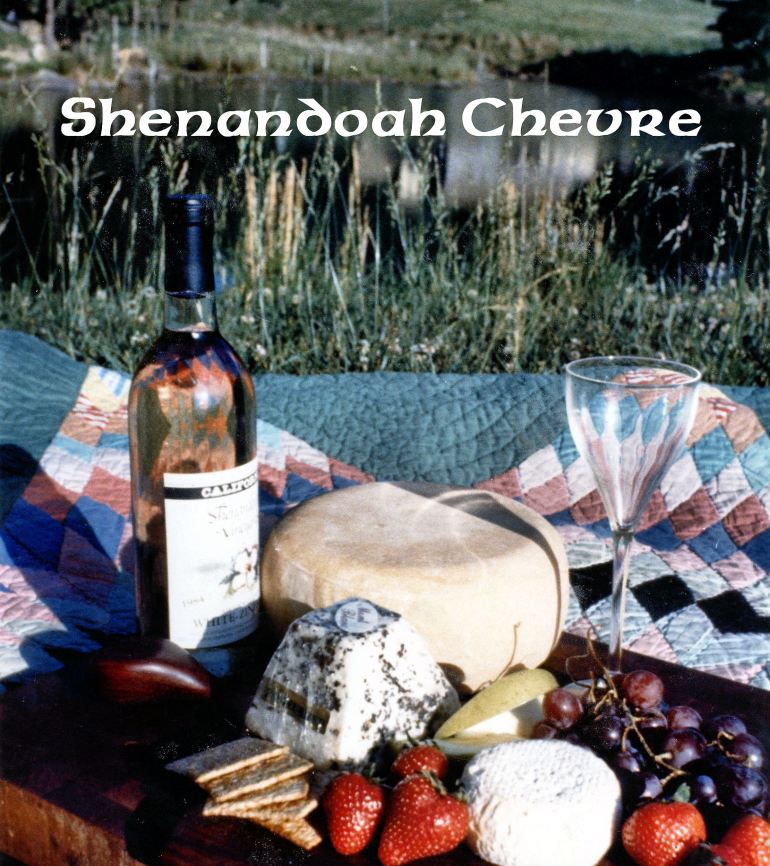
Goat cheese promotion
In September 1991, Gene persuaded her friend, Karen Kathy, of the American Institute of Wine and Food, to let Shenandoah Chevre put its cheeses in the competition at Union Station with other gourmet foods, produced in the United States. On October 21, 1991, I was presented an award in person from the competition’s judge, Chef Julia Child.
I was invited to two parties at the Stuart’s home in Chevy Chase, where I saw George again. My wife found excuses not to accompany me. Gene showed up unexpectantly on a weekday in October 1992, when I was photographing the finished addition for an 18th century farmhouse in rural Frederick County, VA. That’s where I took the only photo that I have of her from the time living in Virginia.
Then in February 1993, Gene invited me and my wife to be their guests at the posh Occidental Restaurant, where my goat cheese was featured on the menu. The invitation for my wife was a formality. They didn’t expect her to come. Her excuse this time was that she had to grade papers on a Saturday night.
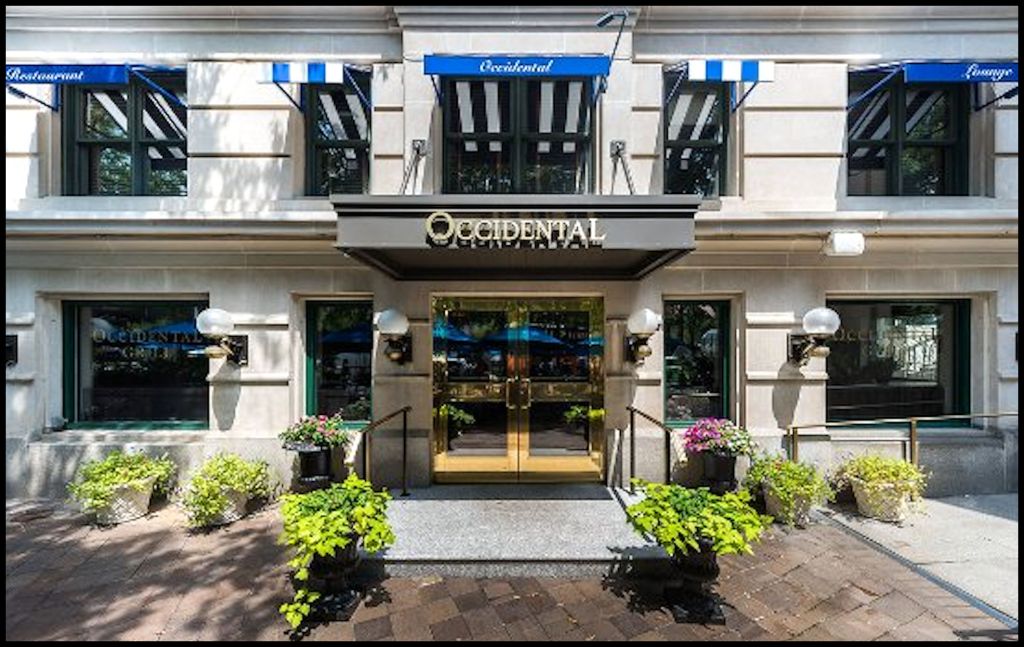
Gene was elated, when I asked permission to bring Vivi as my escort. She was in town and staying in the guest quarters of our mutual friends, the Danby’s, in Alexandria. Vivi was a 1/4th Tamulte Maya – French actress, singer and model, who I met at the 1990 Smithsonian Administrators Christmas Party. She lived in France, but was developing a winery that I designed in northern Virginia. Once I was legally separated, our relationship could easily become visible to the world.
George and Gene had co-written Lost Kingdoms of the Mayas. It had just been published and they had autographed copies for us. Vivi had a degree in Ancient European History from the Sorbonne and had even considered getting a PhD in Anthropology from a university in Mexico. It was the only time that I remember having long discussions with the Stuarts about the Mayas.
Alas, Gene had visibly aged since I saw her the previous October. She looked tired and frail. She was dying of cancer. However, being to chat about intellectual subjects with Vivi made her smile.
It would be the last time that I ever saw Gene. She died of cancer on August 8, 1993. I did not learn how seriously ill she was in February or of her death until much later.
Cambridge University Press stated in her obituary, “Gene Stuart’s legacy lies in her ability to make archaeology vivid and engaging for both academic and general audiences. She was a rare figure who could convey the importance of Pre-Columbian cultures without oversimplifying them, and her work continues to influence how ancient American history is presented to readers.”
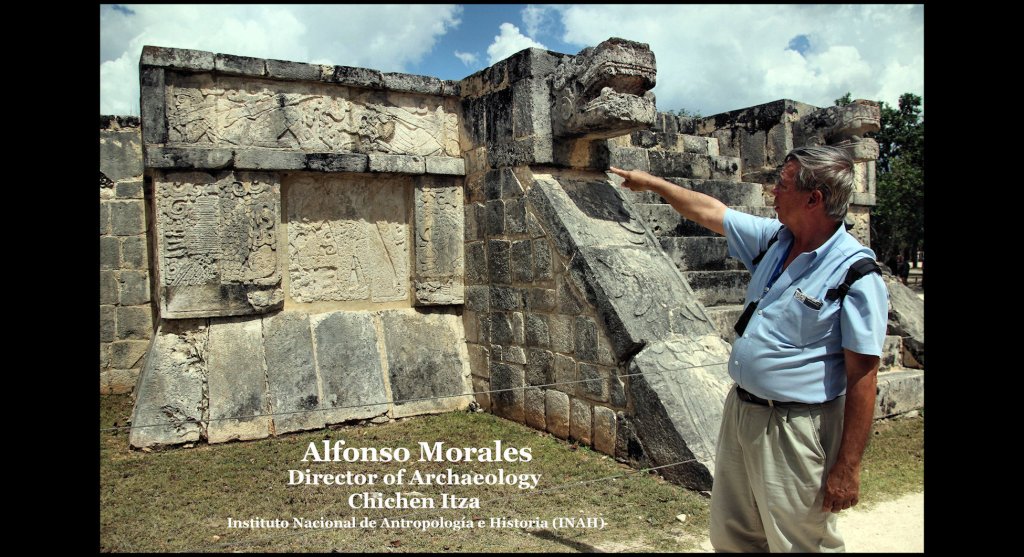
Alfonso Morales in the premier oft “America Unearthed” – Dec, 21, 2012
Dr. Alfonso Morales was to play a key role in linking the Creek Indians of Georgia with the Itza Mayas. As a teenager he had served meals to Georgia Tech student, Richard Thornton, at his parents’ Palenque Inn, not knowing that 42 years later, both he and Richard would be key cast members of a program that has become the most watched History Channel one-hour documentary. After Linda Schele and colleagues translated many of the stelas in Palinque, work began on the important Maya city of Chichen Itza. Palenque was the Itza capital during the Classic Period.
Morales had long been puzzled by some prominent river and mountain names in Georgia, which he knew to be Itza or Chontal Maya words. Georgia archaeologists were not aware of this. Mexican archaeologists had always assumed that that Mesoamerican traders reached southeastern North America, but never researched the supposition further. Morales was able to find inscriptions, describing many voyages to Florida and Georgia from northern Yucatan, plus visits to Chichen Itza by prominent leaders from a city-state in the southern tip of Florida, plus several large towns in what is now the State of Georgia.
Morales also found several images, engraved in stone at Chichen Itza or Paleqne, which contained all the artistic elements, which could found in shell or copper art at Etowah Mounds. For example, figures of art, produced in both towns were portrayed carrying human heads or the effigies of human heads, mounted on a stick. The headdresses of the figures in Etowah were identical to those of either the Itza Maya Sun God or the patron deity of Maya traders, Kukulkan (aka Quetzalcoatl). He could not find the same similaries with the art produced in large towns farther west of Etowah, such as Cahokia and Moundville.
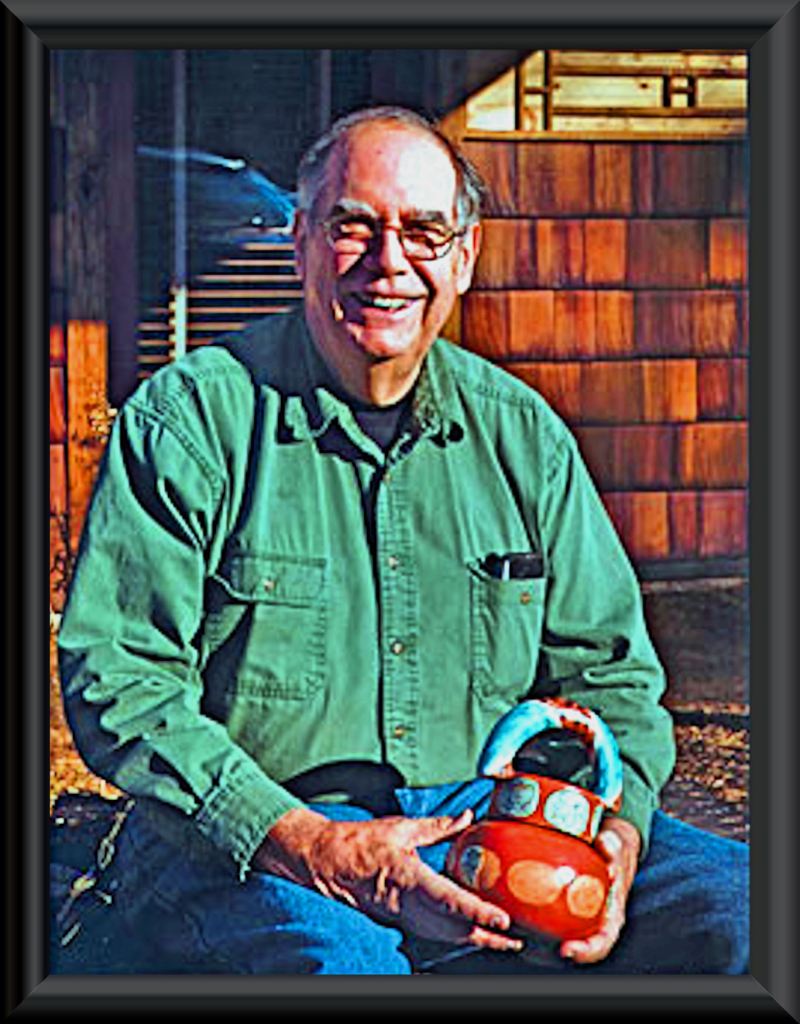
The final 20 years of George Stuart’s life In 1994, George remarried to Melinda Young Frye. He retired from National Geographic in 1998, but it was hardly retirement. “I’ve got a whole bunch of things I want to do,” he said. And he did. He and Melinda founded the Boundary End Archaeology Research Center (formerly the Center for Maya Research) at their home in Barnardsville, which helped make studies of Maya hieroglyphic research widely available
He died of cancer at his vacation-retirement home near Barnardsville, North Carolina on June 11, 2014 (age 79).

