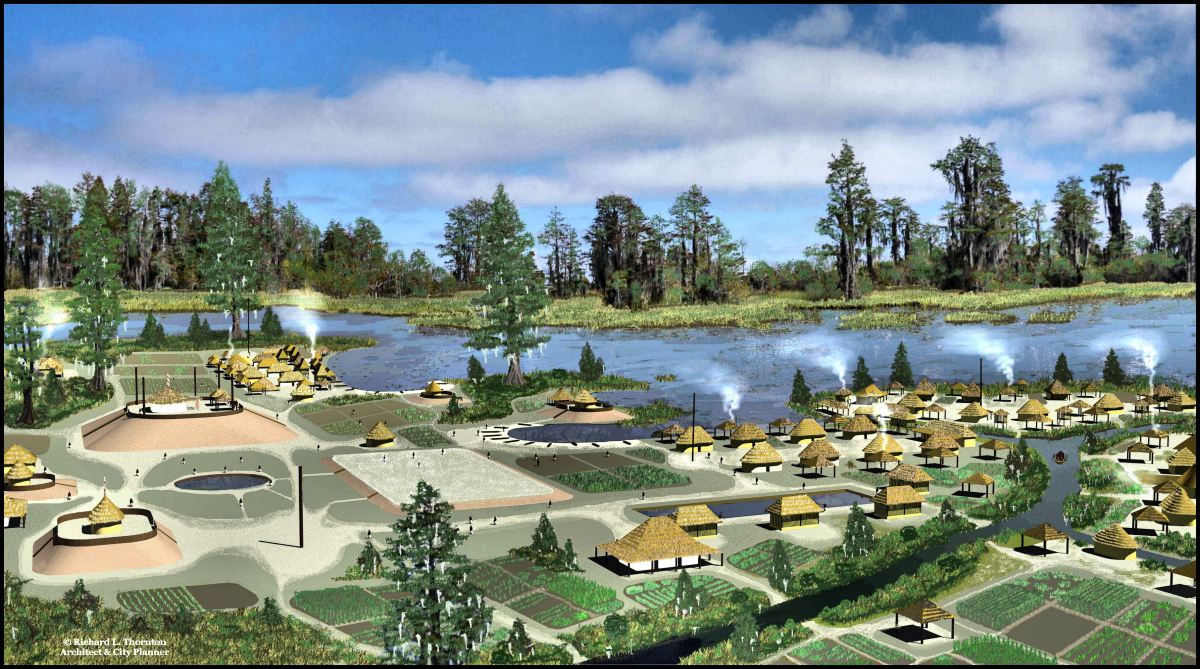
Interpolating genetics, linguistics and architectural analysis is creating a starkly different understanding of the Southeast’s past . . . that has nothing to do with pottery styles.
Did the Aztec farmers living around Cumberland Island, Kings Bay and St. Marys, Georgia create the floating islands in the Okefenokee Swamp? Sixteenth and early 17th century maps show the Okefenokee as a much larger,shallow lake similar to Lake Okeechobee with one large island in it.
Even as late as the founding of Savannah in 1733, eyewitness accounts, such as German artist George Von Reck, described the cultivation of pineapples, cacao and a tropical type of small, sweet squash along the mouths of the St. Marys, Altamaha and Savannah Rivers. Pineapples were in large fields near St. Marys.
Southeast Georgia is where the branches of the Creek People, who originally lived in northeast Georgia, became master farmers of subtropical and tropical crops. Even prior to moving southward into Florida, they were being called Seminoles.
Twenty years ago, when I was doing research for the Muskogee Creek Nation, I found some stream and village names along the Chattahoochee River in southwest Metro Atlanta . . . such as . Anneewakee Creek (also called Annawaka Creek) . . . which were Nahua (Mexica~Aztec), Taino and Chontal Maya words. Feral sweet potatoes still grew in the Chattahoochee River, where they had spread from cultivated Pre-Columbian fields. I thought it impossible, so I did not mention them to my clients.
by Richard L. Thornton, Architect & City Planner
The past year’s research in review
Last month, a Canadian journalist asked me what my four biggest discoveries were in recent years. I told him that they were:
1. South Carolina and Georgia had formerly been occupied by dozens of ethnic groups from around the Americas, northern Europe, Ireland and Polynesia.
2. After 12 years of searching, I had finally found the site of the Spanish fort, trading post and mission, where Richard Brigstock had stayed in 1653 (Robertstown, GA near Unicoi State Park).
3. Linguistics had revealed that Santee, SC, Charleston, SC. Parris Island, SC, Savannah, GA, Darien, GA, Helen, GA, Athens, GA, Smyrna, GA and Downtown Atlanta had once been Chontal Maya trading towns. Actually, the entire length of the Chattahoochee River between Peachtree Creek and Yonah Mountain was probably a Chontal Province. It was named Katawpa (Crown – place of).
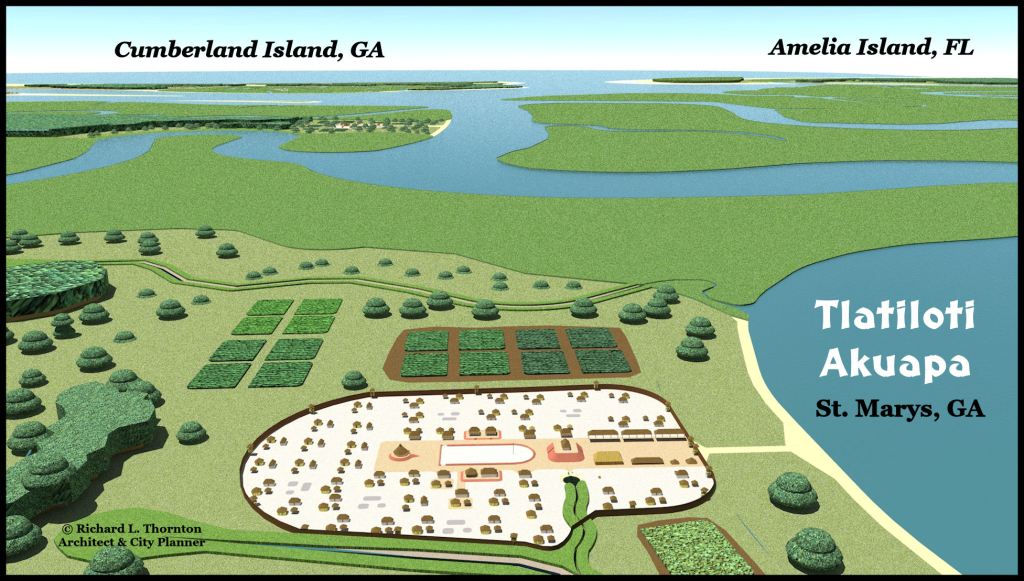
4. Most of the villages around St. Marys Sound, the lower St. Marys River, Kings Bay and Cumbrland island had names that could be easily translated with a modern Aztec dictionary. There were also a few Aztec-named villages on the Altamaha River.
Have I gone bonkers?
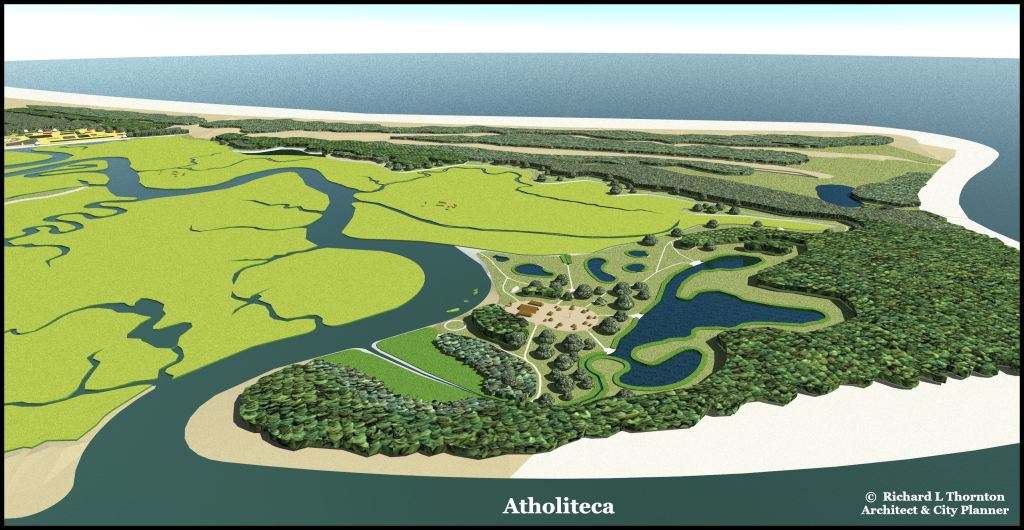
It seemed impossible that relative newcomers to Central Mexico would have a colony on Southeastern North America. Yet, several village names were straight out of a modern Aztec dictionary. The Indigenous name for the Kings Bay U.S. Navy Submarine Base was Tēlpochcalli, which was an Aztec school for commoners. The original name of St. Marys, GA meant “earthen pyramid surrounding by marshes.” The first part of the provincial capital’s name , Tlatiloti Akuapa, was the root word the city of Tlatelolco. The town site on Cumberland Island, where two fraternity brothers and I camped in August 1971 was Atholiteca, which means “Corn Beer People.”
I telephoned Dr. Don Yates of DNA Consultants, Inc. and asked him if I had gone bonkers. He said, “NO! I have been finding Aztec and Chichimec DNA in both Creek and Cherokee clients Entire clans of the Cherokees were probably Chichimecas from northern Mexico. The Creeks with Nahua genes are probably descended from the Mexica (Aztecs), but this is not certain. However, if they were speaking Aztec, they probably were Aztecs.”
“Nancy Ward not a Cherokee. We have studied several of her descendants in NE Georgia. Nancy was a mixture of Mesoamerican – probably Aztec or some other Nahua tribe – and Sephardic Jewish. She grew up where Helen, GA is today (a Chontal Maya town) and lived n the Creek part of NE Georgia until moving to Tennessee in 1785.”
Okay, so I was not bonkers. I have no theories or orthodoxies, but when genetics and linguistics match perfectly, that comes very close to being 100% certain.
Native American History is America’s History

