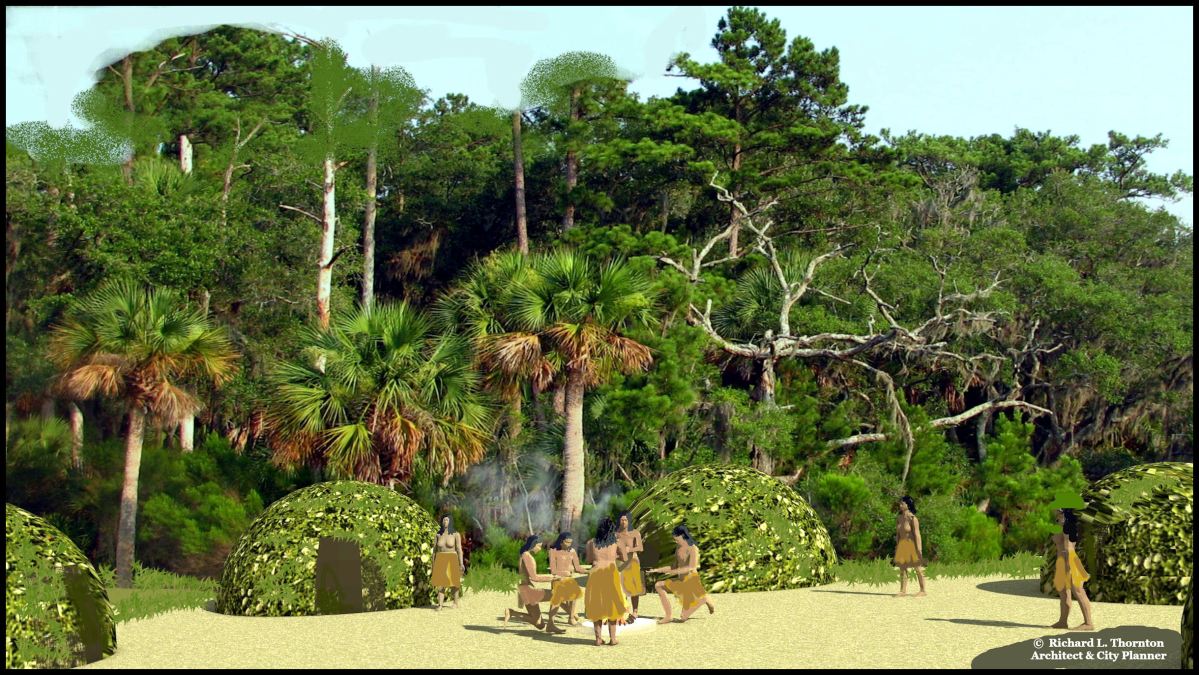
Having a temperate climate and adequate rainfall from 50,000 BP to 6,000 BP, it is where paleontologists should be looking for Early Humans.
The region functioned as a plant nursery. All the indigenous plant families, now found in Eastern North America, cohabitated within the Winter or Spring-Autumn Comfort Zones for 44,000 years. First, former Boreal plants spread northward to their original habitat as the climate warmed and the Ice Sheet retreated, The Northern Temperate and Southern Highlands species followed, while the Southern Temperate species, stayed in place. This and other evidence suggest that there was a “thermal enclave” in Georgia, South Carolina and northeastern Florida, characterized by a isothermal climate, much or all of this epoch,
by Richard L. Thornton, Architect & City Planner
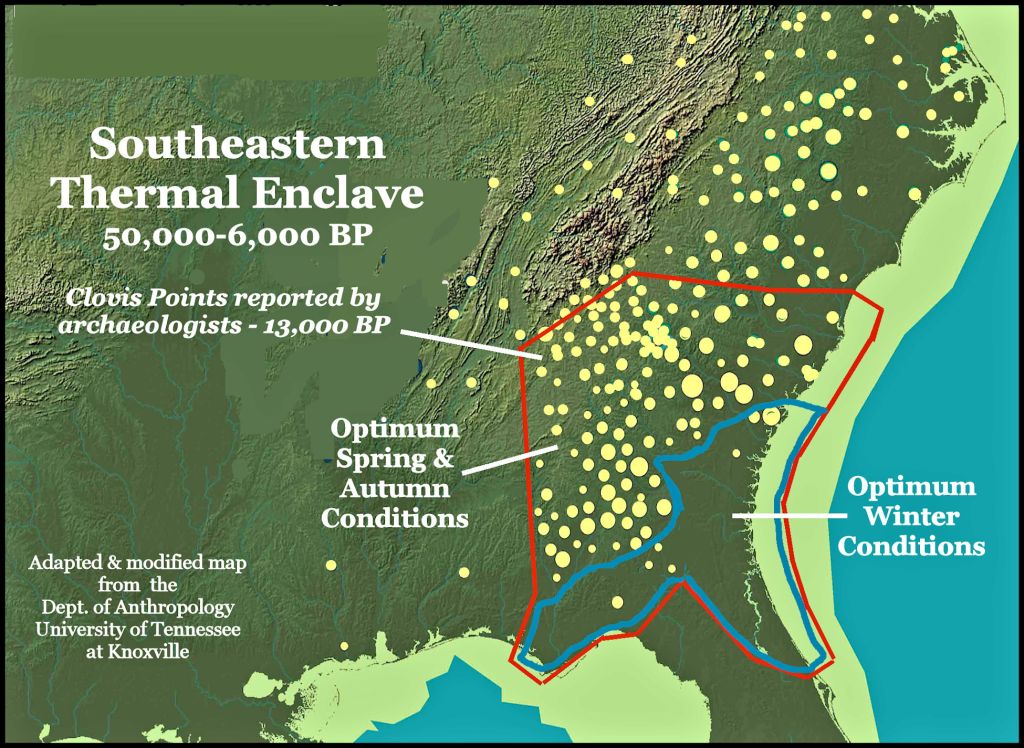
Dr. Frederick Rich* of Georgia Southern University led a team from Georgia Southern University and the University of Georgia which conducted extensive research over a three decade period, showing that during the last Ice Age (Last Glacial Maximum), most of Georgia, South Carolina and northeast Florida did not experience long periods of snow cover or extreme aridity, nor was any of the state permanently covered in ice, but functioned as a warm refuge for plants and animals.
*Dr. Fredrick James Rich (1951 – 2025) was Professor Emeritus of Geology at Georgia Southern University, recognized for his 31 years of teaching, research, and service in the Earth, Environment & Sustainability Department. In 1988, he joined Georgia Southern University in Statesboro, GA, as chair of the Geology and Geography Department (1988–1998) and professor of Geology for 31 years. He earned his Ph.D. in Geology (with a minor in Botany) from Pennsylvania State University in 1979, with dissertation research on the Okefenokee Swamp.
Dr. Rich’s work spanned Georgia Coastal Plain geology, natural resources conservation, palynology, coal geology, and petrography Over his career, he generated over $1.8 million in research and instructional funding, published 43 peer‑reviewed papers, 14 book chapters, 21 field guides, 6 technical reports, and 91 abstracts
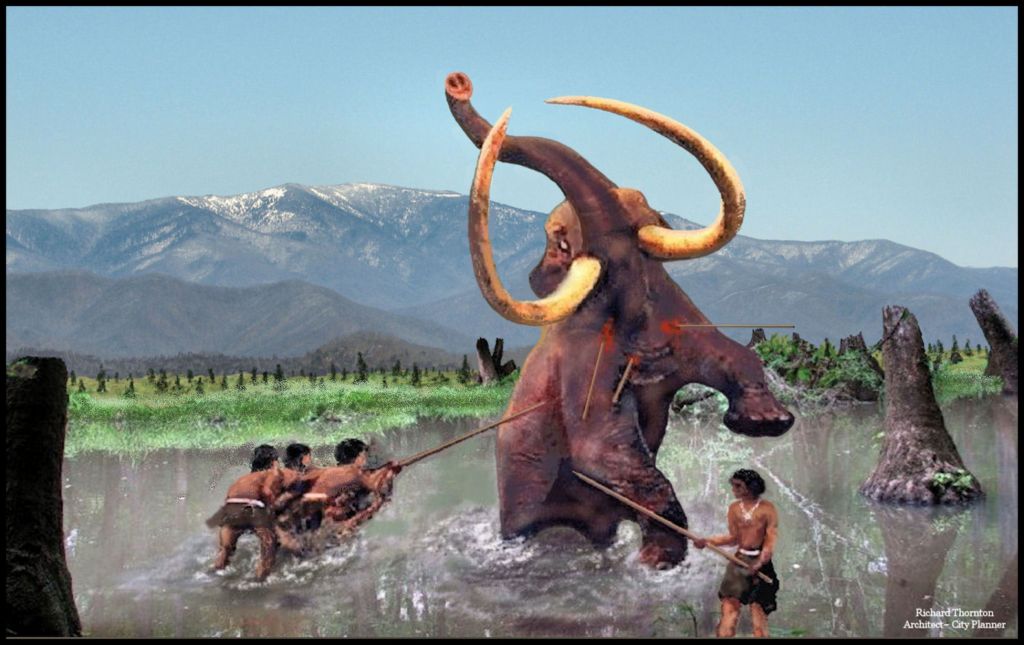
Both western North Carolina and the Georgia Mountains received heavy snowfall with higher elevations probably being in a permanent or lengthy periods of permafrost. During the wintertime, the Blue Ridge Mountains of Georgia and South Carolina contrasted sharply with the rest of these future states. However, in the Blue Ridge Foothills. Biologists were surprised to find in Ice Age soil strata the pollen of a type of grass, that stays green in the winter. It no longer grows in the Lower Southeast, but can be found in Western Virginia and Maryland.
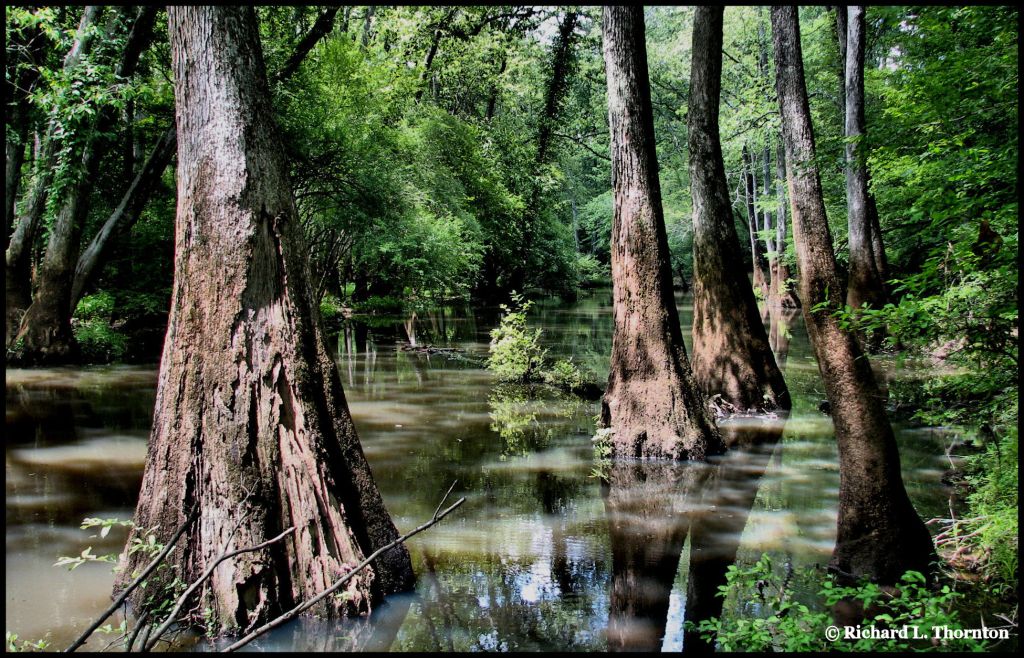
The Thermal Enclave enjoyed an abundance of rainfall, unlike most of North America
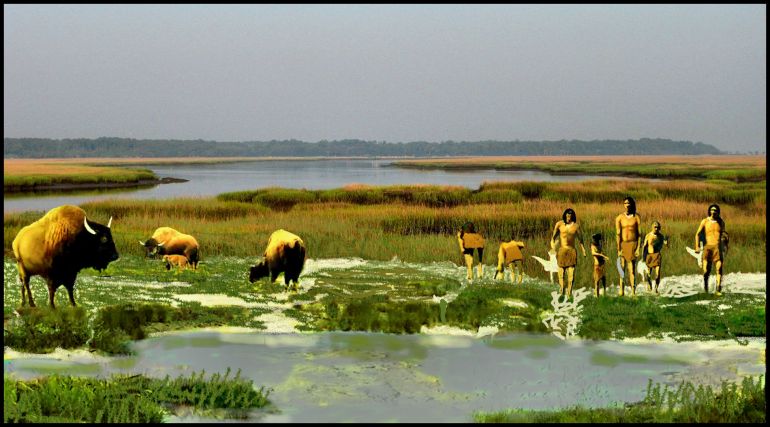
Archaeologists have found the fossils of Giant Bison and American Horses in the coastal regions of Georgia and South Carolina, but the marshes were much farther west at that time. The Atlantic Coast was about 100 miles east of its current location 13,000 years ago.
His work, largely on Coastal Plain fossil pollen, indicates a climate often warmer than today, supporting a mix of temperate forests and some cool-adapted species. Rich’s research supports the idea that the Southeast, including Georgia, was a “thermal enclave,” acting as a warm oasis while North America was largely covered by ice or extreme cold. Research on samples from the coastal plain found that plant communities were quite similar to those that occur today, contrary to assumptions that boreal forests moved far into the south. Findings indicated only a slight influx of cooler climate species such as beech, spruce, hemlock, and basswood.
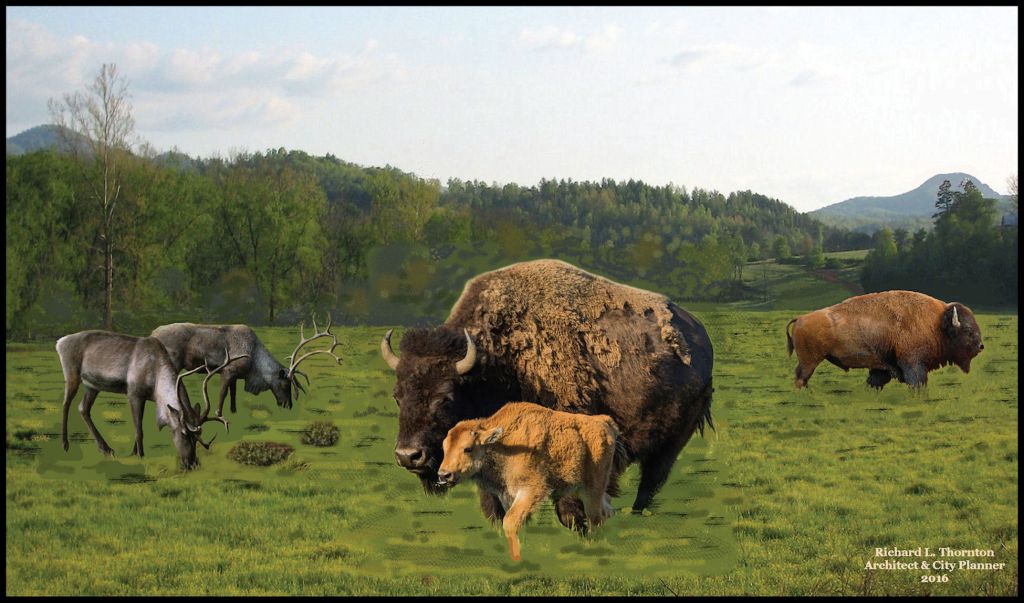
The Blue Ridge Mountain Foothills in Georgia, during the Ice Age
A site near Winderm, GA in Metro Atlanta, called the Nodoroc Mud Volcano, revealed a transitional mix with northern and southern species. This suggests a significant variation in temperatures between north and south Georgia during the Ice Age winters, Proximity to the Gulf Stream meant warming oceanic winds created a “thermal enclave” along the South Atlantic Coast, which gradually diminished as one went inland.
Rich’s findings contradict significantly what one reads in most references, which are based on climatological computer models. The models suggest that the Georgia Coast was cold and arid. Rich’s findings prove that the Georgia Coast and probably the South Carolina Coast ,from Winyah Bay southward, were a haven for wildlife and humans throughout the year. Thus, the region was the most hospitable to humans of any part of North America, yet so far no Glacial habitation sites have been firmly identified other than the Topper site on the Savannah River.
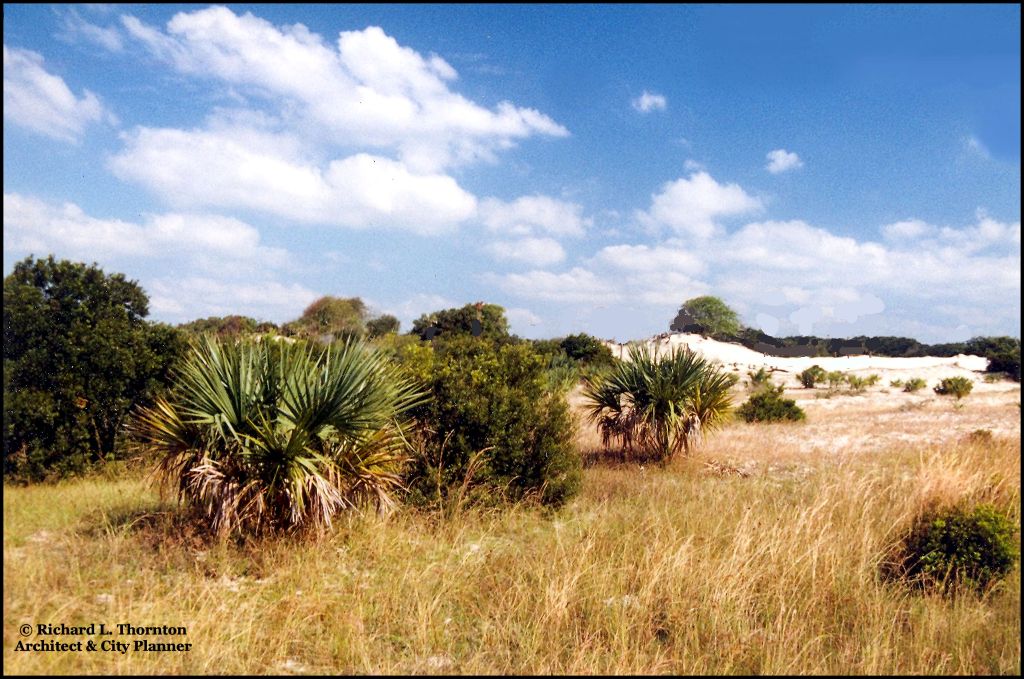
Most of the Florida Peninsula had a desert-like landscape during the last Ice Age.
The Florida Peninsula was a very different situation. The temperatures were generally not extremely cold or warm, but low rainfall created a landscape akin to the savannas of Central Africa today. Nevertheless, the portion of Florida nearest Georgia probably received more rainfall and therefore more resembled the environment of the Georgia Coast.
Now you know!

