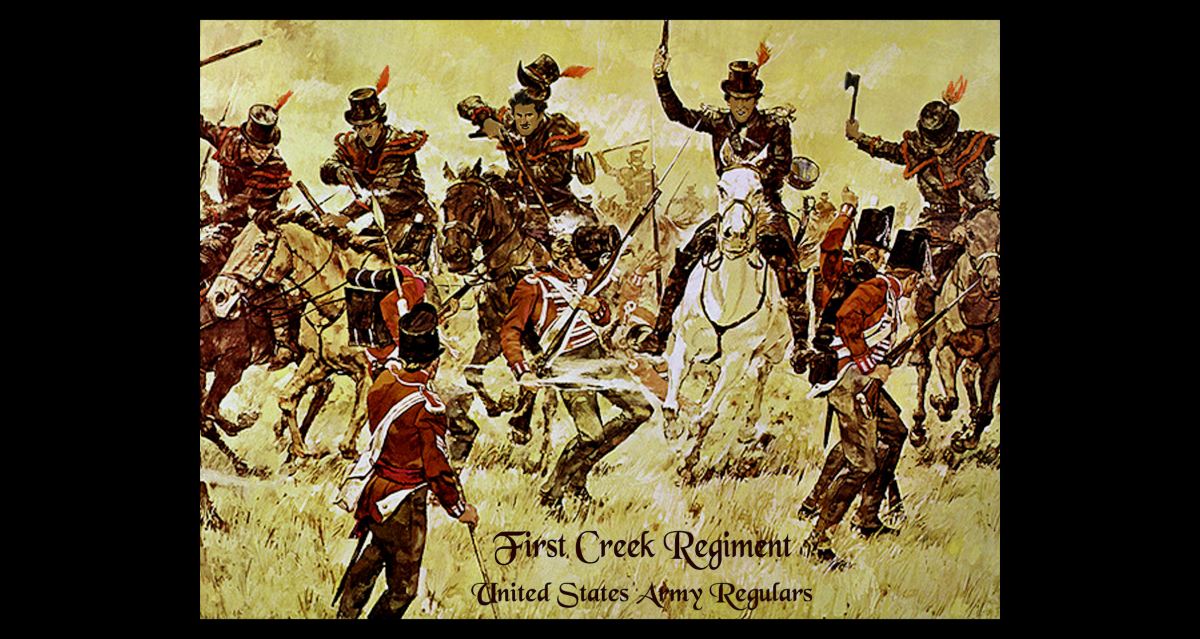
Honoring the men and women, who have put their lives on the line to defend American Democracy . . . and the First Creek Regular Army Regiment
Featuring the forgotten, but proud history of the Creek Patriots of Georgia and South Carolina.
Native American Heritage Month
Clarification: My mother’s family are federally-recognized as Seminoles . . . but the Seminoles were originally Creeks in Georgia and western North Carolina, who spoke a different Creek language than Muskogee. I am not a veteran. Prior to graduating from Georgia Tech, the US Navy decided that I would be more useful as an invisible intelligence asset than an Active Duty Civil Engineering Corps officer. The only live-fire combat I have ever been in was against rogue Virginia National Guard members and a rogue squad of US. Army Rangers, based at Fort Detrick, MD. Both adversaries were defeated, but that does not meet the traditional definition of being a veteran. LOL The rogues had been hired by wealthy real estate developers to vandalize farms and kill livestock in Northern Virginia and Western Maryland, while disguised as “extraterrestrials.” These were some of my experiences that became plots in the X-Files TV series.
Did you know that. . . . ?
In 1703, during the Queen Anne’s War, a Spanish Army was secretly marching across what is now southern Georgia to destroy the Colony of South Carolina. The invaders were nearly wiped out by an army of Creeks, Chickasaws and eight British frontiersmen in the Battle of the Blankets.
Georgia Creeks protected the young colony of Georgia from destruction by the Spanish during the years 1733-1763 . . . the French during the years 1754-1763 . . . the Cherokees during the Anglo-Cherokee War (1757-1763) . . . and the Cherokees again in the Second Cherokee War (1776-1777) and Chickamauga Cherokee-Upper Creek War (1777-1793). That’s right, my Creek ancestors fought side by side with their white neighbors against Pro-British Upper Creeks from Alabama and Cherokees from Tennessee.
The first Native American European-style military unit in North America was the Raccoon Regiment, formed as a unit in the South Carolina State Militia by Creek Indian volunteers to fight the British Redcoats with guerilla tactics. They were one of the few Patriot units that escaped Charleston, prior to over 5,000 Continental Army soldiers surrendering to British forces.
The first Native American to be given the rank of general by Congress was Brigadier General William McIntosh, who was mikko of the Coweta Creeks in western Georgia.
The first Native American unit in the U.S. Army Regulars was the First Creek Army Regiment. It was initially created to protect Macon, GA from Red Stick Creeks, but later in major combat against British Rangers and Marines on the Coast of Georgia.
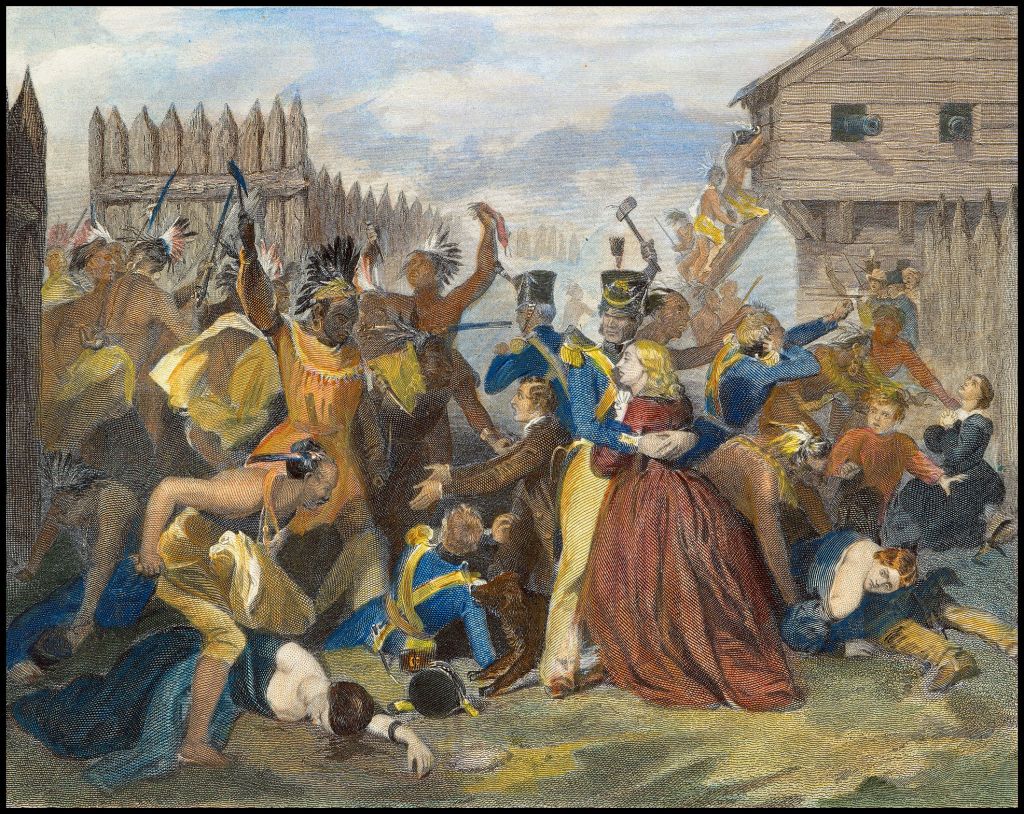
The massacre at Fort Mimms, Alabama, on 30 August 1813
History of the First Creek Army Regiment
After the massacre of 517 militiamen and civilians at Fort Mims, Alabama on August 30, 1813, the whites in Alabama, Georgia and Tennessee were in a state of terror. At that time, Alabama was a part of the Mississippi Territory, but it is estimated that about 25,000-30,000 white settlers lived there. They were outnumbered by the indigenous peoples and lived on widely scattered farmsteads. The situation was very complex in Georgia.
The Creek Red Stick War had its roots in the American Revolution and the repeated efforts by British agents between 1776 and 1812 to persuade the Creeks and Chickasaws, living in what is now Alabama and Tennessee to make war on the United States. The breaking point was when Alexander McGillivray, a Tory and owner of many African slaves, proclaimed himself to the “king” of the Upper Creeks in 1783. His predecessor had been killed during the American Revolution while fighting Patriot troops near Savannah.
McGillivray was mostly French and Scottish in ancestry. He needed translators when speaking to Creek leaders and lived the lifestyle of a wealthy British planter. My gggg-grandfather, Sgt. Jack Bone, along with other NE Georgia Creeks, spent most of the American Revolution fighting off Pro-British Upper Creeks attacks on Creek towns in what is now the Atlanta Metro Area.
Even though the Creek Confederacy was at peace with the United States after the Revolution ended, Alexander McGillivray repeatedly launched Upper Creek raids into Northeast Georgia, which in particular, preyed on Patriot Creek farmsteads and villages. These attacks continued until 1793. Thus, from then on, the Eastern Creeks considered the Upper Creeks in Alabama to be their enemies, not fellow tribesmen.
Didn’t know who their friends were
The animosity between “Alabama Creeks” and “Georgia Creeks” quickly became a civil war in May 2011, after Tecumseh preached his plans for a separate Native American nation in North America in Alabama. Native leaders did not allow Tecumseh to preach to the North Carolina Cherokees and the Georgia Creeks. Alabama Creeks were promised munitions by British agents in Pensacola, if they attacked white settlers in Alabama and Georgia.
Upper Creeks began to made covert raids across the Chattahoochee River against Creek farmsteads and villages in Georgia. Troops of Georgia Creek Light Horsemen would then chase them into Alabama in an effort to either arrest or kill the raiders. The situation had the character of vigilante justice in the Old West.
When, at the onset of the War of 1812, the Upper Creeks allied with Great Britain, the Eastern Creeks naturally strengthened their ties to their European-American neighbors. By this time, most Eastern Creeks were citizens of either Georgia or South Carolina . . . or had moved to Florida and become Semiinoles. This will be explained.
All of Georgia west of the Ocmulgee and Altamaha Rivers was within the territories of the Creek Confederacy or Cherokee Nation. What is now Downtown Macon was in the land of the Creek Confederacy. This constituted far more than half of the state’s land area. However, what is generally unknown to Oklahoma Creeks is that there were more Creeks, albeit many being mixed-bloods, living within the state’s lands than in that portion of Georgia occupied by the Creek Confederacy. Very few of these state citizen Creeks would move to Alabama and later to the Indian Territory.
In 2006, Trail of Tears Association personnel estimated that at least 22,000 adult Creeks, listed on US Census records, never left Georgia during the Indian Removal Period, whereas about 23,000 Creek men, women and children were deported to the Indian territory.
Immediately, after the Fort Mims massacre, the people of Georgia did not who to trust. The Creek Civil War had been assumed to be am internal criminal justice problem of the tribe, until the point where Red Stick warriors began murdering both white and Creek families. Now they envisioned all 30,000 skilled Creek marksmen swarming across the Ocmulgee River to lay waste to Georgia. Remember the British were arming the Red Sticks with the most modern of weapons produced for the Napoleonic Wars.
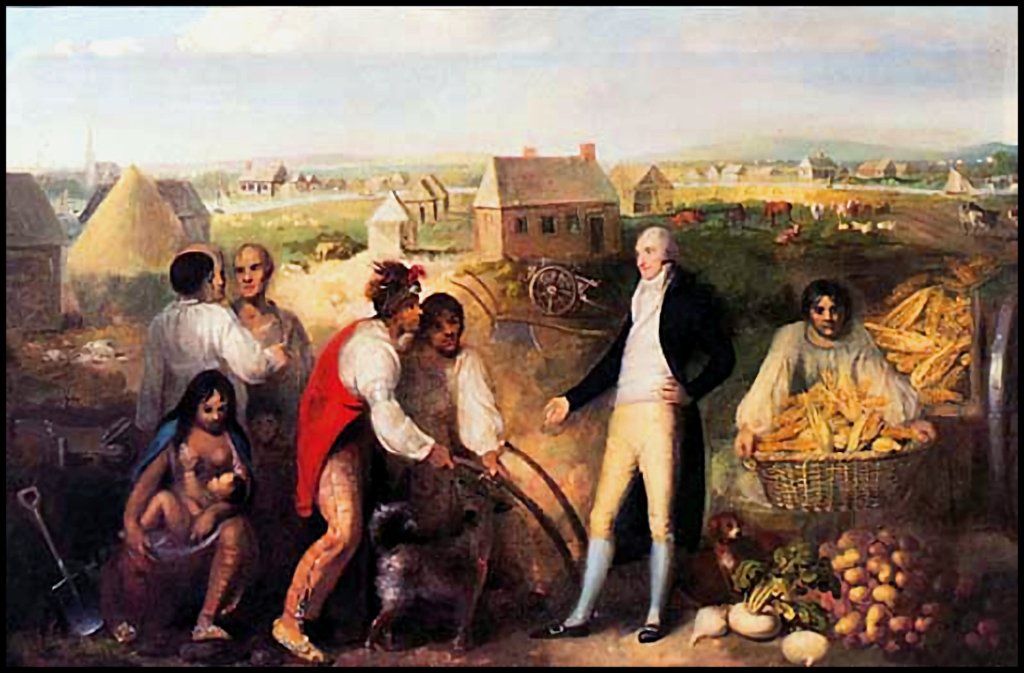
United States Indian agent for the Southeast, Benjaniim Hawkins, is portrayed as showing the benefits of metal implements in agriculture to the grateful, kneeling Creek People. They were already Master Farmers, prior to gaining access to iron plows and livestock.
Fort Hawkins in present-day Macon, GA appeared to be in extreme danger. It was more than a fort. It was the principal regional headquarters of several arms of the Federal government . . . like Atlanta functions today. Hawkins conceived the idea of recruiting a regiment of Creek men, who were citizens of Georgia, to guard Fort Hawkins and the Creek Agency, near present day Roberta, GA. This would be a Regular Army regiment, not a Voluntary regiment composed of short-term enlistments, which was what fought the Mexican-American War, Civil War and Spanish-American War.
This is when a United States Indian Agent coined the phrase, ” If the Good Lord is willing and the Creeks don’t rise!
(Hint . . . he was not talking about flowing water.)
It should be understood that all Native Americans in Georgia were not deprived of their citizenship and most civil rights until 18 years later, when the Georgia General Assembly passed a series of punitive laws aimed at the Cherokees. Up to that time, the many Creeks living outside the boundaries of the Creek Confederacy, were considered both Georgia and United States citizens. The Trail of Tears Association study discovered that around 22,000 adult Creeks within Georgia changed their ethnicity on US Census forms to being White. Most Georgia families of Creek ancestry did not change their ethnicity back to American Indian until Governor Jimmy Carter pushed through legislation in 1971 to abolish all laws in the state that restricted Native American’s civil liberties.
The First Creek Army Regiment initially had little to do, but march back and forth around the eastern edge of the Creek Confederacy. This bought time for Brig. General William McIntosh to recruit about 800 Creek and Cherokee volunteers from within tribal territories. Major General Andrew Jackson recruited a large army of volunteers in Tennessee. Brig. General John Floyd raised an army of white volunteers from Georgia. Brig. General Ferdinand Claiborne raised a volunteer army from the Mississippi Territory, which included the future states of Mississippi and Alabama.
In late 1812, Great Britain established a naval blockade along the coasts of South Carolina and Georgia. British ranger, naval and marine raiding parties concentrated on the wealthy, densely populated coast of South Carolina. Privateers began capturing ships off the Georgia coast and reported that it was virtually defenseless, south of Savannah. All of the Georgia Coast was interconnected by a deep tidal river, now known as the Intercoastal Waterway. British warships hovered off Georgia’s coast, snapping up coastal trading craft and disrupting the livelihood of Georgians.
In response, the minuscule United States Navy established a base in Sunbury, which was then a major port, about 36 miles south of Savannah. From there the Navy planned to harass British naval raids with shallow draft gunboats propelled by oars. However, the British navy was using frigates and brigantines to carry out the seizures of ships, destruction of shipbuilding yards and raids on plantations. The US Navy base was ineptly led and grossly out-gunned, so the operation came to nothing.
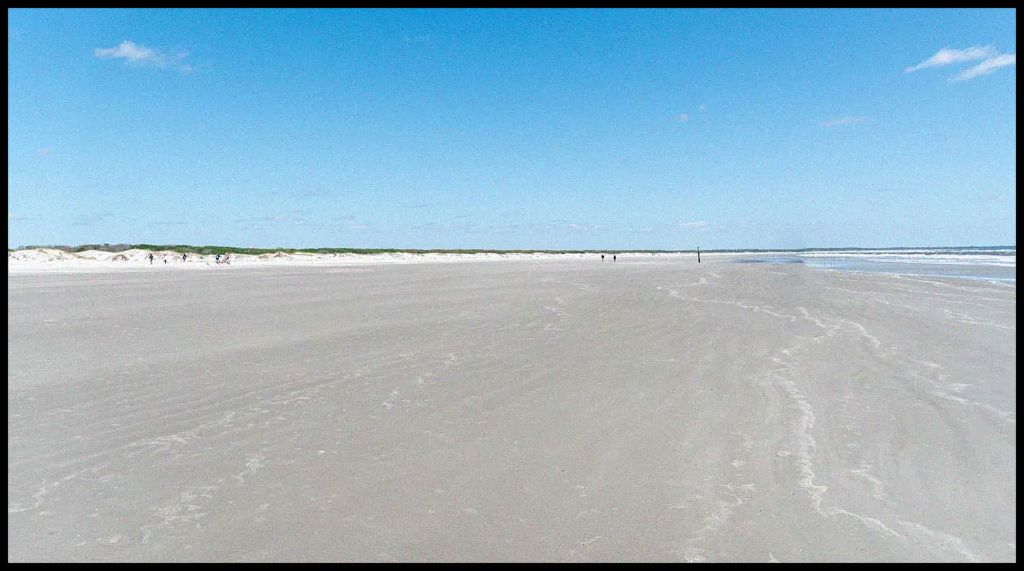
The beaches on Georgia’s Barrier Islands were up to a mile wide and the initial sand dunes were up to 60 feet high. The Creek horsemen could ride up and down the inland side of the dune without being see from British ships. They then could pounce upon the British raiding parties when the distance to their boats were impossibly far away for them to escape.
The First Creek Regiment was dispatched to the Georgia Coast to oppose British raids on the Georgia Barrier Islands, where Sea Island cotton grew abundantly. The Creek Regiment was provide some of the galleys from Sunbury and horses to travel on, while on land. They became the first amphibious “Delta Force.”
A company was placed on each island and provisioned by its plantations. When British warships or privateers were observed loading raiding parties on small boats, the Creeks could race their horses to the probable landing site and pounce on the British soldiers, while they were exposed on the beaches.
The British were shocked to see Native Americans in military uniforms, who were usually over a foot taller than them. After several landing parties did not return to the mother ship, depradations declined sharply.
Then Napoleon was defeated and in a treaty on April 14, 1814 forced into exile on the Island of Elba. Thousands of British veterans of the Napoleonic Wars were transported to North America to crush the upstart United States. Washington was burned then a large force of Redcoats Admiral Sir George Cockburn attacked St. Marys, GA and Point, which was then the most southerly town in the United States. Initially, the operation was conceived as a diverstion to draw American soldiers away from New Orleans. They did not realize that there were very few American soldiers in New Orleans until General Andrew Jackson arrived with his veterans from the Battle of Horseshoe Bend.
St. Marys was defended by about 2,200 Americans, which probably included the Creek Regiment. The others were hastily assembled militiament with little or no combat experience. They were overwhelmed by the cannons from the British ships and the many hardened British veterans. St. Marys was captured on January 13, 1815.
Cockburn planned to sweep up the South Atlantic Coast with the help of thousands of Creek warriors. He did not know that the Red Stick Creeks had been catastrophically defeated in the Battle of Horseshoe Bend on March 14, 1813 or that they actually represented a small minority of the total Creek population. He also did not know that the Treaty of Ghent had been signed about a month earlier and that hostilities had ended between the United States and Great Britain. He finally departed St. Marys on January 23, 1815.
We hear nothing more about the Creek Regiment. If they were at the Battle of St. Marys, they probably skidaddled out of there before the British could make them prisoners of war. With the War of 1812 over, tjere was mp meed to guard Fort Hawkins. They probably just trotted their free horses or walked home to continue their normal lives.
Because they were were citizens of Georgia and most lived on Revolutionary Veteran Reserves, they were not subject to the Treaties of Indian Springs in 1835 and 1827. It is highly likely that many of their descendants still live in Georgia.
Now you know!


Wow! I live in Richmond Hill, Georgia, and this is fascinating information!
Thanks, Tee Hannigan
LikeLike