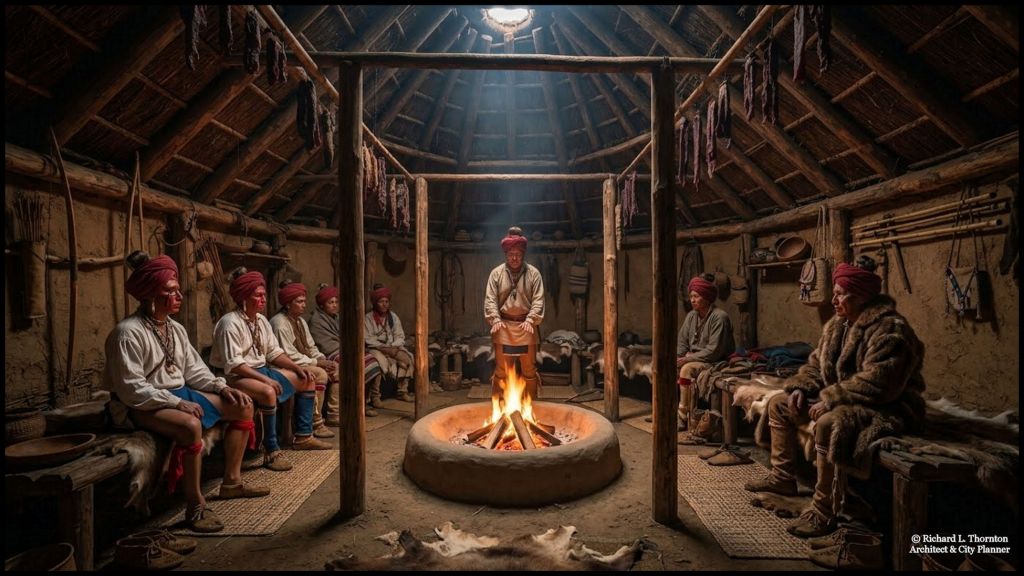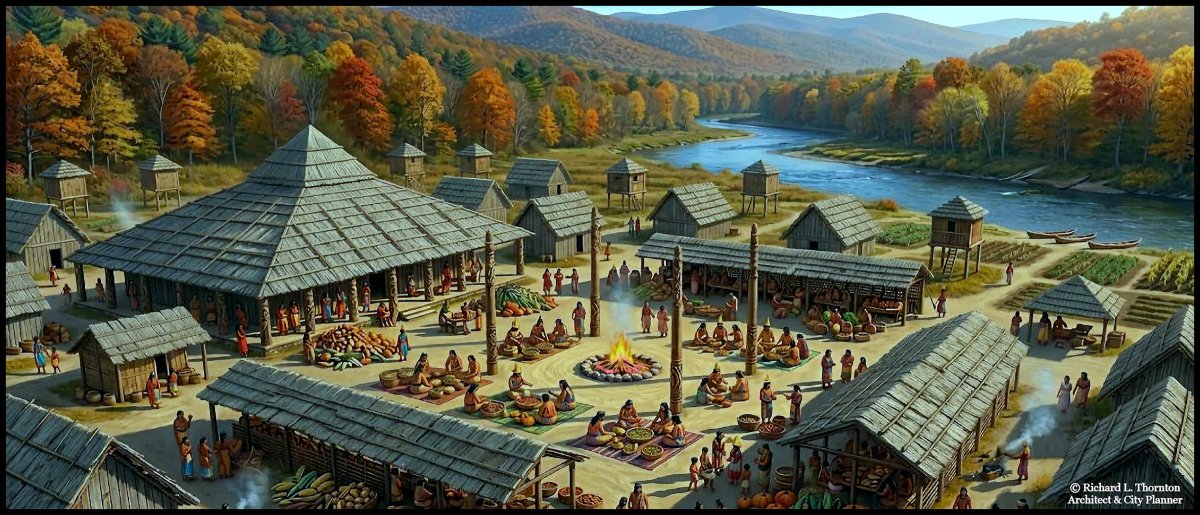
Featuring the celebration of the Autumn Harvest Festival by the Apalachicola Creeks, living in the Cartecay River Basin near present-day Ellijay, GA. This festival occurred after the dried corn cobs were harvested from the stalks. There were also some Apalachicola villages on the Etowah River, some who remained, like Euharlee, even after the region was given to the Cherokees in 1784. Over 3,000 Creeks were still living within Northwest Georgia at the time of Cherokee Trail of Tears.
Native American Heritage Month
Gold and copper nuggets were formerly abundant in the Cartecay River Valley. During the 1920s, the famous archaeologist, Warren King Moorehead, found highly oxidized European tools and weapons within Pre-Columbian strata of Native Americans mounds that were located near the confluence of the Cartecay and Ellijay Rivers in Downtown Ellijay. Sixteenth or seventeenth century European armor, weapons and tools have been found in the Cartecay River Valley, Like so many other intriguing archaeological sites in Georgia, these discoveries were concealed by late 20th century Georgia archaeologists, because they did not mesh with their orthodoxies.
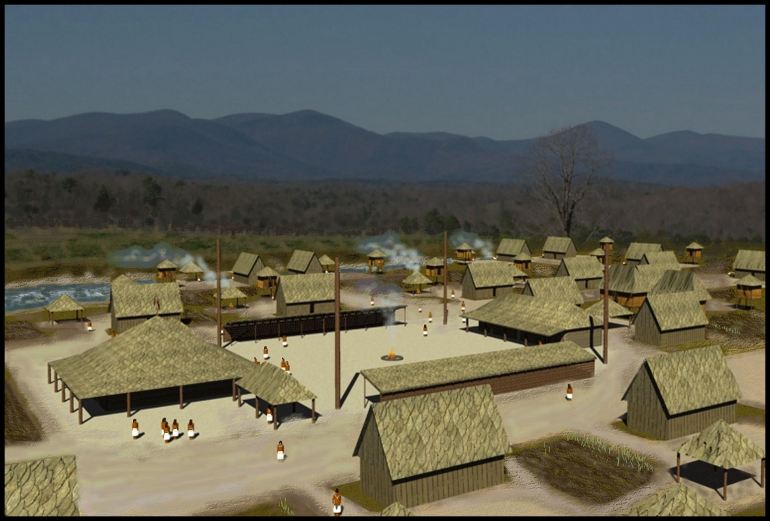
Oothkalooga Creek in Bartow and Gordon Counties, Georgia is named after the Apalachicola town of Uthkalooga, which along with the other Apalachicola villages on the Cartecay, Ellijay and Coosawattee River Basin moved to the Pensacola, Florida area after the French & Indian War. Wikipedia and local tourism agencies state that Oothcalooga is the “Cherokee word for beaver,” but that word is “doya.” The Spanish-speaking, mixed-blood Apalachicola town of Ellijay moved to South Florida and joined the Seminoles.
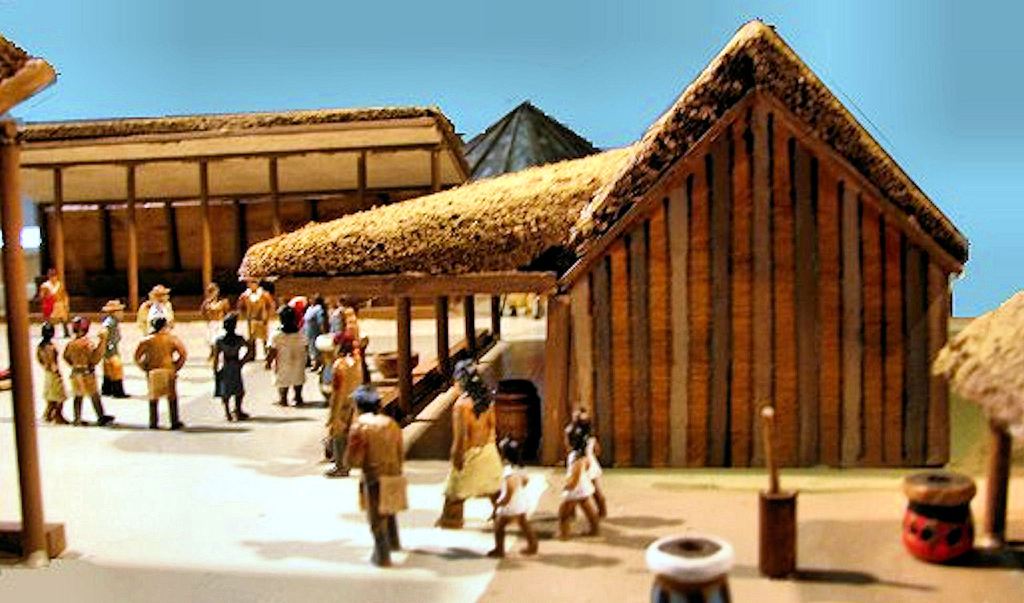
Model of an Apalachicola village near Pensacola, FL – visited by William Bartram.
The Apalachicola were unique in what is now the Southeastern United States because they sheaved most of their buildings with vertical planks. Holes were drilled in the planks then they were lashed to the timber frame of the building. This style of architecture was also practiced by the Indigenous Peoples of the Northwest Pacific Coast.
Apalachicola communities in the Cartecay, Coosawattee and Etowah River Basins split Eastern Hemlock logs to make planks. This wood is immune to termites and most other wood-devouring insects. Appalachicola communities along the Lower Chattahoochee River, Lower Savannah River and in the Florida Panhandle utilized Bald Cypress, which has the same qualities as Eastern Hemlock.
It is probable that the Apalachicola buildings in North Georgia had 6-8 inch wattle and daub walls underneath the plank siding in order to insulate them during winter. The planks protected the clay walls from erosion and also kept them drier.
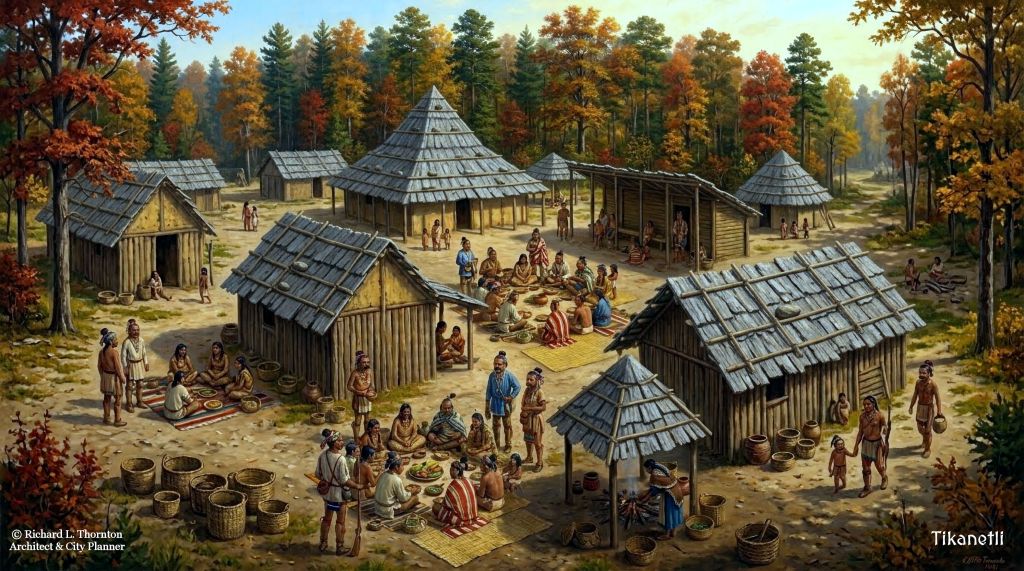
Tikonetli was a small village at the headwaters of the Cartecay River, where there were relatively small areas suitable for cultivation. However, gold AND copper nuggets could be picked up on the surface here, until the Georgia Gold Rush in 1828. One prospector found a basketball-sized nugget of almost pure gold near the village’s previous location.
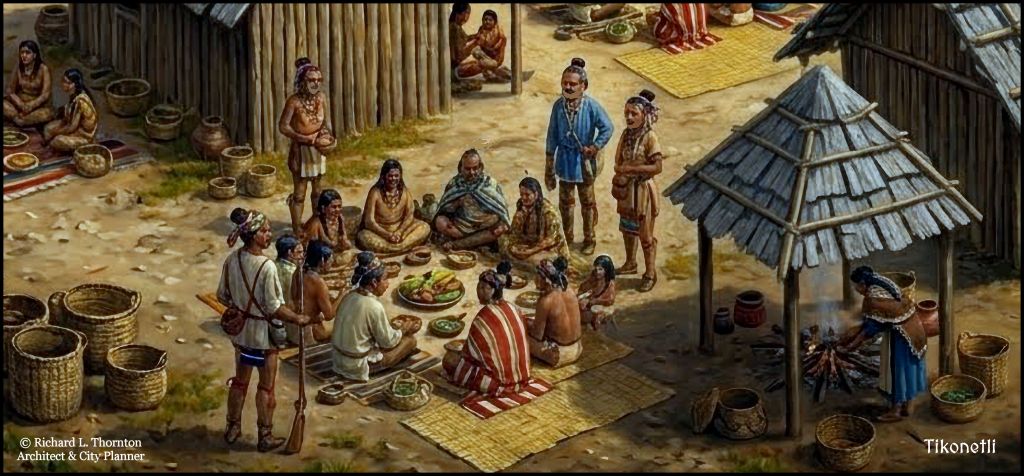
The carbohydrate-rich autumn feasts prepared the Apalachicola people for the ardors ahead after the leaves fell. Women, teenage girls and children headed out into the forests to collect chestnuts, chinkapins, hickory nuts and walnuts. Bands of men and teenage boys headed up into the mountains to hunt. The sudden drop in daily temperatures after the leaves fell enabled them to keep carcasses from spoiling long enough for the meat and hides to be cured.